Jul 15, 2009

T. Boone Pickens to Sell Off 667 Wind Turbines

As part of the first phase to build a 4,000 MW wind farm in the Texas panhandle, Pickens ordered 667 turbines from GE. These turbines are to be ready in 2010 and 2011, but the wind farm was called off due to funding and transmission problems.

Now that's a boondoggle. The economy and the wind energy market were very different just over a year ago when this order was placed. The wind industry was booming and a massive 8,900 MW of wind energy capacity was installed in 2008 in North America --this represents 40% of all total new capacity.

Now Pickens wants to unload these turbines, either by creating some smaller wind farms or by selling them off. He is looking for buyers in the Midwest or in Canada. These turbines have a rotor diameter of 77 meters however and are ideally suited for areas with higher wind speeds. Although the Midwest has a decent transmission grid for wind farms, it lacks the strong wind speeds that are optimal for these turbines.

Pickens is not the only person with a bunch of turbines on his hands and a stalled project. "Some of the cheapest turbines these days are available when another company pre-ordered the them, still has a slot and is trying to resell them off themselves," says Wes Slaymaker, owner of WES Engineering... Continue Reading from triplepundit.com

perfect lawn without gasoline or synthetic fertilizer.

From the earliest days of civilization, an area of short-cropped vegetation required decisive action to meet the definition of a lawn. At first, goats and sheep were put out to forage plants to the ground; in the 1700s, peasants and slaves wielded machetes and scythes.
According to NASA satellite images, the United States is blanketed in approximately 50 million acres of turf, with several hundred thousand acres of grass being added each year.

All that mowing, trimming and blowing contributes up to 10 percent of our nation’s air pollution every summer in the form of hydrocarbons (a major component of smog), particulate matter (which damages respiratory systems), carbon monoxide (a poisonous gas) and carbon dioxide (a greenhouse gas that contributes to global warming). Gas-powered lawn mowers, blowers and trimmers are 10 to 30 times more polluting than combustion-engine automobiles and, well, we all know where the car industry is headed.

It should come as no surprise, then, that today’s Elwood McGuires are waging a new race: to develop kinder, gentler technologies for taming America’s little green patches of paradise. Like it or not, the grass is still growing. More and more folks are mowing it with machines that are human- or electricity-powered. A new campaign co-promoted by the non-profit SafeLawns.org of Washington, D.C., and the for-profit Black & Decker company of Maryland challenges homeowners everywhere to “Get Your Grass Off Gas.”

The statistics in support of the change are staggering. A traditional mower running for 45 minutes consumes about 50,000 BTUs of energy in the form of gasoline. An electric mower doing the same job requires just 2,500 BTUs in form of kilowatts. Some estimates put the electric mowers at 90 percent less polluting than gas models and the cost savings per season is ample. About $5 of electricity will run your electric mower for the whole season on a third-acre lawn that would otherwise require about $40 to $50 in gas and oil.

Read more of 'Grass happens' at the GRIST:

Jul 14, 2009

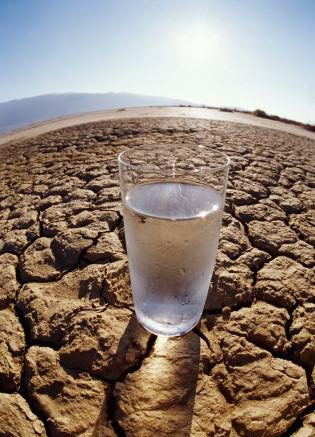
California's future drying up...

No it's not about the money.... is is knowing what has been lost forever...
That groundwater lost from the San Joaquin Valley was enough for every California household for 10 years.
California's San Joaquin Valley has lost 60 million acre-feet of groundwater since 1961, according to a new federal study. An acre-foot of water is enough to serve two average California households for a year.

This is among the findings in a massive study of groundwater in California's Central Valley by the U.S. Geological Survey. It helps shed light on the mysteries and dangers of California's groundwater consumption, which is mostly unregulated.

According to the study, groundwater pumping continues to cause the valley floor to sink, a problem known as subsidence. This threatens the stability of surface structures such as the California Aqueduct, which delivers drinking water to more than 20 million people.

Feds document shrinking San Joaquin Valley aquifer: Aquifer levels drop 400 feet since 1961

Read more from source here


50 Years of no progress... 300 mpg fun

Does any current scooter get 200mpg and look this awesome fun?

This was a 'clean four-stroke engine' - WOW.

Wikipedia Rated these at: 340 mpg-US

Bottled Water Safe? Who knows...

An Environmental Working Group (EWG) investigation of almost 200 popular bottled water brands found less than 2 percent disclose the water’s source, how the water has been purified and what chemical pollutants each bottle of water may contain.

Just 2 of the 188 individual brands EWG analyzed disclosed those three basic facts about their water.

Some of the more interesting discoveries were that mainstream brands such as Sam’s Club and Walgreen’s scored relatively high marks, while waters marketed as elite, including Perrier, S. Pellegrino and the Whole Foods store brand, flunked because they provided almost no meaningful information for consumers.

Why the glaring lack of disclosure?
Houlihan said that bottled water companies enjoy a regulatory holiday under the Food and Drug Administration’s (FDA) Food, Drug and Cosmetic Act, which give beverage corporations complete latitude to choose what, if any, information about their water they divulge to customers.

In contrast, the Environmental Protection Agency (EPA) — the federal agency that oversees the nation’s municipal water utilities — requires all 52,000 community tap water suppliers nationwide to produce an annual water quality report: The utilities’ reports detail water source and pollutant testing results for customers, as required under the Safe Drinking Water Act.

An estimated 58 percent of these reports also describe water treatment methods.

Source: Environmental Working Group

Jul 13, 2009

Small-scale Distributed Energy in Wisconsin Benefits Farmers, Local Communities

 ‘How Could Small Scale Distributed Energy Benefit Wisconsin Agriculture and Rural Communities?’
If Wisconsin would take advantage of “low hanging fruit” and cash in on the state’s biomass potential via small-scale distributed energy systems, advantages would reach both the agricultural sector and rural communities, according to a recently released Program on Agricultural Technologies (PATS) policy perspective.

“For me, the thing that struck home was that all of these logistics behind biomass are so dependent on location,” Turnquist said of his research. The small-scale distributed energy option is obvious, he said, creating a marriage between the idea of hundreds of thousands of producers and smaller-scale uses.


Wisconsin has almost 15 million tons of potential biomass, the paper states, and if smaller local operations use that feedstock, it could increase energy production opportunities and increase returns for rural communities. It’s not just the scale of biomass potential that makes distributed energy a powerful tool in Wisconsin, but also its diversity, Turnquist said. “The single biggest benefit is that we have the capacity to do it right now,” he said.

Small-scale operations are starting to pop up around the state, according to Radloff, mostly at rural schools. Starting small and building out might be a way to build the biomass-to-energy infrastructure in the state, he added. Some larger projects also are in the works such as Governor Jim Doyle’s order for four university campuses in the state to “come off the grid” and switch to biomass, Radloff said. If more energy is produced locally and used locally, it can complement other renewable energy sources such as wind and solar, Radloff said.  The two researchers compare local energy production to something most Wisconsinites can relate to, a local farmer’s market; the money locals spend goes to other locals they might know personally.

Opportunities also exist for small-scale projects to partner with larger-scale operations, according to the authors. They cite as an example Xcel Energy’s 2008 proposal to add a biomass-to-energy burner to their existing plant in Ashland, which already uses woody biomass.

The amount of biomass that can be produced and harvested in Wisconsin still is an open question, the paper states, along with how much the communities actually will benefit from bioenergy and other renewables. But, it adds, local energy production is an important part of the state’s economic future and policies should be crafted to ensure the economic and energy returns go to rural Wisconsin residents and that groups undertaking distributed energy projects can manage the risk in the bioenergy market.

Read more from Renergie’s Weblog

Ethanol from corn consumes 3 times more water than previously thought.

Researchers at the University of Minnesota have concluded that the amount of water used in ethanol production varies up to 2,138 liters of water per liter of ethanol, depending on regional irrigation needs.

Corn ethanol is already plagued by environmental concerns such as pollution from fertilizer, pesticides, and herbicides; soil erosion; greenhouse-gas emissions from production; and competition for agricultural land with food crops.

The new study, published in the journal Environmental Science and Technology, also found that as corn-based ethanol production has approximately doubled nationwide between 2005 and 2008, related water use has more than tripled.

In some states, such as Ohio, Iowa, and Kentucky, where corn can grow with little to no irrigation, only five to seven liters of water are required to turn the foodstuff into fuel. Almost all of this water is used to boil, ferment, and distill the biofuel.

As ethanol production has increased, however, more corn is being grown in western states such as Nebraska, Colorado, and California, where irrigation needs raise the fuel’s water requirements significantly.

“This is one more nail in the coffin for ethanol,” says David Pimentel of Cornell University, in Ithaca, NY, whose own studies have shown that ethanol requires more energy to produce than it releases when burned, and that the fertilizer used to grow corn for ethanol has contributed significantly to dead zones in the Gulf of Mexico (areas of the ocean with low oxygen content due to increases in chemicals in the water).

The U.S. Energy Independence and Security Act of 2007 mandates that ethanol produced using existing technologies will have to increase from the 34 billion liters produced in 2008 to 57 billion liters per year by 2015. This includes the more arid western states, where corn-based ethanol is currently produced.

“We’re already in an unsustainable situation in terms of water use, already drawing down aquifers like the Ogallala,” Schnoor says of the vast underground water source stretching from South Dakota to northern Texas
. “This would exacerbate that decline if we expand in these irrigation states.”

 “There is a finite limit to how much ethanol you can put in water-constrained areas.

Read full from Renergie’s Weblog

Jul 11, 2009

Top companies: Most profitable - Oil & Energy

http://farm3.static.flickr.com/2563/3706844481_8b37bc9fda_o.gif
Is it a surprise to anyone which of these companies will benefit from 'cap n trade'?

EPA Chief: "U.S. action alone will not impact CO2 levels"

An EPA chart was presented during the Senate's debate of the Lieberman-Warner cap-and-trade legislation that showed the carbon reductions under that bill would not materially effect global carbon concentrations in the atmosphere.

SENATOR INHOFE: ...This is what we determined during the Warner-Lieberman bill last year, 13 months ago, and that was the EPA that said this is the difference it would make. And let's keep in mind, the IPCC said they wanted to keep it down below 550 parts per million. And this shows by the EPA chart that with or without the developing nations it makes virtually no change.

Do you still agree with this chart? Dr. Chu,

SECRETARY CHU: Uh, no, I don't agree with that chart.

INHOFE: Do you, Secretary Jackson?

ADMINISTRATOR JACKSON: I believe that essential parts of the chart are that the U.S. action alone will not impact CO2 levels ..

Watt's Up With That concludes with Inhofe's analysis on the effects of the bill if the USA acts unilaterally without China and India:

"I am encouraged that Administrator Jackson agrees that unilateral action by the U.S. will be all cost for no climate gain," Sen. Inhofe said. "With China and India recently issuing statements of defiant opposition to mandatory emissions controls, acting alone through the job-killing Waxman-Markey bill would impose severe economic burdens on American consumers, businesses, and families, all without any impact on climate."

"...I was somewhat surprised that Secretary Chu disagreed with EPA's analysis of what would happen if the U.S. acts alone to address climate change, which cap-and-trade supporters claim is a global problem," Sen. Inhofe said. "EPA's analysis that global greenhouse gas emission levels can only be stabilized with meaningful, mandatory action by China and India is widely accepted. I extend an invitation to the Secretary to see whether he wants to clarify his remarks."

So without the participation of China and India, the climate bill will have virtually no impact on global CO2 emissions.

Please read full from source and You can see the transcript of a video of both these Obama administration officials responding at complete odds with each other under questioning from Oklahoma Senator Jim Inhofe at the Senate hearing on climate bill.

Jul 10, 2009

REAL problem deforestation and extinction of food chain

Five to nine percent of the Amazon's 40,000 known species of plants will be at risk of extinction by 2050 should current deforestation trends continue, report researchers writing in the Proceedings of the National Academy of Sciences.

"Although the number of threatened species is less than estimated in some previous studies, we stress that ongoing and future land-use changes pose serious threats to Amazonian biodiversity. If the risk estimates from this study are applied to the 50,000 total vascular plant species (12,500 canopy trees) estimated to occur in the Amazon Basin, we predict that between 2,400 and 4,550 species (600–1,138 species of trees) will become committed to extinction over the next several decades because of land-use change alone," they write.

"This is an unacceptable loss rate and calls for strong and immediate conservation actions."

Please read full at mongabay


Related: 80% of Amazon Deforestation Stems from Cattle Ranching

EPA new Clean Air Rule to save 3% of ALL the worlds greenhouse gasses

After 20 Years in the making.... critical EPA rule moves forward.
While this should have happened back in 1989... I guess, better late than never.

The US Environmental Protection Agency (EPA) has proposed a new set of rules under the Clean Air Act that would require all U.S. flagged ocean-going vessels to meet stricter diesel engine and fuel standards, leading to cleaner air along the coasts of the US.


The EPA writes:

The rule comes on the heels of a key part of EPA’s strategy, a proposal last March by the United States and Canada to designate thousands of miles of the two countries’ coasts as an Emission Control Area (ECA). The International Maritime Organization (IMO), a United Nations agency, begins consideration of the ECA plan this month, which would result in stringent standards for large ships operating within 200 nautical miles of the coasts of Canada and the United States.

200 miles! Now we're talking. California's new law only applied up to 24 miles from the coasts (for legal reasons), and just for one state. But if the whole US (and Canada) has a uniform regulation that requires cleaner burning engines and fuels, it won't as easy to just ship around the regulation. This should make a real different (if it is enforced properly).

As we wrote previously, cargo ships often have horrible emissions: "Just 15 of the world's biggest ships may now emit as much pollution as all the world's 760m cars"

There's also a good argument to be made that any extra costs from getting cleaner fuel and engines will be partially or completely offset by savings coming from a reduction of health problems and lost productivity.

Via EPA, Environment News Service and AHugger


Haase Comments - History of this on the blog
California makes HUGE gains in cleaning air in harbors

Ocean-going vessels emit up to 3% of the total world inventory of 100 tons greenhouse gas emissions (ICCT).

China Syndrome - Environmental, Economic, Epic....

While U.S. consumer credit fell for the fourth straight month in May, we’re now experiencing the biggest and longest consumer deleveraging since 1991.
The U.S. food stamp program now has a record enrollment of over 33.8 million people. (Not to mention unemployment is at 20%)


Unemployment at a 26 year high and the sudden disappearance of easy-money credit, we wonder if this balance sheet restoration is a matter of choice… or if the lowly American consumer is just playing the hand he’s been dealt.

Lenders both here and abroad remain wary of lending, except for high rollers in China.

While U.S. credit tightens, new loans in China more than tripled in the first half of 2009.
The People’s Bank of China reported overnight that lending reached $1.07 trillion by the end of the first half. That’s more than three times bigger than the same period in 2008
… lending doubled from May to June alone.


Chinese auto sales are soaring too, up 36% from this time last year. The Chinese snapped up 1.14 million cars, trucks and busses in June and 6.1 million in the first half, says the China Association of Auto Manufacturers.

Both of those numbers easily top U.S. auto sales.

Haase Comment - Why is the relevant EHS News?
Are you kidding me, China blew by the U.S. in 2006 as the dominate force in both global toxic emissions and cars on the road... while the 'recession' has put the U.S. emissions and cars back to nearly 1990 levels... CHINA is coming on like a toxic freight train burnin nuke, coal and fossil fuels on massive levels NEVER witnessed in the U.S. and emphatically declined accepting reductions suggested by G8 or U.S. advisers.

But I am sure our proposed 'crap and trade' program that cuts global emissions by less than .0001% will show CHINA we are serious as they are.

Read more of - There is NO action without China and India from The Guardian

New Hype on hydrogen from waste

ScienceDaily (July 8, 2009) — Could the cars and laptops of the future be fueled by old chip fat?
Engineers at the University of Leeds believe so, and are developing an energy efficient, environmentally-friendly hydrogen production system. The system enables hydrogen to be extracted from waste materials, such as vegetable oil and the glycerol by-product of bio-diesel.

The aim is to create the high purity hydrogen-based fuel necessary not only for large-scale power production, but also for smaller portable fuel cells.

Dr Valerie Dupont from the School of Process, Environmental and Materials Engineering (SPEME) says: “I can foresee a time when the processes we are investigating could help ensure that hydrogen is a mainstream fuel.

 “We are investigating the feasibility of creating a uniquely energy efficient method of hydrogen production which uses air rather than burners to heat the raw product. Our current research will improve the sustainability of this process and reduce its carbon emissions.”

A grant of over £400k has been awarded to the University by the Engineering and Physical Sciences Research Council (EPSRC) within a consortium of 12 institutions known as SUPERGEN Sustainable Hydrogen Delivery.

Hydrogen is widely considered to be a potential replacement for fossil fuels, but it is costly to extract.

There are also often high levels of greenhouse gases emitted during conventional methods of production.

“We firmly believe that these advanced steam reforming processes have great potential for helping to build the hydrogen economy. Our primary focus now is to ensure the materials we rely on - both to catalyze the desired reaction and to capture the carbon dioxide – can be used over and over again without losing their efficacy.”

Read full from ScienceDaily


Haase Comment - Didn't we 'discover' this 'new' process decades ago?

Research link

Oh and if we are looking for 'new' hydrogen powered and electric cars to 'grant' and 'subsidize'...

GM produced the Electrovan and AUTOnomy vehicles that date back 40 years. And don't forget the first hybrid in1909 or 108 year old electric...Research link

Over 55 mpg cruising in a twin turbo Jaguar

I watched the Jaguar on this episode get nearly 60mpg average on their road trip.
The VW polo may have got 75mpg but Jeremy was driving fast and in style with the Jaguar with AC on and tunes cranked.

And the U.S. says we will have a hard time meeting 35mpg standards.

Jul 9, 2009

Lawn, lawn go away?

Why do most American front yards look like putting greens?

I like what David Beaulieu, landscape and garden writer, has to say about the modern American obsession with lawns:  “…our desire to impose our will on nature would seem to be the predominant factor behind the hegemony of the lawn.” And “…the lawn is meant to showcase the diligence of the person who owns it, not the plants themselves.” Because grass is, well, boring.

Today, 58 million Americans spend approximately $30 billion a year to maintain more than 23 million acres of lawn.

The lawns in the United States consume around 270 billion gallons of water a week.

Lawns use ten times as many chemicals per acre as industrial farmland. U.S. homeowners apply some 78 million pounds of insecticides, herbicides and fungicides to the lawns each year.

Wow. There are so many good reasons not to have a 'putting green' lawn.

Read more from Lauren at the thinhouse

$3 Billion in Recovery Act Funds for Renewable Energy Projects

As part of an innovative partnership aimed at increasing economic development in urban and rural areas while setting our nation on the path to energy independence, the U.S. Department of the Treasury and the U.S. Department of Energy today announced an estimated $3 billion for the development of renewable energy projects around the country and made available the guidance businesses will need to submit a successful application.

Funded through the American Recovery and Reinvestment Act, the program will provide direct payments in lieu of tax credits in support of an estimated 5,000 biomass, solar, wind, and other types of renewable energy production facilities.

"The renewable energy program provides another important avenue for the Recovery Act to contribute to economic development in communities around the country," said Treasury Secretary Tim Geithner. "It will provide additional stimulus to economies in urban and rural America by helping to develop domestic sources of clean energy. This partnership between Treasury and Energy will enable both large companies and small businesses to invest in our long-term energy needs, protect our environment, and revitalize our nation's economy."

The Recovery Act authorized Treasury to make direct payments to companies that create and place in service renewable energy facilities beginning January 1, 2009. Previously, these companies could file for a tax credit to cover a portion of the renewable energy project's cost; under the new program, applicants would agree to forgo tax credits down the line in favor of an immediate reimbursement of a portion of the property expense. This direct payment program allows for an immediate stimulus in local economies.

Said Energy Secretary Steven Chu: "These payments will help spur major private sector investments in clean energy and create new jobs for America's workers. It is part of our broad effort to double our renewable energy capacity in the next few years and make sure that America leads the world in creating the new clean energy economy of the future."

In previous years, the tax credit has been widely used. It is considered a successful incentive for encouraging the development of renewable energy. In 2006, approximately $550 million in tax credits were provided to 450 businesses. The rate of new renewable energy installations has fallen since the economic and financial downturns began, as projects had a harder time obtaining financing. The departments of treasury and energy expect a fast acceleration of businesses applying for the energy funds in lieu of the tax credit.

Full story

Obesity epidemic continues to grow

According to F as in Fat: How Obesity Policies Are Failing in America 2009, a report released today by the Trust for America's Health (TFAH) and the Robert Wood Johnson Foundation (RWJF). In addition, the percentage of obese or overweight children is at or above 30 percent in 30 states.

Adult obesity rates now exceed 25 percent in 31 states and exceed 20 percent in 49 states and Washington, D.C. Two-thirds of American adults are either obese or overweight. In 1991, no state had an obesity rate above 20 percent. In 1980, the national average for adult obesity was 15 percent. Sixteen states experienced an increase for the second year in a row, and 11 states experienced an increase for the third straight year.

Eight of the 10 states with the highest rates of obese and overweight children are in the South. Childhood obesity rates have more than tripled since 1980.

"Reversing the childhood obesity epidemic is a critical ingredient for delivering a healthier population and making health reform work," said Risa Lavizzo-Mourey, M.D., M.B.A., RWJF president and CEO. "If we can prevent the current generation of young people from developing the serious and costly chronic conditions related to obesity, we can not only improve health and quality of life, but we can also save billions of dollars and make our health care systems more efficient and sustainable."

Link to full ISHN article and all the data (big)

Shoe string solar tracking...

From MakeMag
I really like the idea of using an inexpensive micro-controller for this project. There are commercial solar tracking devices, but those are a lot more expensive and aren't nearly as satisfying as making your own. Check out the web site for a lot more information.


This is just the first part of my overall project idea which I will keep posting about as I progress further. I was able to power up my 65″ HD TV, cable box and Wii with the solar panel I am using by adding my scooter battery and an invertor. So I want to pursue some of this idea but make something that is more effecient. I am going to start keeping a better track of our energy bill each month, and see if I can bring it down. I wont be able to go of the grid just yet, but I think it will be interesting to experiment with.

More about Arduino Solar Tracking

House Cuts Funding for Obama’s Energy Education Initiative

President Obama's national energy education program designed to create a generation of clean energy innovators has been cut from $115 to $7 million by a House subcommittee.
The cuts could mean that fewer than 100 scholarships, not 1,500 scholarships, will be available annually.


Energy analysts say that one of the key barriers to developing clean energy technologies that can compete with fossil fuels is the lack of scholarships both for young scientists to do basic research and for engineers seeking to apply discoveries in the real world.

The Administration's energy education program, called RE-ENERGYSE (REgaining our ENERGY Science and Engineering Edge), would have resulted in "the development of leading edge undergraduate and graduate programs and between 5,000 and 8,500 highly educated scientists, engineers, and other professionals to enter the clean energy field by 2015; and approximately 10,000 to 17,000 professionals by 2020," according to the Department of Energy (DOE).  The initiative, which would be jointly supported by DOE and the National Science Foundation, was modeled after the Breakthrough Institute's National Energy Education Act proposal and would have been the largest federal initiative to focus exclusively on clean energy education.

President Obama announced the initiative as a way to "inspire the next generation of clean energy innovators", similar to the way that the launch of Sputnik and the space race inspired young people to pursue careers in science and engineering in the 1950s and 60s. In 1958, the government passed the National Defense Education Act (NDEA), which provided billions of dollars over 4 years to train a new generation of scientists to help America compete with the Soviet Union in scientific and technical fields.

But in recent years, the number of science and technology professionals has been declining as a share of the labor force, a development that has education experts worried.

The cut to the President's energy education initiative comes as recent reports have expressed concern about the state of science, technology, engineering, and math (STEM) education in the United States. A number of recent studies show that the United States lags behind many of its economic competitors, particularly in higher education. According to a report by the National Academy of Sciences, in 2004 only 15% of American undergraduates received their degrees in natural science or engineering, while in China a full 50% of students received their undergraduate degrees in those subjects. American students are trailing their foreign counterparts in post-graduate STEM education as well; in 2004, 56% of engineering PhDs in the United States were awarded to foreign-born students.

Read more  Cross-posted from Breakthrough Institute  & itsgettinghotinhere

OIL - The price makes no sense.

The Conspiracy Of Short-Sellers Is Driving Down Oil
At this point, the fall in oil prices is so severe that there can be only one explanation: market manipulation by short sellers.
Just like what we saw in the financial stocks.

Let's weigh the evidence:

Look at the charts. The fall has been so severe -- it's basically a straight down line -- that there's no way this price action could be the result of rational markets. Sure, assets should go down, but when it's that fast and disorderly, there must be external factors at play

The price makes no sense. Oil delivered a year from now is selling for so much more than oil is today, that traders are actually buying oil, renting out barges, and then just storing it so they can make a profit. In a rational market, this shouldn't work.

The price makes no sense II. Look at all these fancy models we have. This chart of Hubbert's Peak (AKA Peak Oil), for example, PROVES that we're on the downslope of global production and that prices should be rising! If only we could just mark oil prices to model, then the price wouldn't be plummeting like this

A billion cars in China. Sure, the Chinese economy has slowed down, but remember those billion cars on the road? The decline in economic activity that oil prices are forecasting is just totally unrealistic. Short sellers must be at play here, because the free market would never arrive at this price alone.


Read more from ClusterStock:

"Peak Oil May Solve the Climate Change Problem without Regulation."

CO2 not as big a enemy as methane.... While articles like this put CO2 effects and into future perspective, they do not focus on the fact that we still have to reduce toxic emissions and curb the methane cycle. CO2 may not be a 'real future threat' industrial emissions, toxic releases and peak oil are.

Regardless of your social cause
- we need to have a future powered by sustainable energy.


EV World - Problem with Biokinetic Sequestration

He contends that there is no need to regulate carbon dioxide emissions using cap and trade schemes like those found in the Waxman-Markey Bill (HR 2454) because two natural force are at work: rapidly approaching limitations on fossil fuel availability and natural (biokinetic) sequestration. He writes...

Intuitively, anyone who recognizes the practical limitations on fossil energy supply knows emissions will not rise exponentially for another century, as portrayed by the IPCC and the US Global Climate Change Research Program (ref-1). The forecast growth rate in energy consumption—1.4% per year—is not very large, but compounded over a century it would suggest that by 2100 we would be consuming three times more energy than we consume today. In the meantime, we will have consumed about 15 trillion barrels-of-oil-equivalent.

That is an astounding number considering we only have about 13 trillion barrels-equivalent in oil, gas, coal, oil sands, heavy oil and oil shale combined. And only a portion of this total, perhaps no more than one-third, can ultimately be recovered under reasonable economic conditions.

He believes that "oil is peaking about now," while gas and coal will follow "within a couple of decades." He argues that "unrealistic" expectations of future fossil fuel energy supply are "but one glaring error in the climate change science."

"A second is the systematic underreporting of the beneficial impact higher CO2 concentrations have on photosynthesis," he writes, noting that plants and the oceans can absorb much of the CO2 released by the last two hundred years of industrialization.

"In 2008 we emitted about 34.2 billion tonne [of CO2], of which 18.8 billion went missing. A prime suspect for this missing mass is the fertilization effect that CO2 has on photosynthesis rates."

Dr. Bunger developed a biokinetic model that takes into the account the rate of natural plant and ocean sequestration and projections on oil, gas and coal depletion (Colin Campbell, Energy Watch Group 2007 Coal Report ). The result of that model, shown below, indicates that CO2 emissions will level off well below the 450 ppm tipping point suggested by James Hansen and others around 2030 and begin a gradual decline.

He concludes, "Rather than making the problem worse through regulation, political effort should be better spent on improving efficiency of energy use, and helping to ensure we have adequate domestic supply of fuels when the world-wide competition for dwindling supply begins in earnest. That time is not long from now."

Read more from EV World 

Jul 8, 2009

A REAL problem... Phosphorus.

Phosphorus trouble may surface much sooner than oil or coal...

As last year’s oil price swings have shown, markets can tighten long before a given resource is anywhere near its end. And reserves of phosphorus are even less evenly distributed than oil’s, raising additional supply concerns. The U.S. is the world’s second-largest producer of phosphorus (after China), at 19 percent of the total, but 65 percent of that amount comes from a single source: pit mines near Tampa, Fla., which may not last more than a few decades. Meanwhile nearly 40 percent of global reserves are controlled by a single country, Morocco, sometimes referred to as the “Saudi Arabia of phosphorus.” Although Morocco is a stable, friendly nation, the imbalance makes phosphorus a geostrategic ticking time bomb.

In addition, fertilizers take an environmental toll. Modern agricultural practices have tripled the natural rate of phosphorus depletion from the land, and excessive runoff into waterways is feeding uncontrolled algal blooms and throwing aquatic ecosystems off-kilter. While little attention has been paid to it as compared with other elements such as carbon or nitrogen, phosphorus has become one of the most significant sustainability issues of our time.
  • Mining phosphorus for fertilizer is consuming the mineral faster than geologic cycles can replenish it. The U.S. may runout of its accessible domestic sources in a few decades, and few other countries have substantial reserves, which could also be depleted in about a century.
  • Excess phosphorus in waterways helps to feed algal blooms, which starve fish of oxygen, creating “dead zones.”
  • Reducing soil erosion and recycling phosphorus from farm and human waste could help make food production sustainable and prevent algal blooms.

Please read full from scientificamerican

Quote of week from EcoChildsplay - permanently remove these chemicals from kids.


Whether EDCs cause autism or not, we know they are bad for our health. 
It’s time to permanently remove these chemicals from consumer products.

Nuclear power to rise 10-fold by 2020

'Rinse and Repeat' the title in your head and just think about it...

China is planning for an installed nuclear power capacity of 86 gigawatts (gW) by 2020, up nearly 10-fold from the 9 gW capacity it had by the end of last year, two people familiar with the matter said. The revised target for nuclear power is part of the government's efforts to increase the share of alternative energy in the predominantly coal-based energy mix.  Read more from China Daily


EPA Sees Limited Renewable Energy Growth under Waxman-Markey

Bad for renewables, bad for climate, bad for sustainability....
Are EPA and I wrong about the Climate Bill?

President Obama says the greenhouse-gas emissions cutting Waxman-Markey bill before Congress will "spark a clean energy transformation."

But according to a page 27 of the new analysis by the Environmental Protection Agency casts doubt on that claim.

...published Tuesday, the legislation, sponsored by Reps. Henry Waxman, a California Democrat, and Edward Markey, a Massachusetts Democrat, would actually result in slightly less new renewable energy generation capacity by the year 2020 than if the U.S. continued on a business-as-usual path with no emissions caps.

The bill also won't encourage a big switch to renewables, the analysis says...would reduce demand for new generation, including power from the wind, sun and biomass.  (Here's how that sounds in untranslated EPA-speak: "Allowances prices are not high enough to drive a significant amount of additional low or zero-carbon energy . . . in the shorter term.")

This isn't quite consistent with White House talking points. On Tuesday, President Obama told reporters that the legislation before the House of Representatives "will create a set of incentives that will spur the development of new sources of energy, including wind, solar, and geothermal power," incentives that "will finally make clean energy the profitable kind of energy."

The EPA analysis indicates that the reductions will occur to a large degree because the legislation allows companies to meet their obligations by investing in offsets - activities that are supposed to avoid or reduce emissions but which occur in areas not directly regulated - including paying farmers to switch to no-till agriculture, or paying Brazilians to protect rainforests.

The analysis adds that the share nuclear and coal plants outfitted carbon-capture system - would rise "substantially" under the legislation.
But it indicates that total volume of new renewable generation capacity - meaning new solar, wind and geothermal power - would essentially remain flat or decline slightly compared with a business-as-usual scenario...

Read full from From Wall Street Journal


Climate bill more pork and corporate welfare than ethanol...

New York Times-  As the most ambitious energy and climate-change legislation ever introduced in Congress made its way to a floor vote last Friday, it grew fat with compromises, carve-outs, concessions and out-and-out gifts intended to win the votes of wavering lawmakers and the support of powerful industries.

The deal making continued right up until the final minutes, with the bill’s co-author Representative Henry A. Waxman, Democrat of California, doling out billions of dollars in promises on the House floor to secure the final votes needed for passage.

The bill was freighted with hundreds of pages of special-interest favors, even as environmentalists lamented that its greenhouse-gas reduction targets had been whittled down.

Some of the prizes were relatively small, like the $50 million hurricane research center for a freshman lawmaker from Florida.

Others were huge and threatened to undermine the environmental goals of the bill, like a series of compromises reached with rural and farm-state members that would funnel billions of dollars in payments to agriculture and forestry interests.


Automakers, steel companies, natural gas drillers, refiners, universities and real estate agents all got in on the fast-moving action.

The biggest concessions went to utilities, which wanted assurances that they could continue to operate and build coal-burning power plants without shouldering new costs. The utilities received not only tens of billions of dollars worth of free pollution permits, but also billions for work on technology to capture carbon-dioxide emissions from coal combustion to help meet future pollution targets.

“I think that finding the right balance between providing new incentives to businesses, but not giving away the store, is always an art; it’s not a science because it’s never precise,” Mr. Obama said.

“He loves this bill and lobbied hard for it,” Mr. Emanuel said, “including the great, the good and the not-so-great provisions.”

Read more from
New York Times


Big EERE News from DOE this month

Wow - Too much to talk about this month in U.S. energy investments:

United States Joins the International Renewable Energy Agency on June 29, bringing its total membership to 136 nations. The interim headquarters of the new agency will be in Masdar City, a clean energy district under development in Abu Dhabi, the capital of the United Arab Emirates.

DOE Delivers $288 Million in Recovery Act Funds for Weatherization to the states of Arkansas, Iowa, Kentucky, Massachusetts, Michigan, Minnesota, and New Hampshire. The funds will help to upgrade the energy efficiency of 91,000 homes of low-income families.

DOE Awards $153 Million to Arkansas, Georgia, Kentucky, Mississippi, Montana, New York, and the U.S. Virgin Islands will support a wide variety of energy efficiency and renewable energy projects. The funds were awarded under DOE's State Energy Program.

DOE Offers $3.9 Billion to Support Smart Grid Technologies to support the development and demonstration of smart grid technologies, with the bulk of the money going toward awards of up to $200 million that will enable smart grid functions on the nation's power grid as soon as possible.

Energy Star Homes Achieved a 17% Market Share in 2008, according to the U.S. Environmental Protection Agency. Nearly 940,000 Energy Star-qualified homes have been built to date.


Report: Shale Gas Boosts U.S. Natural Gas Resources by 35% - The successful extraction of large amounts of natural gas from shales under Fort Worth, Texas, has led to a 35% increase in the nation's estimated natural gas resources, according to the Potential Gas Committee. The increased resources could fuel a shift away from more carbon-intensive fuels.


Please check out these headlines and visit EERE Network News


Peakonomics 101 - Finite resources are being quantified by infinite money.

A short and sweet summary of peakonomics in energy and oil and effects along with GDP, oil and market (fiat liquidity bubble).

From theOILdrum - Futures Position Limits on Energy?
Unfortunately, this 'speculation' issue is one of many red herrings that ignores the widening fundamental disconnect between financial and real assets.


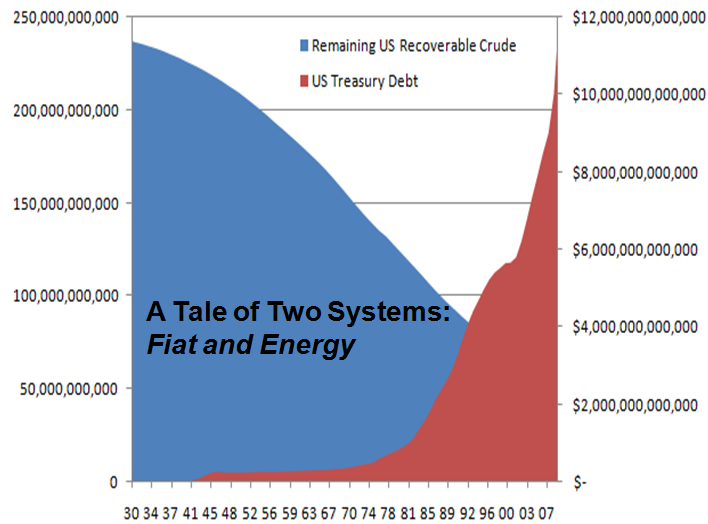
US lower 48 remaining recoverable oil** vs. US Treasury Debt

Energy and natural resources are what we have to spend (or to marshal). Money is just a marker for these real assets, and the ever expanding definition of money - now extending to margin, credit, debt, on and off balance sheet derivatives, etc. - has caused an extreme, paradigm changing disconnect between financial assets, and what they were originally designed to represent. We need growth in order to pay back debt and need energy gain ((gross - costs)*scale) in order to grow.

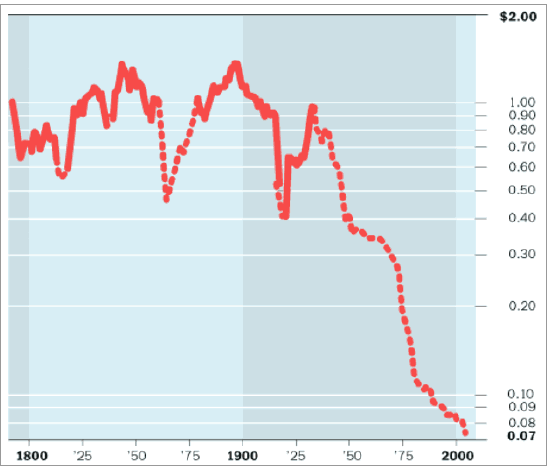
Historical real value of US dollar (American Institute for Economic Research)

Based on historic comparisons - commodities were the ugly stepchild in investment portfolios. As long as energy and resources were cheap, more long term gearing/profits were to be had from the vanilla 'derivatives': stocks and bonds, than from the commodities themselves. But as the world was flooded not only with liquidity in recent decades, but an order of magnitude (or more) increase in notional credit, relaxed oversight rules, relaxed lending standards, higher leverage, etc., these digits have had to find a home. Their doing so culminated in 2007-8 via a dramatic commodity market rall. What really happened in the ensuing 9 months was not a sharp drop in commodity demand, but a global margin call of epic proportions.

The point of this is that oil was not in a speculative bubble, unless you amend that statement to: "oil was one of many instruments in a fiat liquidity bubble, but it was the most important commodity to the global economy so the media paid most attention to it".

As we are mired in a deepening recession,
...
The blame it seems, will again fall on speculators. As we have been writing on these pages for years, oil supply has maxed out, so any stabilization in demand will naturally result in rising prices... In the end the demand for paper natural gas is higher than the demand for real natural gas.

So what does this mean?
Energy, particularly liquid fuel, is the hemoglobin of modern civilization. Price signals based on the marginal unit create long term distortions for utilities and energy policymakers. On the micro level, it is only a matter of time before a highly leveraged, underregulated hedge fund (think Amaranth, Ospraie, but bigger) causes dislocation in energy markets due to their size. On the macro level, depending on which estimates you trust, global notional derivatives are in excess of 1,000 trillion, while global GDP is only $55 trillion (and a decent chunk of that financial, aka questionable). If we accept the peak oil estimates of global remaining recoverable crude oil of around 1 trillion barrels, that equates to $62 trillion using todays closing NYMEX price. This is roughly equal to US treasury total debt (including unfunded Medicare, Social Security liabilities)

We have a monumental problem - a system whose claims on the future are higher than its real assets... We will continue to borrow from all aspects of our socio-ecological system to keep the current paradigm intact (growth at all costs, marginal unit pricing, infinite substitutes, market will solve it, etc). Sooner, rather than later, a plan for re-linking scarce resources to what and how we execute social transactions is going to occur.

I am in favor of an energy based currency and no futures trading at all other than for producers and those taking delivery. But these ideas are so many steps beyond 'regulating oil futures in order to keep prices low' I expect I am wasting my breath.

Read full and join discussion at theOILdrum

bloomberg - “a significant breakdown in the dollar, which will send all the energy prices higher.”


E-wasteland - The growing problem of India

From the boing

“It is vital that we prevent India from becoming the e-waste dustbin for the West”

20 – 50 million tons of electronic waste, known  as “e-waste” is generated annually worldwide. In Europe and the US, an old computer is thrown away, on average, every 2 years. In the US for every new computer bought, an old one is thrown away.

Each year, thousands of tons of old computers, mobile phones, batteries, cables, old cameras and other e-waste are dumped in landfill or burned. Thousands more are shipped, illegally, from Europe, the UK and the USA to India and other developing countries for ‘recycling’.  Some is sent as scrap, some as charity donations.

India has become one of the world’s largest dumping grounds for e--waste. E-waste is highly toxic. It contains lead, cadmium, mercury, tin, gold, copper, PVC and brominated, chlorinated and phosphorus based flame retardants. Many of these heavy metals and contaminants are extremely harmful to humans as well as to animals and plants.

The Basel Convention, of which the UK and India are signatories, bans the transportation of hazardous or toxic waste from the developed world to developing countries.


This illegal toxic trade is, therefore, in direct violation.

E-wasteland: The growing problem of e-waste in India (via riley dog)

Jul 7, 2009

Reissued guidance for safe household pharmaceutical management

MADISON – Pharmaceuticals collected at household pharmaceutical waste collection facilities or events will continue to receive relief from some state regulatory requirements for another two years, under a decision issued by the Department of Natural Resources. This includes those pharmaceuticals collected, confiscated or otherwise taken into possession by law enforcement officials.

In June 2006, the DNR issued an enforcement discretion memorandum that conditionally exempted household pharmaceutical waste from the state’s hazardous waste and solid waste rules. Based on the continued interest and success of pharmaceutical collection efforts across the state, the department decided to renew this exemption. The exemption applies specifically to pharmaceuticals collected at household pharmaceutical waste collection facilities or events, as well as those collected, confiscated or otherwise taken into possession by law enforcement officials.

“Properly disposing of unwanted pharmaceutical waste helps protect public health and the environment,” said Joanie Burns, chief of the DNR Hazardous Waste Prevention and Management Section. “Requiring law enforcement agencies/offices to comply with stringent hazardous waste requirements intended for large or permanent waste collection sites could ultimately discourage household pharmaceutical waste collections.”

Read more from WDNR News

The next new OSHA arrives

From IHSNAfter listening to Labor Secretary Hilda Solis and acting OSHA boss Jordan Barab speak last Monday, June 29th, at the opening day of the American Society of Safety Engineers' (ASSE) annual professional development conference, held in San Antonio, it appears OSHA is in for its most dramatic policy swing in decades.

"We've got a very activist Secretary of Labor and a very activist head of OSHA," said a longtime safety professional after the eventful day.


10 TENETS OF OBAMA'S OSHA


Here are highlights of the new agenda, as laid out by Solis and Barab:

1 - OSHA is back. DOL Secretary Solis and OSHA chief Barab have strong union ties, and are pushing an aggressive OSHA plan that in large part mirrors goals organized labor has promoted for OSHA.

Solis, for instance, spoke of her working class parents in Los Angeles, both union members, "fighting side by side on their shifts to ensure workers came home safe," and instilling in her the value that you "fight for what is right."

2 - More than 150 new inspectors will be hired in fiscal year 2010.

3 - Number of annual inspections will increase from 38,000 nationwide to perhaps 44,000, according to some sources. OSHA has not announced any inspection quota or target.

4 - Penalties will be higher for violations. Consider these six-figure-plus fines proposed since Inauguration Day in January: more than $1.1 million in penalties to Milk Specialties Co. in Whitehall, Wis.; more than $255,000 in fines against a New Hampshire firearms manufacturer; more than $141,000 in fines against Hess Corp.; $105,000 in proposed penalties against an Orlando manufacturer; a Petrolia, Pa., chemical company fined more than $121,000; fall hazards at a Torrington, Conn., site lead to more than $118,000 in penalties; $273,000 in fines against a Jamestown, N.Y., employer for lack of asbestos safeguards; and an El Paso, Texas, construction contractor fined $106,200 for alleged workplace safety violations.

5 - New standards will come out on diacetyl flavoring used for popcorn, combustible dust exposure protection, cranes and derricks, confined space in construction, and rewriting the hazard communication standard to be consistent with new international MSDS laws. This is commonly called the Global Harmonization System (GHS).

6 - Broad, sweeping new standards will come out in 2011 or 2012 on ergonomics and basic requirements for having an overall safety and health program.

7 - Overall, OSHA will be more aggressive with standards and policing / enforcement than in the last 20 years.

8 - The boom years are over for VPP growth. Unions do not like VPP because they argue OSHA's audits of candidate companies to gain entry to VPP program are too weak.

9 - Incentive programs are not favorites of the new OSHA leaders. Again, this reflects union thinking. Unions argue incentive programs lead to workers not reporting injuries in order to win prizes, and a focus on worker behaviors over plant physical conditions.

10 - Recordkeeping and safety in the chemical industry will receive particular scrutiny as the objects for forthcoming OSHA National Emphasis Programs.


"WE'RE BACK"
, said the diminutive Solis, smiling as she stood in a concrete back hallway that exits the Henry B. Gonzalez Convention Center, talking with Barab following a brief press conference that came after her ten-minute speech to about 3,300 ASSE members at the meeting's opening session, held in a cavernous, generic convention ballroom.

"Make no mistake about it," she told the standing room only crowd which lined the hall's walls and had attendees sitting on the floor, "the Department of Labor is back in the enforcement business. We are serious, very serious."


Labor Secretary Solis comes across as the toughest talking DOL head since Elizabeth Dole in the early 1990s took an active interest in OSHA affairs and informed business and the safety profession "the cop is back on the beat."

WILL PROS BUY INTO THE NEW OSHA?

Find out more
from ISHN Special Edition Ezine

Coffee - It's whats for breakfast... and the brain.

Haase - O.K. everyone who knows me understands I have a 'crutch called coffee'... 

I tip back my fare share between 4-6am, but a new study may shed light on why I always find my car keys ;-)


From nextbigfuture

When aged mice bred to develop symptoms of Alzheimer's disease were given caffeine - the equivalent of five cups of coffee a day - their memory impairment was reversed, report University of South Florida researchers at the Florida Alzheimer's Disease Research Center

The just-published Florida ADRC study included 55 mice genetically altered to develop memory problems mimicking Alzheimer's disease as they aged. After behavioral tests confirmed the mice were exhibiting signs of memory impairment at age 18 to 19 months - about age 70 in human years - the researchers gave half the mice caffeine in their drinking water. The other half got plain water. The Alzheimer's mice received the equivalent of five 8-oz. cups of regular coffee a day. That's the same amount of caffeine - 500 milligrams -- as contained in two cups of specialty coffees like Starbucks, or 14 cups of tea, or 20 soft drinks.


At the end of the two-month study, the caffeinated mice performed much better on tests measuring their memory and thinking skills. In fact, their memories were identical to normal aged mice without dementia. The Alzheimer's mice drinking plain water continued to do poorly on the tests.

In addition, the brains of the caffeinated mice showed nearly a 50-percent reduction in levels of beta amyloid, a substance forming the sticky clumps of plaques that are a hallmark of Alzheimer's disease. Other experiments by the same investigators indicate that caffeine appears to restore memory by reducing both enzymes needed to produce beta amyloid. The researchers also suggest that caffeine suppresses inflammatory changes in the brain that lead to an overabundance of beta amyloid.

ALSO link between nitrate levels in environment and food with increased deaths from diseases, including Alzheimer's, diabetes mellitus and Parkinson's.

The study was published in the Journal of Alzheimer's Disease.

The researchers graphed and analyzed mortality rates, and compared them with increasing age for each disease. They then studied United States population growth, annual use and consumption of nitrite-containing fertilizers, annual sales at popular fast food chains, and sales for a major meat processing company, as well as consumption of grain and consumption of watermelon and cantaloupe (the melons were used as a control since they are not typically associated with nitrate or nitrite exposure).

The findings indicate that while nitrogen-containing fertilizer consumption increased by 230 percent between 1955 and 2005, its usage doubled between 1960 and 1980, which just precedes the insulin-resistant epidemics the researchers found. They also found that sales from the fast food chain and the meat processing company increased more than 8-fold from 1970 to 2005, and grain consumption increased 5-fold.


The authors state that the time course of the increased prevalence rates of Alzheimer's, Parkinson's and diabetes cannot be explained on the basis of gene mutations. They instead mirror the classical trends of exposure-related disease. Because nitrosamines produce biochemical changes within cells and tissues, it is conceivable that chronic exposure to low levels of nitrites and nitrosamines through processed foods, water and fertilizers is responsible for the current epidemics of these diseases and the increasing mortality rates associated with them.


De la Monte states, "If this hypothesis is correct, potential solutions include eliminating the use of nitrites and nitrates in food processing, preservation and
agriculture; taking steps to prevent the formation of nitrosamines and employing safe and effective measures to detoxify food and water before human consumption."

Read full from nextbigfuture


WARNING:
Coffee is harmful to the environment,
small woodland animals and people who like to maintain status quo...

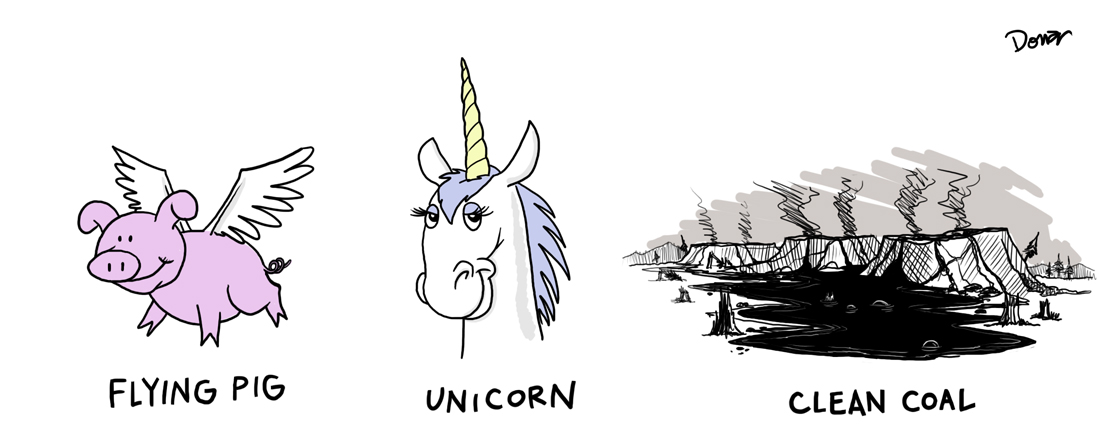
Popular Mythical Creatures


Thanks politicalgraffiti

Massive fire & explosions - we all have bad days and thankful you are here to complain about it.

Haase - A great EHS professional insures bads days are not the death of us.
When you hear of massive explosions, fires, chemical spills and other national incidents on the news ... nearly everyone takes for granted the protection, planning, training and coordination that result in 'no fatalities'.

Out of
these horrible circumstances that result from in many individuals not have a paycheck during rebuilding... we are all proud and thankful you are here to complain about it.

From jsonline - Cudahy residents forced to leave their homes today while firefighters battled a huge fire at the Patrick Cudahy meatpacking plant can sleep in their own beds tonight.

Firefighters have shifted back to an offensive attack but will probably be fighting the fire for at least another 24 hours, officials said this afternoon.

"We are gaining ground, but we still have a ways to go," Cudahy Fire Department Battalion Chief Gary Posda said.

The cause of the fire is not known, but ... may have been fueled at first by cardboard, labels and other paper products kept in the facility's dry storage area, said Dan Habighorst, vice president of human resources at Patrick Cudahy.

Slightly less than half of the facility's 1.4 million square feet appear to have been affected by the fire, Habighorst said.

Fire officials are continuing to monitor air quality near the plant and have not yet determined when Cudahy residents who were evacuated from their homes will be allowed to return, Posda said.

More than 130 firefighters from about 30 departments have responded to the fire so far, Posda said.

Read more updates on story at JSOnline