Nov 12, 2010

WaterWar - World Bank helping corporations seize public water

The World Bank Is Quietly Funding a Massive Corporate Water Grab
Even though water privatization has been a massive failure around the world, the World Bank just quietly gave $139 million to its latest corporate buddy.


Billions have been spent allowing corporations to profit from public water sources even though water privatization has been an epic failure in Latin America, Southeast Asia, North America, Africa and everywhere else it's been tried. But don't tell that to controversial loan-sharks at the World Bank. Last month, its private-sector funding arm International Finance Corporation (IFC) quietly dropped a cool 100 million euros ($139 million US) on Veolia Voda, the Eastern European subsidiary of Veolia, the world's largest private water corporation. Its latest target? Privatization of Eastern Europe's water resources.

"Veolia has made it clear that their business model is based on maximizing profits, not long-term investment," Joby Gelbspan, senior program coordinator for private-sector watchdog Corporate Accountability International, told AlterNet. "Both the World Bank and the transnational water companies like Veolia have clearly acknowledged they don't want to invest in the infrastructure necessary to improve water access in Eastern Europe. That's why this 100 million euro investment in Veolia Voda by the World Bank's private investment arm over the summer is so alarming. It's further evidence that the World Bank remains committed to water privatization, despite all evidence that this approach will not solve the world's water crisis."...painting a not-so-pretty picture: Water privatization is ultimately both a horrific concept and a failed project.

"It's outrageous that the World Bank's IFC would continue to invest in corporate water privatizations when they are failing all over the world," Maude Barlow, chairwoman of Food and Water Watch and the author of Blue Covenant: The Global Water Crisis and the Fight for the Right to Water, told AlterNet. "A similar IFC investment in the Philippines is an unmitigated disaster. Local communities and their governments around the world are canceling their contracts with companies like Veolia because of cost overruns, worker layoffs and substandard service."

"The World Bank has learned nothing from these disasters and continues to be blinded by an outdated ideology that only the unregulated market will solve the world's problems," added Barlow.

Read full at AlterNet

Half the world 90% of it's resources

Nov 11, 2010

Largest Pilot Union Shuns Full-Body Scanners; Radiation Risks

Register: The world's largest independent airline pilot association is warning its members to avoid security screening by full-body scanners out of concern the machines emit dangerous levels of radiation. 
http://www.vosizneias.com/wp-content/uploads/2009/12/body-scanner-at-manchester-airport.jpg

The American Pilots Association, which represents about 12,000 pilots, is recommending members instead submit to new pat-down searches, even though critics have described them as "horribly invasive" and likened them to foreplay. The recommendation is based on concerns that, contrary to claims by the US Transportation Security Administration, the types of X-rays emitted by the machines could pose serious risks that still aren't well understood.

"We are already subjected to larger amounts of radiation by flying long distances at high altitudes," Captain Sam Mayer, who is the APA's communications committee chairman, told The Register. "While the TSA is telling us it's completely safe, that may be true for the occasional user, but we haven't seen any data yet talking about the long term cumulative effects of this over time."

Read full at Register

In honor of our veterans...


Some gave their all and some gave everything to protect our freedom...


Thank you.


Nov 10, 2010

Northeast Assistance and Pollution Prevention News

The fall 2010 special issue of the Northeast Assistance and Pollution Prevention News that focuses on the future of P2 in the northeast is now available HERE (click to download)Pollution  Prevention Resource Exchange

This issue continues the celebration of 20 years of P2 in the region and provides various perspectives on P2 priorities for the next 20 years.

We would appreciate your reactions to the ideas in this Newsletter and your suggestions for P2 priorities in the future. 
 We welcome your comments on this Newsletter and suggestions for improving e-delivery of the content.  

Just email Rachel Smith, rsmith@newmoa.org with your thoughts. 

Smoke up johnny... youth smoking up, funding down

Wall Street Journal  Many cash-strapped U.S. states are slashing budgets for tobacco-prevention programs, raising alarms among public-health groups as the nation's progress toward getting adult smokers to quit has stalled.
 
The adult smoking rate was 20.6% in 2009, the same as a year earlier and largely unchanged since 2004, according to the Centers for Disease Control and Prevention.

That amounted to 46.6 million adult smokers in 2009.HTML clipboard 

Tobacco use is linked to an estimated 443,000 deaths a year in the U.S., making it the nation's leading cause of preventable death, according to the CDC.

States have cut their combined funding for smoking prevention in the current fiscal year to the lowest level since 1999, according to data gathered by a coalition of antismoking groups for a report that will be released later this month.

The $517 million allocated by states for tobacco prevention and cessation in fiscal-year 2011 is down 9.2% from $569 million a year earlier and 28% less than states spent in 2008, according to the Campaign for Tobacco-Free Kids, a Washington advocacy group preparing the report, along with the American Lung Association and others.

The latest amount still exceeds the $300 million spent by states in fiscal 1999, when many programs were getting under way or accelerating their efforts following the landmark Tobacco Master Settlement Agreement in 1998 between 46 states and cigarette companies that was designed to help states recoup the cost of treating sick smokers.

Under the agreement, the tobacco companies were to pay an estimated $246 billion over 25 years to the states, though states are allowed to spend their settlement dollars on needs other than tobacco prevention.

In fiscal 2010, tobacco-settlement revenue amounted to an estimated $8.1 billion for all states.

Public-health experts and tobacco-control groups worry that states' recent spending reductions could further undermine efforts to counter tobacco-industry marketing, persuade smokers to quit and to deter young people from starting.

"There's a risk of a setback," CDC Director Thomas Frieden said of the funding cutbacks. "The data are very clear. The more we invest in tobacco control, the fewer people smoke, and that prevents illness, disability, deaths and healthcare costs."

Read more at Wall Street Journal 

NOTE:  CDC - In 2009, current smoking prevalence was highest in Kentucky (25.6%), West Virginia (25.6%), and Oklahoma (25.5%), and lowest in Utah (9.8%), California (12.9%), and Washington (14.9%) (Table 1)... smoking prevalence was significantly higher among men than among women, and in no state was smoking prevalence significantly higher among women than men.

Healthy People 2010 calls for reductions in adult cigarette smoking to 12% and adult smokeless (spit) tobacco use to 0.4%.¶ This report indicates that states vary substantially in prevalence of cigarette smoking and smokeless tobacco use... and the only state or U.S. territory close to meeting the target for smokeless tobacco use is USVI (0.8%). Neither cigarette nor smokeless tobacco use has declined during the past few years in the United States (3,4), and with the possible exception of cigarette smoking in California, the Health

2010 Business, Environment & Social Responsibility Annual Conference

The WI Sustainable Business Council serves Wisconsin businesses working with sustainable products, services and processes.  The conference is the manifestation of Wisconsin's need for a coordinating group for business in the sustainability area and is the only conference in Wisconsin designed specifically for direct business-to-business sharing of sustainability experiences.  The Wisconsin Sustainable Business Council Conference, as with many other states that have also developed "sustainable business networks" or "sustainable business councils," seeks to create a support group for businesses interested in implementing more sustainable business practices.  Each session delivers take-away lessons and pragmatic tools.

Our goal is to establish Wisconsin not only as a destination for "sustainable businesses", but as a home for businesses from all sectors with an interest in sustainability.HTML clipboard 

Sustainable businesses take full account of the environmental and social consequences of economic activity and use resources that are renewable, replaceable, non-depletionary or regenerative.  By so doing, these businesses reduce waste, improve efficiencies, and increase employee productivity, all of which decrease operating costs and increase margins.

Date: Wednesday, December 8, 2010

Location: Miron Construction, 1471 McMahon Drive, Neenah, WI 54956

Registration

Conference Brochure

Conference Agenda

Contact Us: Sustain@bus.wisc.edu


White House Energy Deals of the week

The Hill - Obama, Singh vow increased clean-energy collaboration
President Obama and Indian Prime Minister Manmohan Singh — meeting in India — have agreed to boost bilateral energy collaboration, the White House announced early Monday.

"Prime Minister Manmohan Singh and President Barack Obama reaffirmed their countries' strong commitment to taking vigorous action to address climate change, ensure mutual energy security, and build a clean energy economy that will drive investment, job creation, and economic growth throughout the 21st century," the White House said in a statement. Here's a summary of the agreement, which focuses on natural gas, energy efficiency in commercial buildings and other areas.


Clinton hopes for progress at Cancun climate meeting, goes solar down under
Over the next three years, Australia and the United States will fund up to 15 additional scholars to work specifically on climate change and clean energy. We hope these clean-tech Fulbright scholars will do work that advances our understanding of climate change, and leads to new commercially-viable solutions," Clinton said.

At a Melbourne press conference Sunday with Prime Minister Julia Gillard, Clinton touted steps the two countries are taking even without a global emissions-cutting deal — including a new joint solar-power-research agreement.

"I am one who believed strongly that we accomplished less than what we should have at Copenhagen, but we did come out with an agreement, and we are committed to working with our partners around the world, particularly the Government of Australia, to ensure that we make progress again at Cancun," Clinton said, referring to last year's Copenhagen U.N. summit that produced only a weak, voluntary agreement.

"And so, rather than just waiting for global agreements, we have decided, between our two governments, to take steps on our own. First, we are launching, as the prime minister said, a new solar energy research collaboration. We have a common goal of making solar energy competitive with conventional sources by the middle of this decade, 2015. The good news is that the price of photovoltaic modules have dropped about 50 percent in the past 3 years. But to meet our goal we have to drive the price down even more," Clinton added.

She warned against reading Obama's admission that cap-and-trade legislation is dead as evidence of a wavering U.S. commitment to battling climate change.

Obama acknowledged after the Democrats took a beating in the midterm elections that cap-and-trade isn't going anywhere on Capitol Hill, but Clinton said the comment wasn't meant to describe "anything other than what is happening inside the United States."

"The president is still very committed to the United States addressing climate change, making investments in clean energy, and we will be looking at a range of options to take, including ... the regulatory route, which we have already been doing in concert with the legislative route," she said.


NY Times A1: Green-power projects scuttled over cost fears

"Even as many politicians, environmentalists and consumers want renewable energy and reduced dependence on fossil fuels, a growing number of projects are being canceled or delayed because governments are unwilling to add even small amounts to consumers' electricity bills," the New York Times reports.

"Deals to buy renewable power have been scuttled or slowed in states including Florida, Idaho and Kentucky as well as Virginia."

Luxury greener than Mercedes hybrid

USA Today Mercedes will be the first of the big luxury-car makers to put such a small engine in its top-line model, according to a report by Bloomberg News. It will try to maintain a semblance of performance for the 2-ton-plus sedan even with a 2.2-liter diesel four-cylinder: The S250 CDI, due at dealers next year, will have a two-stage turbo that is expected to be good for 204 hp., a 149 mph top speed and 0-60 in about 8 seconds.
http://i.usatoday.net/communitymanager/_photos/drive-on/2010/11/09/s%20classx-large.jpg

How green? The diesel's estimate of 41 mpg is greener than the S-Class hybrid

"Green luxury is feasible," Verena Mueller, a Mercedes spokeswoman, told Bloomberg in Stuttgart. "We expect to attract environmentally conscious customers who are seeking the lowest possible CO2 emissions."

Sustainable Growth the ultimate Oxymoron

One of the most unnerving aspects of ... the human psyche to absorb is that it drives home with absolute finality the notion that Earth is finite. I know, that sounds obvious, but people have never behaved as if Earth were finite. They have behaved as if Earth and its resources, the environment itself, were infinite.

Green chemistry and green engineering will obviously play an important role in creating more sustainable manufacturing practices.
They're already having an impact... the assistant administrator in charge of the Environmental Protection Agency's Office of Research & Development and one of the fathers of the green chemistry movement. He said to me, "My vision for the future of the Office of Research & Development includes a recognition that the goal of sustainability is our 'true north,' that scientific and technological innovation is essential to the success of our mission, that we need to couple our excellence in problem assessment with an equal excellence in solving problems, and that we must act with a sense of urgency."


In our interview, however, Anastas also referred to a speech EPA Administrator Lisa P. Jackson had given in early March in which she said,  "It's time to put to rest the notion that economic growth and environmental protection are incompatible. It's time to finally dismiss this false choice."

That's a comforting notion, but it is one that is no longer true. Sustainable economic growth is an oxymoron.

Read more at
American Chemical Society

Anyone in GOV watching our energy problem?

HTML clipboard
  
HTML clipboard

Haase - Please feel free to contact me anytime to fix these problems.
Really: If you are from any sector in our GOV and would like to sit down and review a plan that will save our worlds resources and economies contact me anytime.
If you are investors... get in line ;-)

Solar that Works...simplicity has conquered complexity.

From NBF HTML clipboard

Tony Blair and Vinod Khosla see a big future for Congenra, a solar co-generation (producing both power and heat) company formed just 15 months ago with a scant $10 million of funding. With five times more energy production than photovoltaic technologies, Cogenera's system may help traditional investors discover that the economics of clean energy are quite attractive.

Cogenra has worked with "off the shelf" standard products and a "low-tech" approach. The parabolic solar thermal design doesn't require curved glass, but has layered flat glass panels in a parabolic shape - simplicity has conquered complexity. This drops the capital required to launch Cogenra to a manageable $10 million.

Cogenra Solar's proprietary technology captures up to 80 percent of the sun's delivered energy and produces five times the energy of traditional PV systems. To achieve these dramatic efficiency gains, Cogenra integrates advanced silicon PV cells, concentrating optics with single-axis tracking and an innovative thermal transfer system in a low-cost and scalable design.

* For a standard installation in Fresno, California, with an average number of 194 sunny days per year, the typical payback period is 5 years


Department of Energy Updates This Week


EPA Finalizes Greenhouse Gas Reporting for Petroleum & Natural Gas Industry

The U.S. Environmental Protection Agency (EPA) has finalized greenhouse gas (GHG) reporting requirements for the petroleum and natural gas industries as part of the mandatory reporting program.

The petroleum and natural gas industries emit methane, carbon dioxide and other greenhouse gases, and are one of the largest human related sources of methane in the United States.  Annual methane emissions from intentional venting and equipment leaks from these industries are comparable to annual emissions from more than 40 million passenger cars.

The data collected through the reporting program will provide important information about GHG emissions from petroleum and natural gas facilities. While methane is a potent greenhouse gas, trapping more than 20 times as much heat as carbon dioxide, it is also the primary component of natural gas, a valuable fuel.  The data collected by the companies will help identify cost effective ways to minimize the loss of methane.

Beginning in 2011, petroleum and natural gas facilities that emit more than 25,000 metric tons of carbon dioxide equivalent a year are required to monitor and report all greenhouse gas emissions to EPA. Data collection for petroleum and natural gas sources will begin January 1, 2011, with first annual reports due to EPA March 31, 2012.

EPA's Greenhouse Gas Reporting Program, launched in October 2009, requires the reporting of GHG emissions data from large emission sources and fuel suppliers across a range of industry sectors. The data will help guide the development of programs to reduce greenhouse gas emissions.

Source: Laura B.

Nov 9, 2010

Ten tips to recycle more on America Recycles Day

From Wisconsin DNR - On Nov. 15, celebrate by participating in America Recycles Day. The annual event encourages Americans to waste less, recycle more and purchase recycled products.

In honor of the day, here are 10 ways people can boost the amount of materials they and their family recycle:HTML clipboard

  1. Compost food and yard debris. Suggestions on how to construct and maintain your own bin are on the DNR website.
  2. Remember to reuse. If you have clothing, furniture or other household items you no longer use, consider donating them to a local nonprofit or resale store.
  3. Take time to reacquaint yourself with your community's recycling program. Many communities have expanded the number of materials they collect and simplified the process for you to recycle. See [www.recyclemorewisconsin.org] for a list of recyclables in your community.
  4. Recycle your electronics. E-Cycle Wisconsin, a new program run through the DNR, is making it easier to recycle electronics like TVs, computers, computer accessories.
  5. In addition to standard recyclables, find out what other products your recycling program accepts. Many communities have programs to recycle prescription pills, electronics, and other household hazardous wastes.
  6. In places you visit frequently—grocery store, workplace, gas station and others—ask whether they accept recycling. If not, ask them to put out a recycling bin for customer and employee use.
  7. Recycle construction and demolition debris. Several businesses across the state recycle or reuse shingles, construction lumber, lighting fixtures, drywall, concrete, glass and other construction materials.
  8. Talk to your kids about ways they can recycle at home and at school. Ideas on simple activities to teach kids about recycling can be found on the Wee Recyclers page of the DNR's EEK! Environmental Education for Kids website.
  9. Find businesses in your community that accept materials your local recycling program may not. The Wisconsin Recycling Markets Directory allows you to search by material to find recyclers in your community.
  10. Be a thoughtful shopper. Look for products labeled with a high recycled content or that use "post-consumer" recycled materials, or buy products with minimal packaging or packaging that is easily recyclable.

Recycling is easy, and it makes a difference. More information on America Recycles Day, including a listing of events, is available on the americarecyclesday.org website. The Associated Recyclers of Wisconsin is providing a list of America Recycles Day links and resources. See the AROW website [www.arow-online.org/resources.html]  for more information

Chemicals in Fast Food Wrappers Show Up in Human Blood

Chemicals used to keep grease from leaking through fast food wrappers and microwave popcorn bags are migrating into food and could be harmful.

The specific chemicals studied are polyfluoroalkyl phosphate esters, or PAPs, breakdown products of the perfluorinated carboxylic acids, or PFCAs, which are used in coating the food wrappers.

"We suspected that a major source of human PFCA exposure may be the consumption and metabolism of polyfluoroalkyl phosphate esters, or PAPs," said D'eon, a graduate student in the University of Toronto's Department of Chemistry.

"PAPs are applied as greaseproofing agents to paper food contact packaging such as fast food wrappers and microwave popcorn bags," she explained.

- AlterNet

How New Chemical Regs Will Affect You (Free Webinar)

Best Practices Managing Rapid Chemical Regulatory Changes
The Safe Chemicals Act of 2010, Globally Harmonized System (GHS), Spill Prevention Control and Countermeasures (SPCC) and REACH are just some of upcoming chemical regulatory changes that will have a dramatic affect on your organization.
echalogo1_transparent.gif
With the explosion of new chemicals that have been introduced into the market during the past decade and with minimal environmental, health and safety analysis on these substances, the US, along with many other international governments, are making a concerted effort to regulate chemicals at an unprecedented pace. It is imperative for companies to stay ahead of these regulations and be prepared for significant change. To learn more about the brewing storm of chemical compliance initiatives and how to prepare now, please attend this complimentary 45-minute Web seminar, Managing Rapid Chemical Regulatory Change.

WHAT YOU WILL LEARN:
  • The Catalyst: Explosive New Growth of Chemicals
  • International Pressure, Public Awareness & Corporate Sustainability Regarding Chemicals
  • Brewing Storm of Chemical Compliance Changes
  • Overview of New Chemical Regulatory Initiatives
  • How New Regulations Affect Your Organization and How to Stay Ahead
  • Best Practice Approach: Leveraging Technology and Services to Bridge the Compliance Gap
Register now

LUX: Multi Billion Market Drive for Micro-Hybrids Energy Storage

Micro-hybrid vehicles apply electricity more modestly than their Li-ion battery-driven brethren, but fuel a 57.5% CAGR for energy storage through 2015, says Lux Research.

While makers of grid-connected electric vehicles would be happy with annual sales of tens of thousands of units, micro-hybrid vehicle sales will top three million units this year and rise to 34 million units by mid-decade. This growth spells enormous opportunity for the energy storage technologies that support micro-hybrids. According to the latest report from Lux Research, the energy storage market for micro-hybrids will expand at a CAGR of 57.5% over the next five years, reaching over $2.7 billion in 2015.
http://static.seekingalpha.com/uploads/2009/5/24/saupload_doe_hev.png

The report, titled "Micro-hybrids: On the Road to Hybrid Vehicle Dominance," examines the overall market for micro-hybrids – a term that refers to how extensively the vehicle uses electricity, rather than its size. Unlike conventional hybrid vehicles or plug-in hybrids, which apply energy storage toward propulsion, micro-hybrids apply it more modestly for start-stop and/or regenerative braking applications. Thus, rather than using high-end nickel-metal hydride or lithium-on batteries, they rely instead on more cost-effective energy storage, such as flooded lead-acid (FLA) batteries, enhanced flooded batteries (EFBs), adsorbed glass mat batteries (AGM), and advanced lead-acid systems that often include ultracapacitors.

"We expect that, by the middle of this decade, 37% of the new passenger vehicles sold throughout the world will be micro-hybrids."

In preparing its analysis, Lux Research developed a model to forecast regional markets for three categories of micro-hybrid vehicles and several energy storage technologies through 2015. Among its key observations:
  • Europe's aggressive regulatory environment drives adoption. With the most stringent environmental regulations, Europe will remain at the forefront of micro-hybrid adoption. Sales of 2.8 million units projected for 2010 are on track to grow to 10.5 million by 2015 – representing a CAGR of 30%, by which time micro-hybrids will comprise 64% of European auto sales.
  • Milder fuel efficiency targets in the U.S. cause slower adoption. In the U.S., micro-hybrid sales will grow from virtually zero in 2010 to a respectable 4.6 million units by 2015 – roughly half the penetration that micro-hybrids will see in Europe as a percentage of total vehicles sold.
  • China approaches fuel economy differently. The forecast for China is that its micro-hybrid market will skyrocket from roughly 300,000 units in 2010 to 9.5 million units in 2015. That's a staggering CAGR of 99.8% – representing 48% of the country's passenger vehicle sales in that year.
  • Japan takes the middle road. Micro-hybrid sales in Japan will grow from 300,000 units in 2010 to 3.8 million by 2015, a CAGR of 66.3%. That means that almost two-thirds of Japan's passenger vehicle sales will come from micro-hybrids by mid-decade.

Join Lux Research for a complimentary Power State of the Market webinar, "Micro-hybrids: On the Road to Hybrid Vehicle Dominance," on Tuesday, November 16th at 11:00 am EST.  Register now.

Read more on Fast Track for Hybrid Electric Vehicles (HEVs) from image cred. Seeking Alpha

DOE How Are We Doing on Clean Energy and US Policies? Webinar

Wanna help our nations energy program? Then sign-up!
EnergyBlog
How much of an impact can the government make in pushing forward our country's clean energy future?
Well there's a webinar on just that topic next Wednesday, November 17, at 3pm ET.

Anyone can attend the webinar for free, but you need to RSVP ahead of time in order to get the website and phone log-ins and passwords.

The stars of the webinar will be Elizabeth Doris of the National Renewable Energy Laboratory (NREL) and Jeff Lyng of the Colorado Governor's Energy Office.

It's all part of a "State of the States" webinar series, and there are a bunch of background materials, below, that you can read before or after the call to get up to speed.

Carbon Free natural gas?

Boston -  Imagine a source of energy that is plentiful, produces small amounts of pollutants that contribute to global warming, and can be delivered to homes, businesses, and power plants without new distribution systems.

That source could already be here. A new technology developed by a Canadian company aims to remove carbon from natural gas before it's burned, cutting carbon dioxide emissions by as much as 40 percent and capturing solid carbon — known as carbon black — a substance that can be used in making tires, laser printer toner, and other products.

The firm, Atlantic Hydrogen Inc. of Fredericton, New Brunswick, has formed a partnership with the utility National Grid, which has about 1.2 million customers in Massachusetts and is considering developing a pilot plant in Boston to help prove the technology on a commercial scale. If it works, a National Grid executive said, it could reduce carbon dioxide emissions at a cost that is up to 80 percent less than postcombustion methods that capture greenhouse gases and pump them underground.

"It's not a silver bullet for climate change, but there is no silver bullet for climate change,'' said Stan Blazewicz, National Grid's global head of technology. "It's a way to cut the carbon footprint of natural gas.''

Scale Up Strategy

Analysts expect natural gas to play a large role in the US energy mix as the nation makes the transition to alternative sources of power, such as wind, solar, and fuel cells. Natural gas is not only the cleanest-burning of fossil fuels, which include oil and coal, but also found in abundance in North America. Improved drilling technology has recently unlocked massive new supplies in US shale deposits.

Natural gas prices are projected to rise moderately over the next 25 years, but remain below oil as US gas production increases by 13 percent, according to the Energy Department. Demand will grow, too, with most of it coming from power plants.

Continued at boston.com

Recent Congressional Research Service Reports on Biofuels, Water

Coal Cost May Rise 12% Next Year on Asian Demand

Bloomberg  Coal burned to generate power may jump 12 percent next year on Asian demand for the fuel and supply constraints in producer nations, Deutsche Bank AG said.

"Thermal coal has the potential to be the best performer of the bulk commodities in 2011," Brebner said.

Coal imports by China, the biggest user and producer, jumped 16 percent in September from the previous month, customs data show, the fourth consecutive such increase.

India imports about 67 million tons of coal a year, Coal Minister Sriprakash Jaiswal said on Sept. 24. The country's demand for the fuel may more than triple in the next two decades to 2 billion tons, he said.

Read full at Business Week

How Baby Boomers Will Transform Aging, Work & Retirement

DocuTicker: The MetLife Report on "Early Boomers: How America's Leading Edge Baby Boomers Will Transform Aging, Work & Retirement" contains startling news for the first group of Boomers to enter retirement, and likely those who will follow. It says those born between 1946 and 1955 will transform the American concept of retirement by forgoing the tradition of a leisure-filled life.
http://www.doctorhousingbubble.com/wp-content/uploads/2008/08/9-gdp-and-entitlement-programs.png
Instead, their financial obligations among other things will encourage many of them to remain in the workforce, some indefinitely.
Many Boomers are unable to retire as anticipated, the study says, because they may have debt from putting their children through college, borrowing against their homes and, in many cases, second home ownership.
  • Over the next 10 years aging Early Boomers will cause a 50% rise in the number of people 65 to 74 years old, a growth rate for that cohort not seen in 50 years.
  • It is estimated that at least two-thirds of Early Boomers are grandparents and a rising number are responsible for their grandchildren.
  • The labor force participation rate of Early Boomer men and women is at a 15-year high; trends suggest that it will rise further in the future.
Since they expect to live longer than their predecessors, they fear outliving their savings, and their financial nest eggs have been severely impacted by low interest rates and an uncooperative stock market. Their family finances have also been stretched by the fact that one in four have adult children still living with them. Full Report


Intriguing retirement statistics.
  • One of the 77 million baby boomers reaches 50 every seven seconds. That is around 11,960 people a day and 4 million a year.
  • The age for retirement was set at 65 by Kaiser Willhelm in the late 1800's.
  • In 2001, 77 million Americans were 50 and older (comprising 28% of the population). By 2020 that segment will be 36% of the population.
  • Nearly 6,000 Americans turn 65 every day, that figure will jump to 9,000 as the baby boomers age.
  • Nearly 39 million Americans were 65 or older in year 2009.
  • In 2008, Medicare provided health care coverage for 45 million Americans, making it the largest single health care payer in the nation. Enrollment is expected to reach 78 million by 2030, when the baby boom generation is fully enrolled.
If you would like to review the rest of the article, click here...

Twinkie diet helps nutrition professor lose 27 pounds

CNN - Twinkies. Nutty bars. Powdered donuts.

He intended the trial to last a month as a teaching tool for his class. As he lost weight, Haub continued the diet until he reached a normal body mass index.

Before his Twinkie diet, he tried to eat a healthy diet that included whole grains, dietary fiber, berries and bananas, vegetables and occasional treats like pizza.

"I wish I could say the outcomes are unhealthy. I wish I could say it's healthy. I'm not confident enough in doing that. That frustrates a lot of people. One side says it's irresponsible. It is unhealthy, but the data doesn't say that."

"There seems to be a disconnect between eating healthy and being healthy," Haub said. "It may not be the same. I was eating healthier, but I wasn't healthy. I was eating too much." 

He maintained the same level of moderate physical activity as before going on the diet. (Haub does not have any ties to the snack cake companies.)

To avoid setting a bad example for his kids, Haub ate vegetables in front of his family. Away from the dinner table, he usually unwrapped his meals.

For 10 weeks, Mark Haub, a professor of human nutrition at Kansas State University, ate one of these sugary cakelets every three hours, instead of meals. To add variety in his steady stream of Hostess and Little Debbie snacks, Haub munched on Doritos chips, sugary cereals and Oreos, too.

His premise: That in weight loss, pure calorie counting is what matters most -- not the nutritional value of the food.

The premise held up: On his "convenience store diet," he shed 27 pounds in two months.

For a class project, Haub limited himself to less than 1,800 calories a day. A man of Haub's pre-dieting size usually consumes about 2,600 calories daily. So he followed a basic principle of weight loss: He consumed significantly fewer calories than he burned.

His body mass index went from 28.8, considered overweight, to 24.9, which is normal. He now weighs 174 pounds.

But you might expect other indicators of health would have suffered. Not so.

Haub's "bad" cholesterol, or LDL, dropped 20 percent and his "good" cholesterol, or HDL, increased by 20 percent. He reduced the level of triglycerides, which are a form of fat, by 39 percent.

"That's where the head scratching comes," Haub said. "What does that mean? Does that mean I'm healthier? Or does it mean how we define health from a biology standpoint, that we're missing something?"

Read on at CNN

Nov 8, 2010

Water use hack changes usage

How much water do you use when showering, or washing your hands, or washing the dishes? Not how much does the average person use, but how much to you use?

That's what the team over at Teague Labs set out to find with this water usage feedback system. The sensor used is a Koolance flow meter which is intended to measure coolant flow in PC liquid cooling systems. At $20, it makes a nice low-cost sensor which was paired with a WiFi enabled Arduino. In the image above they're using an iPad as a screen so that you can see how much water you're using (or wasting) as you wash your hands. This resulted in saving 1/2 gallon of water every time someone washed their hands... We've seen a lot of power-meter hacks, but it's nice to have the option to track water usage, even if this is tailored to just one tap at a time. - HackAday

The dogma of Anthropogenic Global Warming (AGW).

In the not too distant future, it will likely be difficult to understand how so many educated people believed in and accepted uncritically for so long a scientifically unproven theory like the so-called Anthropogenic Global Warming (AGW). - Geraldo Luís Lino

Taken almost as a dogma, the AGW has been forcefully imposed by means of a barrage of scare stories and indoctrination that begins in the elementary school textbooks and is volleyed relentlessly upon us by the media and many scientific institutions (including some pseudo-scientific ones), while gullible or opportunistic politicians devise all possible means of inserting climate-motivated items into their power-seeking schemes.

The threat allegedly posed by that supposed world emergency would justify the need of at least halving the human carbon emissions until mid-century, meaning a draconian reduction of the use of fossil fuels worldwide. Despite the drastic potential impact of such measures upon the living standards of all nations, the failure to do so and of establishing a "low-carbon economy," we are told, would usher the environmental apocalypse in. Well, fortunately for Mankind it won't.

However, that avalanche has gone too far. So, it's high time to turn the alarmist page and discard the buzzwords with which the subject has been marketed once and for all: (undeserved) hype, (unmotivated) scare, (unnecessary) restrictions and (unacceptable) sacrifices. In their stead new keywords are needed to put the climatic phenomena into their proper perspective again: proportion, knowledge and resilience.

Let's begin with trying to give the climate theme the right proportion concerning its nature and relationship with Mankind...The environmentalist propaganda machine has ascribed an intrinsically negative and threatening connotation to the expression climate change, as if the climatic oscillations of the last century and a half were something unprecedented and implying that it should be combated at any cost – even if this would hamper the development perspectives of most of the developing countries (and as if Mankind had the necessary knowledge and means to do so).


Real global emergencies
As to the real global emergencies requiring urgent actions on new levels of international attention, cooperation, coordination and funding, there is no shortage of them. For those seriously interested in this business, here are some that do not exist only in supercomputer-run mathematical models and that would benefit very much from fractions of the colossal amounts of money – and human resources – that have been wasted with the non-existent AGW: HTML clipboard
  • The world's most serious environmental troubles, particularly in the developing countries, are those related to the lack of water and sanitation infrastructure, like water pollution and the water-borne diseases that kill a child every 15 seconds in the developing countries, according to the World Health Organization. A 2007 poll conducted by the British Medical Journal among physicians all over the world elected fresh water and sanitation infrastructure as the greatest medical advance of the last 150 years – a "privilege" still unavailable for over 40% of the world's population.  In Brazil, less than half of the population have access to sewage systems and two thirds of the child internments in the public health system are due to water-borne diseases. (I've never seen Al Gore, Hollywood stars or the major environmental NGOs campaigning for sanitation.)
  • Hunger and its consequences kill a child every six seconds, according to the FAO. Almost one billion people all over the world suffer from chronic hunger, a scenario that will surely worsen due to the current speculation-driven price rise affecting some basic staples.  Besides the immoral waste of productive lives, the annual economic cost of such a tragedy in productivity, revenue, investment and consumption losses is estimated in the order of hundreds of billion dollars.
  • The lack of access by much of the world's population to modern energy sources. Dung and firewood, the most primitive fuels known to Mankind, are still the basic resources for the daily needs of most of the Sub-Saharan Africans (besides being major sources of deforestation and respiratory diseases). Although with lower figures, the same happens in much of Asia, Latin America and the Caribbean. And, as over 80% of the world's primary energy needs are provided by coal, oil and natural gas, it's not difficult to ascertain the potential consequences of the intended restriction of their uses, as proposed by many scientists, environmentalists, politicians, carbon traders and all the people terrified by the AGW scare stories. Besides that, thermoelectric plants generate about two thirds of the world's electricity, the rest being almost totally provided by hydroelectric and nuclear plants (also increasingly targeted by the environmentalists).
The list of real troubles is much longer, but these few examples suffice to demonstrate the distortions of the agenda of global discussions, both among the policymakers and the public opinion in general (which, in the case of the climate issues, also reflect a widespread deficiency of scientific education among the educated strata of the societies).

In any case, make no mistake. Barring an unforeseen technological breakthrough, there won't be large scale replacements for the fossil fuels until late this century at least. Massive national and international investments in efficient and integrated multi-modal and urban transportation systems may and should help to reduce the use of automobiles and trucks, particularly in the overcrowded big cities. For power generation, there are the options of harnessing the hydroelectric potential still available, the expansion of nuclear energy and the interlinking of continental and even inter-continental power grids in order to enhance both the energy efficiency and security for all countries involved (forget the current "alternative sources" for large scale uses, they are not technologically and economically feasible for energizing urban and industrial societies). However – and hence –, coal, oil and natural gas will continue to be sources of development and progress for a long time yet – and it is unacceptable that its growing use be hindered by an imaginary threat.

Please read and discuss - Climate Change: The Keywords (Part 1 of 3)

Texas aims to be the anti-California

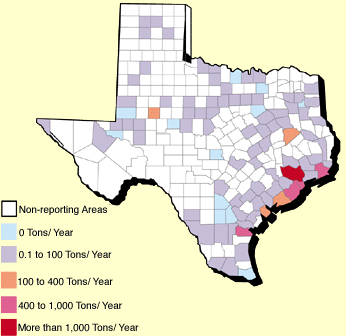
Excerpt from Los Angeles Times "People are tired of the government cooking up new ways to micromanage their lives," he said. "They're tired of the government killing jobs with their do-gooder policies that have nothing to do with science or economics." http://www.texascenter.org/almanac/Air/m.benzene.gif

Texas officials and their allies assert that regulations they consider hasty and onerous would hurt the state's vast economy, which relies on oil refineries, coal-burning power plants and manufacturing.

Those facilities have made Texas the nation's largest emitter of greenhouse gases from power plants, industrial facilities and other so-called stationary sites, according to an Environmental Defense Fund analysis of EPA data. If it were a separate country, Texas would be the seventh-biggest emitter of stationary-site greenhouse gases in the world, according to the environmental group.

Still, Texas is also among the world's largest producers of wind energy, because of a measure adopted when George W. Bush was governor.

On Jan. 2, crucial EPA regulations will kick in limiting greenhouse gas emissions from large industrial facilities. Texas is the only state refusing to enforce the new rules.

"EPA is cramming this down the throats of citizens and the states," said Howard Feldman, director of regulatory and scientific affairs at the American Petroleum Institute, another plaintiff against the EPA. "We see Texas as standing up for normal processes under the Clean Air Act."

...The EPA says it will continue its efforts to scale back greenhouse gases, regardless of Texas' resistance. In an e-mailed statement, the agency said: "The state government in Texas seems to have different priorities right now, but we have not yet given up on our efforts to work with them."

America’s Hidden Diseases

Miller Mccune: Millions of poor Americans living in distressed regions of the country are chronically sick, afflicted by a host of hidden diseases that are not being monitored, diagnosed or treated, researchers say.America's Hidden Diseases

Most of the diseases named in the legislation have not been surveyed in the U.S. for decades, if ever. None are tracked by the U.S. Centers for Disease Control and Prevention, though between 4 million and 10 million Americans could be infected, Hotez said. Drugs are available to treat a number of the neglected diseases, he said, but doctors are not trained to diagnose them.

"These are not even rare diseases," Hotez said. "Yet there's so little research on them, we don't know the full extent of their impact, how they are transmitted, or how they contribute to disability. We do not have good diagnostic methods. We can't even begin to think about controlling these diseases."

The website of the Centers for Disease Control and Prevention lists six "major neglected infections of poverty" in the U.S., all of them parasitic or viral diseases, and notes that they can cause birth defects, epilepsy, hearing loss, infertility, blindness and heart failure. The site says that improved tracking, testing and treatment is needed to reduce illness and death.

...If the Senate passes the new bill, the CDC will conduct a review of existing data on the neglected diseases and try to identify the information gaps, Montgomery said.

According to a report by Families USA, the National Institutes of Health in 2007 accounted for 76 percent of $376 million in U.S. government spending for research on eight globally neglected diseases, including three that afflict hundreds of thousands of Americans — Chagas disease, dengue fever, which can be fatal, and leishmaniasis, a centuries-old disease that produces skin ulcers. Tuberculosis and malaria received nearly three-quarters of the funds. (And the private market sees more opportunity in battling the scourge of baldness.) Overall, the Families USA report said, NIH funding for the eight diseases represented less than 1 percent of the agency's total research budget of $29 billion.

"These are truly neglected problems," he said. "People have these diseases for years, and during this time, they promote poverty. They interfere with child growth and development and, in some cases, impair intelligence and cognition. They affect pregnancy outcomes and are co-factors in the AIDS epidemic."

As reported in Miller Mccune, Hotez has previously challenged both drug makers and policymakers to divert more funding to the neglected diseases of poverty in the developing world.

"They have no advocacy," he said. "It's been very frustrating."

Read full at Miller Mccune

Nov 7, 2010

Al Gore’s Chicago Climate Exchange dying a quiet death

Global warming-inspired cap and trade has been one of the most stridently debated public policy controversies of the past 15 years. But it is dying a quiet death. In a little reported move, the Chicago Climate Exchange (CCX) announced on Oct. 21 that it will be ending carbon trading — the only purpose for which it was founded — this year. HTML clipboard

Although the trading in carbon emissions credits was voluntary, the CCX was intended to be the hub of the mandatory carbon trading established by a cap-and-trade law, like the Waxman-Markey scheme passed by the House in June 2009. At its founding in November 2000, it was estimated that the size of CCX's carbon trading market could reach $500 billion. That estimate ballooned over the years to $10 trillion. Al Capone tried to use Prohibition to muscle in on a piece of all the action in Chicago. The CCX's backers wanted to use a new prohibition on carbon emissions to muscle in on a piece of, quite literally, all the action in the world.

The CCX was the brainchild of Northwestern University business professor Richard Sandor, who used $1.1 million in grants from the Chicago-based left-wing Joyce Foundation to launch the CCX. For his efforts, Time named Sandor as one of its Heroes of the Planet in 2002 and one of its Heroes of the Environment in 2007. The CCX seemed to have a lock on success. Not only was a young Barack Obama a board member of the Joyce Foundation that funded the fledgling CCX, but over the years it attracted such big name climate investors as Goldman Sachs and Al Gore's Generation Investment Management. But a funny thing happened on the way to the CCX's highly anticipated looting of taxpayers and consumers — cap-and-trade imploded following its high water mark of the House passage of the Waxman-Markey bill.

With ongoing economic recession, Climategate, and the tea party movement, what once seemed like a certainty became anything but. (...) Incredibly (but not surprisingly), although thousands of news articles have been published about CCX by the lamestream media over the years, a Nexis search conducted a week after CCX's announcement revealed no news articles published about its demise. Outside of a report in Crain's Chicago Business and a soft-pedaled article in a small trade publication, the media has entirely ignored the demise of the only U.S. effort at carbon trading. Even Glenn Beck, who has dedicated quite a bit of Fox News airtime to exposing the CCX, has yet to mention the news.
Read full from source


The coming nuclear financial disaster

With asset leverage able to surpass 250 times the nominal value of an underlying security, the ballooning of paper assets due to the Nuclear Renaissance can quite quickly make the US subprime asset balloon seem rather small beer.

The coming nuclear financial disaster in fact has many previous models. These stretch back to "classic" stock exchange panics and asset inflation surges of the 19th and 20th centuries, and to the first nuclear asset boom of about 1974-1983. In particular, the US subprime crisis will provide a model by it size, economic damage and international impact.

...The mechanism of the coming nuclear asset boom-bust, or nuclear financial crisis, is easy to describe: investment in productive assets, such as housing or nuclear power plants, becomes a conservative inflation hedge as well as a productive asset, before finally "mutating" into a purely speculative gaming chip or token.


During this process, the inflation rate of asset prices, and related or supporting assets (for example housebuilding materials for realty, and uranium for reactors), increases very fast. Towards the end of the process, the inflation rate is extreme.

The time needed for the shift from one category to the next can be limited - only a few years as in the US and European "railroad booms and slumps" of 1873 and 1893, or the "copper panics" of 1893 and 1907. In these "classic crises", the borderline between rational investment in productive assets (railroads and copper mines), and an inflation hedge, and finally an outright speculative play, was compressed into a period of as little as 3 to 5 years.

During this critical mutation period, as in any financial crisis, public authorities and so-called experts will reassure speculators the underlying assets are sound and even "undervalued" when marked to market.

..Reactor building costs and forecasts, since about 2005, have radically increased, with the current annual inflation rate probably how standing at about 25 percent.

In a 2010 report published by the University of Vermont Law School on reactor costs and nuclear economics, its author Dr. Mark Cooper said:
We are literally seeing nuclear reactor history repeat itself. The 'Great Bandwagon Market' (of the) 1970s and 1980s was driven by advocates who confused hope and hype with reality. .... in the few short years since the so-called 'Nuclear Renaissance' began there has been a four-fold increase in projected costs. In both time periods, the original low-ball estimates were promotional, not practical; they were based on hope and hype intended to promote the industry.

Read more at the source (large post warning ;-)


NOTE: Haase - I want to be wrong about this.

The reality and the gravity of the situation is dire... regardless if you 'perceive' nuclear energy as the carbon neutral messiah or support the current 'Nuclear Renaissance', at the rate that current energy plants are required to be decommissioned (due to safe working lifespan) we will be shutting down more facilities in the next decade faster than we could theoretically build them. - Unless we make reckless safety or epic cost choices, these plants and their 'thirty year old radioactive waste' will continue to plague the heart our nations energy future.