Nov 21, 2012

US paid $454 billion in interest payments alone in 2011. Equity in real estate for households cut in half.

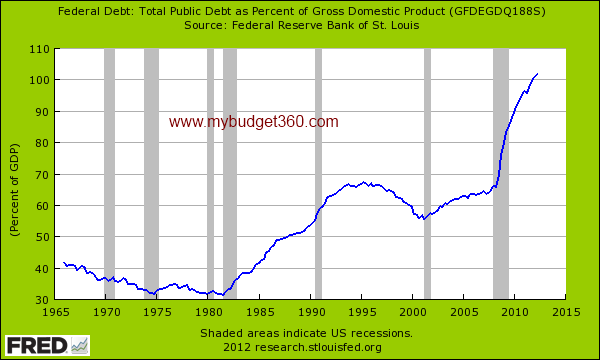
...Too much debt is never a good solution to fixing an ailing economy.  The allure is easy and it is understandable why countries would embark on this easy path.  Yet reverting back to a more normal balance is rarely that easy.  Recently our total public debt surpassed annual GDP:

debt held as percent of gdp

Clearly this is the worst recession since the Great Depression.  On the back-end, the bailout mechanisms are still fully in place.  When you have solvency issues adding more debt simply pushes out the pain deeper into the future.  The Federal Reserve with Quantitative Easingsold it as a way for US households to get easier access to cheap money.  But if we look at interest payments we begin to realize what is going on...


Please continue reading at:

http://www.mybudget360.com/quantitative-easing-money-debt-foreign-debt-real-estate-equity-us-households-interest-rates/

Making steam without boiling water, can build portable, compact steam generator with only on sunlight for input

It is possible to create steam within seconds by focusing sunlight on nanoparticles mixed into water, according to new research.

That observation, reported Monday by scientists at Rice University in Texas, suggests myriad applications in places that lack electricity or burnable fuels. A sun-powered boiler could desalinate sea water, distill alcohol, sterilize medical equipment and perform other useful tasks.

“We can build a portable, compact steam generator that depends only on sunlight for input. It is something that could really be good in remote or resource-limited locations,” said Naomi J. Halas, an engineer and physicist at Rice who ran the experiment.

Whether the rig she and her colleagues describe would work on an industrial scale is unknown. If it does, it could mark an advance for solar-powered energy more generally.

“We will see how far it can ultimately go. There are certainly places and situations where it would be valuable to generate steam,” said Paul S. Weiss, editor of the American Chemical Society’s journal ACS Nano, which published the paper online in advance of the journal’s December print publication.

Please continue reading at:

Caldicott in Japan: “Incredibly rare” thyroid abnormalities found in 40% of Fukushima children — Indicates a really high dose of radiation, higher than at Chernobyl (VIDEO)

Helen Caldicott, Energy News: [The health survey of children in Fukushima Prefecture] found 40% have thyroid abnormalities, which is incredibly rare in pediatrics. 

Some of these children almost certainly are bound to develop cancer of the thyroid. And indeed one 12 year old boy has already been diagnosed with it. And a girl aged about 16 may have already developed cancer. They are testing her now. 

It took 5 years for the children around Chernobyl to develop cancer. These children are showing symptoms and signs that they may well develop cancer in the future, indicating that they got a really high dose of radiation, higher than at Chernobyl....

I predict we’ll see an epidemic of leukemia and cancer and congenital malformations in this exposed population over the next 70 years or longer. 

Please read full and follow at:

Great U.S. Drought of 2012 to Last Into Spring of 2013

Weather Underground : Beneficial rains over portions of the Central U.S. during the past week put a slight dent in the nation's worst drought since 1954. According to the latest U.S. Drought Monitor, the amount of the contiguous U.S. in moderate to extreme drought declined last week to 59%, down from the 65% peak of September 25, 2012. However, the intense drought is likely to persist through the winter, and its already heavily impacting the Winter Wheat growing season, which began in October. NOAA's latest State of the Drought product advised that the Palmer Drought Severity Index (PDSI) for the Primary Hard Red Winter Wheat area reached the lowest value since the 1950s in October. The persistent drought is also a major problem for Mississippi River navigation. According to a November 17 AP story, the Mississippi is so low that if it drops another five feet, barge traffic may shut down from St. Louis to the confluence of the Ohio River at Cairo, IL. The Army Corps of Engineers plans to lower the level of the Mississippi by 2 - 3 feet over the next few weeks, due to the need to conserve water in the upper Missouri River basin. The latest two-week forecast from the GFS model predicts very little in the way of precipitation over the nation's drought-stricken region over the next ten days, which is good for holiday travel, but will worsen the drought. 

Please continue reading at Dr. Jeff Masters' WunderBlog : 

Women who work in bars, factories and casinos face 'higher risk of cancer.'

Women working in manufacturing industries - as well as bars and casinos - face a higher risk of breast cancer, warn researchers. Some have double the normal risk of developing the disease, probably due to higher exposure to cancer-causing chemicals.

Please continue reading at:

Antibiotics in pregnancy tied to asthma in kids.

Children whose mothers took antibiotics while they were pregnant were slightly more likely than other kids to develop asthma, according to a new Danish study.

Please continue reading at:

3,300 gas leaks are found in Boston.

Natural gas is escaping from more than 3,300 leaks in ­Boston’s underground pipelines, according to a new ­Boston University study that underscores the explosion risk and environmental damage from aging infrastructure ­under city sidewalks and streets.

Please continue reading at:

Nov 20, 2012

Economic & housing market headshot | New 3.8% Tax on Sale of Real Estate Effective January 1, 2013

Michael Best & Friedrich LLP - We have been hearing frantic rumors for months about a new 3.8% sales tax or federal transfer tax on real estate. Now that the dust has settled on the presidential election, and a sudden change to existing law is unlikely, we need to deal with the law, adopted in 2010, which will be in effect very shortly.

There is a new 3.8% tax effective January 1, 2013, but it is not a sales tax, not a transfer tax, and it does not target only real estate. This tax, imbedded in the Patient Protection and Affordable Care Act, is actually a Medicare tax. Medicare and Social Security Taxes have always been paid on wages, some by each the employer and employee. However, until now, sales of appreciated property, including real estate, have been subject to capital gains tax but not Medicare or Social Security Tax.

This new provision imposes a 3.8% tax on investment income, including capital gains, dividends, interest income and net rental income, on those taxpayers who have adjusted gross income in excess of $200,000 for individual filers and $250,000 for joint filers. Importantly, the tax is only imposed on the lesser of (i) the investment income or (ii) the amount by which the income exceeds the $200,000 or $250,000 adjusted gross income thresholds. For example, if a single individual has adjusted gross income of $210,000, of which $50,000 is investment income, the 3.8% tax will be imposed on $10,000, that is, only the amount above $200,000, and not on the full $50,000 of investment income. As indicated above, capital gain from the sale of investment real estate is included within the definition of investment income. However, the current exclusion for gain on the sale of principal residences, $250,000 for individual filers and $500,000 for married filers, will continue to be applicable so that only gain above those amounts will be included as investment income.

Please read full and follow at:

Please Help Get PPE & Other #Safety Supplies to People Working in the Wake of Hurricane Sandy via@ASSE_Safety

@ASSE_Safety - At the personal request of OSHA Assistant Secretary David Michaels, ASSE, NSC and AIHA were asked to reach out to companies and others willing to donate PPE and other supplies to aid in OSHA’s efforts to protect workers and others in the areas affected by Hurricane Sandy.  That need is acute.  Talking to ASSE members personally affected by this tragedy, it is much worse and much more dangerous than the news can convey.  People in that region need your help in protecting themselves as they try to fix their homes and their lives.


Below is information on what is needed and who to contact.  Please, reach out to your suppliers or maybe your employer to see what you can do to help.  ASSE members are already on the ground trying to protect people. 


Please back them up. 

The American Society of Safety Engineers and OSHA Seek Personal Protection Equipment (PPE) donations for Hurricane Sandy clean-up and recovery workers.  The PPE needed and contact information for sending donations information is at: http://www.asse.org/en/index.php/press_releases/asse-issues-call-for-help-for-hurricane-sandy-clean-up-workers-volunteers-in-need-of-ppe-2/


AMERICAN SOCIETY OF SAFETY ENGINEERS NEWS ADVISORY
DES PLAINES, IL (November 20, 2012) – As the massive clean-up and recovery efforts following Hurricane Sandy continue on the East Coast, the American Society of Safety Engineers (ASSE) is assisting the U.S. Occupational Safety and Health Administration (OSHA) garner needed personal protection equipment (PPE) through donations to be sent directly to 501c3 organizations in the affected areas or by donating to the ASSE “Sandy PPE Fund”. ASSE members, occupational safety, health and environmental professionals, are also volunteering their time and expertise with the clean-up and recovery, while many have suffered their own damage from the storm.

ASSE is asking companies and organizations if they can donate the following safety equipment:
1.    Safety vests
2.    Gloves (a) cloth, (b) rubber chemical resistant and (c) leather to handle tree branches
3.    Hard Hats
4.    Ear plugs
5.    Knee pads, water proof coveralls and cut resistant chaps
6.    Fire extinguishers
7.    Goggles without vent holes
8.    Electrically insulated watertight boots with steel shank, toe and insole
9.    Disposable N 95 respirators but not elastomer respirators
10.  Bags to contain all of the above

Contact OSHA’s Cathie M. Mannion, assistant regional administrator for technical support, at mannion.cathie@dol.gov or 347-996-2041 for specific donation information and delivery locations. OSHA notes that shipping to the individual organizations directly will speed the distribution to the workers. Also, companies should let ASSE know by contacting dhurns@asse.org or dheidorn@asse.org what donations are being made and where they are being sent to ensure the efforts are coordinated.

To donate funds to go towards purchasing PPE for the Hurricane Sandy clean-up go to the ASSE Foundation web site at  http://www.asse.org/foundation/contribute/donation.php where, after designating the donation amount, one would click Other and in the space next to Other put “Sandy PPE Fund”. One hundred percent of the donation will go to the Hurricane Sandy PPE effort.

“At this point, help is much needed,” ASSE NY City Chapter Past President Peter Amato said.
Growing concerns over 'in the air' transmission of Ebola

BBC News- Canadian scientists have shown that the deadliest form of the ebola virus could be transmitted by air between species.

In experiments, they demonstrated that the virus was transmitted from pigs to monkeys without any direct contact between them.

The researchers say they believe that limited airborne transmission might be contributing to the spread of the disease in some parts of Africa.

They are concerned that pigs might be a natural host for the lethal infection.

"What we suspect is happening is large droplets - they can stay in the air, but not long, they don't go far. But they can be absorbed in the airway” - Dr Gary Kobinger

Details of the research were published in the journal Scientific Reports.

According to the World Health Organization (WHO), the infection gets into humans through close contact with the blood, secretions, organs and other bodily fluids from a number of species including chimpanzees, gorillas and forest antelope.

The fruit bat has long been considered the natural reservoir of the infection. But a growing body of experimental evidence suggests that pigs, both wild and domestic, could be a hidden source of Ebola Zaire - the most deadly form of the virus.

Now, researchers from the Canadian Food Inspection Agency and the country's Public Health Agency have shown that pigs infected with this form of Ebola can pass the disease on to macaques without any direct contact between the species.

In their experiments, the pigs carrying the virus were housed in pens with the monkeys in close proximity but separated by a wire barrier. After eight days, some of the macaques were showing clinical signs typical of ebola and were euthanised.

One possibility is that the monkeys became infected by inhaling large aerosol droplets produced from the respiratory tracts of the pigs.

Please continue reading at:
http://www.bbc.co.uk/news/science-environment-20341423

Fish Poo Power: A Genius Countertop Aquaponics Garden


When Nikhil Arora and Alex Velez launched Back To The Roots (BTTR), their venture growing mushrooms from spent coffee grounds was fueled by the same sort of astonishment you might remember from elementary school, the first time you saw a green sprout emerge from a dirt-filled cup. It was that simple I grew this! feeling that spurred Arora and Velez to proudly show their initial crop to Whole Foods, and eventually build a company that allows just about anyone, by using BTTR’s mushroom kits, to experience the thrill of growing food from what would otherwise have been waste.

Having bootstrapped the young company from an experiment in Velez’s frat-house basement to a brand that now appears at chains like Nordstrom, Whole Foods, Home Depot, and soon, Toys R Us, perhaps the next logical step in the evolution of BTTR is fish poo. 

BTTR is looking to get into the aquaponics business and launched a Kickstarter campaign to fund the $100,000 machine mold and minimum production costs for a table-top aquaponics garden. In their model, fish live in a three gallon tank, excreting waste, which fertilizes the water, which in turn safely feeds herbs and vegetables growing in a garden deck above. All of the nutrients needed for the plants come from the fish, and the plants keep the water clean. It’s a closed loop that provides you with a pet and veggies for lunch.

Much like with their mushroom kits, the aquaponic garden offers a way for people to edge back toward growing their own food. Marc Ecko, CEO of Artists & Instigators is an advisor to BTTR and finds that because we have become so detached from how our food is grown, customers can find something “sublime and magical” in watching mushrooms grow. “It conjures that latent child-like eureka thing that delights us all but we too often repress. That’s the promise of the BTTR brand.” 

In testing their new aquaponic garden and showing it off in classrooms, Arora says they’ve seen kids laugh when the fish do their business, but also learn that waste is an important part of the symbiotic process. It’s a lesson the rest of us could learn from. “You grow up, and you get afraid of it,” Arora adds, “but there’s so much value in waste.” Spoken like a true upcycler.

Please continue reading at: http://www.good.is/posts/fish-poo-power-a-genius-countertop-aquaponics-garden/

Five Reasons Why Urban Farming is the Most Important Movement of our Time

@GOOD- The most important movement of our time. Although there are many other notable initiatives today, the influence of urban farming is uniquely widespread because more people live in cities than rural areas and food is a central necessity that affects everything at once. The seeds of change are already being planted in homes like mine across the world. For these seeds to grow and blossom, we need to demand more local food so that the market for urban-grown produce expands. We also need to put pressure on our legal system to allow easier local trade and more local food production. 


I love suburbia not for what it is, but for what it could be. While most other houses on my street have grass lawns, my yard sprouts zucchinis, tomatoes, pomegranates, kale, spinach, apples, figs, guavas, almonds, garlic, onion, strawberries, and more. Over 500 plant species all in all. We grow more than 3000 pounds of food per year on a plot of land the size of a basketball court—enough fruits and vegetables to feed my family of four year-round. Our house is part of a growing global movement of people involved in urban farming. 

The simple act of planting a garden can shape issues like economics, health, and politics at the same time because food is an essential focal point of human activity. As the urban farming movement grows, here are five ways that it will transform our world


1. Renewed local economies. Local neighbor-to-neighbor commerce generally doesn’t happen in our communities. Residential areas almost never include common spaces where community exchanges might happen. Likewise, because selling homemade bread to your neighbors is illegal in most areas, the law discourages community commerce, and instead encourages you to purchase from the supermarket chain. 

In my own community, the urban farming movement has reinvigorated local commerce. Instead of buying oranges, I now trade pumpkin for oranges from my neighbor’s tree. If urban farming continued to grow, it would cause a massive and positive economic disruption by introducing local food production that would compete with the corporate mainstream on price, quality, convenience, and level of service.

2. Environmental stewardship. Industrial agriculture is a major source of fossil fuel pollution. Petrochemicals are used to fertilize, spray, and preserve food. Plastics made from oil are used to package the food, and gasoline is used to transport food worldwide. Urban farming unplugs us from oil by minimizing the transport footprint and using organic cultivation methods. 

While industrial agriculture often maneuvers to avoid paying for environmental externalities, urban farmers directly bear the ecological costs of their actions. This makes urban farmers better stewards of their land because they draw their nutrition from it. Rather than using chemicals that destroy soil biology, urban farming culture stresses sustainable organic techniques that enrich the topsoil. 

Photos courtesy of Ro Kumar

Please continue reading at: good

Study spotlights high breast cancer risk for plastics workers.

For more than three decades, workers, most of them women, have complained of dreadful conditions in plastic automotive parts factories: Pungent fumes and dust that caused nosebleeds, headaches, nausea and dizziness. Blobs of smelly, smoldering plastic dumped directly onto the floor.

Please continue reading at:

Nov 19, 2012

Ranchers, farmers brace for 'death tax' impact ...rate jumps to a confiscatory 55%.

And you thought the upcoming 39.8% Federal tax rate sounded bad... Did you see this cliff coming? Ranchers, farmers brace for 'death tax' impact. The exemption drops from $3.5 million $1 million, and the rate jumps to a confiscatory 55%.

http://www.foxnews.com/politics/2012/11/16/ranchers-farmers-brace-for-death-tax-impact/

Girl, 14, is America's Top Young Scientist: Her Solar-Powered Jug Cleans Water

A 14-year-old New York student was named “America’s Top Young Scientist” for inventing a solar-powered water jug that changes dirty water into purified drinking water.

Deepika Kurup not only surpassed 9 finalists with her science and math skills to win $25,000 from Discovery Education and 3M, she persuaded the judges with a dynamic five-minute LIVE presentation about the plight of a billion poor people who have no access to clean drinking water.

The cost effective and sustainable water-purification system, which harnesses solar energy to disinfect contaminated water uses her own innovative process designed to overcome current problems with portable purification. Her process can kill many types of bacteria in a fraction of the time of other methods.

Please continue reading at:

A cheaper way to clean wastewater

@SmartPlanet - We create a lot of wastewater in realms as diverse as cities, industrial processes and agricultural work. A promising new solution could make the process of cleaning it up much cheaper and less energy-intensive.

Decanoic acid, when heated, absorbs water but also leaves behind contaminants, which can then easily be skimmed away. Cooling the acid then releases the water, making it easy to reuse.

The biggest test will be to create a process that is cheaper than simply dumping the water, which is the most common method for dealing with wastewater.

Please continue reading at:

Nov 18, 2012

Economy Has Green Shoots From China to US via@nextbigfuture

Business Week - The U.S. and China, the world’s traditional twin sources of growth, are planting seeds to lift the world economy from its midyear slowdown.

Among the green shoots indicating faster expansion: stronger housing demand and hiring in the U.S. and accelerating factory output and retail sales in China. Responsible for a third of the world economy, the two countries are now providing ballast internationally as Europe and Japan stagnate.

“China and the U.S. are both improving, which is extremely good news,” Jim O’Neill, chairman of Goldman Sachs Asset Management, said in a telephone interview. “If we could pretend Europe and Japan didn’t exist, the world would be fine.”


Read more »

A North Dakota Man Reinvents the Tractor: Autonomous Tractor Corporation’s “Spirit”

Big Picture Agriculture: Anderson believes there is a need for autonomous tractors due to the skilled labor force lacking in rural areas. The company is working with a farmer in Brazil who has 1.5 million acres and they can set the farm up using just four control towers. There are many safety features built into their controller system.

To get this tractor into a field, it will follow a pickup or another tractor accurately when put on “follow me” mode. By (secret) design, it will never leave the field that it is assigned to. It can be used to pull a grain cart, or till independently. A two-hundred horsepower drive to power a fan, mower, or auger will be available from the front or back and this tractor will accept common European-style implements. Separate implements can be used in the front and back, such as a combination of seeding with tillage or roller equipment.

Please continue reading at:

Rail Commuters paying $5,832 a year to save on gas? Hikes may require big lifestyle changes

Here we go again. For the sixth time (by my count) in 10 years, the Metropolitan Transportation Authority is seeking to hike its fares. This round will take effect next March with a proposed increase of 9.71 percent that brings the tab for a monthly ticket between Poughkeepsie and Manhattan to $486 and a not-so-grand total of $5,832 a year.

Please continue reading at:

The U.S. has a flat tax (in effect) In 2014, tax rate will rise to 35%.

The Congressional Budget Office has a new study of effective federal marginal tax rates for low and moderate income workers (those below 450 percent of the poverty line).  The study looks at the effects of income taxes, payroll taxes, and SNAP (the program formerly known as Food Stamps).  The bottom line is that the average household now faces an effective marginal tax rate of 30 percent.  In 2014, after various temporary tax provisions have expired and the newly passed health insurance subsidies go into effect, the average effective marginal tax rate will rise to 35 percent.

Please continue reading at:

Green chemistry works to cut pollution

Business Examiner - Continuing their efforts to clean up Puget Sound, a team of South Sound leaders in business, government and the environment is strategizing to reduce toxic contaminants from this region’s waterways. And sometimes, in doing so, they find new business opportunities.

“Fisheries and supporting business are currently being most affected,” said James West, senior research scientist for the state Department of Ecology, and a team leader for the Puget Sound Assessment and Monitoring Program.

Brian Penttila, a chemical/process engineer for the Pacific Northwest Pollution Prevention Resource Center, agreed that, despite the agency’s best efforts so far, Puget Sound waterways aren’t close to being as healthy as they should be.

“Commercial and tribal fishing and shellfish interests are directly impacted by pollution in Puget Sound,” said Penttila, “but all businesses are impacted by the cost of dealing with stricter stormwater regulation and permitting across the state, as well as trends toward tighter contaminated site cleanup and water-quality standards.”

To talk about all this, PPRC gathered industry leaders last month for a Regional Roundtable focused on toxic contaminants in Puget Sound and how they’re affecting both local businesses and the environment.

Besides studying how to reduce key pollutants like copper, participants are also looking at opportunities for creating new products and services. “Green chemistry” — creating better, safer chemicals with more efficiency — is the industry at the top of the list.

As for specific toxic targets, copper is at the top of the hit list for reductions in Puget Sound waters.

Last year, Washington became the first state to ban copper-based bottom paint for boats due to leaching effects. Paint for boat hulls has been a product of particular contention because it traditionally has contained copper as a key component for keeping hard and soft fouling (shellfish and algae) from growing.

“Most of the paints out there are EPA safe, because you have to comply with EPA standards. But I don’t know if there are boat hull paints out there that are copper-free,” said Randy Chase, managing partner for Chase Marine in Tacoma. West Marine, which has stores in Olympia, Fife and Gig Harbor, seems to be ahead in the solutions search for this industry.

Please continue reading at:

Great Lakes utilities downsize workforce with shift from coal

The gradual closure of coal-fired power plants in Great Lakes states has utilities looking at options for workers no longer needed to operate them. New federal rules require the pollution control equipment, switching to cleaner energy sources or shutting down coal plants. In some casest is cheaper to retire the coal plants than retrofit them. Apart from the federal regulations, utility companies are building windfarms and power plants operating on natural gas that are cheaper than coal.

Please continue reading at: greatlakesecho

Nov 17, 2012

ASSE & OSHA Seek PPE Donations for Hurricane Sandy Cleanup

ASSE and OSHA are seeking PPE donations to help with Hurricane Sandy cleanup and recovery. To speed up the process, the organizations ask that donations be sent directly to 501(c)(3) organizations in the affected areas. Also, those donating are asked to let ASSE know by contacting its public relations department at either tstachura@asse.org or cnorgaard@asse.org. Ideas for donations include

Please read full and follow at:

CRS — The United States as a Net Debtor Nation: Overview of the International Investment Position « Full Text Reports…

The United States as a Net Debtor Nation: Overview of the International Investment Position (PDF)

Source: Congressional Research Service (via Federation of American Scientists)

The international investment position of the United States is an annual measure of the assets Americans own abroad and the assets foreigners own in the United States. The net position, or the difference between the two, sometimes is referred to as a measure of U.S. international indebtedness. This designation is not strictly correct, because the net international investment position reveals the difference between the total assets Americans own abroad and the total amount of assets foreigners own in the United States. These assets generate flows of capital into and out of the economy that have important implications for the value of the dollar in international exchange markets. Some Members of Congress and some in the public have expressed concerns about the U.S. net international investment position because of the role foreign investors are playing in U.S. capital markets and the potential for large outflows of income and services payments. Some observers also argue that the U.S. reliance on foreign capital inflows places the economy in a vulnerable position.

Please read full and follow at:

USPS Reports $15.9 Billion Loss, Asks Congress For more handouts via @slashdot

 United States Postal Service has posted a $15.9 billion loss over the past fiscal year, more than three times the amount it lost the previous year."The USPS, which relies on the sale of stamps and other products rather than taxpayer dollars, has been grappling for years with high costs and tumbling mail volumes as consumers communicate more online. In September, the Postal Service hit its $15 billion borrowing limit for the first time in its history. That leaves it with few options if it suffers an unexpected shock, such as a slowdown if lawmakers are unable to prevent the year-end tax increases and spending cuts known as the 'fiscal cliff.' ... Postal officials want Congress to pass legislation that would allow the agency to end Saturday mail delivery and run its own health plan rather than enrolling USPS employees in federal health programs, among other things."
Please read full and follow at:
http://tech.slashdot.org/story/12/11/16/1440224/usps-reports-159-billion-loss-asks-congress-for-help

Empirical Data Confirm Autism Symptoms Related to Aluminum & Acetaminophen Exposure

Abstract: Autism is a condition characterized by impaired cognitive and social skills, associated with compromised immune function. The incidence is alarmingly on the rise, and environmental factors are increasingly suspected to play a role. This paper investigates word frequency patterns in the U.S. CDC Vaccine Adverse Events Reporting System (VAERS) database. Our results provide strong evidence supporting a link between autism and the aluminum in vaccines. A literature review showing toxicity of aluminum in human physiology offers further support. Mentions of autism in VAERS increased steadily at the end of the last century, during a period when mercury was being phased out, while aluminum adjuvant burden was being increased. Using standard log-likelihood ratio techniques, we identify several signs and symptoms that are significantly more prevalent in vaccine reports after 2000, including cellulitis, seizure, depression, fatigue, pain and death, which are also significantly associated with aluminum-containing vaccines. We propose that children with the autism diagnosis are especially vulnerable to toxic metals such as aluminum and mercury due to insufficient serum sulfate and glutathione. A strong correlation between autism and the MMR (Measles, Mumps, Rubella) vaccine is also observed, which may be partially explained via an increased sensitivity to acetaminophen administered to control fever.

Please continue reading at:

New design for wind power promises cheaper, more efficient wind energy.

ENN - A Tunisian invention that harvests wind energy through a design inspired by sailboats promises cheaper, more efficient wind energy.

The bladeless wind turbine, the Saphonian, named after the wind divinity that was worshiped by the ancient Carthaginians, also promises to be more environmentally friendly than existing wind turbines that produce noise and kill birds through their blade rotation.

Instead of rotating blades, the Saphonian's sail-shaped body collects the kinetic energy of the wind, Anis Aouini, the Saphonian's inventor, told SciDev.Net.

He explained that the resulting mechanical energy moves pistons which generate hydraulic pressure that can be stored in a hydraulic accumulator or converted into electricity.

"This is not the first bladeless wind turbine, but we thought outside the box: the initial idea came from sails — the only human system that can capture and convert the bulk of the wind's power into mechanical energy," said Aouini.

An average wind turbine captures only 30 to 40 per cent of the wind's kinetic energy, while the Saphonian can capture up to 80 per cent, according to Aouini.

Please continue reading at:

CBO Factors of Slow Growth of Economy After the Recession - Infographic

CBO -The U.S. economy has grown slowly since the deep recession in 2008 and 2009. In the three years following the recession, the cumulative growth of the nation’s output—real (inflation-adjusted) gross domestic product—was nearly 9 percentage points below the average seen in previous economic recoveries since the end of World War II, or less than half the average growth during those other recoveries.

$150 billion to fund Military Pay & Benefits is more than one-quarter of DoD’s total base budget

For fiscal year 2013, the Department of Defense (DoD) requested about $150 billion to fund the pay and benefits of current and retired members of the military. That amount is more than one-quarter of DoD’s total base budget request (the request for all funding other than for military operations in Afghanistan and related activities).

Please read on from CBO:
http://www.cbo.gov/publication/43574

Our Season of Harvest is a Good Time to Address Hunger Elsewhere | via @GOOD


This photograph was made in South Sudan in the Darfur region in 1997. I was beginning to look at how climate change was effecting fragile ecosystems and the people who live within them.

....Last year I was in New York during the last week of October when they had unprecedented snow, this year, same week, was Hurricane Sandy. Our takeaway has to be change, but on a global level.

Japan has unofficially adopted the Polar Bear, and a national television ad campaign was created that shared the simple message: "Turn off a light, save a Polar Bear." These humble beginnings need to have a ripple effect worldwide. The entire world should be turning off a light, and saving a Polar Bear.

We need to start in our own lives first, then reach out to one another, then reach out to the GOOD community, who then reaches out, leveraging the voice of tens of thousands. How do we create the groundswell of support that President Obama achieved during his viral marketing campaign, and translate that into environmental hope? That is the challenge of our lifetime and the legacy of what we leave behind

Please continue reading at:
http://m.good.is/posts/our-season-of-harvest-is-a-good-time-to-address-hunger-elsewhere/

Will China's new policy silence the voice of their people?

Mass protests in China have quadrupled over the last decade. A new environmental regulation could make it easier for authorities to suppress protesters before they hit the streets.

Please continue reading at:

Move over Petraeus... GOP accuses EPA chief of using secret email.

Republican leaders of the House Science Committee want to know if EPA Administrator Lisa Jackson is using private email addresses or pseudonyms to conduct official business in an effort to dodge public scrutiny.

Please continue reading at:

California judge allows $68bn high-speed rail project to continue to destroy California'seconomy

Associated Press: A judge has denied a request from Central Valley farmers who sought to halt work on California's ambitious high-speed rail project, allowing work on the $68bn project to continue at an aggressive pace. Sacramento County superior court judge Timothy Frawley denied a request for a preliminary injunction, saying that the agency overseeing the project "acted reasonably and in good faith" in trying to comply with California environmental law. Groups representing Central Valley farmers had hoped...

Please continue reading at:

Anyone looking to hire a competent HSE officer within South Africa ?

shina ajayi is looking for employment in the SAFETY,HEALTH AND ENVIRONMENT filed within  South Africa

Please see his full profile and add any assistance or guidance if you have it here:
http://za.linkedin.com/pub/shina-ajayi/54/b9a/72

E.P.A. Upholds Ethanol Standard on Use in Gasoline - very sad in a nation of $46 million poor

New York Times: The Environmental Protection Agency declined on Friday to relax its requirement on the use of corn ethanol in gasoline, rejecting a request from several states related to a steep decline in the nation’s corn production. A summer drought that withered crops led to a spike in prices, hurting the livestock industry and others that depend on corn for food. Estimates indicate that as much as half of the nation’s crop will be used to produce ethanol this year to meet the federal renewable energy standard...

Please continue reading at: