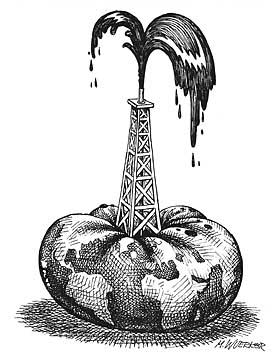
"... India, the dynamics of overpopulation and overconsumption are most acute, where the lifelines between water, food, fuel, and 1.17 billion people—17 percent of humanity subsisting on less than 2.5 percent of the globe's land—are already stretched dangerously thin. India's population is projected to surpass China's by 2030 in a country only a third China's size—adding 400 million citizens between now and 2050. But that's the mid-level projection. A slight uptick in global fertility, and it may be home to a staggering 2 billion people by 2050. Here, before anywhere else on Earth, the challenges of 20th-century family planning will become a 21st-century fight for survival."
May 14, 2010
The Last Taboo... Population.
Fusion update- cheaper discoveries & N.Korea triumphant?
Russia and Italy have entered into an agreement to build a new fusion reactor outside Moscow that could become the first such reactor to achieve ignition, the point where a fusion reaction becomes self-sustaining instead of requiring a constant input of energy.
The design for the reactor, called Ignitor, originated with MIT physics professor Bruno Coppi, who will be the project's principal investigator.
Bruno Coppi was an associate of Dr. Robert Bussard (of Polywell fame) when they worked together on the Riggatron concept [pdf]- National Lab Discovers New Pathway To Commercial Nuclear Fusion Power Prospects for low-cost, clean energy through nuclear fusion just got brighter, thanks to a lucky discovery at Sandia National Laboratories in Albuquerque. A research team led by noted physicist Dr. Franklin Felber has taken a big step towards meeting two of the greatest technological challenges of pulsed power for fusion – current amplification and pulse compression. The team's discovery was published in Physical Review Letters.
Physicists worldwide are striving to develop a nuclear fusion power plant, a project which the International Atomic Energy Agency terms "a great challenge".
But North Korea said it had triumphed using its own technology.
May 13, 2010
DNA Test Kit Will Sell At Walgreens starting in Mid May
Pathway Genomics with have genetic testing kits selling at Walgreens Pharmacy.
Walgreen will start offering the kits in about 6000 stores (It will not be available in New York because of a state law)
* Walgreen plans to offer Pathway's Insight Saliva Collection Kit at retail from $20 to $30. The saliva test, which will be done at Pathway's labs, will cost between $79 and $249. Genetic tests typically cost about $300.
Conditions Included in Your Report
Age-related macular degeneration
Alzheimer's disease, late onset
Amyotrophic lateral sclerosis (sporadic)
Asthma
Atrial fibrillation
Breast cancer (females only)
Colorectal cancer
Coronary artery disease
Diabetes, Type 1
Diabetes, Type 2
Glaucoma
Hypertension
Leukemia, chronic lymphocytic
Lung cancer
Melanoma
Multiple sclerosis
Myocardial infarction
Obesity
Osteoarthritis
Parkinson's disease
Peripheral arterial disease
Prostate cancer (males only)
Psoriasis
Rheumatoid arthritis
Systemic lupus erythematosus
Ulcerative colitis
And many more...
Forty years of WI cleaner air and Clean Air Month
- Sulfur dioxide emissions from electric utilities in the state were 46 percent lower by 1990 after passage of Wisconsin's groundbreaking acid rain law in 1986 and the acidity of precipitation in the state had decreased accordingly.
- All 11 southeastern counties identified as not meeting the federal one-hour standard for ozone levels in 1993 now do meet that standard. The six counties listed as severe nonattainment areas met the one-hour standard two years ahead of the mandated date of 2007.
- A mercury pollutant rule, adopted in 2008 under Gov. Jim Doyle's directive, has the state's four major utilities on track to reduce their mercury emissions by 40 percent by the end of this year. It also requires the large coal-fired power plants to reduce mercury by 90 percent by 2015 or meet that target six years later but also reduce multiple pollutants, including nitrogen oxides and sulfur dioxide.
A prescription for early death...drugged culture
May 12, 2010
US dependence on foreign energy... now more than ever.
* In 1974 with 36.1% of oil from foreign sources, President Richard Nixon said, "At the end of this decade, in the year 1980, the United States will not be dependent on any other country for the energy we need."* In 1975 with 36.1% of oil from foreign sources, President Gerald Ford said, "We must reduce oil imports by one million barrels per day by the end of this year and by two million barrels per day by the end of 1977."
* In 1979 with 40.5% of oil from foreign sources, President Jimmy Carter said, "Beginning this moment, this nation will never use more foreign oil than we did in 1977 – never."
* In 1981 with 43.6% of oil from foreign sources, President Ronald Reagan said, "While conservation is worthy in itself, the best answer is to try to make us independent of outside sources to the greatest extent possible for our energy."
* In 1992 with 47.2% of oil from foreign sources, President George Bush said, "When our administration developed our national energy strategy, three principles guided our policy: reducing our dependence on foreign oil…"
* In 1995 with 49.8% of oil from foreign sources, President Bill Clinton said, "The nation's growing reliance on imports of oil…threatens the nation's security…[we] will continue efforts to…enhance domestic energy production."
* In 2006 with 65.5% of oil from foreign sources, President George W. Bush said, "Breakthroughs…will help us reach another great goal: to replace more than 75 percent of our oil imports from the Middle East by 2025."
* In 2009 with 66.2% of oil from foreign sources, President Barack Obama said, "It will be the policy of my administration to reverse our dependence on foreign oil while building a new energy economy that will create millions of jobs."
But they get an "A" for effort! A history of false starts for US energy independence
BP's Deepwater drilling rig had warning signs
Nuke the Gulf oil leak?
Stephanie Mueller, a spokeswoman for the Energy Department, said that neither Energy Secretary Steven Chu nor anyone else was thinking about a nuclear blast under the gulf. The nuclear option was not — and never had been — on the table, federal officials said.
“It’s crazy,” one senior official said.
Government and private nuclear experts agreed that using a nuclear bomb would be not only risky technically, with unknown and possibly disastrous consequences from radiation, but also unwise geopolitically — it would violate arms treaties that the United States has signed and championed over the decades and do so at a time when President Obama is pushing for global nuclear disarmament.
May 11, 2010
"Oil dispersant treatment toxic effect is double."
"But my concern is that the oil - which is a toxic substance - could have a very negative impact on shrimps, fish, oysters and crabs in the Delta. The development of the young, the juveniles - if exposed to oil - could be very strongly impacted."
Swamps and marshes in the Mississippi Delta provide 40 percent of US seafood production.
Even when there is a lower concentration of toxic products, organs can be damaged.
"If you take a fish, and oil - too much oil - finds its way into his organism, the liver is not able to detoxify the oil anymore," the biologist said. "The same goes for other organs like the brain and the gonads. The development of the young can also be damaged, and that's my main concern."
He noted that dispersants like Corexit used to halt the spread of the oil were also nefarious to sealife.
"Those products don't make the oil go away," Griffitt said. "It just falls to the sea bottom. That's where you'll find the sediments and the larvae. So the toxic effect is double."
Please read full at independent
OSHA Only a Tiny Dent in Huge Health Standard Backlog
The new regulatory agenda for the U.S. Occupational Safety and Health Administration (OSHA) will result in new worker protections against at most a small handful of health hazards by the end of the presidential term, leaving untouched the absence of standards for thousands of chemicals and hundreds of existing standards that are much weaker than needed to protect workers, according to Public Employees for Environmental Responsibility (PEER). While OSHA is beginning some new initiatives, it is also pushing back the deadlines for completing some ongoing health standards.
Published in the Federal Register on April 26, 2010, the OSHA regulatory agenda lays out what new rules the agency expects to finalize and under what schedule. The agenda does outline a new initiative on infectious disease control for health workers and begins a long process for issuing an omnibus "injury and illness prevention program standard" (that would, much like the food safety rules industry now operates under, allow each company to write its own plant-specific plans). At the same time, it would extend the rulemaking process for stricter limits on beryllium and silica – a substance whose dangers have been known since the Roman Empire.
This latest semiannual agenda is the third attempt by the Obama administration to lay out its plans. While a contrast from the almost total inaction during the last several years of the Clinton administration and all the Bush years, even if OSHA meets all its new deadlines, it will promulgate at most two or three new health standards by the time of the 2013 Inauguration.
- Look at the OSHA regulatory agenda (PDF)
- Compare the yawning regulatory backlog in exposure limits
- Read David Michael's explanation via web-chat
- See the PEER plan for Putting the "H" Back in OSHA
Cost of Fire up 86% or 2.5% of nations GDP
The National Fire Protection Association (NFPA) released a new report today, Total Cost of Fire in the United States, which finds that in 2007, after adjusting for inflation, the core total cost of fire has increased by 86 percent since 1980.
The complete total cost of fire for 2007 is estimated at $347 billion, making up approximately 2.5 percent of the U.S. gross domestic product (GDP).
The complete total cost of fire is defined as the sum of economic loss (e.g., property damage, business interruption), human loss (e.g., lives lost, medical treatment, pain and suffering), and the cost of provisions to prevent or mitigate the cost of fire (e.g., fire departments, insurance, and fire protection equipment and construction).
Other key findings from the report:
- Although the core total cost of fire increased, the economic loss due to fire decreased by 13 percent since 1980, totaling at $18.6 billion.
- The total cost of direct property damages, reported or unreported, totaled at $16.6 billion. This figure represents 90 percent of the economic loss. The other 10 percent represents indirect losses, such as business interruption.
- Human losses are estimated at $42.5 billion. Full Report
Population degradation of society for VA
"Estimating Impacts of Population Growth on Ecosystem Services for the Community of Albemarle County and Charlottesville, VA," produced by Advocates for Sustainable Albemarle Population, as far is known, is the first such study ever undertaken to examine the effects of a community's projected growth on its ecosystem services, and to suggest projected population sizes at which essential ecosystem services are threatened or impaired.
This research examined the effects of local population increases on a selection of ecosystem services, including water and air related services
Excerpt: "At a 50% increase in population, services within the developing sub-study areas begin to decline markedly. Up to a 125% population increase, degradation of ecosystem services is contained within the developing sub-study areas; as population exceeds this threshold degradation becomes widespread, impacting all of the rural areas. It is important to emphasize that ecosystem degradation occurs unevenly across the study area. While ecosystem services at the level of the entire study area appear to be sustainable up to a 125% population increase due to the continued functioning of the rural areas, this masks the degradation that is occurring in the developing areas.
"The results of this . . . study clearly indicate that if growth continues, planners will have to balance the needs of the human population with local ecosystem health. We note that while careful development can continue in the short term, it clearly cannot be sustained forever without sacrificing important ecosystem services.
Read more from prorevnews
"There was zero sign of humans, but plastic was already there."
The great state- and small country-sized floating plastic garbage patches in the Pacific and Atlantic are gaining publicity, but here's another example. In this video from the Plastic Pollution Coalition, globetrotting surfing legends Chris and Keith Malloy point out that even on the remotest beaches on the planet they've found plastic litter.
VIA TreeHugger
New idea may save H2 & Wind future
The current tech to make H2 is immensely expensive to ever dream of replacing current energy sources... and while finding a cheaper way to make H2 will help its future, cheaper electrolysis could also be an ideal companion to a big wind farm that produces lots of energy at times when it's not otherwise needed. Divert that energy to splitting some water into hydrogen and oxygen and voila, you could have an excellent source of standby energy--just like a big battery--available when energy demands peak but the winds die down.
Next100... a new discovery from Lawrence Berkeley National Laboratory (LBNL) of an effective replacement for platinum as a catalyst for the production of hydrogen from water could be a very big deal indeed. If hydrogen could be produced cheaply enough, it could be used for clean electric power generation or as a transportation fuel. The only byproduct would be water vapor.
A team at LBNL says it has identified a molybdenum compound that works about as well as platinum but costs only one-seventieth as much.
"In addition," said Hemamala Karunadasa, one of the co-discoverers, "our catalyst does not require organic additives, and can operate in neutral water, even if it is dirty, and can operate in sea water, the most abundant source of hydrogen on earth and a natural electrolyte. These qualities make our catalyst ideal for renewable energy and sustainable chemistry."
LBNL scientists aren't the only ones seeking a breakthrough in cheaper catalysts. Other academic scientists have their eyes on cobalt compounds and on ceramic materials that could replace platinum in fuel cells.
Finding a workable and far cheaper catalyst for electroloysis would be a huge achievement but wouldn't revolutionize the energy industry overnight. That's because hydrogen is an energy carrier, like electricity, not an energy source, like the sun or fossil fuels. Even with a good catalyst, hydrogen takes more energy to produce than it delivers back as energy when burned or fed into a fuel cell. Thus the so-called "hydrogen economy" would require major new infrastructure for hydrogen production, gas storage and gas transportation, all of which make it an expensive proposition. - Read full at Next100
Inhabitat - Diapers into Energy Source
May 10, 2010
Green manufacturing shift to China
...China's environmental course will make or break global efforts to coordinate an effective means of controlling greenhouse gas emissions and climate change.Bottom line: it's easy to sound virtuous in a survey. What counts is where you put your money. The world is waiting to see which way China goes.
Further evidence that the center of gravity for green manufacturing may shift to China comes from a new survey by Ernst & Young. Six in ten Chinese respondents said they would consider buying an electric or hybrid vehicle—nearly five times more than those surveyed in the United States, Japan or Western Europe. (Fewer than one in four in the United States say they would consider buying an electric car anytime soon.) Chinese respondents were also much more likely to favor subsidizing local charging stations to make electric vehicles more practical.
Now for a reality check. From Bloomberg comes news today that "Toyota Motor Corp. and Honda Motor Co. dealers in Beijing say they don't have enough sport-utility vehicles in stock to meet demand, while hybrid models are selling at loss-making discounts."Honda sold only 193 hybrid Civics in China last year, making it the company's worst-selling model there, even at one-third off list price. In contrast, Honda has a two-month backorder for its CR-V SUVs.
Quote of the week... Get used to it, baby
Related Quote :Oil Spill Much Worse Than We've Been Told: "Official Estimates for the Flow of Oil ... May be Just a Drop in the Bucket"... lead government official responding to the spill - the commandant of the Coast Guard, Admiral Thad Allen - as stated: If we lost a total well head, it could be 100,000 barrels or more a day.
Feeling Like A Loser? Go Outside For 5 Minutes
The study concluded that 5 minutes in a park was beneficial.
They found that the greatest health changes occurred in the young and the mentally ill, although people of all ages and social groups benefited. The largest positive effect on self-esteem came from a five-minute dose of "green exercise."The most positive effect came from green areas with water, but any park or grassy, green area will do... so if you've got one of those handy, walk around out there for 5 minutes, then come back an tell us if it worked.
Five minutes in the green can boost self esteem [Via Reuters]
May 9, 2010
Happy Mothers Day - Mines #1 ... Yours is 28th
Greece, UK, Spain... then U.S. Dominos
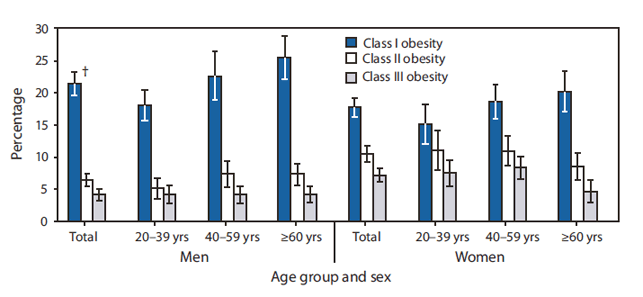
Aging obese generation making any healthcare unsustainable
Anyone else see a correlation?
800 years of oil supply before we run out?
There’s a huge glut of natural gas; witness current low gas prices mainly due to the recent discovery and recovery methods from shale formations and the fact that no one in the industry predicts major upward price adjustments anytime soon.
Peak oil theorists have been wrong at least 10 times since the 1970s. We have, maybe, 800 years of supply before we run out if we find no more reserves, an unlikely possibility.
Solar and wind energy are, so far, so expensive to construct and operate compared to oil, gas, coal, nuclear or hydro-generated power, they’re at least a decade away from general use. To boot, they don’t produce sustainable energy when the sun doesn’t shine or the wind doesn’t blow.
Both wind and solar produce excess energy, which can be stored and traded to public electric grids. Again, storage is expensive to build and maintain, requiring substantial government or electric system subsidies to make the trades viable. While it would be nice, they just aren’t viable for ordinary folks yet. And ordinary folks, unfortunately, pay for those subsidies and trade-offs.
Environmentalists say our oilsands are dirty and want them shutdown — pointing out that current technology produces massive amounts of CO2 and kills ducks that land on tailings ponds. One wonders if the so-called environmental disaster of the oilsands is anywhere near the ongoing catastrophe from BP’s offshore rig in the Gulf of Mexico.
The renewable sectors will refine their technologies too, reducing costs and increasing production consistency.
We won’t run out of oil, gas or coal. Their use will decline as renewables become more viable and cost effective and they become more efficient. So it’s only a matter of time until there’s a new mix of energy sources. We’ll preserve the reserves.
That ought to suit both environmentalists and the dinosaurs.
OIL Stunning Statistic of the Week
- $75 million: The liability cap for BP for the Gulf oil spill, for damages such as lost wages and economic suffering
- $5.6 billion: BP's first-quarter profits, a 135 percent increase over the first quarter of 2009
OIL Quote of the Week Gulf spill will "forever" change drilling-BP exec
Related: Gulf incident prompts policy-change efforts as Obama suspends new Virginia offshore drilling bid
And Shell: We're ready to drill Arctic Ocean while Alaska struggling 21 years after Exxon spillAnd please visit EPA's Web site on BP Oil Spillwww.epa.gov/bpspill
Report - Drinking Water & Watersheds Widely Contaminated by Hormone Disrupting Pesticide, Atrazine
An EPA investigation of the chemical kicked off soon after the report was released and magnified by prominent media coverage, with expert meetings being held all last week in DC. The report authors today released Still Poisoning the Well, which uses updated data and new scientific research to show that the vexing problem continues throughout the Midwest and southern United States.experts say ancient freshwater was created eons ago and trapped underground in huge reservoirs, or aquifers. And like oil, no one knows how much there is—but experts do know that when it's gone, it's gone. "You can apply the economics of mining because you are depleting a finite resource,"
Radioactive water from nuclear power plant reaches major New Jersey aquifer
May 8, 2010
Environmentally caused cancers are "grossly underestimated"
The 240-page report by the President's Cancer Panel is the first to focus on environmental causes of cancer. The panel, created by an act of Congress in 1971, is charged with monitoring the multi-billion-dollar National Cancer Program and reports directly to the President every year.
The President's Cancer Panel: Environmentally caused cancers 'needlessly devastate American lives.' The panel, appointed by President Bush, told President Obama that the federal government is missing the chance to protect people from cancer by reducing their exposure to carcinogens. In its letter, the panel singled out bisphenol A, a chemical used in polycarbonate plastic and can linings that is unregulated in the United States, as well as radon, formaldehyde and benzene.
"We're not going to get any better than this," Clapp said. "This goes farther than what I thought the President's Cancer Panel would go. I'm pleased that they went as far as they did."
Environmental health scientists said they hope the report raises not just the President's awareness of environmental threats, but the public's, since most people are unaware of the dangers.
"This report has stature," Schettler said. "It is a report that goes directly to the president." Environmental Health News
inked VIA GreenChange
System Stores Wind and Solar Power in the Form of Natural Gas, to Fit Neatly Into Existing Infrastructure
The process hopes to create the storage capacity for renewable power sources that they so sorely lack. When the wind is blowing and the sun is shining, excess power is siphoned off and used to split water through electrolysis. But rather than storing the hydrogen gas for use in fuel cells -- technology that, while potentially game-changing, is not widely employed -- a simple chemical reaction between hydrogen and carbon dioxide is used to generate CH4, or a synthetic version of methane.
That methane can be stored in existing natural gas facilities for use when renewable fuel sources are having an off day. Those supplies could also be used as a heat source during cold winters or burn in natural gas powered car engines. The synthetic methane does release carbon emissions into the air, but since the CO2 used to make the synthetic methane is pulled from the atmosphere rather than the ground, the process only returns the carbon it initially pulled out.
And keep in mind this is envisioned as a backup storage system rather than a shift to a natural gas economy. On breezy, sunny days the synthetic methane stays in its tanks and the world turns on carbon-free power. The team has a demo plant up and running in Stuttgart, and a larger double-digit megawatt system is planned by 2012. Read more at Fraunhofer
VW Twincharger may kill hybrids or just help...
With all the focus on hybrids and electric cars, you might assume that the internal combustion (IC) engine was headed for extinction. Yet more than 99 percent of the world's new cars still use one. That includes conventional hybrids, whose batteries and electric motors derive their energy entirely from gasoline. Even those automakers who are most bullish on alternative energy say that the IC engine will remain their primary propulsion system for decades.
Read more at PopSci The Internal Combustion Engine Is Not Dead
Algae Cleans Water, Then Transforms into Organic Fertilizer
The solution offers better management of the cycle of nitrogen and phosphorus nutrients which plants depend on. Experiments have shown that algae can capture 60 to 90 percent of nitrogen and 70 to 100 percent of phosphorus from a mixture of manure and fresh water, as proved by the U.S. Department of Agriculture (USDA) on four dairy farms.
The system is practicable now. Farmers would have to set up algal turf scrubber (ATS) raceways covered with nylon netting to serve as a platform for algae to grow upon. The capture costs of around $5 to $6 per pound of nitrogen and $25 per pound of phosphorus is about the same as other manure-management practices.
But Walter Mulbry, the USDA microbiologist, also showed that corn and cucumber seedlings could thrive on an organic fertilizer made from the dried-out algae. That might allow farmers to recoup even more of the costs from the ATS system, or perhaps turn a profit if the price is right.
Mulbry has already begun another study to see whether fertilizer made from chicken and poultry litter can also benefit from the algae cleanup system. And he has also begun studying whether the ATS systems can remove nitrogen and phosphorus from estuaries that flow into the Chesapeake Bay, so that they could clean up runoff that has already made it into the water system.
Algae's versatility has already won over scientists who see it as the biofuel of the future, and the tiny plant organisms have also been proving their worth in scrubbing carbon dioxide and nitrous gas from industrial smokestacks. A company called Algenol has even looked to using algae-derived plastic as a replacement for petroleum-derived plastic.
More Via PopSci ....Even the U.S. Department of Energy and various branches of the U.S. military have begun seriously exploring algae-derived solutions. If that doesn't entirely ensure a clean future, it at least suggests a future with a scummy color palette ranging from pale to bright green.
Free Energy - simple methane digester
So 'scuse me for mentioning it but Afrigadget's latest story has come up with a neat way of turning chicken sh1t into chicken salad – otherwise known as a DIY methane digester. It reports that "David from Kenya" has made a digester that works mainly on "livestock faeces". It is made from an old oil drum.
The balloon shows that gas is being produced. The costs for the drum and professional valves may already be too high for some, and the design isn't that optimal. They intend to add a storage drum with a water-filled header tank for constant pressure and the loading & desludging processes obviously still require some work.
He shovels the "faeces" in there and the resulting gas is carefully kept under constant pressure so it can be used for cooking or lighting.The trick is the pressure mechanism. When the digester produces methane, a balloon is puffed up. The Digester needs a storage drum and a water-filled header tank to maintain constant pressure through the entire process.
David is also working on the "loading and desludging" process (otherwise known as shovelling s**t) to make his digester more efficient. But you can read all about it here.
VIA OffGrid
For domestic biogas digesters, with floating dome storage tank, see… http://solarcities.blogspot.com/
Epic War and Energy Bill
“Its mother is a scooter. Its father is a car.” –BB1 Concept Car
Peugeot BB1 Concept car is an electric car born from a mix and match of a scooter & a car. Designed to tackle all issues of the modern world faced by people on a daily basis in order to offer maximum versatility…More photos & info after the jump.
Waukesha bypass battle to balance nature and traffic
"They really need the highway to go in," said David Bahl, plant manager at Weldall Mfg. Inc. and a member of the planning group. "But my first concern is doing it without destroying the wetlands."
The project does not have a proposed route, but a conceptual plan from Waukesha County showed the highway passing through the Pebble Creek wetland at the southern end of the study area. Planning panel member Joe Banske said he refuses to sacrifice wetland protection for a road.
A bypass built near Pebble Creek could harm the town of Waukesha's water quality and quantity, said Banske, a town resident and organizer for Bypass the Bypass and Save our Town.
"I'm going to stand very strongly on the absolute protection of the shallow aquifer and the ability for it to regenerate," he said, "because it is the only one that supplies the town, because without it, the town is in great peril.
"That may sound dramatic, but without it, where does the town go for water?"
Please read full at DailyReporter
Bladeless Wind Turbine to Replace Bladed Wind Turbine

The Fuller Wind Turbine that is bladeless wind turbine developed by Solar Aero has been patented by a company in New Hampshire. Fuller Wind Turbine will replace the weakness of bladed wind turbines such as noise, radar interference, visual pollution and wildlife injuries but still produce high efficiency.
Actually the Fuller Wind Turbine is based on a 1913 Tesla patent which modified for wind generation applications. Besides bladeless, the turbine assembly also protected by a house and has only one turbine-driveshaft which rotates. Equipped with inlet and outlet filters, turbine would be safe for wild birds, including bats.
According to the companies, the turbine will be easier in the treatment because using magnetic bearings and its located at ground level, no routine maintenance-tower. The turbine will move as it adjusts to track the wind.
Fuller Wind Turbine would be very suitable for use near military surveillance and radar installations, where moving blades is likely to cause disruption. The turbine is expected to deliver power at a cost comparable to coal-fired power plants or capable to generate electricity up to 10 kW output.