Jul 10, 2017

Wisconsin (@DHSWI) #Art Show Showcases Abilities of DHS Clients, Patients, Residents

The  Wisconsin Department of Health Services Art Show Showcases Abilities of DHS Clients, Patients, Residents!!

Display at Wisconsin State Office Building runs through August 11
In recognition of the creative talents of the clients, patients, and residents served at its seven facilities for individuals living with psychiatric disorders and intellectual disabilities and the therapists who support imaginative expression as a key part of effective care and treatment services, the Wisconsin Department of Health Services (DHS) is sponsoring an art show at the Wisconsin State Office Building, 1 W. Wilson St., Madison, now through August 11.

"Events like this provide an opportunity to see our clients, patients, and residents for their abilities, not their illnesses or disabilities," said DHS Secretary Linda Seemeyer. "I would like to thank all of the artists, and the staff members who assist them, for brightening up the building with these impressive works of art."

View the entire news release.

Despite reductions, the amount of opioids prescribed remains approximately three times as high as in 1999.

 ​​Changes in Opioid Prescribing in the United States, 2006–2015

Key Points
• The amount of opioids prescribed in the United States peaked in 2010 and then decreased each year through 2015. Despite reductions, the amount of opioids prescribed remains approximately three times as high as in 1999.

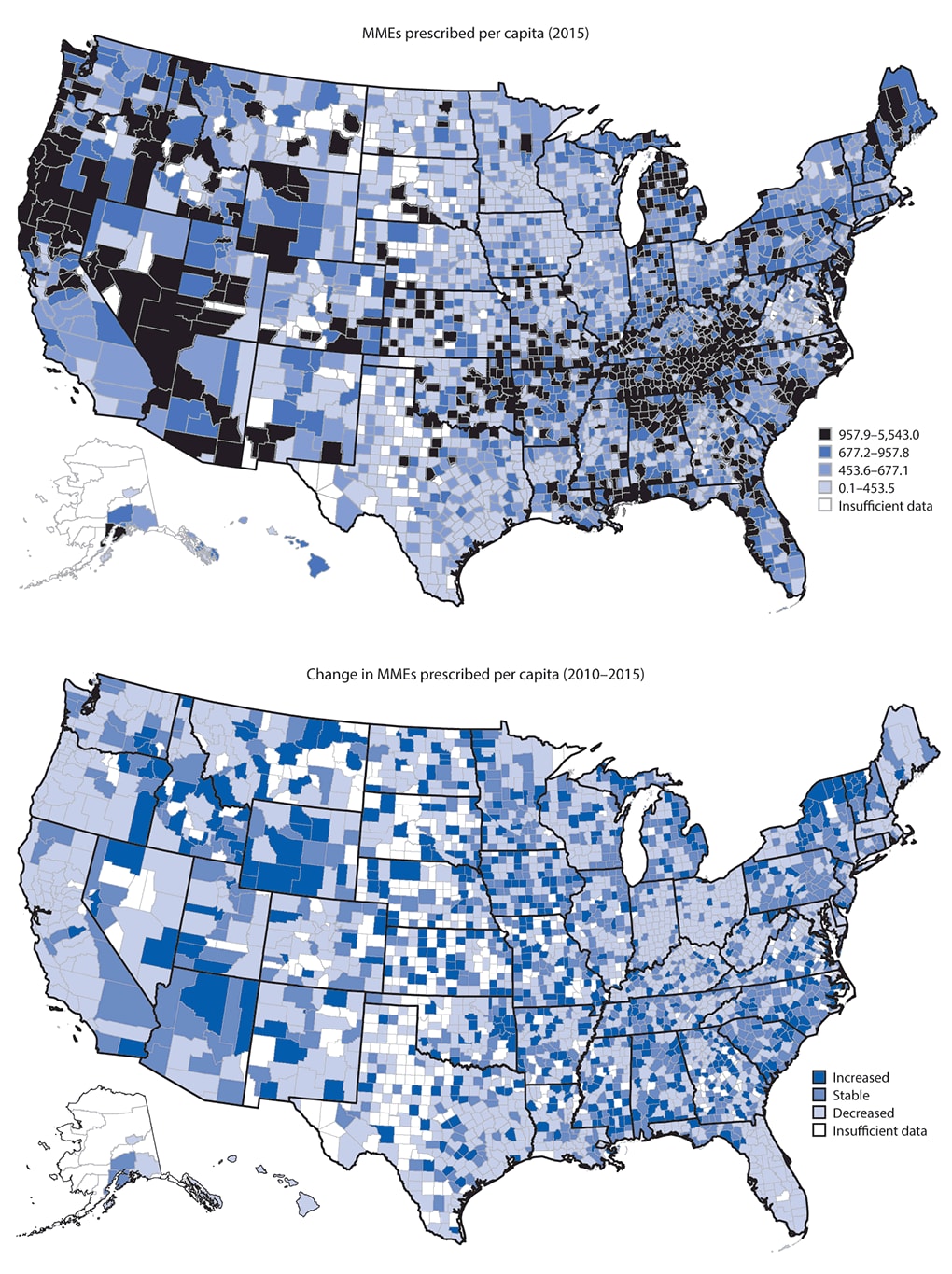
• Opioid prescribing varied substantially across the country, with average per capita amounts prescribed in the top-prescribing counties approximately six times the amounts prescribed in the lowest prescribing counties in 2015.

• Higher amounts of opioids were prescribed in counties with a larger percentage of non-Hispanic whites; a higher prevalence of diabetes and arthritis; micropolitan counties; and counties with higher rates of unemployment and Medicaid enrollment.

• The substantial variation in opioid prescribing observed at the county-level suggests inconsistent practice patterns and a lack of consensus about appropriate opioid use and demonstrates the need for better application of guidance and standards around opioid prescribing practices.

• Health care providers can follow the CDC's Guideline for Prescribing Opioids for Chronic Pain, which provides evidence-based recommendations about opioid prescribing for primary care clinicians treating adult patients with chronic pain, outside of active cancer treatment, palliative care, and end-of-life care.

• Additional information is available at https://www.cdc.gov/vitalsigns/.

Abstract

Background: Prescription opioid–related overdose deaths increased sharply during 1999–2010 in the United States in parallel with increased opioid prescribing. CDC assessed changes in national-level and county-level opioid prescribing during 2006–2015.

Methods: CDC analyzed retail prescription data from QuintilesIMS to assess opioid prescribing in the United States from 2006 to 2015, including rates, amounts, dosages, and durations prescribed. CDC examined county-level prescribing patterns in 2010 and 2015.

Results: The amount of opioids prescribed in the United States peaked at 782 morphine milligram equivalents (MME) per capita in 2010 and then decreased to 640 MME per capita in 2015. Despite significant decreases, the amount of opioids prescribed in 2015 remained approximately three times as high as in 1999 and varied substantially across the country. County-level factors associated with higher amounts of prescribed opioids include a larger percentage of non-Hispanic whites; a higher prevalence of diabetes and arthritis; micropolitan status (i.e., town/city; nonmetro); and higher unemployment and Medicaid enrollment.

Conclusions and Implications for Public Health Practice: Despite reductions in opioid prescribing in some parts of the country, the amount of opioids prescribed remains high relative to 1999 levels and varies substantially at the county-level. Given associations between opioid prescribing, opioid use disorder, and overdose rates, health care providers should carefully weigh the benefits and risks when prescribing opioids outside of end-of-life care, follow evidence-based guidelines, such as CDC's Guideline for Prescribing Opioids for Chronic Pain, and consider nonopioid therapy for chronic pain treatment. State and local jurisdictions can use these findings combined with Prescription Drug Monitoring Program data to identify areas with prescribing patterns that place patients at risk for opioid use disorder and overdose and to target interventions with prescribers based on opioid prescribing guidelines.

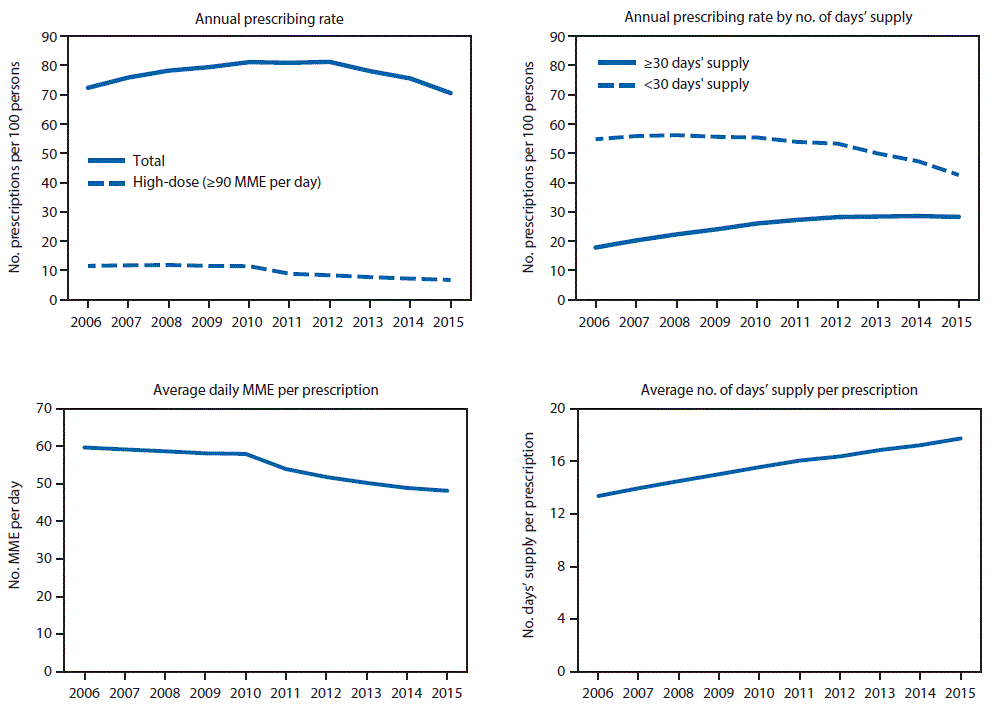
FIGURE 1. Annual opioid prescribing rates, by number of days' supply, average daily morphine milligram equivalent (MME) per prescription, and average number of days' supply per prescription — United States, 2006–2015


​The figure above is a set of four line graphs showing the annual opioid prescribing rates, by number of days' supply, average daily morphine milligram equivalent (MME) per prescription, and average number of days' supply per prescription in the United States during 2006–2015.​

FIGURE 2. Morphine milligram equivalents (MMEs) of opioids prescribed per capita in 2015 and change in MMEs per capita during 2010–2015, by county — United States, 2010–2015


TABLE 1. Percentage of counties with changes* in opioid prescribing — United States, 2010–2015

TABLE 2. Sociodemographic characteristics of counties by MME per capita quartiles* — United States, 2015

​​Tobacco Use in Top-Grossing Movies — United States, 2010–2016


Summary

What is already known about this topic?
The Surgeon General has concluded that there is a causal relationship between depictions of smoking in the movies and the initiation of smoking among young persons. The more frequently youths see smoking on screen, the more likely they are to start smoking; youths who are heavily exposed to onscreen smoking imagery are approximately two to three times more likely to begin smoking than are youths who are less exposed.

What is added by this report?
Previously reported declines in number of top-grossing movies with tobacco use has continued; however, the decline in the total number of tobacco incidents has not progressed since 2010. From 2010 to 2016, the total number of tobacco incidents in top-grossing movies increased, with a 43% increase occurring among movies rated PG-13.

What are the implications for public health practice?

Although there were fewer youth-rated films with tobacco incidents in 2016 than in 2010, total depictions of tobacco use has remained stable, concentrating such exposure in fewer films. Reducing tobacco incidents that appear in youth-related movies would prevent the initiation of tobacco use among young persons. An R rating for movies with tobacco use could potentially reduce the number of teen smokers by 18% and prevent their premature deaths from tobacco-related diseases.

The Surgeon General has concluded that there is a causal relationship between depictions of smoking in the movies and the initiation of smoking among young persons (1). The more youths see smoking on screen, the more likely they are to start smoking; youths who are heavily exposed to onscreen smoking imagery are approximately two to three times as likely to begin smoking as are youths who receive less exposure (1,2). A Healthy People 2020 objective is to reduce the proportion of youths exposed to onscreen tobacco marketing in movies and television (Tobacco Use Objective 18.3) (3). To assess the recent extent of tobacco use imagery in youth-rated movies (G, PG, PG-13*), 2010–2016 data from Thumbs Up! Thumbs Down! (TUTD), a project of Breathe California of Sacramento-Emigrant Trails were analyzed and compared with previous reports.† In 2016, 41% of movies that were among the 10 top-grossing movies in any calendar week included tobacco use, compared with 45% in 2010. Among youth-rated movies, 26% included tobacco use in 2016 (including 35% of PG-13 movies) compared with 31% in 2010 (including 43% of PG-13 movies). The steady decline in the number of tobacco incidents in youth-rated movies from 2005–2010 stopped after 2010. The total number of individual occurrences of tobacco use in a movie (tobacco incidents) in top-grossing movies increased 72%, from 1,824 in 2010 to 3,145 in 2016, with an increase of 43% (from 564 to 809) occurring among PG-13 rated movies. Reducing tobacco use in youth-related movies could help prevent the initiation of tobacco use among young persons.

TUTD counts occurrences of tobacco incidents, defined as the use or implied use of a tobacco product (cigarettes, cigars, pipes, hookah, smokeless tobacco products, and electronic cigarettes) by an actor, in U.S. top-grossing movies each year. Trained monitors count all tobacco incidents in those movies that are among the 10 top-grossing movies in any calendar week of the year. Previous reports have used this criterion because U.S. movies ranked in the 10 top-grossing movies for at least 1 week have accounted for 96% of U.S. ticket sales (4–6). At least two monitors independently evaluate each film; any differences are resolved by a supervisor who independently watches the film using the same protocol. Incidents of implied use have been rare and occur when a person is handed or is holding, but does not necessarily use, a tobacco product. A new incident was counted each time 1) a tobacco product went off screen and then came back on screen; 2) a different actor was shown with a tobacco product; or 3) a scene changed and the new scene contained the use or implied use of a tobacco product.§

To calculate the percentage of movies with tobacco incidents, the number of movies with tobacco incidents was divided by the total number of movies, and the average number of tobacco incidents per movie was calculated for each motion picture company. For each year during 2010–2016, the number of top-grossing movies with tobacco incidents and overall number of tobacco incidents were calculated. Results were also analyzed by Motion Picture Association of America (MPAA) ratings (G, PG, PG-13, R). Findings were also compared with data from reports from 1991–2010 (4,5).

In 2016, among 143 top-grossing movies, 59 (41%) had tobacco incidents, compared with 62 (45%) of 137 in 2010; among top-grossing R-rated movies, 35 (67%) of 52 had tobacco incidents in 2016, compared with 35 (71%) of 49 in 2010 (Table 1). Among youth-rated movies (G, PG, or PG-13), 24 (26%) of 91 had tobacco incidents in 2016, compared with 27 (31%) of 88 in 2010. Overall, from 2010 to 2016, the number of top-grossing movies with tobacco incidents ranged from 58 in 2014 to 76 in 2013 (Table 1).

Although the percentage of top-grossing movies with tobacco incidence decreased during 2010–2016, the total number of tobacco incidents in top-grossing movies increased by 72%, from 1,824 to 3,145 (Table 2). The total number of incidents in G or PG movies decreased by 87% (from 30 to 4), whereas the number in PG-13 movies increased 43% (from 564 to 809), and the number in R-rated movies increased 90% (from 1,230 to 2,332). Compared with previous studies (4,5), smoking incidents had peaked at 3,962 incidents in 2005; the year with the lowest number of recorded smoking incidents (1,613) was 1998 (Figure). During 2010–2016, the lowest number of tobacco incidents (1,743) occurred in 2015; the highest number since 2010 (3,145) occurred in 2016, representing an 80% increase compared with the previous year.

Jul 6, 2017

EPA Releases Materials for Cyanobacterial Bloom Management in Recreational Waters

EPA has released a suite of materials states and communities can use to protect public health during harmful algal bloom (HAB) outbreaks caused by cyanobacteria. Some blooms are capable of producing toxins, called cyanotoxins, which can harm humans and animals, affect drinking water sources and impact local economies. Public health officials and outdoor water recreational managers can use EPA's online resources to develop a cyanotoxin monitoring program, communicate potential health risks to the public, and address HAB outbreaks.

View the Materials.
 

Jul 5, 2017

RMP Final Rule Delayed until February 2019

(PAINT.ORG) On June 12, U.S. Environmental Protection Agency (EPA) Administrator Scott Pruitt signed a final rule delaying the effective date of the Risk Management Program (RMP) final rule amendments until Feb. 19, 2019. Per the agency, the 20-month delay will allow the EPA's new leadership to review two industry petitions for reconsideration and a third petition from 11 states, as well as public comments.

ACA submitted comments to EPA last month in support of the agency's proposed rule to further delay the effective date of the RMP regulation. ACA underscored that during this proposed delay, the existing RMP regulations will remain in place, and noted that the already robust RMP requirements have resulted in a steady decline in reportable accidental releases over the past 20 years. From 2004 to 2013, EPA data show that there were roughly 12,500 facilities subject to RMP. During that 10-year span, 92 percent of these facilities had no RMP reportable accidents. This decline in reportable accidental chemical releases is expected to continue under the existing RMP regulations.

In general, EPA's RMP program applies to all stationary sources with processes that contain more than a threshold of a regulated substance. The program's elements are intended to prevent accidental releases and reduce the severity of releases that occur. All sources must prepare and submit an RMP to EPA at least every five years. In addition, RMP Program 3 facilities involve processes subject to OSHA's Process Safety Management (PSM) Standard or are in one of the specified NAICS codes, such as chemical manufacturing. Together, PSM and RMP form the regulatory framework for prevention of catastrophic chemical accidents at fixed facilities. Several ACA companies have facilities subject to RMP requirements, particularly Program 3 facilities which have the most stringent requirements. ACA's main concern with the RMP proposal is that the proposed changes would not actually enhance chemical facility safety, but would instead create significant administrative burdens and higher compliance costs without commensurate benefits in safety.

On March 29, EPA Administrator Pruitt signed a proposed rule to delay the effective date of RMP final rule amendments to Feb.19, 2019. This action followed a series of prior delays issued by the White House and EPA in January and mid-March. In January, the White House issued a memorandum implementing a freeze on federal regulations pending further administrative review. RMP was one of the regulations subject to the regulatory freeze, and the effective date was subsequently delayed until March 21, 2017. However, on March 16, EPA Administrator Pruitt issued a final rule that provided for a further three-month administrative stay of the effective date until June 19, 2017.

The final RMP rule amendments have encountered extreme resistance since EPA first issued them in mid-January. EPA stated that the amendments made to the final rule were aimed at modernizing RMP by (1) making changes to the accident prevention program requirements, (2) enhancing the emergency response and preparedness requirements, and (3) modifying the information availability requirements. However, numerous industry members and trade associations have continued to push back against implementation of these amendments.

EPA Extends NAAQS Ozone Compliance Date by One Year

(PAINT.ORG) On June 6, U.S. Environmental Protection Agency (EPA) Administrator Scott Pruitt notified governors that states would have an additional year to comply with the National Ambient Air Quality Standards (NAAQS) for ozone promulgated in October 2015. EPA is giving states more time to develop air quality plans, and the agency is looking at providing greater flexibility to states as they develop their plans. Pursuant to the language in the recently enacted FY2017 Omnibus funding bill, Administrator Pruitt is establishing an Ozone Cooperative Compliance Task Force to develop additional flexibilities for states to comply with the ozone standard.

Additionally, EPA said it is taking time to better understand "some lingering, complicated issues so that air attainment decisions can be based on the latest and greatest information. This additional time will also provide the agency time to review the 2015 ozone NAAQS, prior to taking this initial implementation step."

In October 2015, EPA lowered the National Ozone Standard from 0.75 parts per million (ppm) to 0.70 ppm. However, EPA's final rule on the ozone standard is forcing a significant number of states that are currently "in attainment" to "non-attainment" status, triggering a requirement to revise their State Implementation Plans and adopt even stricter volatile organic compound (VOC) emission regulations for coatings. This triggering event is being realized as ozone monitors across the country are demonstrating a marked improvement in air quality under the 2008 standard of 0.75 ppm.

ACA has long advocated for a two-step solution to this problem, most recently in comments submitted to EPA and the Department of Commerce as part of the regulatory reform review mandated by Executive Order 13777, Enforcing the Regulatory Agenda. ACA has suggested that, 1) EPA should revert to the 2008 standard of 0.75 ppm and fully implement this standard so that the forward progress already achieved can be extended without unnecessarily burdening the paint industry with increased standards and costs for many years to come; and 2) EPA should amend the Clean Air Act Regulations to extend the time for review of the ozone standard to every 10 years. Currently the Act requires a review every five (5) years. ACA noted that extending the review of the ozone standard to every 10 years will allow for more stability in the marketplace for formulators while still protecting human health and the environment.

ACA is also taking this message to members of Congress as there are bills in both the House and Senate, S.263 and H.R. 806, that would push back deadlines for Obama-era ozone standards.

In a statement, EPA acknowledged that although the new ozone standard was set on October 1, 2015, there remains a host of complex issues that could undermine associated compliance efforts by states and localities. The agency says it is evaluating these issues, and is

​​
primarily focused on:

  • fully understanding the role of background ozone levels;
  • appropriately accounting for international transport; and
  • timely consideration of exceptional events demonstrations.

Since 1980, total emissions of the six principal air pollutants have dropped by 63 percent, and ozone levels have declined by 33 percent. Despite the continued improvement of air quality, costs associated with compliance of the ozone NAAQS have significantly increased.

​​

OSHA Proposes Compliance Date Delay for Electronically Submitting Injury, Illness Reports

(PAINT.ORG) On June 27, the U.S. Department of Labor's Occupational Safety and Health Administration (OSHA) proposed a delay in the electronic reporting compliance date of the rule, Improve Tracking of Workplace Injuries and Illnesses, from July 1, 2017, to Dec. 1, 2017. OSHA says the proposed delay will allow the agency an opportunity to further review and consider the rule. OSHA is accepting comments on the proposed delay through July 13, 2017.

Additionally, Last December, OSHA released its final rule clarifying an employer's continuing obligation to make and maintain accurate injury and illness records.

The amendments in the final rule didn't add any new compliance obligations or require employers to make records of any injuries or illnesses for which records are not already required. However, the final rule did extend the statute of limitations for which the agency can issue citations for recording, keeping violations to five years and six months, as opposed to just six months that most employers interpreted previously. OSHA maintained that it can cite employers for recordkeeping violations for up to six months after the five-year retention period expires, not just six months after the initial failure to record (first day of occurrence, or injury), without running afoul of the Occupational Safety and Health Act's statute of limitations.

On March 22, the U.S. Senate voted 50-48 to pass H.J. Res. 83 under the Congressional Review Act (CRA), to repeal the U.S. Occupational Safety and Health Administration's (OSHA) "Clarification of Employer's Continuing Obligation to Make and Maintain Accurate Records of Each Recordable Injury and Illness," also known as the "Volks Rule." A related House resolution passed on March 1 by a vote of 231-191. President Trump signed the resolution into law, effectively overturning the rule and barring OSHA from issuing a similar one.

The rule was the result of the AKM LLC v. Secretary of Labor (Volks) decision in 2012, a case decided against OSHA. In that case, the U.S. Court of Appeals for the District of Columbia Circuit ruled that OSHA citations for recordkeeping violations must be issued within six months of the first day of an alleged failure to record the injury or illness; a citation issued after the six-month period is barred. OSHA had subsequently issued its final rule to go against the D.C. Circuit ruling.

OSHA alliance partners commit to better protect worker safety and health

The American Society for Safety Engineers-Arkansas Chapter signed a two-year agreement to provide guidance and training resources that will help protect the health and safety of workers, particularly by reducing exposures to falls, electrocution, and struck-by and caught-in or -between hazards.The OSHA Alliance Program fosters collaborative relationships with groups committed to worker safety and health. Alliance partners help OSHA reach targeted audiences, such as employers and workers in high-hazard industries, and give them better access to workplace safety and health tools and information.

OSHA seeks input for strengthening the Voluntary Protection Programs


OSHA Voluntary Protection Programs

OSHA will hold a stakeholder meeting July 17 in Washington, D.C., to discuss the direction of the agency's Voluntary Protection Programs. OSHA is seeking to reshape VPP so that it continues to represent safety and health excellence, leverages partner resources, further recognizes the successes of long-term participants, and supports smart program growth. The meeting will run 9 a.m. to 5 p.m. in the Frances Perkins Building, U.S. Department of Labor, 200 Constitution Ave., NW, Washington, DC 20210. For more information, including details on how to register by the July 10 deadline, see the news release.

Proposed rule modifies beryllium standards for construction and shipyards sectors

OSHA announced a proposed rule on June 23 that would modify the agency's recent beryllium standards for the construction and shipyard sectors. The proposal provides a new opportunity to comment on the rule for all interested stakeholders. Since the new proposal would make changes to the rule only for the shipyard and construction sectors, the general industry standard remains unaffected by the proposal. The proposal would maintain the requirements for exposure limits and revoke the application of ancillary provisions such as housekeeping and personal protective equipment in the January 2017 final standards for the construction and shipyard industries. For information on submitting comments on the proposed rule and requesting public hearings, see the news release.

Sailors’ $1 billion lawsuit over radiation from Fukushima nuclear disaster sails through federal court

(Todd Barnett ) — A federal appeals court rejected affirmed a district court's rejection of a Japanese power company's motion to dismiss a $1 billion lawsuit brought by American sailors, who were allegedly harmed by radiation exposure during a relief effort following the Fukushima nuclear disaster.

On June 22, a three-judge appellate panel from the U.S. Court of Appeals for the Ninth Circuit unanimously rejected an attempt by the Tokyo Electric Power Company (TEPCO) to secure the dismissal of the class-action lawsuit. The suit was launched by American sailors who allegedly sustained injuries related to radiation exposure from the Fukushima Daiichi Nuclear Power Plant during a relief effort in the wake of an earthquake and tsunami in March 2011. 

The appellate panel affirmed the U.S. District Court for the Southern District of California's rejection of TEPCO's motion to have the suit dismissed on the grounds that U.S. courts lacked jurisdiction to try the case.

TEPCO's initial challenge to U.S. jurisdiction is rooted in its interpretation of the Convention on Supplementary Compensation for Nuclear Damage (CSC), a 1997 international liability agreement concerning nuclear accidents. TEPCO argued that Article XIII of the CSC, which states "jurisdiction over actions concerning nuclear damage from a nuclear incident shall lie only with the courts of the contracting party within which the nuclear incident occurs," invalidates U.S. jurisdiction. The appellate panel affirmed the district court's ruling that the CSC, though signed in 1997, was only valid after it went into effect in April 2015. The sailors launched the lawsuit in December 2012.

TEPCO also challenged U.S. jurisdiction by citing international comity, a legal tradition allowing courts to decline jurisdiction in a court case when a foreign country has a "strong interest" in trying the case on its own soil. The appellate panel rejected this argument, noting that even though Japan had a strong interest in a case involving an incident on Japanese soil, the U.S. had a strong interest in prosecuting the case in the U.S. because the alleged victims were members of the U.S. military, and the U.S. "had a strong interest in maintaining jurisdiction over this [case] in order to help promote the CSC."

TEPCO's final challenge to U.S. jurisdiction was that the case violated U.S. constitutional law because it conflicted with the political question doctrine, which restricts the federal judiciary to deciding legal questions and bars it from deciding political questions. 

The panel also rejected this argument, ruling that at this time the court was "unable to undertake the 'discriminating inquiry' necessary to determine if the case presented a political question because there were outstanding basic factual questions regarding the Navy's operations" during the relief effort. However, the panel noted that TEPCO was free to raise the international comity and political question issues again if information was uncovered providing justifications for those arguments.

The sailors represented in the case were deployed off the coast of Fukushima aboard the U.S.S. Ronald Reagan aircraft carrier on March 12, 2011, during Operation Tomodachi, a U.S. relief response following an earthquake and tsunami that caused massive damage to the region. The carrier was moved two days later, allegedly after radiation was detected. 

The sailors allege they were harmed by radiation exposure because TEPCO leadership and Japanese government officials allegedly conspired to downplay the threat posed by the damaged nuclear reactor.

The sailors launched the lawsuit on Dec. 21, 2012, seeking $10 million in damages each, along with $30 in punitive damages, and a $100 million healthcare fund for future monitoring and medical treatment.

Jun 26, 2017

POWERFUL tool to connect to a wide range of government databases.

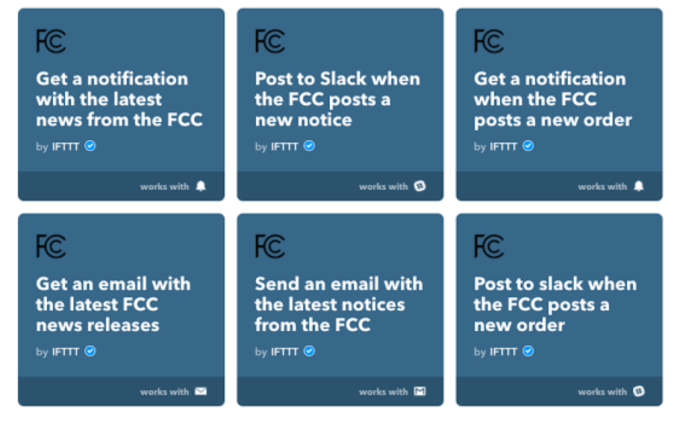
Today, all around cool internet thing IFTTT is hooking all kinds of useful public data into its powerful platform. With the launch of its new Data Access Project, IFTTT will add support for a broad selection of government agencies, organizations and research and cultural groups. That includes public data from federal and state government feeds on down to municipal transit information.

The new data streams have the potential to be all kinds of useful. In practice, that means every time there's a relevant new SEC filing, your Hue lights can flash green (or red, depending). Or you can get a text every time the State Department posts a travel warning. Or a Slack notification each time the Department of Defense posts an update. Or lots of things — infinitely configurable things, really.

Put simply, IFTTT lets you connect things to other things. It does this through easy to set up custom formulas, like "every time @techcrunch tweets, call my phone." These logic statements, all take the form of "if x happens, do y," hence the name If This Then That (IFTTT). IFTTT used to call these formulas Recipes but now they're calling them Applets, which is more confusing in our book but the functionality remains the same.

IFTTT's more than 40 new sources include:

  • Department of Labor
  • Bureau of Economic Analysis
  • Federal Communications Commission
  • Environmental Protection Agency
  • Library of Congress
  • National Science Foundation
  • Energy Information Association
  • USA.gov
  • Pew Research Center
  • Department of Defense
  • Centers for Disease Control
  • Amtrak
  • Caltrain
  • Texas Legislature
  • Electronic Frontier Foundation
  • American Civil Liberties Union

For IFTTT, the public data initiative stands to breathe some new life into a platform that in recent years is perhaps best known for letting you automate quirky things in your smart home. As a (really) long time IFTTT user, I have to say that it's an exciting and potentially very useful new direction. I fully expect to lose hours configuring my own public data streams in the coming days.

According to IFTTT CEO Linden Tibbets, the beauty of the service's new direction is that it can help users organize yet another kind of information that might otherwise be overwhelming and put it to good use.

"It's not that the information isn't out there — companies, governments, and institutions are releasing information all the time. But for the average person, it's overwhelming," said Tibbets.

"We've built out services whose data impacts people in very real ways: governments, agencies, non-profits, transits, and other institutions. Now people can easily find, and use, that information in brand new ways. We're excited to see the response, and plan to expand the Data Access Project with more services in the near future."

Apparently, this could be the tip of the iceberg for IFTTT's foray into helping people harness the power of public information that's already floating around.

"People are hungry for public data, especially when it comes to staying on top of the news and government," said Anne Mercogliano, IFTTT Vice President of Business Operations and Marketing. "Our IFTTT team kept seeing more and more amazing data resources out there and realized it was something we wanted to invest in and help build and bring onto the platform. We hope the Data Access Project is helpful for the average person, researcher, official and more."

Mercogliano notes that ProPublica's IFTTT channel saw a significant boost in interest after November 8, 2016. And in March of this year, IFTTT launched a collection of "Applets for activism" that sought to tap into that same phenomenon.

"Customizing your experience is at the heart of IFTTT and we want to ensure you're getting all of the data you need but in a way that works for your lifestyle," Mercogliano said. "The Data Access Project is an ongoing initiative for us and we're looking for any government, local agency or nonprofit to be a part of our project."

Interested groups can contact IFTTT at dap@ifttt.com to get started.

DHHS (NIOSH) Publication: The Myths of Respiratory Protection in Healthcare

Evidence from surveillance studies indicates gaps in hospitals' respiratory protection programmatic operations and healthcare workers' (HCWs) marginal compliance with respiratory protection recommended practices. Improper use of respiratory protective devices (RPDs) may expose HCWs to infectious respiratory illnesses. In this document, NIOSH addresses common myths related to respiratory protection and provides information to reinforce respiratory protection program administrator responsibilities and HCW knowledge concerning the proper use of these devices so that they can be prepared for the next public health emergency and best protect themselves in daily practice.

Preparedness through Daily Practice: The Myths of Respiratory Protection in Healthcare

Jun 22, 2017

Information about Laboratory Chemical Safety from the National Library of Medicine (NLM)

NLM Toxicology and Environmental Health Info
Chemicals accidents in academic and industrial labs are too common. Some of these accidents result from hazardous chemical reactions.The National Library of Medicine (NLM) has information about laboratory chemical safety.

The NLM National Center for Biotechnology Information (NCBI) PubChem provides a new feature, the Laboratory Chemical Safety Summary (LCSS). These summaries have stability and reactivity information taken from the NLM Hazardous Substances Databank (HSDB). An LCSS offers easily accessible, helpful information for directors and instructors of research and teaching laboratories to help in the development and implementation of safe laboratory practices.

The NCBI Minute Webinar PubChem, a Source of Laboratory Chemical Safety Information shows how to access the LCSS to find the most relevant chemical safety information including flammability, toxicity, exposure limits, exposure symptoms, first aid, handling, and clean up. It can be viewed at

The NLM also provides selected links to information about lab safety.

CA-OSHA: Disinfectants Can Cause Asthma

Disinfectants are readily available and frequently used in many work settings, including schools, offices, health care, and manufacturing. However, disinfectants are pesticides, and many contain ingredients that can cause or trigger work-related asthma. People may not realize that products they commonly use, such as disposable wipes and common cleaners, often contain disinfectant ingredients. Disinfecting is often unnecessary, for example, for cleaning up a drink spill, a dusty workstation, or a muddy floor. Usually, cleaning with asthma-safer cleaners and microfiber is enough to keep a workplace clean and healthy.

May is Asthma Awareness Month, and employers and workers can read about how to prevent work-related asthma caused by disinfectants in new fact sheetspublished by the Work-Related Asthma Prevention Program (WRAPP) of the California Department of Public Health. WRAPP has found over 275 people in a variety of work settings who, when interviewed, linked their work-related asthma to disinfectants. One fact sheet was created for employers, and a second fact sheet for workers is available in English, Spanish, and Chinese. They explain work-related asthma, how to prevent asthma from disinfectants, what to do if a worker experiences symptoms, and new requirements for disinfectant use in California schools and childcare.

Work-related injuries and illnesses are costly but preventable

Every year, thousands of California workers are injured on the job or become ill as a result of health hazards at work. These injuries and illnesses result in substantial costs. California's workers' compensation benefits paid in 2013 alone totaled $12.1 billion.

Worker injuries and illnesses are preventable; having the necessary data to understand them is the first step to helping workers stay safe and healthy. The California Department of Public Health's Occupational Health Branch calculates Occupational Health Indicators for California each year and has recently released a reportwith data from 2008 to 2013.

Important findings from the report:

  • In 2013, 396 workers died from injuries sustained on the job, and Hispanics accounted for 49% of the deaths.
  • Each year more than 100,000 workers lose work time from job injuries, and about 20,000 are hospitalized.
  • Over 1.7 million workers are employed in high-risk occupations where the rate of work-related injuries is more than twice the overall rate for U.S. industries.
  • Nearly 950,000 working adults report that their asthma was caused or made worse by their exposures at work, representing a significant opportunity to reduce the overall burden of asthma.

Please download the full report and share it widely with your networks to join our effort of making the workplace a safer and healthier place for all Californians.

Jun 15, 2017

The murky waters surrounding glyphosate - another view on Reuters 'Cancer agency left in the dark over glyphosate evidence'

The Reuters piece on glyphosate may shed light on one part of the current debate about glyphosate and the role of WHO's IARC. However, the lack of company transparency, problems with accessing raw data and the lobbying of industry groups to undermine independent agencies forms by far the biggest part of the problem facing public health researchers investigating pesticides and other chemicals. The chemical industry assault on IARCs wider monograph work has been well documented in the last couple of years and would appear to be pretty crude. This is very much 'Doubt is their Product' territory.
 
Below are 4 examples of how this may be happening and why researchers like Portier for example challenge the evidence base for glyphosate safety used by ECHA and EFSA. It is very much the other side of the 'transparency' coin.
 
(1)"EU declared Monsanto weedkiller safe after intervention from controversial US official. Exclusive: European Food Safety Authority dismissed a study linking glyphosate to cancer following counsel with an EPA official allegedly linked to the company and who figures in more than 20 lawsuits…"
 
(2)Inconvenient data buried as 'confidential business information.'
"The key ingredient in the most widely used herbicide in the world, Roundup, is stirring up controversy again.
A new analysis of previously confidential data has revealed serious errors in the supposedly scientific justification that glyphosate is safe.
The analysis comes from a real silverback in the environmental health field: Dr. Chris Portier, retired Director of the US National Center for Environmental Health and formerly the director of the US Agency for Toxic Substances and Disease Registry. He finds that the European Food Safety Authority (EFSA) and the European Chemical Agency (EChA) missed eight instances where statistically significant increases in tumors occurred in animals exposed to glyphosate.
Portier was only able to obtain access to these data, which had been submitted for review by Monsanto, because in 2016 members of the European Parliament requested that the data be made available for public scrutiny. This request—and the delayed release of the data in the first place—was necessary because the data had been considered confidential information by EFSA and EChA.

From Portier's letter:
In these additional analyses, I found eight significant increases in tumor incidence that do not appear in any of the publications or government evaluations presented by both EFSA and EChA.

He also observes:
Transparency is an important aspect of the scientific process and I applaud EFSA for allowing limited access to the raw data from the animal studies of glyphosate. However, scientific rigor is required and the tumors identified in Table 1 may be interpreted as a failure by the agencies involved in these assessments to carefully review and analyze all of the available data before rendering a decision that there is no evidence that glyphosate is carcinogenic to humans".
 
(3)WHO agency targeted by Monsanto lobby group over glyphosate cancer link.
 
(4)"The American Chemistry Council is a trade group representing a long list of corporations that produce and work with synthetic chemicals, from ExxonMobil to Eli Lilly to Monsanto. The trade group has a history of enthusiastically defending the safety of various chemicals and lobbying health agencies to do the same.
On Wednesday, the American Chemistry Council announced the launch of its new campaign, one that it claims will promote "Credibility in Public Health Research," or CAPHR for short. The target of the CAPHR campaign is the World Health Organization's International Agency for Research on Cancer, the same agency that had listed glyphosate as a carcinogen".

"In particular, CAPHR will seek reform of the International Agency for Research on Cancer's (IARC) Monographs Program, which evaluates the carcinogenic hazard of substances and behaviors," writes the American Chemistry Council in a press release. "IARC's Monographs Program suffers from persistent scientific and process deficiencies that result in public confusion and misinformed policy-making."

Jun 13, 2017

EPA Honors Winners of the 2017 Green Chemistry Challenge Awards

Innovative Technologies Spur Economic Growth, Reduce Costs, and Decrease Waste
 
Contact Information:
EPA Press Office (press@epa.gov )
 
WASHINGTON (June 8, 2017) - The US Environmental Protection Agency (EPA) is recognizing landmark green chemistry technologies developed by industrial pioneers and leading scientists that turn potential environmental issues into business opportunities, spurring innovation and economic development.
 
"We congratulate those who bring innovative solutions that will help solve problems and help American businesses," said EPA Administrator Scott Pruitt. "These innovations encourage smart and safe practices, while cutting manufacturing costs and sparking investments. Ultimately, these manufacturing processes and products spur economic growth and are safer for health and the environment."
 
The Green Chemistry Challenge Award winners will be honored on June 12 at a ceremony in Washington, DC. The winners and their innovative technologies are:
 
Professor Eric Schelter, University of Pennsylvania, for developing a simple, fast, and low-cost technology to help recycle mixtures of rare earth elements. Reducing the costs to recover these materials creates economic opportunity by turning a waste stream, currently only recycled at a rate of 1%, into a potential revenue stream. About 17,000 metric tons of rare earth oxides are used in the US annually in materials such as wind turbines, catalysts, lighting phosphors, electric motors, batteries, cell phones, and many others. Mining, refining, and purification of rare earths are extraordinarily energy and waste intensive and carry a significant environmental burden.
 
Dow Chemical Company, Collegeville, Pennsylvania, in partnership with Papierfabrik August Koehler SE, Germany, for developing a thermal printing paper that eliminates the need for chemicals used to create an image, such as bisphenol A (BPA) or bisphenol S (BPS). Thermal paper is used broadly throughout the world for cash register receipts, tickets, tags, and labels. This technology reduces costs by creating records that do not fade, even under severe sunlight, allowing the original document to be preserved for long term storage. The paper is compatible with thermal printers currently in commercial use around the world.
 
Merck Research Laboratories, Rahway, New Jersey, for successfully applying green chemistry design principles to Letermovir, an antiviral drug candidate, that is currently in phase III clinical trials. The improvements to the way the drug is made, including use of a better chemical catalyst, increases the overall yield by more than 60%, reduces raw material costs by 93%, and reduces water usage by 90%.
 
Amgen Inc., Cambridge, Massachusetts, in partnership with Bachem, Switzerland, for improving the process used to manufacture the active ingredient in ParsabivTM, a drug for the treatment of secondary hyperparathyroidism in adult patients with chronic kidney disease. This improved peptide manufacturing process reduces chemical solvent use by 71%, manufacturing operating time by 56%, and manufacturing cost by 76%. These innovations could increase profits and eliminate 1,440 cubic meters of waste or more, including over 750 cubic meters of aqueous waste annually.
 
UniEnergy Technologies, LLC (UET), Mukilteo, Washington, in partnership with Pacific Northwest National Laboratory (PNNL), for an advanced vanadium redox flow battery, originally developed at the PNNL and commercialized by UET. The battery, when used by utility, commercial and industrial customers, allows cities and businesses more access to stored energy. It also lasts longer and works in a broad temperature range with one-fifth the footprint of previous flow battery technologies. The electrolyte is water-based and does not degrade, and the batteries are non-flammable and recyclable, thus helping meet the increasing demand of electrical energy storage in the electrical power market, from generation, transmission, and distribution to the end users of electricity.
 
During the 22 years of the program, EPA has received more than 1600 nominations and presented awards to 114 technologies that spur economic growth, reduce costs, and decrease waste. The agency estimates winning technologies are responsible for annually reducing the use or generation of more than 826 million pounds of hazardous chemicals, saving 21 billion gallons of water, and eliminating 7.8 billion pounds of carbon dioxide equivalent releases to air.
 
An independent panel of technical experts convened by the American Chemical Society Green Chemistry Institute formally judged the 2017 submissions from among scores of nominated technologies and made recommendations to EPA for the 2017 winners. The 2017 awards event will be held in conjunction with the 21st Annual Green Chemistry and Engineering Conference.
 
More information: www.epa.gov/greenchemistry

Jun 12, 2017

Energy Department Announces $3 Million for High Performance Computing to Advance Clean Energy Manufacturing

The Energy Department announced up to $3 million in available support for manufacturers to use supercomputers at the department's national laboratories to tackle major manufacturing challenges. The High Performance Computing for Manufacturing (HPC4Mfg) Program enables the use of high performance computing (HPC) expertise and resources for the manufacturing sector to address research and development challenges with HPC and investigate its use to support advanced energy and manufacturing issues.

Full Story

Jun 8, 2017

DEA and NIOSH Guidance Documents on Fentanyl

DEA has just published a new guidance document for first responders to protect against exposure to  fentanyl or one of the analogues:
 
NIOSH has a document first posted last year :
 
Of note in the NIOSH document is recommended use of a 5 mil glove and a P-100 mask.

Jun 7, 2017

EPA Further Delays Implementation of Final Rule for Wood Composite Formaldehyde Emissions

(PAINT.ORG) The U.S. Environmental Protection Agency (EPA) has once again pushed back the implementation date for its final rule that limits formaldehyde emissions from composite wood products. In a direct final rule, the compliance dates for the rule set the emission limits, recordkeeping, and labeling requirements for March 22, 2018, instead of Dec. 12, 2017; importers of articles made with composite wood products, such as furniture or kitchen cabinets, must certify the articles comply by March 22, 2019; and laminated products producers have one additional year, until March 22, 2024, to comply with the emissions.

Prior to this delay, implementation had been pushed back following the White House "regulatory freeze" memo.

EPA on Dec. 12, 2016 published in the Federal Register its final rule that limits formaldehyde emissions from composite wood products and establishes a process by which companies will use third parties to certify compliance with the formaldehyde emission standards. EPA's announcement followed a four-month long delay since its pre-publication notice on July 27. The pre-publication notice was mostly consistent with 2009 limits that California's Air Resources Board began to phase in. California's limits range from 0.05 part per million (ppm) to 0.13 ppm, depending on the product covered.

The final rule addresses formaldehyde, which the agency says can irritate the skin, eyes, nose, and throat following short-term, relatively low exposures. EPA says elevated exposures may cause some cancers.

The final rule mandates composite wood products that are sold, supplied, offered for sale, manufactured, or imported into the United States to be labeled as Title VI compliant under the Toxic Substances Act (TSCA). These products include hardwood plywood, medium-density fiberboard, particleboard as well as household and other finished goods containing these products.

The Formaldehyde Emission Standards for Composite Wood Products Act of 2010 established emission standards for formaldehyde from composite wood products and directed EPA to finalize a rule on implementing and enforcing many provisions covering composite wood products.

Formaldehyde may be released from adhesives that are used in a wide range of wood products, such as some furniture, flooring, cabinets, bookcases, and building materials including plywood and wood panels. Exposure to formaldehyde can cause adverse health effects including eye, nose and throat irritation, other respiratory symptoms, and cancer.

EPA is setting testing requirements to ensure that products comply with those standards, establishing eligibility requirements for third-party certifiers, and establishing eligibility requirements for accreditation bodies to be recognized by EPA that will accredit the third-party certifiers. The final rule includes certain exemptions for products made with ultra-low formaldehyde or no-added formaldehyde resins and new requirements for product labeling, recordkeeping, and enforcement provisions.

Additional provisions, including recordkeeping requirements, apply to importers, distributors, and retailers, which includes dealers selling recreational vehicles, mobile homes, and building materials.

There is, however, some variation between the national rule and California's, one of which is that EPA requires recordkeeping for three years compared to California's two-year requirement. EPA is also requiring importers to provide certification of their compliance with the rule within two years, and the agency requires manufacturers to disclose emissions test results to their direct purchasers upon request.

Additionally, companies that make or import laminated hardwood plywood products are not automatically exempt, as they are from California's requirement. Under EPA's final rule, while some laminators will qualify for exemptions, others must comply within seven years.

Jun 6, 2017

Free digital edition of “Occupational Safety and Health Online. How to find reliable information”.

The book is an introduction on how to find the highest quality occupational safety and health (OSH) information online, and is a useful tool for education and training, research and evidence-based practice. It is recommended he book for PhD and Master's students as well as for postgraduate education of OSH professionals: occupational physicians, safety experts, occupational health nurses, hygienists, psychologists and ergonomists. The book is appropriate for continuing medical education (CME) and continuous professional development (CPD). See  https://shop.ldoh.net/shop/occupational-safety-health-online-e-book/

The book can be downloaded as a common working tool by course participants, a group of OSH professionals-in-training or researchers. Authors and co-authors are Frank van Dijk, Yohama Caraballo-Arias, Jos Verbeek, Carel Hulshof and Paul Smits, all international experts in the field.


Jun 1, 2017

Initial Release of the 2016 Chemical Data Reporting (CDR) Data

EPA is releasing initial data collected under EPA's Chemical Data Reporting (CDR) rule from the 2016 CDR reporting period. This initial release of the 2016 CDR data includes national production volume, other manufacturing information, and processing and use information, but does not include information that was claimed by the submitter to be confidential business information (CBI) or information that is being withheld to protect CBI.
 
EPA anticipates releasing additional data in FY 2018 after the completion of an ongoing CBI substantiation process required by the Frank R. Lautenberg Chemical Safety for the 21st Century Act, which amended TSCA.
 
There are a number of changes since the 2012 CDR, including new information as a result of new lower threshold for reporting chemicals subject to certain TSCA actions and changes to processing and use reporting. CDR data is collected every four years, with the latest submission period ending on October 31, 2016. 
 
The CDR information collection is carried out pursuant to section 8 of the Toxic Substances Control Act (TSCA). Under the CDR rule, EPA collects basic exposure-related information on the types, quantities and uses of chemical substances produced domestically and imported into the United States. This information constitutes a comprehensive source of basic screening-level, exposure-related information on chemicals available to EPA, and is used by the Agency to help assess potential health or environmental effects of chemicals in commerce.
 
The 2016 CDR data is available via ChemView: https://java.epa.gov/chemview

May 31, 2017

ANNOUNCING $56.8 Million in FY17 Brownfields Assessment and Cleanup Grants

EPA is pleased to announce that 172 communities will receive 279 grants totaling $56.8 million in EPA Brownfields funding through our Assessment and Cleanup Grants. These funds will aid under-served and economically disadvantaged communities through the assessment and cleanup of abandoned industrial and commercial properties and expand the ability of communities to recycle vacant and abandoned properties for new, productive reuses.

List of FY17 Grants Selected for Funding


Fact Sheets of All Selected Applicants

Women in Green Cleaning Free Webinar

Friday, June 2

1-2 p.m. Central Time

What are the unique challenges facing women in the cleaning industry? What are some of the ways women can help mentor and support each other to help grow the green cleaning movement? Let's take a look at these questions—and more—in this important discussion with some of Healthy Schools Campaign's strongest champions.

The Women in Green Cleaning panel will feature some of the most inspiring and hard-working women leading the field of green cleaning right now. Each woman will discuss her own career in the traditionally male-dominated cleaning industry, offering advice for how to overcome the unique challenges of the different areas in the field. Panelists will also discuss their reasons for supporting the green cleaning movement.

  • Diana Stewart, President, EnvirOx
  • Tracy Enger, Indoor Air Quality Tools for Schools Project Manager, EPA
  • Kim Thomas, Executive Director, Plant Services and Custodial Operations, Clarke County School District in Georgia
  • Shawna Cragun, Director of Custodial Services, Davis School District in Utah

We want to hear from you, too! Are you a woman in green cleaning? Whether you've been at this for decades, blazing your own trail, or if you're new to the game—please join us for this first-ever discussion of women in green cleaning. We will be leaving ample time in this webinar for questions and discussion from our network.


The Women in Green Cleaning panel will feature some of the most inspiring and hard-working women leading the field of green cleaning right now. Each woman will discuss her own career in the traditionally male-dominated cleaning industry, offering advice for how to overcome the unique challenges of the different areas in the field. Panelists will also discuss their reasons for supporting the green cleaning movement.
 
Women in Green Cleaning panelists include—
Kim Thomas, Executive Director of Plant Services and Custodial Operations at Clarke County School District in Georgia. Kim is a long-standing champion of the IAQ Tools for Schools program. To hear more about her stellar program, be sure to view the EPA IAQ Master Class webinar "Creating Healthy Indoor Environments in Schools: The Knowledge Network and Actions You Need." Click on this link to view this webinar and all of our webinars on-demand: www.epa.gov/iaq-schools/indoor-air-quality-master-class-webinar-series-calendar#register

Shawna Cragun, Director of Custodial Services at Davis School District in Utah. Meet Shawna on this webinar, then dive into the details of her program on Thursday, June 22, during EPA's IAQ Knowledge-to-Action webinar "Green Cleaning for Improved Health: The Return on Investment of Green Cleaning in Schools."

Diana Stewart, President of Envirox. Diana will provide insight into Envirox's commitment to supporting student health and wellness through safer, healthier cleaning technology.


TOXIC CHOCOLATE: that 45 of the 70 chocolate products contain lead and/or cadmium above the safe harbor threshold of California’s Safe Drinking Water and Toxic Enforcement Act of 1986

As You Sow has conducted independent laboratory testing of 70 chocolate products for lead and cadmium. We found that 45 of the 70 chocolate products contain lead and/or cadmium above the safe harbor threshold of California's Safe Drinking Water and Toxic Enforcement Act of 1986 (Proposition 65). Based on these results, we have filed notices with 18 manufacturers, including Trader Joe's, Hershey's, MondelÄ“z, Lindt, Whole Foods, Kroger, Godiva, See's Candies, Mars, Theo Chocolate, Equal Exchange,  Ghirardelli, Earth Circle Organics, and more, for failing to provide the legally required warning to consumers that the products contain cadmium or lead, or both.

No level of lead is safe for children. Lead exposure has been a significant public health issue for decades. Lead is linked to a variety of neurological impairments, including learning disabilities, seizures, and a lower IQ. Developing fetuses and children are especially vulnerable to lead exposure because their brains are in critical growth and development stages.

"As underscored by the Flint disaster, humans have contaminated our environment with lead, and now we must do everything in our power to protect ourselves and our children, who are the most vulnerable of us, from every possible exposure," said Sean Palfrey, MD,  a pediatrician and Professor of Pediatrics and Public Health at Boston University School of Medicine. "Young children and pregnant women especially should avoid exposure to lead."

Cadmium can cause damage to the kidney, liver, and bones, while also impairing neurobehavioral development. Lead and cadmium are both listed under the act as reproductive toxins.

California law ensures consumers receive warnings before they are harmed. To protect consumers, companies should take immediate steps to remove these toxic heavy metals from their products or, at a minimum, to provide consumers with warnings according to Proposition 65. If the heavy metals are not removed, people need to be informed so they can protect themselves and their families.

Read full at:

http://www.asyousow.org/our-work/environmental-health/toxic-enforcement/lead-and-cadmium-in-food/

May 30, 2017

FREE Webcast on Injury & Illness Recordkeeping @jjkeller

Injury and Illness Recordkeeping 9-1-1: Status of the revised rule

Tuesday, June 6th 10:00 AM Central Time

(11:00 ET, 9:00 MT, 8:00 PT) – Register Now!

OSHA has significantly revised its Injury and Illness Recordkeeping requirements, which will affect the recordkeeping experience for the majority of employers.

But the core of what an employer must do has not really changed.  You must still evaluate each injury and illness for its recordability according to OSHA's criteria in Sections 1904.5 through 1904.7, and log it within seven working days of finding out about it. You're still required to keep and maintain the OSHA 300 Log for each establishment that is required to keep records, and fill out and post the 300-A Summary by February 1st each year.

There have been significant changes as well. These may affect post-incident drug testing policies in your workplace and incentive programs which are tied to your incident rates.

This webcast will present a clear picture of:

• the status of the rule changes, 

• electronic reporting of injuries and illnesses, and 

• employer responsibilities under OSHA's Part 1904 Injury and Illness Recordkeeping rules