Nov 30, 2017

OSHA 2016 FORM 300A ONLINE SUBMISSION DEADLINE IS DECEMBER 15, 2017

Some establishments are coming up on an important OSHA deadline for online submission of their 2016 OSHA Form 300A. That deadline is December 15, 2017. Please note that on November 22, 2017, OSHA issued a press release stating that the previous December 1, 2017 deadline had been pushed back to December 15, so if this new date looks weird to you, that's why.

You can upload and submit your information here on OSHA's site.

Which establishments have to submit online, you ask? Good question:

There are some exceptions for establishments covered by OSHA-approved state plans that have not yet adopted the requirement to submit injury and illness reports electronically. Those states are:

  • California

  • Maryland

  • Minnesota

  • South Carolina

  • Utah

  • Washington

  • Wyoming

In addition, state and local government establishments in the following states are also not currently required to submit their data electronically:

  • Illinois

  • Maine

  • New Jersey

  • New York

For additional information on these exceptions, contact your State Plan with the contact information available here.

This December 15, 2017 deadline is only for the 2016 300A forms and only for the establishments defined above. However, for those of you who are forward-thinking, you might want to know about following upcoming deadlines as well:

  • July 1, 2018, for all covered establishments with 250 or more employees: 2017 Forms 300A, 300, and 301

  • July 1, 2018, for all covered establishments with 20-249 emplyees: 2017 Form 300A

  • March 2, 2019 and future years: Online submissions must be made by March 2

EPA Determines that Update to Standards for “Small Manufacturers and Processors” is Warranted for TSCA Reporting

On November 30, 2017, EPA will publish a final determination, as required under the amended TSCA, that an update is warranted to the size standards for small manufacturers and processors currently used to determine which small businesses are exempt from reporting regulations under TSCA Section 8(a).

As required by the amended TSCA, EPA reviewed the adequacy of the existing standards that define what constitute small manufacturers and processors used in connection with reporting regulations under TSCA section 8(a). After reviewing public comments and consulting with the Small Business Administration (SBA), EPA has determined that a revision to the existing standards is warranted.  The future revisions to the standards will occur by subsequent rulemaking, which allows for further opportunities for consultation with the SBA and public notice and comment.

Read the Federal Register notice announcing EPA's determination.

Read the May 9, 2017, notice requesting public comment on the necessity for an updated standard.

Learn more about the Frank R. Lautenberg Chemical Safety for the 21st Century Act.

Nov 22, 2017

Russia finds 1,000-times normal level of radioactive isotope after nuclear incident claims

MOSCOW (Reuters) - Russia's meteorological service said on Tuesday it had measured pollution of a radioactive isotope at nearly 1,000 times normal levels in the Ural mountains, the first official Russian data supporting reports that a nuclear incident had taken place.

The data appears to back up a report by the French nuclear safety institute IRSN, which said on Nov. 9 a cloud of radioactive pollution over Europe had indicated some kind of leak had taken place at a nuclear facility either in Russia or Kazakhstan in the last week of September.

Neither Russia nor Kazakhstan has acknowledged any accident.

Russian state weather service Roshydromet said in a statement it had found "extremely high pollution" of ruthenium 106 in samples from two meteorological stations in the southern Urals region in late September and early October.

At the Agrayash weather station the levels were 986 times those of the previous month, while at the Novogorny station they were 440 times higher. The weather service did not rule out that the radioactive isotope could be absorbed into the atmosphere and reach Europe.

Western scientists said the ruthenium 106 levels disclosed did not by themselves indicate any major health threat, although it was still unclear what had happened.

"Ruthenium is very rare and hence its presence may suggest that an event of some nature has occurred. That being said, the natural abundance is so low that even a factor of 900 up on natural levels is still very low," said Malcolm Sperrin, director of the Department of Medical Physics and Clinical Engineering at Oxford University Hospitals in England.

Professor Paddy Regan at the University of Surrey said the fact that the ruthenium was found in isolation, rather than with other radioactive materials "suggests a leak from a fuel/reprocessing plant or somewhere they are separating the ruthenium" rather than a bigger nuclear accident.

"If it was a reactor leak or nuclear explosion, other radioisotopes would also be present in the 'plume' and from the reports, they are not," Regan said.

He said any health effect would be negligible.

"The measurement of its presence in the amounts reported suggest that any biological effects of exposure to this source are essentially similar to that of the normal, naturally occurring radiation background," he told Reuters.

Russia's Consumer Rights Protection service said in a statement that the ruthenium 106 posed no threat to public health.

Read full from Reuters Staff


Nov 21, 2017

The Guardian: Russian nuclear facility denies it is source of high radioactivity levels

The Guardian: A secretive Russian nuclear facility has denied it was behind high atmospheric concentrations of the radioactive isotope ruthenium-106, after Russia's meteorological service confirmed levels several hundred times the norm were found in several locations in the country during tests in late September.

Greenpeace has called for an investigation into a potential cover-up of a nuclear accident after Russia's nuclear agency had denied European reports of increased ruthenium-106 levels. Rosgidromet, the weather monitoring service, released test data on Monday that showed levels were indeed much higher than normal. The most potent site was Argayash in the south Urals, where levels were 986 times the norm.

Argayash is about 20 miles from Mayak, a facility that reprocesses spent nuclear fuel. The plant facility issued a denial on Tuesday. "The contamination of the atmosphere with ruthenium-106 isotope registered by Rosgidromet is not linked to the activity of Mayak," a statement said.

It went on to reassure people that the measurements were well below dangerous levels: "The measurements which Rosgidromet has released suggest that the dose people might have received is 20,000 times less than the allowed annual dose and presents no threat at all to health."

Nuclear experts also said there was no evidence to suggest the leak posed a significant hazard to human health or the environment.

A report earlier this month from France's Institute for Radioprotection and Nuclear Safety (IRSN) said ruthenium-106 had been detected in France between 27 September and 13 October.

In mid-October, the state nuclear agency Rosatom issued a statement saying that samples from across Russia during the same period showed no trace of ruthenium-106 after European agencies had reported levels that were higher than usual.

87 Percent of Newborns Have Chlorpyrifos (Neurotoxic Pesticide) in Their Cord Blood

​NY Times​: The pesticide, which belongs to a class of chemicals developed as a nerve gas made by Nazi Germany, is now found in food, air and drinking water. Human and animal studies show that it damages the brain and reduces I.Q.s while causing tremors among children. It has also been linked to lung cancer and Parkinson's disease in adults.

Even if you haven't heard of it, it may be inside you: One 2012 study (intro summary below) found that it was in the umbilical cord blood of 87 percent of newborn babies tested.

The Environmental Protection Agency actually banned "the Pesticide" for most indoor residential use 17 years ago — so it's no longer found in the Raid you spray at cockroaches.... The E.P.A. was preparing to ban it for agricultural and outdoor use this spring, but then the Trump administration rejected the ban.

Introduction (https://www.ncbi.nlm.nih.gov/pmc/articles/PMC4309544/)

Organophosphorous pesticides are widely used in agriculture in the United States(DPR, 2008); despite the voluntary phase out of residential uses of chlorpyrifos and diazinon between 2000 and 2004 (U.S. EPA, 2000; U.S. EPA, 2001), some organophosphate pesticides are still registered for home garden use (U.S. EPA, 2006). Acute exposure to organophosphate pesticides can lead to neurotoxic effects through inhibition of the enzyme acetylcholinesterase (Costa et al., 2008). Recent epidemiologic studies suggest associations of low dose chronic prenatal exposure to organophosphate pesticides with adverse birth and neurodevelopmental outcomes including reduced birth weight and length (Whyatt et al., 2004), shorter gestational duration (Eskenazi et al., 2004), increased number of abnormal reflexes in neonates (Engel et al., 2007; Eskenazi et al., 2008), higher risk of reported attention problems (Marks et al., 2010), and lower intelligence in 7 year olds (Bouchard et al., 2011).

Although the majority of animal data provide evidence of organophosphate toxicity through cholinergic pathways, some studies suggest potential mechanisms for the adverse effects of organophosphate pesticide exposures, even at dose levels below the threshold for acetylcholinesterase inhibition (Costa, 2006). For instance, exposures to low doses of diazinon and/or chlorpyrifos in rat and or mouse models were associated with changes in neuronal cell development (Slotkin et al., 2008), changes in emotional behaviors (Roegge et al., 2008), up regulation of serotonin neurotransmitters(Aldridge et al., 2003; Slotkin et al., 2006), and changes in thyroid hormone levels and the reproductive system(Buratti et al., 2006; De Angelis et al., 2009; Haviland et al., 2010). Recent studies also provide evidence that organophosphate pesticide exposure induces oxidative stress (Samarawickrema et al., 2008; Slotkin and Seidler, 2009), a condition associated with common diseases like cardiovascular disease and diabetes (Bhattacharyya et al., 2008; Li et al., 2003).

Estimating the internal dose of organophosphate pesticide exposure in biological specimens is particularly challenging because organophosphate pesticides have relatively short half-lives and are quickly metabolized and excreted from the body (Wessels et al., 2003). Organophosphate metabolites, including dialkyl phosphates, in urine have been used as biomarkers of organophosphate pesticide exposure in many studies (Bouchard et al., 2010; Eskenazi et al., 2004; Fenske et al., 2002; Grandjean et al., 2006; Lacasana et al., 2010; Ye et al., 2009). Collection of urine specimens from study participants is relatively noninvasive and methods for analyzing organophosphate pesticide metabolites are well established (Bradman and Whyatt, 2005). Analysis of organophosphate pesticide levels in blood allows for direct measurement of parent compounds rather than metabolites and may more accurately represent the dose that reaches the target tissue (Bradman and Whyatt, 2005). Although the rate of clearance from the blood is initially quite rapid, chlorpyrifos and diazinon are lipophilic so the portion of compound that partitions into body fat may be eliminated more slowly (Eaton et al., 2008). Therefore, levels in blood may represent a steady state concentration (Needham, 2005). However, since concentrations of organophosphate pesticides in blood are much lower (by orders of magnitude) than metabolite levels in urine, very sensitive analytical methods are required to measure them (Perez et al., 2010). Thus far, only a small number of studies have measured prenatal organophosphate pesticide exposure in maternal or umbilical cord blood (Neta et al., 2010; Whyatt et al., 2003). Only one study has compared chlorpyrifos levels in blood and urine from the same subjects (mothers and infants) and reported no association between chlorpyrifos in maternal or cord blood and levels of the chlorpyrifos metabolite 3,5,6-trichloro-2-pyridinol in urine (Whyatt et al., 2009). Additionally, there are no published analytical methods for some organophosphate pesticides in blood, such as oxydemeton methyl and thus, blood measures may not fully capture exposure especially in populations exposed to multiple organophosphate pesticides. As there are strengths and weaknesses in using either of the two biological matrices, it remains unclear which measures will be more useful in epidemiological studies of prenatal organophosphate pesticide exposures and adverse health effects.


Regulatory Alert: EPA holds public meetings on toxic chemicals

Public Meeting on New Chemicals

EPA is holding a public meeting to update and engage with the public on its  progress in implementing changes to the New Chemicals Review Program as a result of the 2016 amendments to Toxic Substance Control Act (TSCA), including discussion of EPA's New Chemicals Decision-Making Framework on Monday, December 6, 2017.  During the meeting, EPA plans to provide an overview of its review process for new chemicals and will provide an opportunity for interested parties to discuss their experiences and ask questions regarding the New Chemicals Review Program.

View the agenda and meeting materials here.

Register to attend the meeting either in-person or remotely here.


Public Meeting on Approaches for Identifying Potential Candidates for Prioritization for TSCA Risk Evaluation

EPA is holding a public meeting to discuss the possible approaches for identifying potential candidate chemicals for EPA's prioritization process under the Toxic Substance Control Act on Monday, December 11, 2017.  During the meeting, EPA plans to describe and take comments and questions on the number of possible approaches that the agency has identified in its discussion paper. EPA has also provided a public docket to accept written comments until January 25, 2018.

View the agenda and meeting materials including EPA's discussion paper here.

Register to attend the meeting either in-person or remotely here.

Nov 20, 2017

$1.8 Million in OSHA proposed Fines Against a Wisconsin Corn Milling Facility After Fatal Grain Dust Explosion

CAMBRIA, WI – The U.S. Department of Labor's Occupational Safety and Health Administration (OSHA) has proposed $1,837,861 in fines against Didion Milling Inc. following a May 31, 2017, explosion that killed five workers and injured 12 others, including a 21-year-old employee who suffered a double leg amputation after being crushed by a railcar.

OSHA found that the explosion likely resulted from Didion's failures to correct the leakage and accumulation of highly combustible grain dust throughout the facility and to properly maintain equipment to control ignition sources. OSHA cited Didion's Cambria facility with 14 willful – including eight willful per-instance egregious– and five serious citations, most involving fire and explosion hazards. The company has been placed in OSHA's Severe Violator Enforcement Program.

"Didion Milling could have prevented this tragedy if it had addressed hazards that are well-known in this industry," said OSHA Regional Administrator Ken Nishiyama Atha, in Chicago. "Instead, their disregard for the law led to an explosion that claimed the lives of workers, and heartbreak for their families and the community."

The egregious willful citations were issued for violating OSHA's Grain Handling standard by failing to perform required maintenance on operating equipment and implementing a housekeeping program to control dust accumulations. Willful citations were issued for failure to shut down ignition sources, prevent static electricity discharge, provide adequate personal protective equipment to employees, correct malfunctioning dust collection systems, maintain equipment safety controls, and have an emergency alarm system. Serious citations addressed hazards associated with fires and explosions, and the lack of employee training.

The company has 15 business days from receipt of its citations and penalties to comply, request an informal conference with OSHA's area director, or contest the findings before the independent Occupational Safety and Health Review Commission.

Under the Occupational Safety and Health Act of 1970, employers are responsible for providing safe and healthful workplaces for their employees. OSHA's role is to ensure these conditions for America's working men and women by setting and enforcing standards, and providing training, education, and assistance. 

For more information, visit http://www.osha.gov.

Nov 15, 2017

EPA: TSCA Risk Evaluation Public Meeting materials available

EPA is making available the agenda and other meeting materials for its planned December 11, 2017 public meeting to discuss ongoing implementation activities under the Frank R. Lautenberg Chemical Safety for the 21st Century Act, which amended the Toxic Substances Control Act (TSCA).

View the agenda and meeting materials:

Background:  The December 11th meeting will focus on possible approaches for identifying potential candidate chemicals for EPA's prioritization process under TSCA. As amended, TSCA required that EPA establish processes for prioritizing and evaluating risks from existing chemicals. EPA will describe and take comment on a number of possible approaches that could guide the Agency in the identification of potential candidate chemicals for prioritization. EPA will accept questions from the public in advance of the meeting if such questions are received by November 20, 2017, and will respond to these questions at the meeting as time allows.  Additionally, EPA will be accepting written comments in the docket until January 25, 2018.

To register to attend, submit questions, and learn more:

Arkema documents show planning, mechanical failures led to chemical fires during Harvey

HoustonChronicle - Poor planning and a series of cascading equipment failures led to dangerous chemicals erupting into flame in late August during the height of Hurricane Harvey. The miscalculations indicate the company's lack of preparation for more than 3 feet of flooding, reflected by an emergency management plan that barely addressed how to handle such a storm.

Those judgments led to the burning of nine trailers containing the company's stockpile of organic peroxides. The resulting inferno exposed first responders and local residents to dangerous fumes and pulled emergency staffers away from hurricane recovery at a critical time.

Arkema officials argue that unprecedented floods made it impossible to prevent its chemicals from catching fire. The site had only seen up to 2 feet of flooding in the past, company officials said.
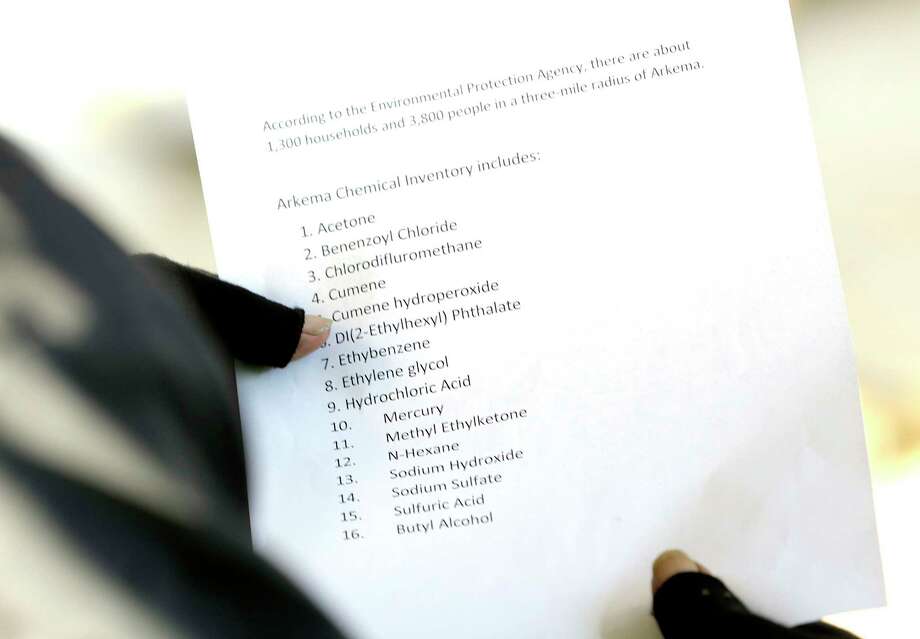
A list of chemicals at the Arkema plant was passed around to people who live near the chemical plant on Saturday, Nov. 11, 2017, in Crosby. Photo: Elizabeth Conley, Houston Chronicle / © 2017 Houston Chronicle

Photo: Elizabeth Conley, Houston Chronicle

A list of chemicals at the Arkema plant was passed around to people who live near the chemical plant on Saturday, Nov. 11, 2017, in Crosby.

The Chronicle obtained Arkema's internal records from the U.S. Environmental Protection Agency and conducted interviews with government employees with knowledge of ongoing investigations of the events at the plant. The emerging picture reveals nine days of chaos, culminating with the decision to intentionally burn chemicals that posed a danger to the public.

The records, obtained through the Freedom of Information Act, and interviews show that:​

Arkema's emergency response plan provided employees with little direction for how to handle major flooding events. It contained one paragraph about flooding but a page and a half on handling bomb threats, records show.

Arkema's main power transformers and its powerful backup generators were not high enough off the ground, causing them to become submerged with floodwaters, Arkema records show. Without power, the company could not keep its stash of organic peroxides at a safe temperature inside its refrigerated buildings.

The company's last resort for keeping organic peroxides cool - refrigerated trailers - also was destined to fail. The diesel-powered trailers had fuel tanks that ran along the bottom of the vehicle. More than 3 feet of water compromised the fuel tanks, causing the freezers to die.

Arkema had a tank of an extremely dangerous chemical, isobutylene, located about 40 yards from six trailers that had been relocated during the storm, according to interviews and satellite images. Government officials were concerned about a chain reaction with that chemical that could have led to catastrophic results.

Arkema officials said again Tuesday that no amount of planning could have protected its site from the storm.​​

​"Many of your conclusions fail to recognize that Hurricane Harvey was unlike any rain event Houston ever experienced," company spokeswoman Janet Smith said in an email. "FEMA's 500-year flood map doesn't address the situation that occurred during Hurricane Harvey."

Four days after Harvey made landfall in Texas, the Arkema plant was under 7 feet of water. The last employees to evacuate the site left by boat, floating over a 6-foot chain-link fence topped by barbed wire, the records show.

"Flooding in Houston is a perfectly foreseeable event," said Paul Orum, an independent Washington, D.C., consultant and longtime chemical safety advocate. "Facilities should be prepared when it comes to several different layers of flooding."

Lines laid low

Arkema, a French multinational company, manufactures chemicals used to create plastic products. Many of its proprietary compounds are classified as organic peroxides, which must be kept at temperatures well below freezing to prevent the chemicals from catching fire.

With Hurricane Harvey bearing down on Southeast Texas and the National Hurricane Center warning of potentially "catastrophic" or "life-threatening" flooding, the company's plans for protecting its product were simple: keep the chemicals cold on-site.

The company had multiple freezer buildings, six backup generators, and, as a last resort, refrigerated trucks. Documents provided to the Chronicle did not indicate any plans to drive the organic peroxides away from Harvey's impact.

But Arkema's plan for Harvey was based on one flawed assumption: that the site would never experience floods higher than 3 feet. By the end of the weekend, the rain had exceeded that total.​


Nov 14, 2017

FREE: Sustainable Materials Management (SMM) Web Academy Webinar: Preventing Food Waste Upstream

EPA will host this webinar on Thursday, November 16 from 1:00 pm - 2:30 pm Eastern Time.

Please register for this free webinar here. 

Photo of food recovery hierarchy with Source Reduction circledThe top tier of EPA's Food Recovery Hierarchy is source reduction, which is reducing the volume of surplus food generated.  Source Reduction can be challenging to understand, quantify and implement. Businesses and organizations can learn to effectively prevent wasted food by taking source reduction steps such as inventorying supplies, changing processes and buying less.  Looking through a Sustainable Materials Management lens, preventing wasted food provides the greatest potential for cost savings and resource conservation relative to the other Food Recovery Hierarchy activities, as demonstrated by the US EPA Waste Reduction Model (WARM). This webinar will introduce progressive examples from a state agency and the business community that prevent wasted food at the source.

Top of Page


Speakers

photo of David AllawayDavid Allaway, Senior Policy Analyst, Oregon Department of Environmental Quality's (DEQ) Materials Management Program

Mr. Allaway currently addresses sustainable consumption and production, materials (including waste) management, and greenhouse gases (GHGs). He has led efforts to develop and update Oregon's consumption-based GHG inventory, contributed to the ICLEI US GHG accounting protocols for communities and recycling, and served as an invited science advisor to Wal-Mart. Before joining DEQ in 2000, David worked for 11 years in the solid waste consulting industry. A native of Oregon, David has a B.A. in physics from Carleton College, Minnesota.

Photo of Stephanie BargerStephanie Barger, Director of Market Transformation & Development, TRUE Zero Waste Programs – U.S. Green Building Council

Ms. Barger formed the U.S. Zero Waste Business Council (USZWBC) in January of 2012 to meet the growing need for educational resources, peer-to-peer networking and third-party certification for businesses across the nation. In November of 2016, USZWBC merged with Green Business Certification, Inc. and the U.S. Green Building Council. She brings over 25 years of experience in environmental stewardship, employee training, management consulting and business relationship development. She received her Bachelor of Science in Business Administration from San Diego State University. In her spare time, Ms. Barger raises guide dog puppies for the blind, and advocates for humane treatment of all creatures great and small.

Photo of Brian BalukonisBrian Balukonis, Solid Waste Process Owner, Raytheon Company

Mr. Balukonis has worked for over 32 years in the Environmental Health, Safety and Sustainability Group.  He has developed many unique and innovative resource management programs for Raytheon. These programs were recently recognized by the US Zero Waste Business Council, which certified six Raytheon sites as Zero Waste in Massachusetts.  Mr. Balukonis is a recognized subject matter expert in Zero Waste and has presented for many years at national and local conferences and colleges. 


Photo of Marc WincottMarc Wincott, District Manager, Eurest Thompson Hospitality

Mr. Wincott has worked for Compass Group for 21 years, joining the Eurest in 2004 as General Manager of Georgia-Pacific where he was quickly promoted to Area Manager and named "Manager of the Year."  From there, Marc became the GM of Sikorsky in Stratford, CT before being promoted to District Manager for the Raytheon enterprise for National Accounts.

Photo of Andre VillasenorAndré Villaseñor, Sustainable Management of Food Coordinator, U.S. Environmental Protection Agency (EPA)

Mr. Villasenor began his career fulfilling EPA's mission to protect human health & the environment in 2005, following his service in the U.S. Peace Corps in Ecuador. He holds an M.S. from State University of New York and an M.A. from Syracuse University. He resides in Los Angeles.


Nov 13, 2017

Shutdown of world’s biggest uranium mine will boost to sustainable prices

A move by one of the world's biggest uranium producers to suspend production will cut global supply by 10 per cent and boost the spot price, according to uranium play Boss Resources.

Cameco last week announced it would temporarily suspend production at its McArthur River uranium mine and Key Lake processing facility in northern Saskatchewan by end of January.

McArthur River accounted for more than 10 per cent of uranium production in 2016. Cameco provides about 17 per cent of the world's uranium from mines in Canada, the US and Kazakhstan.

The move was due to oversupply in the uranium market — which isn't likely to change in the foreseeable future — resulting in continued weakness in the uranium price.

Since the halcyon days a decade ago when its price hit $US130 a pound, uranium has slid to a 12-year low of $US18 a pound in November 2016, recently trading slightly higher at $US20.25 a pound.

In the wake of the Fukushima nuclear incident in 2011, there has been concern over future demand and over oversupply of uranium with three European Union member states – Belgium, Germany and Switzerland – seeking to phase out nuclear reactors.

In the US and Europe, premature retirements of reactors continue to outstrip the rate of capacity addition.

However, managing director Duncan Craib of ASX-listed uranium explorer Boss Resources (ASX:BOE) believes Cameco's cutbacks – along with other cuts by uranium producers including Paladin and Areva – will "bring discipline to the supply side and reduce excess inventories".

"This is further evidence that uranium production is not sustainable at current uranium term and spot prices," he said.

"The cumulative impact of global supply reductions in 2018 should strongly influence the spot market in 2018 and further out, if the suspension period is extended.

"We expect to see the strengthening in spot price reflected in the term price."

Read on from source:

https://stockhead.com.au/resources/cameco-uranium-halt-benefits-industry-boss-resources/

Nov 10, 2017

Nuclear incident suspected after radioactive cloud over Europe

​A cloud of radioactive pollution over Europe in recent weeks indicates an unidentified nuclear incident happened at some facility in Russia or Kazakhstan in the last week of September, French nuclear safety institute IRSN said on Thursday.

The IRSN ruled out an incident in a nuclear reactor, saying it was likely to be in a nuclear fuel treatment site or centre for radioactive medicine. There has been no impact on human health or the environment in Europe, the IRSN said.

IRSN, the technical arm of French nuclear regulator ASN, said in a statement it could not pinpoint the location of the release of radioactive material but that based on weather patterns, the most plausible zone lay south of the Ural mountains, between the Urals and the Volga river.

This could indicate Russia or possibly Kazakhstan, an IRSN official said.

"Russian authorities have said they are not aware of an accident on their territory," IRSN director Jean-Marc Peres told Reuters. He added that the institute had not yet been in contact with Kazakh authorities.

A spokeswoman for the Russian Emergencies Ministry said she could not immediately comment. It was not immediately possible to reach authorities in Kazakhstan or the Kazakh embassy in Moscow.

Ruthenium 106

Mr Peres said that in recent weeks IRSN and several other nuclear safety institutes in Europe had measured high levels of levels of ruthenium 106, a radioactive nuclide that is the product of splitting atoms in a nuclear reactor and which does not occur naturally.

IRSN estimates that the quantity of ruthenium 106 released was major, between 100 and 300 teraBecquerels, and that if an incident of this magnitude had happened in France it would have required the evacuation or sheltering of people in a radius of a few kilometres around the accident site.

The ruthenium 106 was probably released in a nuclear fuel treatment site or centre for radioactive medicine, Mr Peres said. Because of its short half-life of about a year, ruthenium 106 is used in nuclear medicine.

Read on from source​:

Nov 8, 2017

Free Respiratory Training Protection for Healthcare Workers is Available

A short, self-paced online program preparing healthcare workers to use respiratory protection is available from AAOHN and satisfies the annual Federal OSHA Respiratory Protection Standard's (1910.134 CFR) training requirements. Designed by experts from AAOHN, AOHP and ANA with a NIOSH grant, this online training program prepares you and your staff for respiratory protection in the workplace. This program provides Continuing Nursing Education (CNE) credits and is available for FREE to all healthcare workers at www.aaohn.org/respiratory-protection.

Oct 30, 2017

Webinar recording available: Avoiding the Next Chemical Catastrophe: Strategies for Chemical Threat Reduction

The recording of the ACS webinar from earlier this month on Avoiding the Next Chemical Catastrophe: Strategies for Chemical Threat Reduction is now available at:

The summary of the webinar is:
Every lab has chemicals that are vital to research and experimentation but these same chemicals whether you are in industry or academia, can be stolen and used by non-state actors for malevolent acts.  Join Andrew Nelson of Sandia National Laboratories as he introduces strategies to mitigate the risks that small labs and universities face with theft of chemicals for chemical weapons, explosives, and illicit drug production.

What You Will Learn
• Why chemical security is important to all labs with current examples of incidents
• What considerations must be made in a security risk management system
• How chemical security is a teachable skill and what resources are available to you today

Oct 27, 2017

EPA annoucement: Alternative Test Methods to Reduce Vertebrate Animal Testing: Announcement of Public Meeting

The Frank R. Lautenberg Chemical Safety for the 21st Century Act amended Section 4(h) of the Toxic Substances Control Act (TSCA) to require EPA to develop a Strategic Plan by June 22, 2018 to promote the development and implementation of alternative test methods and strategies to reduce, refine or replace vertebrate animal testing.

EPA is announcing a public meeting on November 2nd, 2017 from 9:00 am to 5:00 pm to obtain input from interested parties and the public on the Agency's development of the Strategic Plan. EPA believes this early feedback will be important in developing a strong Strategic Plan. Goals and objectives to inform the Strategic Plan and that can be used for discussion and comment are available here.

Interested parties may provide input about the draft Strategic Plan during the meeting. Additionally, written comments may be submitted to docket EPA-HQ-OPPT-2017-0559 at www.regulations.gov and must be received no later than 60 days following the meeting.

To register to attend the meeting and for more information, visit the EPA's Alternative Test Methods webpage.


The Agency will consider input from the meeting and from written comments to develop a draft Strategic Plan that will be shared with the public for comment.

Oct 26, 2017

Free webinar: Using the EPA WARM Tool to Communicate the Environmental Benefits Associated with Material and Waste Management

Session Description 

Register

As health care organizations develop climate strategies and set greenhouse gas reduction goals, they are increasingly looking to measure the impacts of waste reduction strategies and its role in achieving greenhouse gas reduction targets. The EPA's WARM Tool calculates and totals Greenhouse Gas emissions of baseline and alternative waste management practices—source reduction, recycling, anaerobic digestion, combustion, composting and landfilling. Further, a related EPA tool translates greenhouse gas reduction into readily understandable impacts, like number of cars removed from the road.

Join the EPA as they explain how you can use the WARM tool to measure material and waste diversion efforts on greenhouse gas reduction and communication to key stakeholders.

Learning Objectives

  • Learn how waste contributes to greenhouse gas generation and its role in climate mitigation strategies.
  • Understand how to access and use the EPA WARM Tool for greenhouse gas tracking as it relates to material and waste management strategies.

Pricing: FREE! 

Register

Tyler Rubright

US EPA Office of Resource Conservation and Recovery

Tyler Rubright is a biologist in the US EPA's Office of Resource Conservation and Recovery. His primary role focuses on using data measurement and analytics surrounding Municipal Solid Waste to inform program direction and provide stakeholder information. These efforts seek to expand the analysis of material flows in order to increase recovery of valuable resources from the waste stream and prevent various forms of further pollution. Prior to joining the EPA, Tyler was an Albert Schweitzer Fellow researching the health effects of proximate unconventional natural gas drilling in southwestern Pennsylvania. This fellowship complimented data-intensive research examining ambient air quality effects on heart attack risk. Tyler earned his Bachelor of Science in biology from Furman University, Master of Science degree in environmental and occupational health from the University of Pittsburgh, and a Certificate of Public Health.

Nathan Wittstruck

US EPA Office of Resource Conservation and Recovery

Nathan Wittstruck is an economist with the US EPA Office of Resource Conservation and Recovery. Before transitioning to the waste office's measurement branch, he promoted sustainable materials management, worked on e-waste issues and helped develop voluntary consensus standards. Nathan also spent one year in the international branch supporting work on key environmental issues in the US-Mexico border region and with the North American Commission for Environmental Cooperation. Currently, Nathan's primary role is the management of the WARM tool, which includes stakeholder engagement and overseeing technical improvements to the tool. Before joining the EPA, Nathan gained international experience as a Peace Corps volunteer in Panama and as a Rotary Ambassadorial Scholar in Bogota, Colombia. Nathan has a master's degree in economics from the University of California, Riverside.

Proposed Mercury Reporting Rule

As required by the Frank R. Lautenberg Chemical Safety for the 21st Century Act, EPA is proposing a rule to require reporting from persons who manufacture (including import) mercury or mercury-added products, or otherwise intentionally use mercury in a manufacturing process. This reporting rule must be finalized before June 22, 2018. Comments can be submitted to docket EPA-HQ-OPPT-2017-0421. The 60-day comment period will begin upon publication in the Federal Register.

EPA is required by the amended TSCA to carry out and publish in the Federal Register not later than April 1, 2017, and every three years thereafter, an inventory of mercury supply, use, and trade in the United States. Mercury is defined as "elemental mercury" and "a mercury compound." The Agency published its initial inventory report in March 2017.

The proposed rule, when finalized, would support future, triennial publications of the inventory. Based on the information collected, the Agency is directed to identify any manufacturing processes or products that intentionally add mercury; and recommend actions to achieve further reductions in mercury use.


EPA Raises Radiation Limits For Emergency Responders

FORBES - Last week, the U.S. Environmental Protection Agency set new radiation guidelines that raise the acceptable limits on the radiation dose that can be tolerated by first responders and emergency personnel in the case of a nuclear incident, radspill, terrorist attack like a dirty bomb, or any other radiological emergency.

'According to radiation safety experts, radiation exposures of 5-10 rem (5,000-10,000 mrem or 50-100 mSv) usually result in no harmful health effects, because radiation below these levels is a minor contributor to our overall cancer risk,' EPA said in the document. Present limits are 0.5 rem or less depending on the situation.

....These EPA changes raise the radiation limits that emergency personnel can take, making them less fearful of responding to an event, which will make this weapon less effective, and will make any radiological incident less deadly. The change was included as part of EPA guidance on messaging and communications in the event of a nuclear power plant meltdown or a dirty bomb attack. The September 2017 FAQ document, is part of a broader planning document for nuclear emergencies, but is not a federal standard or a law.

Unless you, the reader, are in a boat out in the middle of the Pacific Ocean, you're getting a radiation dose between 0.2 and 1 rem/year (0.002 and 0.01 Sv) in the United States, just from background sources such as rock, dirt, potatoes and cosmic rays (EPA Rad Limits). Some places in the world have background doses ten times higher than we do, without any differences in cancer rates.

There have never been any observable health effects from doses less than 10 rem (0.1 Sv). Ever. Anywhere.

Under the Safe Drinking Water Act, exposure limits are set at 4 millirem (or mrem) a year, and federal standards for hazardous air pollutants limits radiation exposure to 10 mrem a year. Federal regulations limit exposure for living near a nuclear power plant to 25 mrem a year. These limits are between 10 and 100 times below background radiation levels in the United States, 1000 times below background radiation levels in than many areas of the world.

...Our ultralow limits have cost the United States close to a trillion dollars, and will cost us a lot more in the years to come (Low-Level rad Summit; Atomic Insights; Reason.com). This latest step by the EPA is also driven by none other than the Government Accounting Office. More and more reports indicate that the forced evacuation in Fukushima was not necessary (Fukushima 2.25). The panicked Japanese authorities were following our American policy (As Low As Reasonably Achievable, or ALARA) that has always been misinterpreted to mean any and all radiation is dangerous no matter what level.

Read full at: 
FORBES

​

Oct 19, 2017

Evaporation could power 69% of the nation’s annual electrical generation

​​
Natural evaporation could provide most of the electricity used by the US and also save about one fifth of the water it uses, scientists believe.

Climate
​N​
ews
​N​
etwork
​ - ​
The flow of water vapour into the atmosphere
​...​
it happens wherever there is liquid water – could generate up to 325 gigawatts. This is 69% of the nation's annual electrical generation. The same process could save about 25 trillion gallons of water every year. This is about one fifth of US water consumption.

And the same technology could be exploited as a natural battery to conserve renewable energy for those moments when the wind fails to turn the turbines or at night when the solar power plants lie idle.

There is a catch. The project has been demonstrated so far only in the laboratory. But the small-scale experiments with what its inventors call the evaporation engine show that the new source could in theory complement other, more fully developed renewable technologies.

And it would work even more efficiently in those hot landscapes most prone to drought: California, Arizona and Nevada, the researchers say.

A team from Columbia University report in the journal Nature Communications that they based their calculations on data from 934 weather stations across the United States to calculate the potential power – sometimes called latent heat –  packed by the upward flow of water molecules from all the lakes and reservoirs larger than 0.l square kilometres in the contiguous US. They excluded rivers, farmland, coasts and the Great Lakes.

The experimental technology exploits natural biology and physics. The evaporation engine controls humidity with the action of a shutter and the expansion and contraction of bacterial spores in response to this process is transferred to a generator that delivers current.

The study is yet another instance of the scale and range of ingenuity repeatedly demonstrated by the world's laboratories in search of alternatives to the fossil fuels that so far have driven human economies, but now threaten to drive global warming and potentially catastrophic climate change.

US researchers have exploited computer studies and scaled up existing technologies to show, again and again, that the US could be fuelled by wind, sunlight and water power and that what works for the US could drive development in many parts of the world. The argument is that the knowhow exists: what is lacking is the political will.

But the Columbia scientists make no such claims: they have devised their own way of exploiting the water cycle in a manner that would actually reduce evaporation in the warmest, driest states and at the same time siphon electrical energy from the process.

They can also demonstrate the system's potential as a renewable battery that exploits already existing infrastructure such as a reservoir or lake.

But they have yet to test the technology on a larger scale, and beyond the laboratory: at a reservoir, or in a greenhouse. The latest study calculates the potential energy drifting upwards from standing water, on cold days as well as hot.

"We have the technology to harness energy from wind, water and the sun, but evaporation is just as powerful," said Ozgur Sahin, a biophysicist at Columbia University, and the senior author. "We can now put a number on its potential."