Oct 14, 2013

Leak found in a nuclear reactor located near Tonopah, Arizona at Palo Verde Power Plant

PHOENIX (CBS5) -

A small leak was found in a nuclear reactor at the Palo Verde Power Plant, west of the Valley, last week.

Arizona Public Service spokesman Alan Bunnel said the leak never posed a threat to the community.

"It is radioactive water, but because it's inside the steel and concrete containment dome there was no threat of any radioactive material coming outside into the environment," said Bunnel. "There was no threat to the safety or well being of the public or employees."

The incident has raised new concerns about the impact the government shutdown is having on power plants across the country.

The U.S. Nuclear Regulatory Commission, which oversees nuclear power plants across the country, has been forced to send home 93 percent of its workforce.

The NRC currently has about 300 of its 3,900 workers showing up for work. 

"Our full-time inspectors are still on duty at every nuclear plant across the country," said Elliot Brenner, NRC director of public affairs. "There is longer term work not getting done, but we are making certain that we have inspectors at the plants every day."

Please read on at source: http://www.kpho.com/story/23672968/small-leak-found-at-palo-verde-nuclear-power-plant

#Disney Research: new energy harvesting technology that generates energy from touching Paper

Disney Research presents a new energy harvesting technology that generates electrical energy from a user's interactions with paper-like materials. The energy harvesters are flexible, light, and inexpensive, and they utilize a user's gestures such as tapping, touching, rubbing and sliding to generate energy. The harvested energy is then used to actuate LEDs, e-paper displays and other devices to create interactive applications for books and other printed media.

This new approach to energy harvesting uses electrets, materials with special electrical properties that already are used in microphones and in tiny MEMS devices. This latest application, developed by researchers at Disney Research, Pittsburgh and at Carnegie Mellon University, could make possible new types of interactive applications involving books, posters and other printed materials that require no batteries or external power.

The design of a Paper Generator is simple: one approach is to sandwich a thin, flexible sheet of polytetrafluoroethylene, or PTFE – best known by the brand name Teflon® –between two conductive layers, such as sheets of metallized polyester, that serve as electrodes. Electrical charge accumulates on the PTFE sheet when paper is rubbed against it. Then, if the electrodes are made to move relative to each other against the PTFE, a tiny, alternating electrical current is generated. This electrical current can be used to power a broad variety of devices such as LED arrays, e-ink displays, sound buzzers and infrared communication devices.

"Though the fundamental principles of operation remain the same, it's possible to build Paper Generators that respond to a number of different gestures, such as tapping, touching, rubbing or sliding," said Ivan Poupyrev, director of Disney Research, Pittsburgh's Interaction Group. "We can imagine any number of ways to use this to add sights, sounds and other interactivity to books and other printed materials inexpensively and without having to worry about power sources."


Paper Generators: Harvesting Energy from Touching, Rubbing and Sliding (8 pages)

Read more published on Next Big Future // visit site

Plastics for Life - #Microplastics growing concern in #GreatLakes

ENN Original news: Researchers have recently found an alarming number of microplastics in Lake Garda, a subalpine lake located in the Adamello-Presanella Mountains, a part of the Italian Alps. The microplastics found in Lake Garda were a surprise because of its elevation; researchers had anticipated pure unpolluted waters.

Microplastics, small pieces of plastic, typically less than 5 millimeters (0.2 inches) in size come from a variety of man-made sources. Some of it is produced when large pieces of plastic breakdown in the environment. Other types come from synthetic fibers broken down from clothing, other consumer and personal care products as well as construction materials.

Researchers led by Christian Laforsch of the University of Bayreuth in Germany conducted the Lake Garda study and found the numbers of microplastic particles in sediment samples from Lake Garda were similar to those found in studies of marine beach sediments. Laforsch said, "The mere existence of microplastic particles in a subalpine headwater suggests an even higher relevance of plastic particles in lowland waters." Ingestion into the food chain is likely to blame.

"Next to mechanical impairments of swallowed plastics mistaken as food, many plastic-associated chemicals have been shown to be carcinogenic, endocrine-disrupting, or acutely toxic," said Laforsch. "Moreover, the polymers can adsorb toxic hydrophobic organic pollutants and transport these compounds to otherwise less polluted habitats. Along this line, plastic debris can act as vector for alien species and diseases."

Half a world away other microplastic studies are being conducted on the Great Lakes. Sherri Mason, Associate Professor of Chemistry at the State University of New York (SUNY) is measuring the incidence of microplastics in the Great Lakes. Initial studies on Lakes Superior, Huron and Erie were completed in 2012. The remaining two, Lakes Ontario and Michigan will be complete this year.  The highest number of microplastic particles so far has been found in Lake Erie where more than 600,000 pieces per square kilometer were found in parts of the lake.

Because microplastics are not biodegradable, they persist in the environment for many years. When entrapped within the sediment they are likely to persist for decades. Clearing the pollution is likely to be expensive and difficult.

Regardless of which body of water is being tested though, all of the contributing scientists are concerned that ingested microplastics may impair the ability of organisms to feed, leading to disruptions in aquatic food webs. Additionally, microplastics are likely to play a role in the transfer of chemical contaminants into aquatic biota affecting all of the world's ocean and watersheds.

Read more at ENN affiliate Eurekalert and SUNY Fredonia.

Oct 13, 2013

Popular insecticide linked to bee deaths

Ecowatch - A recent investigation into the death of thousands of bees last month in Minnesota revealed that fipronil, a widely used insecticide, was to blame.

In mid-September, three colonies of bees in Minneapolis were found twitching and dying on the ground. Local apiarist Mark Lucas paints a grim picture of the poisoning event, which he witnessed, recalling that bees inside the hive came "spilling out of the hive as if they were drunk."

University of Minnesota Bee Lab, the University's Bee Squad and the Minnesota Department of Agriculture carried out the investigation, taking samples from hives to confirm pesticide poisoning. Indeed, MDA tests found that all three of the affected hives tested positive for the presence of fipronil.

Although neonicotinoid pesticides such as clothianidin, thiamethoxam and imidacloprid have been widely implicated in the phenomenon of colony collapse disorder, other pesticides are known to adversely affect honey bee health. Fipronil has also been heavily implicated in elevated bee toxicity and decline. Indeed, the European Union recently put forth a proposal to restrict the use of the pesticide in recognition of the high acute risks it poses to bees.

The chemical is widely used for indoor and turf pest control in the U.S., incorporated in more than 50 pest-killing products and is highly toxic. Fipronil has been shown to reduce behavioral function and learning performances in honey bees.

Please continue reading at:

Oct 11, 2013

Largest US Power Storing #Solar #Energy Array Goes Live

A solar power array that covers three square miles with 3,200 mirrored parabolic collectors went live this week, creating enough energy to power 70,000 homes in Arizona. The Solana Solar Power Plant, located 70 miles southwest of Phoenix, was built at a cost of $2 billion, and financed in large part by a U.S. Department of Energy loan guarantee. The array is the world's largest parabolic trough plant, meaning it uses parabolic shaped mirrors mounted on moving structures that track the sun and concentrate its heat. A first: a thermal energy storage system at the plant can provide electricity for six hours without the concurrent use of the solar field. Because it can store electricity, the plant can continue to provide power during the night and inclement weather.
Shared via feedly // published on Slashdot // visit site

Fusion "Breakthrough" At National Ignition Facility? not the breakthrough everyone is hoping for.

One unintended effect of the U.S. federal shutdown is that helpful press officers at government labs are not available to provide a reality check to some of the wilder stories that can catch fire on the Internet. They would have come in handy this week, when a number of outlets jumped on a report on the BBC News website. The National Ignition Facility (NIF) at Lawrence Livermore National Laboratory in California, it reported, had passed a 'nuclear fusion milestone.' NIF uses the world's highest energy laser system to crush tiny pellets containing a form of hydrogen fuel to enormous temperature and pressure. The aim is to get the hydrogen nuclei to fuse together into helium atoms, releasing energy. The BBC story reported that during one experiment last month, 'the amount of energy released through the fusion reaction exceeded the amount of energy being absorbed by the fuel — the first time this had been achieved at any fusion facility in the world.' This prompted a rush of even more effusive headlines proclaiming the 'fusion breakthrough.' As no doubt NIF's press officers would have told reporters, the experiment in question certainly shows important progress, but it is not the breakthrough everyone is hoping for.
Shared via feedly // published on Slashdot // visit site

Oct 10, 2013

Highest radiation level seen in 2 years near Fukushima reactor — Surges more than 1,000% over previous day

Jiji Press, Oct. 10, 2013: Radioactive cesium levels have surged 13 times in the bay of the crippled Fukushima No. 1 nuclear power station in northeastern Japan [...] Seawater sampled near a water intake of the No. 2 reactor on Wednesday contained 1,200 becquerels per liter of radioactive cesium, up from 90 becquerels the previous day, TEPCO said. [...]

Reuters, Oct. 10, 2013: Radiation levels in seawater just outside one of the damaged Fukushima reactors spiked this week to the highest level in two years, the operator of the crippled Japanese nuclear plant said on Thursday. [...] In the latest incident, a worker on Wednesday mistakenly detached a pipe connected to a treatment system, releasing seven tonnes of highly radioactive water. [...] The pressure from pumping chemicals into the ground pushed some contaminated soil out into the port area, the spokesman said.

Fukushima Daiichi NPS Prompt Report, Oct. 10, 2013: [...] On October 9, we found a significant increase in the measurement results of cesium 134 and 137 sampled inside the silt fence of the water intake for Unit 2 [...] Cesium 134: 370Bq/L; Cesium 137: 830Bq/L [...]Measurement results on October 8: Cesium 134: 26Bq/L; Cesium 137: 64Bq/L [...]It is assumed that the ground improvement work administrated near the water intake for Unit 2 (where high concentration contaminated water leaked two years ago) has some influence on the increase in the measurement results this time. We continue to watch the situation. [...]


Please read and follow ENE News:

http://enenews.com/radiation-spikes-near-fukushima-reactor-highest-level-seen-for-2-years-up-over-1000-in-a-day

Don't miss wrap up of #ReFresh #sustainability week #Milwaukee with @MayorOfMKE

Join @ ReFresh and Mayor Barrett at Jackson's Blue Ribbon Pub from 4-6pm (on) for a celebration of Milwaukee's sustainability efforts past, present, and future! 

Friday, 10/11: Revitalize & ReFresh: Cultural Sustainability and Milwaukee's Future
At Jackson's Blue Ribbon Pub from 4-6pm for an exploration of Milwaukee's very own LEED-certified redevelopment... the nation's first! Enjoy complimentary appetizers and Central Waters Brewery tastings, as well as great drink specials courtesy of Jackson's. We'll also be offering walking tours of the redevelopment and Mayor Barrett will be on hand to share his vision for Milwaukee sustainability moving forward!

This event will feature:
-an exploration of Milwaukee's very own LEED-certified redevelopment... the nation's first! (We'll be doing walking tours and doling out tons of information about the future of this historic development at 5pm)http://www.thebrewerymke…
-complimentary appetizers (including Jackson's famous cheese curds!) 
-complimentary Central Waters Brewery tastings http://centralwaters.com…
-great drink specials courtesy of Jackson's ($2 PBRs/Miller + $3 taps/rails)
-Mayor Barrett will be on hand to meet and greet folks and share his vision for Milwaukee sustainability moving forward! (He'll be sharing his vision for sustainable Milwaukee moving forward at 6pm)
-get the lowdown on all the new items you can recycle in Milwaukee and learn how to compost
-learn how to make your moving easier and greener with Brew City Boxes http://www.brewcityboxes… 
-fix up your home in a green way with Milwaukee's ReStores! http://www.milwaukeehabi…
-re-skill with Transition Milwaukee (http://transitionmilwauk…)


Market demand for #solar power is being met at steadily lowering prices

Solar power consumption increased by 58 percent, to 93 terrawatt-hours (TWh), and the use of wind power increased by 18 percent, to 521 TWh. Although hydropower remains the world's leading renewable energy, solar and wind continue to dominate investment in new renewable capacity and are quickly becoming the highest-profile renewable energy sources.

Global investment in solar energy in 2012 was $140.4 billion, an 11 percent decline from 2011, and wind investment was down 10 percent, to $80.3 billion. But due to lower costs for both technologies, total installed capacities grew sharply. In 2012, installed capacity for concentrating solar thermal power (CSP) reached 2.55 GW, with 970 megawatts (MW) alone added in 2012.

At least 110 TWh, or 110 billion kWh will be produced in 2013 by PV systems already installed.

The wind and solar power are less reliable than nuclear (80-90% capacity factor), natural gas (pump in the gas and it runs as needed) or coal power plants (shovel in the coal it works). Wind works about 20-30% of the time when the wind is blowing and varies by the minute. Solar power works about 10-20% of the time when the sun is shining and there are not too many clouds.

Current solar PV and wind turbines have reached a scale and cost reduction path that will make it difficult for any leapfrog technology to displace them. Even though the current system architectures use too much steel and support structures for the energy that is produced. Concentrated solar power as has been indicated above is about 2% of the overall solar market and costs about twice as much as solar PV. There are rooftop solar water heaters in China with a significant market and contribution but those appear to be unlikely to be adopted in the developed countries.


Read more published on Next Big Future // visit site

Source of benzene in Jackson well has not been identified

Village of Jackson — The source of benzene detected this month in a municipal well on the south side of the village has not been confirmed, Public Works Director Brian Kober said Tuesday.

Water was pumped out of the well for several hours Tuesday in an attempt to remove benzene, Kober said. After flushing the well Tuesday, a water sample was scheduled to be collected later in the day for testing.

A test of a water sample collected May 13 from the well off Jackson Drive, near Hickory Lane Park, detected a small amount of benzene, a component of crude oil and gasoline. The concentration of 1.6 parts per billion of benzene found in the water is below the safe drinking water standard of 5 parts per billion.

The water is safe to consume, but the well has not been used as a source of drinking water since the benzene detection was reported May 23, Kober said. The village operates four other wells, and monthly tests have not detected benzene in those wells.

Although no source of the toxic chemical has been confirmed, the state Department of Natural Resources has asked West Shore Pipe Line Co. of Illinois to test the Jackson Drive well weekly for benzene.

The company has tested each of five village wells monthly since a July gasoline pipeline spill in the Town of Jackson. The May test was the first time benzene was detected in the Jackson Drive well.

A West Shore fuel pipeline ruptured July 17 and spilled an estimated 54,600 gallons of gasoline in a farm pasture in the 1800 block of Western Ave. The gasoline drained into cracks of fractured dolomite bedrock at the surface.

The spill site is two miles southeast of the Jackson Drive well.

On May 3, the DNR announced a plume of gasoline in groundwater was spreading west of the initial cluster of private wells polluted in the spill. Benzene was detected in a water sample collected in April from a private well serving a residence on Sherman Road near Maple Road.


#RefreshMKE: Save water, make money under new #Milwaukee @H2Oscore initiative via @conserve

Hey, Milwaukee: What is your H2O score?

Milwaukeeans can earn a dollar's worth of gift certificates at local stores by reducing their family's water use by 100 gallons from the previous year, through a new initiative. Drop water demand by 1,000 gallons, and earn $10 worth.

Residents and businesses in Milwaukee will be able to track their water use, review strategies to stop leaks, and save money, Milwaukee Water Works officials said Wednesday in announcing a partnership with H2Oscore.

The utility has contracted with the Milwaukee water technology start-up to provide customers with an online account they can use to find out their water use information and compare it with a neighborhood or citywide average, Water Works Superintendent Carrie Lewis said.

To protect privacy of all customers, an individual with an account will not be able to learn the water use of other specific addresses, Lewis said. A residential customer will be ranked in comparison with other homes within one quarter of a square mile.

The service also is available to residents and businesses in three communities — Greenfield, Hales Corners and St. Francis — that are retail customers of the Water Works.

Households reducing their water demand will become eligible for conservation rewards offered by participating businesses. Residents and businesses can sign up for an account, known as a dashboard, at the H2Oscore websitewww.h2oscore.com.

Conservation rewards provide positive feedback for residents seeking ways to cut water use, H2Oscore founder McGee Young said. He is an associate professor of political science at Marquette University.

Participants can connect to their dashboards with a smartphone or computer, Young said.

H2Oscore also will provide each account with a link to Milwaukee's Use Water Wisely website. The site advises customers on ways they can find and repair water leaks, and control costs.

Milwaukee paid H2Oscore $5,000 for a one-year contract, Lewis said.

In addition to Milwaukee, the company has contracts with Waukesha, Grafton and Whitewater. Madison will offer H2Oscore to its residents by the end of this year, Young said.

Twitter: twitter.com/conserve


Follow: @NewsHub on Twitter | shared via feedly mobile

Via @LibertyBlitz - Deaths from Prescription Drugs Now Exceed Those Related to Cocaine and Heroin Combined


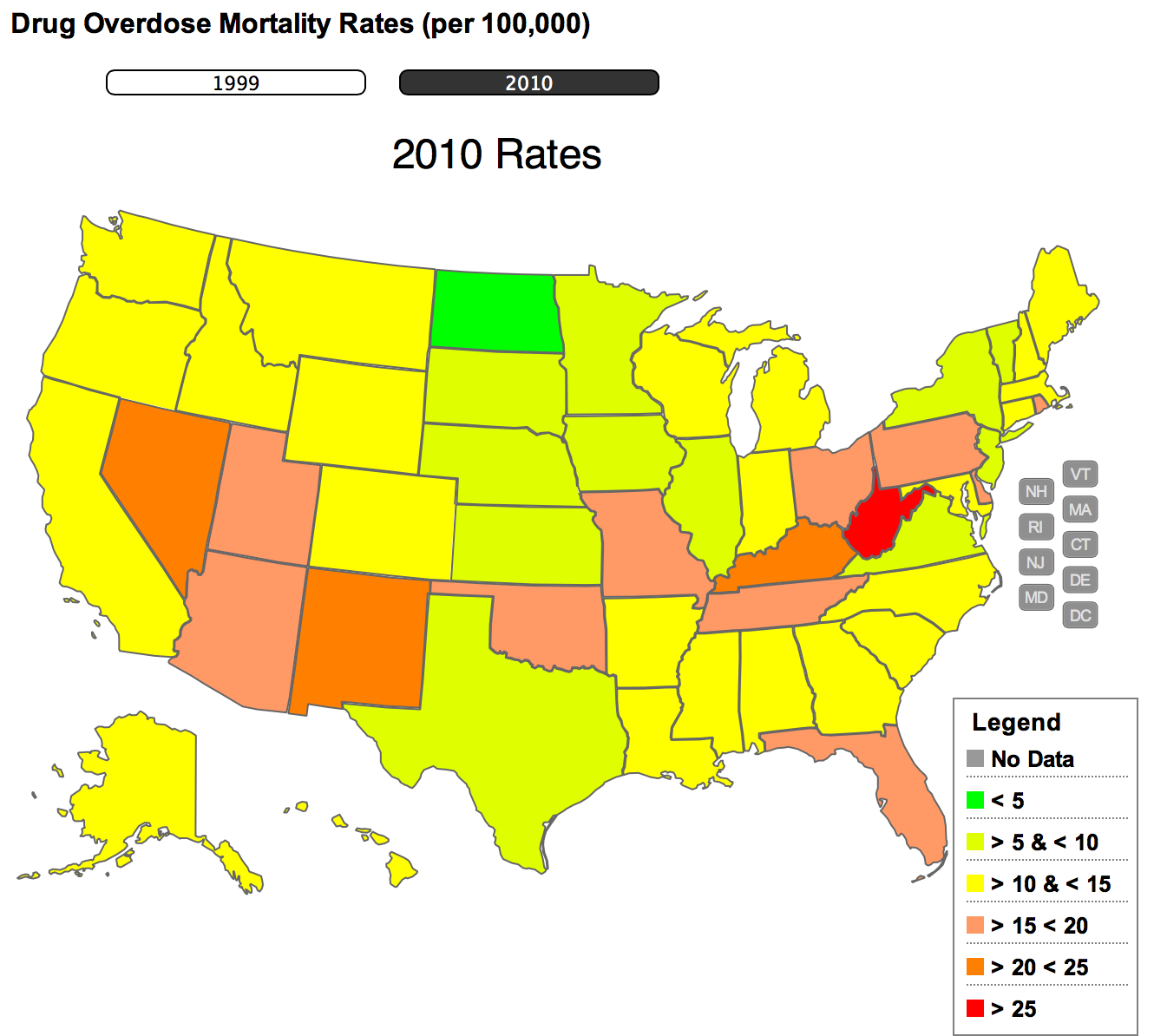
*Click on the image above for an interactive map.

Deaths from Prescription Drugs Now Exceed Those Related to Cocaine and Heroin Combined (Liberty Blitzkrieg, Oct 8, 2013):

A report released yesterday by the non-profit organization Trust for America's Health has revealed some startling data on prescription drug abuse in these United States. The results are pretty damning to the prescription drug industry. Specifically, it found the majority of total drug related deaths in the U.S. come from prescription drugs, and they now account for more deaths than heroin and cocaine combined.

More from Trust for America's Health:

According to the report, prescription drug abuse has quickly become a top public health concern, as the number of drug overdose deaths - a majority of which are from prescription drugs – doubled in 29 states since 1999. The rates quadrupled in four of these states and tripled in 10 more of these states.

Prescription drug related deaths now outnumber those from heroin and cocaine combined, and drug overdose deaths exceed motor vehicle-related deaths in 29 states and Washington, D.C. Misuse and abuse of prescription drugs costs the country an estimated $53.4 billion a year in lost productivity, medical costs and criminal justice costs, and currently only one in 10 Americans with a substance abuse disorder receives treatment.

Am I the only one who finds it strange that 655,000 Americans were arrested for marijuana possession alone in 2012, a drug that no one dies from, yet these prescription drugs are not only legal, but pharmaceutical companies continue to make billions of dollars each year selling them? Yep, you guessed it. USA! USA!

University creates "world's first walkable #solar panel pathway" [feedly]

The university's first-of-its-kind Solar Walk (Photo: The George Washington University)

We typically see photovoltaic panels up on roofs, as they're broad, open surfaces that receive a lot of sunlight. You know what else spends a lot of time in the scorching sun, though? Sidewalks. With that in mind, a team at Washington DC's The George Washington University has created what is claimed to be "the first walkable solar-paneled pathway in the world." .. Continue Reading University creates "world's first walkable solar panel pathway" 
Shared via feedly // published on Gizmag Emerging Technology Magazine // visit site

YIKES! 90% of Nuclear Regulators Sent Home Due To #Shutdown

More than 90% of nuclear regulators are being sent home due to the Federal Government shutdown, as the agency announced today that it was out of funds. Without Congressional appropriations, the nuclear watchdog closes its doors for what appears to be the first time in U.S. history. CNN reports that while a skeleton crew remains to monitor the nation's 100 nuclear reactors, regulatory efforts to prevent a Fukushima-like incident in the United States have ceased.
Shared via feedly // published on Slashdot // visit site

Report: Foxconn using forced student labor to build #Sony's PS4 #tech #humanrights

Report: Foxconn using forced student labor to build Sony's PS4

 | On 10, Oct 2013

If reports in the Chinese press are to be believed, Sony's next-gen games console may be being assembled using some very outdated labor practices. According to Hong Kong's Oriental Daily, thousands of students from an IT engineering program at the Xi'an Institute of Technology are being forced to work at Foxconn's Yantai plant assembling the Sony Playstation 4Students have been told if they refuse to participate, they lose six course credits, which effectively means they will not be able to graduate.

Officially, the program is considered an "internship" and it ispublicly recognized and promoted by the school. But students have said that once they got to Foxconn, they were assigned to jobs that had no relation whatsoever to their fields of study, including grunt work like distribution and shipping. One student, for example, majored in finance and accounting but has been assigned to a job that entails glueing together parts of Sony's Playstation 4. Another was assigned to a job that entails peeling of the PS4′s protective plastic and putting stickers on it. Still another, a computer science major, puts the PS4′s various cords and the instruction manual into the console's box. Moreover, students say that their working hours are exactly the same as regular workers. The only difference is that unlike the workers, the students aren't being paid.

Foxconn told the Oriental Daily that its workers are all voluntary and that it has no interest in preventing them from leaving work if they choose to. The Xi'an Institute of Technology declined to comment on whether the university had received an agent's fee for providing what is essentially free labor to the Foxconn plant and did not directly answer questions about whether or not the internship program was forced, but stressed that it was legal and that it was "mainly about making students learn about society and experience life."

Please continue reading at:

Oct 9, 2013

Two-Laser Boron Fusion Lights the Way To Radiation-Free #Energy

Fusion unleashes vast amounts of energy that might one day be used to power giant electrical grids. But the laboratory systems that seem most promising produce radiation in the form of fast-moving neutrons, and these present a health hazard that requires heavy shielding and even degrades the walls of the fusion reactor. Physicists have now produced fusion at an accelerated rate in the laboratory without generating harmful neutrons (abstract). A team led by Christine Labaune, research director of the CNRS Laboratory for the Use of Intense Lasers at the Ecole Polytechnique in Palaiseau, France, used a two-laser system to fuse protons and boron-11 nuclei. One laser created a short-lived plasma, or highly ionized gas of boron nuclei, by heating boron atoms; the other laser generated a beam of protons that smashed into the boron nuclei, releasing slow-moving helium particles but no neutrons. Previous laser experiments that generated boron fusion aimed the laser at a boron target to initiate the reaction. In the new experiment, the laser-generated proton beam produces a tenfold increase of boron fusion because protons and boron nuclei are instead collided together directly.
Shared via feedly // published on Slashdot // visit site

Call for #ZeroWaste Ideas and Presentation for @zerowastesd first Southern California Zero Waste Meet up

Call for Ideas and Presentation Abstracts
**Save the Date February 4 for the first Southern California Zero Waste Meet up**
This one day program will feature speakers from all over Southern California and a few out of area specialists in a fast paced information and networking based program focused on the current and forthcoming State wide rules for managing resources. 
Sponsored by the County of San Diego Integrated Waste Management Technical Advisory and Citizens Advisory Committees, Zero Waste San Diego and the San Diego Chapter of the  CRRA,  we will cover a range of  topics from Zero Waste planning to  EPR and hazardous material  and oil recovery programs.
Please submit your ideas for speakers and topics by filling out the following form Due by October 30th and we will convene a planning committee in November to work on the details.

Signup here:

Join @ReFreshMKE Thursday @mkebrewco in celebration of #solar power and great local #GREEN #MKE businesses!

Thursday, 10/10: What's In Your Beer? Coffee, Tea, and Sunshine!
Green tours from Milwaukee's first solar brewery and featured tastings of local collaborations, Anodyne Brown & O-Gii. Sip coffee, tea, & beer, check out the Clock Shadow building and Andoyne's brand new location, too! Milwaukee's coolest food trucks will be on hand offering up some of their best and brightest fare at discounted prices as well.

Join the Milwaukee Brewing Company from 5:30-7:30pm in celebration of solar power and great local businesses!
http://www.yelp.com/events/milwaukee-refreshmke-with-yelp-whats-in-your-beer-coffee-tea-and-sunshine

This event will feature:
-green tours of Milwaukee's first solar brewery
-featured tastings of local collaborations, Anodyne Brown & O-Gii
-get to know world-class (and local!) tea purveyor, Rishi: http://www.yelp.com/biz/… and local coffee favorite Anodyne: http://www.yelp.com/biz/…
-MKE Brewing Co. tastings ($7 gets you a limited edition pint glass and five generous "tastings!")
-information on Me2 and other solar initiatives by the City of MKE
-see how cheese is made in Milwaukee with Clock Shadow Creamery: http://www.clockshadowcr… 
-the Midwest Renewable Energy Association https://www.midwestrenew…
-Urban Caveman, Roll MKE, and Simmer Truck will be on hand doling out awesome food truck fare all event long
-more more more in the works, too... we promise!

This event is part of #ReFreshMKE with Yelp: A week-long sustainability initiative hosted by Yelp and the City of Milwaukee Office of Environmental Sustainability. All events are open to the Yelp community as well as the public!

Celebrate #Sustainablilty! #Milwaukee innovative @H2Oscore program and Freshwater Sciences tonight with @ReFreshMKE (Free food :-)

Wednesday, 10/9: H-2-the-izzo: There's Water In My Booze!
Join us at Great Lakes Distillery from 5:30-8pm for:  Complimentary green tours and GLD tastings, as well a super-top secret Great Lakes speciality cocktail. Complimentary bites courtesy of Blue Jacket and Braise as well! Learn about Milwaukee's innovative H20Score program, explore UWM's School of Freshwater Sciences, and more.

This event is part of @ReFreshMKE with Yelp: A week-long sustainability initiative hosted by Yelp and the City of Milwaukee Office of Environmental Sustainability. All events are open to the Yelp community as well as the public.

Wednesday, 10/9: H-2-the-izzo: There's Water In My Booze at Great Lakes Distillery from 5:30-8pm for a celebration of the Third Coast! 

This event will feature:

-complimentary green tours of the distillery and complimentary GLD spirits tastings
-a super-top secret Great Lakes speciality cocktail created and named exclusively for this celebration of H20
-complimentary bites from Braise (http://www.yelp.com/biz/…) and Blue Jacket (http://www.yelp.com/biz/…)
-learn about Milwaukee's innovative H20Score program: https://www.h2oscore.com/
-explore UWM's School of Freshwater Sciences: http://www4.uwm.edu/fres…
-tips on how to save water from City of Milwaukee DPW
-connect with Milwaukee Green Drinks networking events (http://www.mkegreendrink…)
-re-skill with Transition Milwaukee (http://transitionmilwauk…)
-tour the Rooftop Production Garden and explore what may be the greenest building in Milwaukee: The Clock Shadow Building (http://www.fixdevelopmen…)
-re-skill with Transition Milwaukee (http://transitionmilwauk…)

RSVP/more info here:

Water scarcity by 2030: True for every second person on earth, UN says

 RT News: About a half of the global population could be facing water shortages by 2030 when demand would exceed water supply by 40 percent, says United Nations Secretary General Ban Ki-Moon.

Opening the Water Summit in Budapest, Hungary on Tuesday, the UN chief warned against unsustainable use of water resources.

"Water is wasted and poorly used by all sectors in all countries. That means all sectors in all countries must cooperate for sustainable solutions. We must use what we have more equitably and wisely," Ban said, as cited by the UN website.

"By 2030 nearly half the global population could be facing water scarcity. Demand could outstrip supply by 40 per cent."

Governments cannot cope with the problem on their own, without the "full engagement" of all other players, including business, Ban underlined.

 Agriculture remains the largest consumer of freshwater. "There is growing urgency to reconcile its demands with the needs of domestic and industrial uses, especially energy production," the UN Secretary General said.

He urged industrial giants as well as small farmers to learn to get "more crop per drop" by using advanced irrigation technologies and focusing on "climate-resilient" rather than water intensive crops (i.e. rice).

..."While the MDG target for providing access to improved water sources has been reached, 780 million people lack this basic necessity," Ban said on Tuesday. "Roughly 80 per cent of global wastewater from human settlements or industrial sources is discharged untreated. Water quality in at least parts of most major river systems still fails to meet basic World Health Organization standards."

About one-third of people on the planet drink water that is dangerous for health, while even a larger part of population lack adequate sanitation, according to the UN chief.

"Some 2.5 billion people lack the dignity and health offered by access to a safe, decent toilet and protection from untreated waste. One billion people practice open defecation."

Such insanitary practices, common for many developing countries, are considered among the main causes of diarrhea – the second biggest killer of children in the world after pneumonia.

"Even when it does not kill, repeated diarrhea can cause childhood stunting. These children are more vulnerable to disease and their brains do not develop as they should," Ban's speech at the Budapest Water Summit reads.

In his words, investment in sanitation is a down-payment on a sustainable future, with economists estimating that every dollar spent can bring a five-fold return.

"Our societies cannot prosper without clean, plentiful freshwater. People cannot thrive without adequate sanitation."

According to the United Nations, Sub-Saharan Africa has the largest number of water-stressed countries of any region.

Please read full and follow at:

American women expected to live FIVE YEARS less than their mothers - and scientists don't know why

Daily Mal UK- While the U.S. has always been a beacon of medical advancement for the world, American women today are expected to live shorter lives than their mothers.

Two recent studies found that life expectancy for women have decreased the last two decades.

Since these women are more likely to be unemployed or working low-wage jobs, researchers believe the new health care law may combat this backwards slide, but point out that it might not solve the underlying problem. 

'Health care is far from the whole story,' David Kindig, co-author of one of the studies, told the Atlantic. 'More and more people are beginning to realize that the non-health-care factors are at least as important.' 
Life expectancy rates among women have been worsening in about half of all U.S. counties. Above, red signifies the counties where the life expectancy rate for women is declining

Kindig was the co-author of a University of Wisconsin study published in March which reported that for the last two decades, the mortality rate for women had increased in half of U.S. counties, while the male mortality rate only increased in 3 per cent.


Please continue reading at:

Oct 8, 2013

Drugs, caffeine, chemicals found in Great Lakes worry researchers #Water #Greatlakes

Pharmaceuticals, caffeine and items such as toothpaste additives have been found farther out in the Great Lakes than ever before, according to a new study that also raises concerns about their levels.

The presence of pharmaceuticals and personal care products - or PPCPs - has previously gone largely unstudied within the Great Lakes, according to Rebecca Klaper, a co-author of the study released last month.

Klaper, an associate professor at the University of Wisconsin-Milwaukee's School of Freshwater Sciences, said the expectation has been that the Great Lakes' huge volumes of water would dilute the PPCPs into undetectability. Lakes Michigan and Huron, which are connected, together have 2 quadrillion, or 2,000 trillion, gallons of water, for example.

Pharmaceuticals found in Lake Michigan 2 miles offshore from two Milwaukee wastewater treatment plants included a diabetes medication and a hormone used in birth-control pills. The new findings are alarming researchers, even as they continue to learn more about what the presence of PPCPs means. The concern is that the products, or mixtures of them, might affect fish and other aquatic life in ways that harm the ecosystem, Klaper said.

"If it does cause an impact, we need to start targeting some of our treatment processes," she said.

Klaper and her team looked for 54 PPCPs and hormones in Lake Michigan surface water and sediment samples at varying distances from Milwaukee's two main wastewater treatment plants. The samples were collected on six dates over two years.

Thirty-two of the PPCPs were found in Lake Michigan's water and 30 in the lake's sediments. The most frequently found products - detected as far out as 2 miles from the waste  facilities - included:

-Metformin, a prescription diabetes medicine.

-Caffeine, found from some natural sources but also from coffee, tea, pop and energy drinks.

-Sulfamethoxazole, an antibiotic used to treat ailments such as urinary tract infections and inner-ear infections.

-Triclosan, an antibacterial and antifungal agent found in many consumer products, including toothpaste and antibacterial soaps.

Of the detected drugs and care products, 14 were found to be in concentrations of "medium" or "high" ecological risk, according to the study.

"The concentrations found in this study ... indicate a significant threat by PPCPs to the health of the Great Lakes, particularly near-shore organisms," the research report states.

While only Lake Michigan was studied, PPCPs likely persist in other Great Lakes that take wastewater outflows, according to Klaper.

It's alarming that the chemicals are found that far from shore in the new study, said Olga Lyandres, research manager for the Alliance for the Great Lakes, a nonprofit lake advocacy group.

"The argument used to be the lakes are so large, of course right by the discharge point you need to check for the stuff, but it's not affecting the lake as a whole," she said.

Please read and follow by Keith Matheny: http://phys.org/news/2013-09-drugs-caffeine-chemicals-great-lakes.html

Join Mayor Barrett, @MayorOfMKE Friday, October 11 as @ReFreshMKE wraps up #sustainability week for week review of Cultural Sustainability & Milwaukee's Future.

Friday, 10/11: Revitalize & ReFresh: Cultural Sustainability and Milwaukee's Future
Join us at Jackson's Blue Ribbon Pub from 4-6pm (on) for a celebration of Milwaukee's sustainability efforts past, present, and future!

This event will feature:
-an exploration of Milwaukee's very own LEED-certified redevelopment... the nation's first! (We'll be doing walking tours and doling out tons of information about the future of this historic development at 5pm)http://www.thebrewerymke…
-complimentary appetizers (including Jackson's famous cheese curds!) 
-complimentary Central Waters Brewery tastings http://centralwaters.com…
-great drink specials courtesy of Jackson's ($2 PBRs/Miller + $3 taps/rails)
-Mayor Barrett will be on hand to meet and greet folks and share his vision for Milwaukee sustainability moving forward! (He'll be sharing his vision for sustainable Milwaukee moving forward at 6pm)
-get the lowdown on all the new items you can recycle in Milwaukee and learn how to compost
-learn how to make your moving easier and greener with Brew City Boxes http://www.brewcityboxes… 
-fix up your home in a green way with Milwaukee's ReStores! http://www.milwaukeehabi…
-re-skill with Transition Milwaukee (http://transitionmilwauk…)

No Planes, No Trains, And No Automobiles As Record Smog Shuts Beijing

China started re-opening roads and airports in Beijing and surrounding areas that have been shut by record high levels of smog. An estimated 430 million people were expected to travel during the holiday that ends today and with the air quality index "improving" from its highest possible level to below 200 (the line between heavy and medium pollution), some will be able to return home. The clips below are stunning (and no that is not 'fog'); summed up best by one Shanghai-based accountant that Bloomberg reports noted, "I won't go to heavily polluted places like China's north region as it's either hazardous to your health or causes trouble when traveling."

Beijing Air Poluution Hits Highest

 China smog shrouds Beijing and Northern China Via Bloomberg,

"Beijing will see light rain tonight, which will make it easier for air pollutants to dissipate," Beijing Meteorological Bureau said today in its official microblog. The bureau lifted a yellow alert on smog at 8:50 a.m., predicting that visibility will improve.

The closures yesterday of six expressways and disruption at Beijing Capital International Airport underscore the severity of pollution that has become the top cause of social unrest in China.

Shared via feedly // published on Zero Hedge // visit site

#Hydroponic #Gardening Made Easy: #Sustainable #Microfarms’ Automated Controller System

hydroponic farming

Now that I've been sufficiently (but nicely) schooled in the sustainability of hydroponic food production, I've become fascinated by the method, and try to keep on top of it. It's not easy for this English major: an awful lot of the discussion around these techniques (which I follow on reddit) seem to require graduate work in chemistry. I love to tinker, but if playing with hydroponics means chemical calculations, I'm out… just don't have the background or patience for that.

Sanjay Kumar Rajpoot definitely does have the background for significant work in hydroponics – he's earned degrees in physics, chemical and nanotechnological engineering – but gets it that not all of us are up for figuring out precise ratios of water and specific nutrients. His startup company Sustainable Microfarms is dedicated to creating "new and innovative products and solutions that make the most efficient farming methods simpler, more accessible, and more economical." The small company's first product should give many of us who'd like to try hydroponics one less excuse for not doing so: the Genesis controller automates the process of keep plants fed and hydrated based on pre-programmed formulas. Rather than trying to explain further and screwing it up, I'll let the folks at Sustainable Microfarms take over:

Pretty impressive, huh? As you probably gathered from the use of the phrase "your support" towards the end of the video, Sustainable Microfarms is using crowdsourcing to fund their initial production run of the controller. Their Indiegogo campaign has already raised just over $18,000 of the needed $50,000. They've got lots of time left to hit that goal, but, of course, would rather do so sooner than later (and perhaps end up with extra funds to support further production and development). And their next product is already set to go: Nanofarms are described as "the perfect way to baby-step in hydroponics" (though they're not fully automated). More details coming later in the month.

Shared via feedly // published on Sustainablog // visit site