Jun 26, 2013

U.S. DOT Research Board Initiate New Study Evaluating Risks of Small Quantities of Class 3 and Class 9 Materials

ACA will be participating in a new study funded by the U.S. Department of Transportation (DOT) and conducted by the Transportation Research Board (TRB): Risk Evaluation of Small Quantities of Class 3 and Class 9 Hazmat. Functioning under the National Research Council (NRC), the principal operating agency of the National Academies, TRB tapped ACA to join the study project panel to provide overall counsel and technical guidance. The importance of this research is to determine more effective risk measures in the transportation of certain hazardous materials. The results of the study will likely direct DOT's Pipeline and Hazardous Materials Safety Administration's (PHMSA) incident reporting system and its requirements, which greatly impact the paint and coatings industry. 

This project is particularly important to the paint industry because paint ranks as the top (#1) commodity for the number of reported incidents. Paint has a very high number of reported incidents because it is shipped and re-shipped in extremely high volumes. PHMSA collects incident data, and also publishes it. Other organizations use this data, as well. Several years ago, the National Motor Freight Traffic Association (NMFTA) used the incident report summaries to argue that the freight classification of paint should be revamped, and while ACA was able to delay this action for almost four years, this higher freight classification was ultimately adopted. Currently, regulated paint now ships at a much higher and more expensive classification than it did prior to the NMFTA action. 

In 2010, ACA petitioned PHMSA to exempt small quantities of paint from incident reporting requirements under the Hazardous Materials Regulations (HMR). At the same time, the American Trucking Association filed a similar petition. PHMSA consolidated these petitions and agreed to conduct a rulemaking. While this rulemaking has yet to be initiated, in the most recent reauthorization of the federal hazardous materials transportation law (MAP-21), Congress required PHMSA to conduct a comprehensive assessment of its incident reporting program due July 2013.  In order to facilitate its report and the upcoming rulemaking in response to the ACA/ATA petitions, PHMSA has provided funds and asked TRB to study the transport risks of small quantities of Class 3 and Class 9 materials in order to support the work on this rulemaking. The work on the study will commence in June 2013 and will be completed in one year. 

Read on and contact ACA for more information.


Nevada Bans BPA in Certain Bottles and Cups Intended for Children

On May 28, Nevada Gov. Brian Sandoval signed into law A.B. 354, which prohibits the manufacture, sale, or distribution of certain bottles and cups intended for use by children that contain Bisphenol A (BPA), making Nevada the thirteenth state to enact prohibitions on the sale of products containing BPA. The ban takes effect on Jan. 1, 2014.

 Specifically, the new law states:
"A person shall not knowingly manufacture, sell or distribute in \[Nevada] any bottle or cup which contains intentionally added Bisphenol A if the bottle or cup is designed or

 intended to be filled with any liquid or food intended primarily for consumption directly from the bottle or cup by a child who is less than 4 years of age."

"A person shall not knowingly manufacture, sell or distribute in \[Nevada] any baby food or infant formula stored in a container which contains intentionally added Bisphenol A."

A.B. 354 passed the Nevada Legislature on final votes of 39-0 in the state Assembly on April 22, and 21-0 in the state Senate on May 22.

Contact ACA's  for more information.

ACA to Host Complimentary Webinars for Members to Train Employees on Revised OSHA Hazard Communication Standard, Developing Additional Compliance Resources

ACA has developed a new program that helps safety managers train their employees on the new U.S. Occupational Safety and Health Administration's (OSHA) Hazard Communication Standard (HCS) and the adopted Globally Harmonized System of Classification and Labeling of Chemicals (GHS). As part of the program, ACA is offering three complimentary webinars for all ACA members, entitled "Train the Trainer," which are intended to aid safety managers in complying with OSHA's Dec. 1, 2013, HCS training requirement deadline, and will be offered on July 18, 2013, Aug.15, 2013, and Sept.10, 2013, from 1:00 pm - 2:00 pm (ET). Members may register for one of the three complimentary webinars at http://www.paint.org/events/item/1223-ghs-training-webinars.html

In March 2012, OSHA revised its HCS to align with the United Nations' GHS. Two significant changes contained in the revised standard require the use of new labeling elements and a standardized format for the new 16-section Safety Data Sheet (SDS), formerly known as the Material Safety Data Sheets. While OSHA has granted a seemingly long implementation timeframe for this regulation — requirements are keyed to 2015 and 2016 dates — many industry trade practices require significant "lead time" in order to allow for a cost-effective transition by our industry. As such,ACA is preparing compliance guidance and materials for members with a timetable for release detailed below.

The webinars are just ACA's latest support effort to help members with the transitions mandated by the updated HCS and the GHS. In November 2012, ACA held a successful one-and a-half-day seminar, "The New OSHA Hazard Communication Standard: Integrating the Globally Harmonized System," which reviewed the sweeping OSHA revisions from the perspective of the paint industry. The seminar helped jumpstart members' compliance efforts and apprise companies of ACA's compliance assistance effort, including anticipated changes to the ACA Paint Industry Labeling Guide (pending sixth edition) and Hazardous Materials Identification System® (HMIS®).

In addition to the July, August and September webinars, by July 1, 2013, ACA will provide its members with a paint industry-focused presentation aligned with the new "initial training" requirements, related OSHA handout materials on labels and SDSs, an employee quiz, and an employee training documentation form. ACA is encouraging its members to use this presentation and related materials to inform all employees exposed to hazardous chemicals about the pending changes in labels and SDSs that will be coming in the next few years. All of these resources are available to ACA members via http://www.paint.org/resources/globally-harmonized-system.html

Read full at:

OSHA Event: Federal Agency Training Week (FEDWEEK) 2013

Description: OSHA has scheduled a three-day training event for federal agency staff responsible for keeping federal workers safe and healthy on the job. The OSHA Training Institute, in collaboration with OSHA's Office of Federal Agency Programs, will conduct a series of half-day seminars that discuss potential hazards, such as distracted driving, ergonomics, confined spaces, hearing conservation and fall protection. OSHA developed this training event to ensure that federal workplaces have safety programs and standards consistent with those in the private sector. Registration deadline is July 23.

Date: July 30 - Aug. 1, 2013

Location: OSHA Training Institute 
2020 South Arlington Heights Rd.
Arlington Heights, Illinois

For more information and registration details: Read news release, or visit FEDWEEK website at www.osha.gov/dep/fap/fedweek_fy13.html.

Medicare by the Scary Numbers with long-term shortfall more than $100 trillion.

Excerpt: When the latest Medicare trustees report came out at the end of May, the White House spin masters told us Medicare's finances have improved and one of the reasons is ObamaCare, say John C. Goodman, president and CEO of the National Center for Policy Analysis, and Laurence J. Kotlikoff, a senior fellow with the National Center for Policy Analysis and an economist at Boston University. Here's the real story: In their report, the trustees acknowledge that current law envisages dramatic reductions in future Medicare outlays which may be "difficult to sustain." The unfunded liability in Medicare, the trustees tell us, is $34 trillion over the next 75 years. Looking indefinitely into the future, the unfunded liability is $43 trillion -- almost three times the size of today's economy. Based on more plausible assumptions, such as those reflected in the "alternative" scenario for Medicare produced by the Congressional Budget Office in June 2012, the long-term shortfall is more than $100 trillion.

Read on at:

End of the World? Expert Scientific Global Warming doomsday models are not coming to pass, now what?

Excerpt: Now media outlets from The New York Times to The New Republic to The Economist are wrestling with the question of why their own ideology's doomsday predictions are not coming to pass. "If scientific models can't project the last 15 years, what does that mean for their projections of the next 100?," the New Republic asks. It means that the world isn't going to end. Even as Obama exploits Global Warming to launch a War on Affordable Energy, the doomsday environmentalists look as foolish as any other group that set a date for the end of the world, only for the world to stubbornly go on existing.

Geismar explosion & fire released more than 62,000 pounds of toxic chemicals, company reports

NOLA.com...According to the report, the facility released 31,187 pounds of volatile organic carbon material; 23,090 pounds of propylene; 2,398 pounds of ethylene; 5,621 pounds of other volatile organic carbon materials, including propane; and 48 pounds of benzene. Also released were 85 pounds of soot and particulate matter. The report said those are conservative estimates.

At the time of the accident, air monitoring did not detect harmful amounts of chemicals in the air, but residents were advised to "shelter in place" in their homes, with windows and doors shut, EPA officials said at the time. DEQ reported that monitoring on the day of the accident and the two days afterward found no unsafe levels of chemicals and that Williams Olefins reported its air monitoring also showed no measurable levels of chemicals in the air.

Please continue reading at:

Plainwell HazMat Chemical Fire Has Penalty History With EPA

FOX17online.com...According to witnesses at the scene, three or four explosions went off inside the building and produced a "chemical smell" and large plumes of smoke at the Plainwell Industrial Park.  Everyone within a quarter of a mile north and east of the plant was asked to evacuate to Plainwell High School until Allegan County Sheriffs and HazMat officials can determine the exact chemicals that were released from the plant.

Please continue reading at:

Jun 25, 2013

FINAL RULE! Significant New Use Rules on Certain Chemical Substances

Significant New Use Rules on Certain Chemical Substances 
AGENCY: Environmental Protection Agency (EPA). 
40 CFR Parts 9 and 721  [EPA-HQ-OPPT-2010-0279; FRL-9390-6]  RIN 2070-AB27 
ACTION: Final rule. 

SUMMARY: EPA is finalizing significant new use rules (SNURs) under section 5(a)(2)  of the Toxic Substances Control Act (TSCA) for 17 chemical substances which were the subject of premanufacture notices (PMNs). Fifteen of these chemical substances are subject to TSCA section 5(e) consent orders issued by EPA. This action would require 
persons who intend to manufacture, or process any of these 17 chemical substances for an activity that is designated as a significant new use by this proposed rule to notify EPA at least 90 days before commencing that activity. The required notification would provide EPA with the opportunity to evaluate the intended use and, if necessary, to prohibit or  limit that activity before it occurs. 

II. Background 
A. What Action is the Agency Taking? 
EPA is finalizing SNURs under TSCA section 5(a)(2) for 17 chemical substances which were the subject of PMNs. Fifteen of these chemical substances are subject to TSCA section 5(e) consent orders issued by EPA. The final SNURs for these substances are based on and consistent with the provisions in the underlying consent order. The final SNURs designate as a significant new use manufacture (including import) or processing 4in the absence of the protective measures required in the corresponding consent order. The final SNURs for the 2 remaining substances are not subject to a consent order under TSCA section 5(e). In these two cases, EPA has determined in the final SNURs that these significant new use activities, "(i) are different from those described in the premanufacture notice for the substance, including any amendments, deletions, and additions of activities to the premanufacture notice, and (ii) may be accompanied by changes in exposure or release levels that are significant in relation to the health or environmental concerns identified" for the PMN substance. This action requires persons who intend to manufacture, or process these chemical substances for an activity that is designated as a significant new use by this final rule to notify EPA at least 90 days before commencing that activity. 

 Previously, in the Federal Register issue of December 28, 2011 (76 FR 81447) (FRL–9326–2), EPA proposed SNURs for these seventeen chemical substances More information on the specific chemical substances subject to this final rule can be found in the Federal Register documents proposing the SNURs. The record for the SNURs for these seventeen chemical substances was established in the docket under docket ID number EPA–HQ–OPPT–2010–0279. That docket includes information considered by the Agency in developing the proposed and final rules, including comments on those rules. 
EPA received numerous comments on the proposed rule. A full discussion of EPA's response to these comments is included in Unit V. of this document. Based on these comments, EPA is issuing modified final rules for these chemical substances as described in Unit V. of this document. 5

B. What is the Agency's Authority for Taking this Action? 
Section 5(a)(2) of TSCA (15 U.S.C. 2604(a)(2)) authorizes EPA to determine that a use of a chemical substance is a "significant new use." EPA must make this determination by rule after considering all relevant factors, including those listed in TSCA section 5(a)(2). Once EPA determines that a use of a chemical substance is a significant new use, TSCA section 5(a)(1)(B) requires persons to submit a significant new use notice (SNUN) to EPA at least 90 days before they manufacture, or process the chemical substance for that use. Persons who must report are described in §721.5. 

Final Rule filed for public inspection on Jun 25, 2013
Next Steps This pre-release document will be published on Jun 26, 2013.
Resources Visit the Federal Register for much more information.

Full Text Read the full text (PDF) of this document here:

Eating fish adds over 2 years of health to your life

Fish, fish, it's good for the heart. Yeah, you know that.

But here's a more precise fact about fish you probably haven't heard—eating it adds 2.2 years to your life.

That's more than 800 additional precious days here on earth—all for eating some delicious bounty from the sea.

The biggest surprise is how little you actually have to consume to lengthen your life...


What the researchers found: Participants with the highest total omega-3 blood levels lived, on average, 2.2 years longer than those with the lowest levels. In addition to being 35% less likely to die from cardiovascular disease, these participants were 27% less likely to die from any cause during the study period.

Looking at the specific effects of the various types of omega-3s, researchers found that higher levels of DHA were linked to a 45% reduction in death from heart rhythm disorders…DPA was associated with a 47% drop in the risk of dying from stroke…and EPA was linked with a 28% lower risk for nonfatal heart attack.
Fish is a very important dietary source of omega-3s, but it's not the only one—other good sources include flax seeds, walnuts, soybeans and grass-fed beef.

You don't have to gorge on fish or other omega-3-rich foods to reap the longevity benefits. In the study, blood levels of omega-3s showed the most pronounced increase when comparing participants who consumed little or no omega-3s with those who had an average omega-3 intake of approximately 400 mg per day (that's about 2,800 mg per week)—about the amount you would get from eating two servings of fatty fish (such as salmon, sardines or tuna) every week. At higher levels of omega-3 consumption, blood levels continued to rise but they did so much more gradually. This suggests that the biggest "bang for your buck" occurs when a person goes from eating little or no fish to regularly eating modest amounts of fish.

Because this study focused on people who did not take fish oil pills, it is not known whether using supplements would produce similar benefits—but other studies that have looked at the effects of omega-3 supplementation have shown mixed results. 

Click here to read more...


Lifetime cost of an electric vehicle higher, even with the tax credit of $7,500 per vehicle.

CBO Discusses the Effects of Tax Credits for Electric Vehicles at Energy Conference
...The federal government provides tax credits to buyers on each purchase of new plug-in hybrid vehicles (electric vehicles with an externally rechargeable battery that are powered, in part, by gasoline) or all-electric vehicles (electric vehicles that run entirely on battery power)....At current vehicle and energy prices, the lifetime costs to consumers of an electric vehicle are generally higher than those of a conventional vehicle of similar size and performance, even with the tax credits, which can be as much as $7,500 per vehicle. That conclusion takes into account both the higher purchase price of an electric vehicle and the lower fuel costs over the vehicle's life. The additional tax credit that would be required for electric vehicles to be cost-competitive with other vehicle options is smaller for electric vehicles that have small batteries or that are substituting for vehicles with low fuel economy.

Read on at CBO:

Federal Agriculture Reform And Risk Management Act Of 2013, amendment is simple: No bees, no food.

Below is an excerpt from a speech in Congress by Rep. Alcee Hastings (D-FL), From CapitolWords

Mr. Chair, my amendment today is simple: No bees, no food. The amendment improves federal coordination in addressing the documented decline of managed and native pollinators, as well as promotes the long-term viability of honey bees, wild bees, and other beneficial insects in agriculture.

Beekeepers and their honey bees are vitally important partners in American agriculture.

They provide essential pollination services to a diverse array of important agricultural commodities. Bee pollinated crops represent an estimated $20 billion in value annually.

Furthermore, one in three bites of food that we eat directly or indirectly comes from pollinators.

Unfortunately, our honey bees, native bees and other pollinating partners are showing signs of decline.

Colony collapse Disorder (CCD), multiple pests and diseases continue to plague beekeepers and their honey bees, as well as affect agriculture producers who depend on their pollination services.

This means that our food and job security, and healthy ecosystems are also at risk.

A recent study released by the National Academy of Sciences on the status of pollinators in North America, highlighted the lack of research and coordination in the federal government when it comes to pollinator health and protection.

In 2008, I offered an amendment to the Farm Bill aimed at protecting pollinators through additional research at the U.S. Department of Agriculture (USDA).

Those provisions went a long way in highlighting the seriousness of pollinator health decline and Colony Collapse Disorder.

I am pleased to see those provisions preserved and extended in this year's Farm Bill. While progress has been made, we still have a long way to go. My amendment will help address these issues.

Bee health is affected by the activities of a number of federal agencies who are dedicated to finding a solution.

But this is a complex problem and it requires a sophisticated and multi-agency response.

Please read more on Bill at:

How EPA region 5 tried to prevent WACO explosion in Texas, but members of Congress from both parties protested.

In 2006, the EPA's Chicago office told Midwestern fertilizer dealers it found problems with nearly all their safety plans for poisonous anhydrous ammonia. Fix them, the EPA wrote the dealers, or face possible fines.

Members of Congress from both parties protested. Among those publicly flaying the Environmental Protection Agency for excessive zeal was a freshman Democrat from Illinois.
At a Capitol Hill hearing on June 28, 2006, Sen. Barack Obama greeted one witness as an old friend and ally from his days in the Illinois Senate: the head of Illinois' farm-chemical lobby.

Obama then counseled the EPA to give fertilizer dealers friendly and informal phone calls instead of enforcement letters. If most dealers flunked safety checks, he said, it must be the EPA's fault for not educating them.

"It strikes me that this is an industry that wants to do the right thing — that has a stake in doing the right thing," Obama declared. Other senators concurred.
The EPA apparently got the message. It never repeated that particular enforcement threat.

Seven years later, under President Obama, the fatal West Fertilizer Co. fire and explosion again forces federal regulators' hands.
They must decide if any federal violations contributed to the 15 deaths, 200 injuries and $100 million in property damage — and if so, how they should respond.
So far, it appears that, as in the past, uncertainty could be keeping them at bay.

After more than two months, the EPA and the Occupational Safety and Health Administration have not said whether they plan formal enforcement.
They declined to discuss the case. OSHA went further, citing its own investigation in refusing to release any documents on the explosion.

Please read on at:

New link found between bacteria and cancer

A recent study by a group at the University of Maryland School of Medicine shows that bacterial DNA gets transferred to human cells, in a process known as lateral gene transfer, or LGT. LGT is known to occur quite commonly between bacteria, including bacteria of different species. In fact, that is how antibiotic resistance is transferred so quickly. The team has shown that certain types of tumor cells acquire bacterial DNA that may play a role in tumor progression. Another group at the University of North Carolina, Chapel Hill has shown that gut inflammation leads to a radical change in the microbial population there, which encourages growth of E. coli that can disrupt the inflamed cells' DNA, leading to cancer. Both studies enable us to ask new questions such as: how does inflammation change the landscape for bacterial colonization? Can bacteria indeed harness inflammation — and then cancer — to flourish and remove competitors from their newly found ecosystem? And can we use this information to fight cancer?
Please read full and follow at:
http://m.slashdot.org/story/187897

Recovery? 76% of Americans Are Living Paycheck-to-Paycheck

Roughly three-quarters of Americans are living paycheck-to-paycheck, with little to no emergency savings, according to a survey released by Bankrate.com Monday.
Fewer than one in four Americans have enough money in their savings account to cover at least six months of expenses, enough to help cushion the blow of a job loss, medical emergency or some other unexpected event, according to the survey of 1,000 adults. Meanwhile, 50% of those surveyed have less than a three-month cushion and 27% had no savings at all.

Please continue reading at:
http://finance.yahoo.com/news/76-americans-living-paycheck-paycheck-045900956.html

Jun 23, 2013

Poverty in Suburbia: Rise of Outer City Poor via @SocImages & @TheWILDmagazine

Cross-posted at The Wild Magazine.

Poverty in the United States is stereotypically associated with racial minorities in urban centers. However, a closer look at social geography reveals a more complex situation: a majority of poor people are white and live in the suburbs. This makes sense when you consider that whites are the largest racial group in the U.S., making up 75% of the population, and that there are three times as many suburbanites than urbanites.

A majority of Americans are losing wealth, and we know it's going straight to the top. This is not a conspiracy theory, but the economic arrangement of the last 40 years. The New Deal, which created the middle class and the American Dream, was systematically dismantled by elite interest. The revolving door, the shuffling of elites in top positions of power between the public and private sectors, made this possible. The New Deal was abandoned for neoliberal policy. As a result, the comfortable middle class lifestyle was replaced by unemployment and working class struggle.

Suburban poverty normally reflects the spread of metropolitan poverty, but in recent years, suburban poverty has been growing at a faster rate. From 2010-2011, poverty in America's 100 largest metro areas increased by 5.9% overall. Suburban poverty grew at a rate of 6.8%, while urban poverty grew only 4.7%. In general, the poverty rates in urban areas are still higher (21%) than those in the suburbs (11%). Most notable is the rate of change in the suburbs, which can be attributed to increasing inequality, the housing market crash, gentrification, efforts to make low-income people more mobile, and public housing vouchers.

Screenshot_1
Please continue reading at:

Adding silver to antibiotics, could INCREASE effectiveness 1000 Times?

  • Silver could be used to help fight antibiotic resistance
  • Can make bugs which are antibiotic resistant treatable
  • Works by making bacteria more 'leaky', allowing antibiotics to get inside them and kill them
  • Britain's top doctor says the rise of drug-resistant superbugs could trigger an 'apocalyptic scenario'

Silver could be a precious weapon in the fight against antibiotic resistance.

Scientists have shown that giving tiny amounts of silver at the same time as antibiotics makes the drugs up to a thousand times more effective.

The finding comes in the wake of warnings by Britain's top doctor that the rise of drug-resistant superbugs could trigger an 'apocalyptic scenario' in which even routine operations such as hip surgery become deadly because we have run out of antibiotics.

Read more: http://www.dailymail.co.uk/health/article-2344583/Silver-really-COULD-new-weapon-superbugs-Adding-antibiotics-boosts-effectiveness-1-000-times.html

If you could get 70% of Americans addicted to your drugs & rake in $280 billion a year in the process, would you do it?

Pharmaceutical Drugs - Photo by Tom Varco

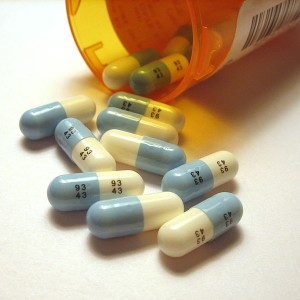
If you could get 70 percent of Americans addicted to your drugs and rake in $280 billion a year in the process, would you do it?  If you could come up with a "pill for every problem" and charge Americans twice as much for those pills as people in other countries pay, would you do it?  If you could make more money than you ever dreamed possible by turning the American people into the most doped up people in the history of the planet, would you do it?  In America today, the number of people hooked on legal drugs absolutely dwarfs the number of people hooked on illegal drugs.  And sadly, the number of people killed by legal drugs absolutely dwarfs the number of people killed by illegal drugs.  But most Americans assume that if a drug is "legal" that it must be safe.  After all, the big pharmaceutical companies and the federal government would never allow us to take anything that would hurt us, right?  Sadly, the truth is that they don't really care about us.  They don't really care that prescription painkillers are some of the most addictive drugs on the entire planet and that they kill more Americans each year than heroin and cocaine combined.  They don't care that antidepressants are turning tens of millions of Americans into zombies and can significantly increase the chance of suicide (just look at the warning label).  All the big pharmaceutical companies really care about is making as much money as they possibly can.  The following are 20 signs that the pharmaceutical companies are running a $280 billion money making scam…

#1 According to a study conducted by the Mayo Clinic, 70 percent of Americans are on at least one prescription drug.  An astounding 20 percent of all Americans are on at least five prescription drugs.

#2 According to the CDC, approximately 9 out of every 10 Americans that are at least 60 years of age say that they have taken at least one prescription drug within the last month.

#3 The 11 largest pharmaceutical companies combined to rake inapproximately $85,000,000,000 in profits in 2012.

#4 During 2013, Americans will spend more than 280 billion dollars on prescription drugs.

#5 According to Alternet, last year "11 of the 12 new-to-market drugs approved by the Food and Drug Administration were priced above $100,000 per-patient per-year".

#6 The CDC says that spending on prescription drugs more than doubledbetween 1999 and 2008.

#7 Many prescription drugs cost about twice as much in the United States as they do in other countries.

Please continue reading at:

Holycrap! Russia agrees $270 billion 25 year oil deal with China - MarketWatch

Russian oil major OAO Rosneft has agreed on a 25-year contract with China to deliver 365 million tons of oil to the country in a deal worth $270 billion.

Russia already supplies China with 15 million tons of oil annually.

Please read full and follow at: http://www.marketwatch.com/story/russia-agrees-270-billion-oil-deal-with-china-2013-06-21

US foods that are BANNED in other countries for containing dangerous chemicals

....Do you like citrus drinks, like Mt. Dew, Squirt or Fresca? Then you also like brominated vegetable oil, which is banned in more than 100 countries because it has been linked to basically every form of thyroid disease - from cancer to autoimmune diseases - known to man.

In Singapore you can get up to fifteen years in prison and penalized nearly half a million dollars in fines for using an ingredient found in common U.S. bread products

Other food products made from brominated vegetable oil include New York brand flatbreads, bagel chips, Baja Burrito wraps and other bread products.

Of brominated vegetable oil, the FDA says it is approved 'for flavoring oils used in fruit-flavored beverages, for which any applicable standards of identity do not preclude such use, in an amount not to exceed 15 parts per million in the finished beverage.'

Then there's things like Hungry Man frozen dinners, which will fill you up - with azodicarbonamide, a chemical used make things like bleach and rubber yoga mats.

Most frozen potato and bread products - like different varieties of McCain brand french fries - contain the chemical, as well as several store brand bread products.

Azodicarbonamide is known to induce asthma, and has been banned in Australia, the U.K. and most other European countries. If you were to use it as a food ingredient in Singapore, you could face up to 15 years in prison and a $500,000 fine.

According to the FDA, Azodicarbonamide is 'approved to be a bleaching agent in cereal flour' and is 'permitted for direct addition to food for human consumption.'

‘Don’t take vitamin pills’: U.S. doctor warns that some supplements could HARM health

  • Dr Paul Offit, who has written a book about 'alternative medicine', says that the trend for super-strength supplements are dangerous
  • Said that multivitamin pills are unlikely to do harm but may be of no benefit
  • But pediatrician added that in certain cases, such as during pregnancy, certain supplements, such as Vitamin D, can boost health
  • Said that Apple founder Steve Jobs might be alive today if he hadn't used 'alternative therapies' as 95% of those with his cancer survive with surgery

A U.S. doctor is has warned people against taking health supplements, saying they could pose a risk to health.

Dr Paul Offit, who has written a book called 'Do You Believe In Magic? The Sense and Nonsense of Alternative Medicine', said that very few alternative health supplements are of any benefit and could in fact carry health risks.

He added that people often believe that supplements are harmless but that this simply isn't true – particularly in the case of super-strength supplements which are becoming increasingly popular.

Read more: http://www.dailymail.co.uk/health/article-2345988/Dont-vitamin-pills-U-S-doctor-warns-supplements-harm-health.html

Jun 22, 2013

Beijing Pollution So Bad That International Schools Build Filtered Air Domes for Children - via @latimes

Via: Los Angeles Times:
After nearly two decades in Beijing, David Wolf knew it was time for a change when his 11-year-old son, Aaron, somberly asked him, "Dad, when you were growing up, did you ever have PE outdoors?" Wolf had grown up in smog-choked Los Angeles in the 1970s, but even that wasn't nearly as bad as Beijing today. His son, like many young students in the city, has been kept inside for months, with the luckier children getting the chance to exercise under huge air-filtered domes that their international schools have built.

Please continue reading at:

NOAA predicts dead zone size of New Jersey in Gulf of Mexico

This year, NOAA predicts a massive "dead zone" the size of New Jersey will bloom in the Gulf of Mexico.

via NOAA predicts dead zone size of New Jersey in Gulf of Mexico

Jun 21, 2013

WTF? In all but six states, women can be fired for being abused by spouse #CivilRights

Think Progress - Last week, Carie Charlesworth, a teacher in California and a victim of domestic violence, was fired from her job because her abusive husband invaded the school parking lot and put the school on lockdown. While her abuser was sent to prison, she was also punished for his crime by losing her employment.

The school's action -– firing her because she is a victim of domestic abuse –- is sadly legal in most states. 
Just six, Connecticut, Hawaii, Illinois, New York, Oregon, and Rhode Island, have laws on the books that bar employment discrimination against victims of domestic abuse or sexual assault, according to an up-to-date document tracking these laws from Legal Momentum.

Read on at:

Holy Crap!! 1 in 6 women in fracture clinics report domestic violence #peace #civilrights

Prevalence of abuse and intimate partner violence surgical evaluation (PRAISE) is the largest prevalence study done so far in orthopaedics. Orthopaedic surgeons should be confident in the assumption that 1 in 6 women have a history of physical abuse, and that 1 in 50 injured women will present to the clinic as a direct result of intimate partner violence (IPV). These findings warrant serious consideration for fracture clinics to improve identification of, respond to, and provide referral services for, victims of IPV.
The Lancet (6/12) 

Intimate partner violence (IPV) is the leading cause of non-fatal injury to women worldwide. Musculoskeletal injuries, which are often seen by orthopaedic surgeons, are the second most common manifestation of IPV. We aimed to establish the 12-month and lifetime prevalence of IPV in women presenting to orthopaedic fracture clinics.
Methods

The PRAISE team of 80 investigators did a cross-sectional study of a consecutive sample of 2945 female participants at 12 orthopaedic fracture clinics in Canada, the USA, the Netherlands, Denmark, and India. Participants who met the eligibility criteria anonymously answered direct questions about physical, emotional, and sexual IPV, and completed two previously developed questionnaires (Women Abuse Screening Tool [WAST] and Partner Violence Screen [PVS]). We did a multivariable logistic regression analysis to investigate the risk factors associated with IPV.

Please read on at:

Vitamin D Deficiency and Risk for Cardiovascular Disease

Vitamin D and mortality
This study found an inverse association between 25(OH)D and all-cause and cardiovascular disease mortality in healthy adults with serum 25(OH)D levels ≤21 ng/mL. Clinical trials for the primary prevention of cardiovascular disease with 25(OH)D supplementation may target healthy adults with serum 25(OH)D levels ≤21 ng/mL to validate these findings. The American Journal of Medicine (6/2013) 
From AJM and other Elsevier publications

U.S. adults smoking smoking less, CDC not clear why? Dahhh, the economy guys. via @USAtoday

A CDC report found 18% of adults smoked last year, compared with 19% in 2011
Smoking rates are declining after they plateaued in the past seven years The CDC's graphic advertising campaign may be a factor in the decline. The smoking rate for adults in the USA dipped last year after a seven-year stall, a new government report says. It's too early to tell why.

Read on at:

Singapore worst air pollution crisis in its history - can chemically induced rain clear the air?

Governments in south-east Asia meet to discuss growing crisis and people are warned to remain indoors
Singapore has been hit by the worst air pollution crisis in its history, while government agencies try to induce rain in an attempt to stop forest fires spreading a smoky haze across three south-east Asian countries.

The average Pollution Standard Index (PSI) – the measurement for air pollution – hit 401 at midday today, beating previous records of 371 and 321 on the previous two days. A reading between 101 and 200 is considered unhealthy. Anything over 300 is "hazardous".

It is six days since the clouds of smoke first descended on Singapore, the result of fires in neighbouring Sumatra, Indonesia. Blaze season usually runs from June to September, when land is illegally cleared in this fashion for palm plantations.

Singapore's environment minister flew to Jakarta today to discuss measures to tackle the forest fires, and the Indonesian National Disaster Management Agency said it plans to use helicopters in a "water-bombing" operation, alongside more than 100 firefighters on the ground.

Please read & follow:

Woohoo! H.R. 1825, Opens Federal Land to Recreational Fishing and Hunting Opportunities

H.R. 1825 would require federal land management agencies to provide access to certain federal lands for hunting, fishing, and recreational shooting activities. The bill also would require those agencies to prepare annual reports identifying lands that have

Read complete document:

Drill baby, drill H.R. 2231, Offshore #Energy and #Jobs Act #Green?

H.R. 2231 would revise existing laws and policies regarding the development of oil and gas resources on the Outer Continental Shelf (OCS). It would direct the Department of the Interior (DOI) to adopt a new leasing plan for the 2015-2020 period, require auctions of leases in certain areas in the Atlantic and Pacific OCS, and reduce the department's discretion regarding which regions would be included in future lease sales. Under this bill, some of the offsetting receipts from leases issued in newly available areas would be spent, without further appropriation, to make payments to states. Finally, H.R. 2231 would direct DOI to collect fees from certain firms that operate in the OCS and to implement various administrative reforms... CBO estimates that enacting H.R. 2231 would reduce net direct spending by $1.5 billion
over the 2014-2023 period.

Deaths and injuries in grains handling ‘too frequent’ and could be prevented, says US OSHA

Cases of death and injury in the US grains handling sector are too frequent and could be prevented, says the US Department of Labor's Occupational Safety and Health Administration. Read on at: http://www.foodnavigator-usa.com/Markets/Deaths-and-injuries-in-grains-handling-too-frequent-says-US-OSHA

Only 5% Of People Wash Their Hands Correctly | 23% don't even use soap.

And 23 percent don't even use soap. That's messed up, people.

"Many people do not wash their hands when the behavior in which they engage would warrant it," begins a recent study from Michigan State University, and I'm sorry to say it only gets grosser from there. Researchers sneakily observed 3,749 people in public restrooms and found that nearly all of them-95 percent-didn't wash their hands long enough to kill germs.

Even scarier, 15 percent of men and 7 percent of women did not wash their hands at all. When they did bother to turn on a faucet, half of men and 22 percent of women neglected to use soap! (Or, as the researchers describe it: They "attempted to wash their hands," but failed.)

The CDC says you need to wash your hands-with soap!-for at least 20 seconds in order to kill disease-causing germs. Alas, the people in this study only washed their hands for an average of 6 seconds.

"Imagine you're a business owner and people come to your establishment and get foodborne illness through the fecal-oral route-because people didn't wash their hands-and then your reputation is on the line," says Carl Borchgrevink, a professor at MSU and the study's lead investigator. "You could lose your business." Or, imagine you're a person of any occupation, and the people around you have poop on their hands-because they don't wash their hands.

This extensive study founds lots of other interesting tidbits about hand-washing habits. Here are a few:

  • People were more likely to wash their hands in the morning
  • People were less likely to wash their hands if the sink was dirty
  • People were more likely to wash their hands if there was sign to remind them

Other hand-washing research has found that college students are disgusting, people will wash their hands if they're being watched, and antibacterial soap isn't much better than the regular kind.

The study appears in the Journal of Environmental Health


Please read full and follow at:

How Geography Drives Energy Development - #Energy via @PopSci

Worldwide renewable energy production reached 66.83 quadrillion BTUs in 2010. The countries in the Organisation for Economic Co-operation and Development—which keeps detailed records for its 34 members [see map]—produced 16.50 quadrillion BTUs that year. Which technology works in which country is often a matter of topography.

Global Landscapes
Please read full and follow at:

All Of America's Waterways On One Map [Infographic]

Vector Waterways

Nelson Minar via Flickr

And you thought the U.S. had deserts!

Who knew America was so well hydrated? These maps, created by former Google engineer Nelson Minar using data originally from the U.S. Geological Survey, show America's extensive system of waterways, including streams, tributaries and creeks. Even in places you don't often think of as water-logged, it's a surprisingly expansive network.

As beautiful as the maps turned out, Minar created the project largely just as a tutorial on how to make a vector-based map. (His code and more background on the process are on GitHub.) "It's mostly a demo project with readable source," he writes on his blog, "but it's also kind of pretty."

This particular map includes all flow lines, which is why you see a lot more blue than you might expect in desert areas--it encompasses seasonal water flow, like creek beds that are dry for much of the year. Down in Florida, the Everglades don't have well-defined enough flow lines, so the swampy preserve isn't included, and the state looks mysteriously white in comparison to, say, New Mexico.

And here's California and some of the surrounding area (look how all the squiggles converge on the California Delta near the San Francisco Bay over at the left):

You can see the full zoomable map and pinpoint precise waterways here.

Via http://gearjunkie.com/rivers-of-america-map

Where To Hide When The Ecopocalypse Hits [Infographic]

Map Of The U.S. By Volume Above Sea Level

Michael Scott Cuthbert and Nate Barksdale

Let this map of U.S. states scaled by volume above sea level guide you to your water-damaged, dystopian home of the future.

Thanks to climate change, our oceans could rise by as much as 20 or 30 feet in the coming centuries. You can either build an ark (which sounds like an awful lot of work) or high-tail it to higher ground.

This map, designed by MIT music professor Michael Scott Cuthbert and researched by writer/designer Nate Barksdale, can help you plan your trip. The United States is organized by volume above sea level: the more high-reaching areas a state has, the more space on the map it gets. So the mountainous Southwest ends up holding on to a lot of its space, while the relatively low-lying South has almost completely vanished. If you're into cooler climes, Alaska seems to be doing pretty well, too. Rhode Island doesn't have much space left at all--but maybe if there's a tiny bit post-apocalypse you can create a Waterworld-style fortress island.

Please read full and follow at: http://www.boston.com/bostonglobe/ideas/brainiac/2013/06/global_warming.html