Feb 3, 2017

Final Rule for Control of Communicable Diseases Uses International Quarantine Powers To Stop Outbreaks

CDC - The Department of Health and Human Services (HHS) Centers for Disease Control and Prevention (CDC) published the final rule for the Control of Communicable Diseases on January 19th, 2017 which includes amendments to the current domestic (interstate) and foreign quarantine regulations for the control of communicable diseases. These amendments have been made in response to public comments received regarding the notice of proposed rulemaking published on August 15, 2016. This final rule improves CDC's ability to protect against the introduction, transmission, and spread of communicable diseases while ensuring due process. This rule will become effective on February 21st, 2017. The final rule is published on the Office of the Federal Register's website.

Response to public comments

HHS/CDC published a Notice of Proposed Rulemaking (NPRM) on August 15, 2016, and received 15,800 public comments from individuals, stakeholders, and other interested parties during the 60-day comment period.

These comments covered a range of topics, including concerns regarding:

  • agreements between the CDC and persons subject to federal public health orders,
  • forced vaccination or medical treatment,
  • CDC's constitutional and statutory authority for carrying out quarantine and isolation,
  • data collection from aircraft and vessel operators,
  • people being quarantined for non-quarantinable illnesses,
  • due process,
  • electronic monitoring and surveillance of persons subject to federal public health orders,
  • the proposed definition and requirement for airline and vessel operators to report an "ill person,"
  • public health risk assessments being made by non-medically trained personnel,
  • payment for hospital and other expenses for persons subject to federal public health orders, and 
  • the proposed definition of "indigent."

The Final Rule:

  • Outlines the provisions to reflect input received from individuals, industry, state and federal partners, public health authorities, and other interested parties.
  • Does not authorize compulsory medical testing, vaccination, or medical treatment without prior informed consent.
  • Requires CDC to advise individuals subject to medical examinations that such examinations will be conducted by an authorized health worker and with prior informed consent.
  • Includes strong due process protections for individuals subject to public health orders, including a right to counsel for indigent individuals.
  • Does not expand CDC's authority beyond what is granted by Congress, nor does it alter the list of diseases subject to federal isolation or quarantine, which is established by an Executive Order of the President.
  • Limits to 72 hours the amount of time that an individual may be apprehended pending the issuance of a federal order for isolation, quarantine, or conditional release.
  • Provides the public with explicit information about how and where the CDC conducts public health risk assessments and manages travelers at US ports of entry.

For more information about the Final Rule, please visit the Office of the Federal Register's website.

Source: https://www.cdc.gov/quarantine/final-rule-communicable-diseases.html

Looking for data on safety hazards in a specific industry from other health or labor departments

NIOSH - Clearinghouse Showcases States' Health & Safety Publications

  • Ever wonder which states track work-related heat illness or address it in different industries?
  • Want to search OHB's 800 publications by keyword or browse them by language, industry, or health condition?
  • Looking for data on safety hazards in a specific industry from other health or labor departments?

Check out the State-based Occupational Health Surveillance Clearinghouse!

CDC's National Institute for Occupational Safety and Health or NIOSH supports California and other state health departments and universities to track and study work-related injuries and illnesses. NIOSH set up the Clearinghouse to promote public access to publications from over 25 states, including thousands of educational materials, data and case reports, studies, investigations, articles, and more.

You'll find publications on traumatic injury, musculoskeletal disorders, toxic exposures, health disparities, and other cross-cutting health and safety issues. 


Source from CDPH - Occupational Health Branch

Toxic Paint Removers: Safer Alternatives through Green Chemistry

Our Green Chemistry at ESS, has ​replacing paint strippers and hazardous cleaners for over 20 year and this Article by CDPH - Occupational Health Branch discusses Safer Alternatives like ours for replacing Toxic Paint Removers.

A new digital story (video) produced by the California Fatality Assessment and Control Evaluation (FACE) program explains Jason's tragic incident, the hazards of using methylene chloride-containing paint strippers, and the safer alternatives that are available. Watch the video

Resources:
Methylene Chloride – OHB web page

Worried about Flint? California workers still exposed to lead at harmful levels

A new report from the Occupational Health Branch presents data on adults with elevated blood lead levels (BLLs)—now defined by health agencies as 5 micrograms of lead per deciliter (µg/dL) and higher. Between 2012 and 2014:
  • More than 6,000 workers were identified with an elevated blood lead level.
  • The majority were male, aged 20–59, and had a Hispanic surname.
  • 60% of workers with BLLs ≥10 µg/dL worked in the manufacturing sector, followed by 14% in construction.

Long-term lead exposure at levels above 5–10 µg/dL increases the risk for health effects such as hypertension, kidney disease, cognitive dysfunction, and adverse reproductive outcomes.

Even higher blood lead levels continue to be a problem among California workers. Blood lead levels of 40 µg/dL and above were reported among workers in industries that handle lead-containing bullets and firearms, and metal-related and construction industries.

For more information, see the full report: Blood Lead Levels in California Workers, 2012–2014.

​​

Feb 2, 2017

Evaluating Risk of Existing Chemicals under TSCA

Abstract: Under TSCA EPA is now required to evaluate existing chemicals to determine whether they "present an unreasonable risk of injury to health or the environment." Under the conditions of use for each chemical, EPA will assess the hazard(s), exposure(s), and the potentially exposed or susceptible subpopulations(s) the Agency plans to consider. This information will be used to make a final determination as to whether the chemical presents an unreasonable risk.

This page links to the risk evaluation process and docket numbers for each chemical currently under evaluation.

URL:
https://www.epa.gov/assessing-and-managing-chemicals-under-tsca/evaluating-risk-existing-chemicals-under-tsca

Source:
U.S. EPA

First study to look at occupational exposure to bisphenol A (BPA) among manufacturing workers in the United States.

By Robin Mackar - NIH: A new study, supported by the National Toxicology Program (NTP), is the first to look at occupational exposure to bisphenol A (BPA) among manufacturing workers in the United States.

Researchers at the National Institute for Occupational Safety and Health (NIOSH) led the study, which appeared Jan. 1 in the journal Annals of Work Exposures and Health. NIOSH is one of the member agencies of NTP, and the study was conducted as part of an ongoing collaboration between the two agencies.

Manufacturing workers face higher BPA exposure

The researchers found that manufacturing workers exposed to BPA had levels of the chemical in their urine that were on average about 70 times higher than most adults in the U.S. population. Certain job categories were associated with average levels more than 300 times that of the general population.

The study did not evaluate the health of the workers involved. "Researchers studying health outcomes need exposure data, and published data on occupational exposures in the U.S. was very limited," said the paper's lead author Cynthia Hines, a senior research industrial hygienist with NIOSH. "Manufacturing workers may face the highest exposure levels of any worker group, so we concentrated on them, as an important first step."

Widespread exposure in general population

Researchers at the Centers for Disease Control and Prevention (CDC) have found BPA in the urine of nearly all people tested, indicating widespread exposure in the U.S. population. "Diet is thought to be the main nonoccupational source of BPA exposure," the authors wrote. However, according to CDC, finding a measurable amount of BPA in a person's urine does not necessarily mean it will result in a health effect.

Workers who participated in the new study handled raw BPA, often in large quantities. Unlike the general population, workers in the NIOSH study were exposed to BPA mainly by inhalation and absorption through the skin.

Learning more about occupational exposure

BPA is used to make polycarbonate plastics and some epoxy resins that are used to protectively line some food cans. In the past, BPA was used as a developer on thermal paper. BPA may also be added to certain specialty waxes that are used to make wax patterns for casting metal parts in manufacturing plants.

"We wanted to work with NIOSH to design a study that would allow a comparison with a similar study done in China," said John Bucher, Ph.D., NTP associate director. The new study found levels comparable to those reported in Chinese workers. Researchers in China linked exposures to effects on the male reproductive system (see citations below).

Study participants

The NIOSH study included six U.S. companies that made BPA, made resins with BPA, made wax with BPA, or used wax made with BPA. A total of 78 workers participated in the study, mostly white males. Over two days, participants provided seven urine samples. The participants also answered questions about food and beverage products they consumed in the past 24 hours.

NIOSH researchers found increased urinary BPA levels in workers who performed tasks such as handling sacks of BPA and taking process or bulk samples containing BPA for quality control testing. Among the highest exposed workers were those who worked with molten casting wax that contained BPA. The lowest urinary BPA levels were found in workers who handled a resin product with only trace levels of BPA.

Minimizing BPA exposure

Hines noted that although Europe places some limits on BPA levels in air, there are no occupational exposure limits for BPA in the U.S. Until research sheds more light on the potential for health effects among workers, Hines suggested that companies could take steps to minimize exposures. Such steps include trying to contain BPA dust and vapor emissions with local exhaust ventilation; cleaning surfaces in production areas, offices, and lunch rooms to remove BPA residues; and using appropriate personal protective equipment, such as respirators and gloves.

Companies and workers should also take steps to prevent exposures of family members to BPA residues on work apparel or other items workers may bring home. The NIOSH Science Blog provides more information about this study and ways to reduce exposure.

See full By Robin Mackar - NIH

White House Orders “Regulatory Freeze”

(PAINT.ORG) Last week, President Trump, through the White House Chief of Staff, Reince Priebus, issued a memorandum implementing a freeze on federal regulations pending further Administration review. The memorandum directs federal agency/department heads to withhold sending any regulations to the Federal Register for publication until a current administration agency/department head reviews them.

Specifically, regulations sent to the Federal Register but not yet published are to be immediately withdrawn; regulations already published in the Federal Register and which have not taken effect are to be postponed for 60 days (from January 20); and, where the effective date has been delayed to review questions of fact, law, or policy, the agency/department should consider proposing further notice-and-comment rulemaking.

Excluded from the memorandum are regulations subject to statutory or judicial deadline and regulations addressing emergency situations or other urgent circumstances relating to health, safety, financial or national security matters.

The presidential directive indicates that "regulation" means regulatory action and includes any "guidance document" or any other substantive action by an agency including "notices of inquiry, advance notices of proposed rulemaking and notices of proposed rulemaking."  In addition, it includes any agency statement that set forth policy on statutory, regulatory, or technical issues or interpretations of statutes or regulations.

As such, the memorandum applies to final and proposed regulations, guidance, or interpretations of statute or regulations issued by federal agencies.  Already, several agencies have withdrawn final rules that meet the criteria above or extended the effective date.  These include the following:

  • U.S. Department of Transportation Pipeline Hazardous Materials Safety Administration Final Rule HM-215N on International Harmonization
    • Withdrawn
  • U.S. Environmental Protection Agency (EPA) Final Rule Formaldehyde Emission Standards for Composite Wood Products (EPA-HQ-OPPT-2016-0461)
    • Effective date extended until March 21, 2017
  • U.S. EPA Final Rule for Accidental Release Prevention Requirements: Risk Management Programs under the Clean Air Act
    • Effective Date extended until March 21, 2017

EPA has published a list of 30 regulations that are subject to the "Regulatory Freeze." Notably absent are rulemakings to implement the newly revised Toxic Substances Control Act (TSCA); EPA is moving forward with rule development on these issues.

Please note: this memorandum does not impact or change any obligations to comply with existing regulations nor does it apply to any state regulations.

Source: http://www.paint.org/regulatory-freeze/

Coalition Letter Urges Congressional Action on EPA’s Risk Management Program Final Rule

(PAINT.ORG) Last month, ACA signed onto a coalition letter to Congressional leaders expressing major concern over the U.S. Environmental Protection Agency's (EPA) final rule for Risk Management Programs (RMP). ACA and 20 other trade associations maintain that the final RMP rule not only imposes significant new costs without identifying or quantifying the safety benefits that will be achieved through these new requirements; but that it may actually compromise the security of facilities, emergency responders, and communities. As such, the trade associations urged Congress to disapprove the final RMP rule under the Congressional Review Act.

In the letter, ACA and the other trade associations underscored that the current RMP regulations include requirements that have produced and will continue to drive continuous safety improvements, provide robust protection for our employees and the public, and are not in need of revision.

EPA issued the final RMP rule in mid-January, stating that the amendments made to the final rule were aimed at modernizing RMP by (1) making changes to the accident prevention program requirements, (2) enhancing the emergency response and preparedness requirements, and (3) modifying the information availability requirements.

memorandum signed by President Trump last week put a "regulatory freeze" on certain regulations, including RMP.  As a result, the rule's new effective date is March 21, 2017.

"Unfortunately, EPA's final RMP rule fails to identify any meaningful safety benefit and may actually increase security risks given the rule's expanded public information disclosure requirements. It is not just industry that has this concern. White House Office of Management and Budget records show that during interagency review the Department of Homeland Security officials, and others, repeatedly raised security concerns with the RMP rule. In fact, one official stated that '[h]aving facilities share this information would be precedent setting — currently the [Chemical Facility Anti-Terrorism Standard (CFATS)], [Process Safety Management (PSM)], and [Bureau of Alcohol, Tobacco, Firearms and Explosives (ATF)] (licensee/permittee) programs do not share this level of detail with the public due to security concerns'…Federal regulations should not make it easier for sensitive information to wind up in the hands of criminals and terrorists."

In general, EPA's RMP program applies to all stationary sources with processes that contain more than a threshold of a regulated substance. The program's elements are intended to prevent accidental releases and reduce the severity of releases that occur. All sources must prepare and submit an RMP to EPA at least every five years. In addition, RMP Program 3 facilities involve processes subject to the Occupational Safety and Health Administration's (OSHA's) Process Safety Management (PSM) program Standard or are in one of the specified NAICS codes, such as chemical manufacturing. Together, PSM and RMP form the regulatory framework for prevention of catastrophic chemical accidents at fixed facilities.

ACA and its fellow signatories noted that beyond security concerns, it is unclear what, if any, safety benefits the final RMP will provide. "The lack of identifiable and quantifiable benefits stands in stark contrast to the clear costs associated with this rule. Whether it be the requirement of third-party auditor participation that will reduce the pool of qualified auditors, changing well-established audit procedures already designed to maximize safety effectiveness, or imposing ineffective requirements to consider 'inherently safer technology/design,' the final rule includes a litany of costly changes that have not been shown to increase safety."

The associations urged Congressional disapproval in order to protect national security and allow EPA to reconsider what, if any, revisions to the RMP regulations are needed to reduce the risk of an accidental release.

Source: http://www.paint.org/rmp-letter/

Employers are reminded to post injury and illness summaries now through April

OSHA reminds employers of their obligation to post a copy of OSHA's Form 300A, which summarizes job-related injuries and illnesses logged during 2016. The summary must be displayed in a common area where notices to employees are usually posted each year between Feb. 1 and April 30. Businesses with 10 or fewer employees and those in certain low-hazard industries are exempt from OSHA recordkeeping and posting requirements. Visit OSHA's Recordkeeping Rule webpage for more information on recordkeeping requirements

OSHA's free On-site Consultation Program helped more than 27,000 employers create safer workplaces in 2016

On-site Consultation Program

Last year, 27,385 small and mid-sized U.S. businesses took advantage of OSHA's free and confidential On-site Consultation Program to remove workplace hazards and better protect their workers. The program primarily benefits small and mid-sized businesses – 57% of those helped last year had fewer than 26 employees. Priority is given to high-hazard industries, with more than half of all visits going to construction or manufacturing sites. In 2016, consultants identified and helped employers eliminate more than 140,000 total hazards, protecting an estimated 3.3 million workers from possible injury, illness or death.

Feb 1, 2017

Sadly, Richard Raymond “grandfather of in-situ bioremediation” has passed away

He is acknowledged by the US EPA as the "grandfather of in-situ bioremediation" in the United States. During the early 1970's, while employed by the Sun Oil Company, he developed the microbial and field techniques that are now universally known as the "Raymond Process" for the cleanup of groundwater contaminated with petroleum and petroleum products, a great alternative to the endless and extensive process of "pump and treat." His 1974 patent for "Reclamation of Hydrocarbon Contaminated Groundwater" provided the basis for the development of the groundwater bioremediation industry that is now a worldwide business. His 1984 patent, "Stimulation of Biooxidation Processes in Subterranean Formations," developed the use of hydrogen peroxide to overcome limitations in the existing methods for mass transfer of oxygen to groundwater.

Countless books and research articles acknowledge Raymond's seminal contributions as the inventor of process technology for the in-situ bioremediation of contaminated groundwater. While at Sun Oil Co., Mr. Raymond directed a group of microbiology specialists, and early research activities greatly expanded the scope of biological hydrocarbon oxidations. 

Mr. Raymond has received numerous awards for his research over the years including the Society of Industrial Microbiologists Charles Porter Award. He also served on numerous committees including the API Groundwater Task Force, peer review panel of the Robert S. Kerr Environmental Research Laboratory, and the USEPA Valdez Oil Spill Panel. He received his B.S. and M.S. degrees in Microbiology from the University of Illinois-Champaign in 1947 and 1951, respectively. His college studies were interrupted by World War II, when he served as a B-17 navigator in the European theater. After graduation, he worked for Socony Mobil Oil Co. and Sun Oil Co. as a Research Microbiologist. After retiring from Sun Oil Co. in 1982, he founded the first in-situ bioremediation company (Biosystems, Inc.) in the US. The company was later purchased by the DuPont Company and became DuPont Environmental Remediation Services (DERS). 

May this legend in our bioremediation industry, "Rest In Peace". Our thoughts and prayers are extended to his family

Richard Cartwright PE, CHMM (IHMM Fellow)

NIOSH Free Sound Level Meter (SLM) app

CDC - The National Institute for Occupational Safety and Health (NIOSH) is pleased to announce the availability of a new mobile application (app) for iOS devices that can measure sound levels in the workplace. The app called the NIOSH Sound Level Meter (SLM) app can help promote better hearing health and prevention efforts at construction worksites by acquiring and displaying real-time noise exposure data when occupational safety and health professionals are not readily available. The NIOSH SLM app is free, easy to use, and can give any user immediate feedback about sound levels and noise exposure. 

Available for iOS Devices only.
Search the App Store: NIOSH SLM 

For more information:

Jan 31, 2017

Annals of Work Exposures and Health Vol 61 Issue 1 is now available online - free abstracts

​In January 2017, the Annals of Occupational Hygiene was renamed Annals of Work Exposures and Health. This was to signal an interest in all exposures occurring at work and their links to health, plus, indicate to occupational hygiene scientists that we are seeking a broader definition of 'exposure' and the impact that working conditions can have on the health of workers.

Annals of Work Exposures and Health Vol 61 Issue 1 is now available online. The contents list with links to free abstracts is provided below. The full text of the Editor's Choice, editorial, review and commentary are free to access online on the following link: https://academic.oup.com/annweh/issue.

Jan 30, 2017

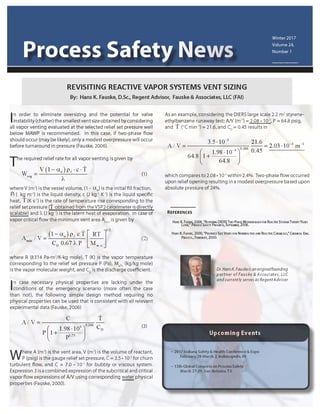
Process Safety News - Winter 2017

 Winter 2017 Process Safety News

This issue includes:

Winter 2017 Process Safety News web_Page_01.jpg

REVISITING REACTIVE VAPOR SYSTEMS VENT SIZING
Hans K. Fauske, D.Sc., Regent Advisor, Fauske & Associates, LLC 

QUALITATIVE FIRE RISK ASSESSMENT USING NFPA® 550, NFPA® 551 AND THE FIRE SAFETY CONCEPTS TREE
James A. Huddleston, P.E., Senior Consulting Engineer, Fauske & Associates, LLC

REVISTING CHERNOBYL - 30 YEARS LATER
AnnMarie Fauske, Customer Outreach & Digital Media Manager, Fauske & Associates, LLC

NEW IN FLAMMABILITY: THE DISCOVERY HYBRID RHEOMETER
Megan Piotrowski, Lab Chemist, Fauske & Associates, LLC

THREE CRITICAL OVERSIGHTS THAT PRECEDE COMBUSTIBLE DUST INCIDENTS
Tim Cullina, MS, PE, Senior Safety and Environmental Consulting Engineer
& Ursula Malczewski, Chemical Engineer, Fauske & Associates, LLC 

On-The-Job Deaths At Highest Level Since 2008

 Jack Benton, CDS: A total of 4,836 deaths due to workplace injuries occurred in 2015 – a 0.3 percent increase over 2014 and the most since 5,214 workers died in 2008, according to data released Dec. 16th, 2016 by the Bureau of Labor Statistics.


Other highlights from the 2015 Census of Fatal Occupational Injuries:

  • The 903 deaths among Hispanic or Latino workers and 495 deaths among African-American workers were the most since 2007 and 2008, respectively.
  • 650 deaths occurred among workers age 65 and older – the second-highest total among this demographic since the Census of Fatal Occupational Injuries began in 1992.
  • Roadway incident fatalities climbed 9 percent to 1,264, accounting for 26 percent of all fatal work-related injuries in 2015.
  • The private construction industry recorded 937 deaths, the highest total since 975 in 2008.
  • Heavy and tractor-trailer truck drivers experienced 745 fatal injuries, the most of any occupation.
  • Fatal injuries among private oil and gas extraction workers were 38 percent lower in 2015 than 2014.
  • The states with the highest number of worker deaths were Texas with 527, followed by California with 388, Florida with 272 and New York with 236.

Although the overall rate of fatal workplace injuries fell to 3.38 per 100,000 in 2015 from 3.43 per 100,000 in 2014, the rise in the number of fatalities alarmed officials.

"These numbers underscore the urgent need for employers to provide a safe workplace for their employees as the law requires," Secretary of Labor Thomas Perez said in a press release. "We have a moral responsibility to make sure that workers who showed up to work today are still alive to punch the clock tomorrow."

Meanwhile, AFL-CIO Director of Safety and Health Peg Seminario sounded a warning for the future. "The bottom line is that working people in this country need more safety and health protection – not less," Seminario said in a statement. "The new administration's actions on worker safety will be an important measure of whether they are keeping their campaign promises to improve the lives of workers."
 

Sources: Jack Benton, CDS

and http://www.bls.gov/news.release/cfoi.toc.htm

Jan 27, 2017

EPA announces a Public Meeting on Collecting Chemical Use Information

On February 14th, EPA will hold a public meeting to receive public input and information on uses and conditions of use for the initial ten chemicals to be evaluated under the Toxic Substances Control Act (TSCA), as amended by the Frank R. Lautenberg Chemical Safety for the 21st Century Act.  Information on uses and the conditions of use will assist EPA in identifying potential exposure scenarios for the ten chemicals.    The meeting will be held on February 14, 2017 from 9:00 a.m. to 3:00 p.m., at the Ronald Reagan Building and International Trade Center, Polaris Room, 1300 Pennsylvania Avenue Northwest, Washington, DC 20004.    To participate, please register online:  https://tscachemicaluse.eventbrite.com  The meeting will also be available by remote access for registered participants.  EPA has also established public dockets for those who wish to submit information.  Written comments and materials will also be accepted and should be submitted before March 1, 2017.    For additional information, including links to the public dockets, please visit:  https://www.epa.gov/assessing-and-managing-chemicals-under-tsca/evaluating-risk-existing-chemicals-under-tsca

FREE Webinar & Lunch: EPA RMP - THE FINAL RULE: How does this affect your facility?

PSM STANDARD – Recent Fifth Circuit opinion limits OSHA's power to issue citations for failing to address  PHA and audit findings.

PSRG Inc. will hold a special PSM/RMP Forum Luncheon Series from January 18, 2017 to February 22, 2017 in various locations. You are cordially invited to attend the program that is most convenient for you. There is no fee to attend this event. A complimentary buffet lunch will be provided.
 
After more than three years of review and iterations on proposed modifications to the RMP Rule (40 CFR 68), EPA announced on December 21 the long-awaited FINAL RULE. The 372-page final rule bolsters new requirements for third party audits, incident investigations, emergency preparedness and response, and information sharing which will affect every covered facility.

In a recent decision, the Fifth Circuit vacated OSHA citations issued to Delek Refining Co. in 2008 for the alleged failure to correct PHA and audit findings that had been conducted by the prior owner of the facility prior to its acquisition by Delek. The PHAs at issue were completed in 1994, 1998, 1999, and 2004, and the audits dated back to 2001 and 2004. In vacating the citation items, the Court unanimously rejected OSHA's argument that the alleged failures were continuing violations that extended the six month statute of limitations contained in the OSH Act. 
 
The guest speaker will be Mr. Mark S. Dreux, a nationally recognized expert attorney in occupational safety and health law and partner at Arent Fox LLP in Washington, DC. Mr. Dreux's presentation will discuss the EPA's new RMP Rule, how it impacts your business, and the necessary steps and timeline to comply.

U.S. Chemical Safety Board (CSB) released a safety video of its investigation of the June 13, 2013 explosion and fire at the Williams Olefins Plant in Geismar, Louisiana

January 26, 2017, Washington, DC – The U.S. Chemical Safety Board (CSB) released a safety video of its investigation of the June 13, 2013 explosion and fire at the Williams Olefins Plant in Geismar, Louisiana, which killed two workers and injured an additional 167.  The deadly explosion and fire occurred when a heat exchanger containing flammable liquid propane violently ruptured.
  The CSB's newly released 12-minute safety video entitled, "Blocked In," includes a 3D animation of the explosion and fire as well as interviews with CSB investigator Lauren Grim and Chairperson Vanessa Allen Sutherland. The video is based on the CSB's case study on the Williams incident and can be viewed on the CSB's website and YouTube.    Chairperson Sutherland said, "Our investigation on the explosion at Williams describes an ineffective process safety management program at the plant at the time of the incident. We urge other companies to incorporate our recommendations at their facilities and to assess the state of their cultures to promote safety at all organizational levels to prevent a similar accident. "    The CSB's investigation found many process safety management program deficiencies at Williams, which set the stage for the incident. In particular, the CSB found that the heat exchanger that failed was completely isolated from its pressure relief valve.    In the video, Investigator Lauren Grim said, "When evaluating overpressure protection requirements for heat exchangers, engineers must think about how to manage potential scenarios, including unintentional hazards. In this case, simply having a pressure relief valve available could have prevented the explosion."
CLICK HERE TO WATCH THE NEW SAFETY VIDEO: http://www.idevmail.net/link.aspx?l=6&d=86&mid=414620&m=1816

Jan 26, 2017

WISCONSIN - Pharmaceutical pollution takes toll on crayfish and other species

By Carin Tunney at Great Lakes Drugs seeping into groundwater threaten crayfish and have a domino effect of environmental impacts that harm fish and other species, according to new research.

Pharmaceutical pollution happens when medicines are improperly disposed or flushed into septic tanks and sewers as the body eliminates them, said Paul Moore, an ecologist from Bowling Green State University's Laboratory for Sensory Ecology.

Treatment can't filter them so they make their way into lakes and streams, he said.

Moore recently published research that shows even at low levels, a popular headache medicine has a negative environmental impact. His research exposed crayfish to naproxen, an over-the-counter pain medication.

And that's bad news for many other aquatic species faced with pollution from pharmaceuticals.

Crayfish are a keystone species, one that many others species depend upon, Moore said. If they died, so would trout and bass. That would lead to algae overgrowth and in turn, insects and invertebrates would die when decaying algae used up all the oxygen.

Moore's research was prompted when anglers reported fewer crayfish in Burt Lake in Cheboygan County, Michigan. Although the observations were not scientific, Moore decided to evaluate the potential threat of pharmaceutical exposure to crayfish survival.

He placed crayfish into simulated streams made of cinderblocks at the University of Michigan's Stream Research Facility in Pellston, Michigan. The streams had a constant flow that mimicked a natural river, he said.

The study found the naproxen made the crayfish less aggressive, Moore said.

"What is unique is that [crayfish] fight all the time, and the fighting determines who gets food, who gets shelters, who gets mates, " he said. "Depending on the different concentrations of the exposure, we saw different effects on their fighting behavior."

Moore said the reduction of aggression is likely because naproxen impacts the crayfish's sense of smell. Smell sends their brains cues about critical elements of survival.

"When they start to fight, they release chemical signals back and forth, and inside these signals are anything from the sex of the animal to the reproductive state, even a type of identity so they know if they fought this guy yesterday or the day before," he said. "So if you block that ability . . . they fight more intensely or less intensely based on the amount of exposure they have."

Moore focused on naproxen because he said non-prescription drugs are the fastest growing source of pharmaceutical pollution.

Other research shows hormones and antidepressants also harm species, including fish.

This type of research raises alarm for people, said Lyman Welch, the legal director for Alliance for the Great Lakes, an advocacy group based in Chicago.

"The effects on fish and aquatic life can be a real indicator of concern for humans," he said. "The fact that pharmaceuticals harm fish can act as a canary in a coal mine and give us a warning that we need to pay more attention."

Forty-million people rely on the Great Lakes for drinking water and recreation, Welch said.

"There is no known [human] health risk at the low levels of the chemicals that are being found right now, but our detection levels have improved, and we are starting to see these chemicals." Welch said. "And there is a need to do additional research to better understand the impacts of these chemicals."

Alliance for the Great Lakes supports forcing pharmaceutical companies to help pay some of the cost for disposal. Only nine counties throughout the U.S. require drug companies to pitch in, but the laws are changing, Welch said.

Cook County, Illinois, approved an ordinance last November that requires pharmaceutical companies to pay for some of the disposal cost. The buy-back program forces those who sell medications to register with the county and pay a fee for disposal. The ordinance has a provision that penalizes the drug producers if they pass the cost on to consumers.

Counties in California and Washington have similar laws.

But Welch said most programs rely on consumers to safely dispose of medications.

The Tip of the Mitt Watershed Council in Petoskey, Michigan, helped organize safe drop-off sites for unused drugs within four-counties in Northern Michigan, said Executive Director Gail Gruenwald. The project is funded by grants from local community foundations, the Michigan Department of Environmental Quality, the Environmental Protection Agency and others.

It is a coordinated effort by pharmacies, hospitals and law enforcement. Prescription medications, including narcotics, can't be left in an unsupervised dropbox and law enforcement must transport controlled substances to disposal sites.

Over the last nine years, residents turned in 12 tons of waste, including prescription drugs, over-the-counter medications and beauty supplies, Gruenwald said.

"At this point there are not solutions for removing pharmaceuticals once they are in lakes and streams. So this is a prevention issue," she said. "We need to keep it out of the waterways."

Please read full By Carin Tunney at Great Lakes Echohttp://greatlakesecho.org/2017/01/25/pharmaceutical-pollution-takes-toll-on-crayfish-and-other-species/

Use EPA’s Safer Choice label to make better purchasing decisions

saferchoice_rgbFinding products that are safer for you, your employees, your family, and the environment should be easy. That's why EPA developed the new Safer Choice label. Products with the Safer Choice label help consumers and commercial buyers identify products with safer chemical ingredients, without sacrificing quality or performance.

More than 2,000 products currently qualify to carry the Safer Choice label. You can find products for your home at retail stores, as well as products to use in facilities like schools, hotels, offices, and sports venues.

Participation in the Safer Choice program is voluntary. Companies that make products carrying the Safer Choice label have invested heavily in research and reformulation to ensure that their products meet the Safer Choice Standard. These companies are leaders in safer products and sustainability.... EPA has more information here

Please read full at GLRPPR by the Fabulous Laura L. Barnes 

Why Walmart’s $250 Billion Pledge Will Make US Manufacturing More Sustainable

VIA Jessica Lyons Hardcastle at Environmental Leader The Walmart US Manufacturing Innovation Fund has invested about $3 million in projects that aim to make domestic manufacturing more cost-effective and sustainable, bringing its grants awarded total to $10 million.

The fund, which launched in 2014, is a collaboration between Walmart, the Walmart Foundation and the United States Conference of Mayors. It focuses on making it both easier and more competitive to manufacture household goods in the US. It's also part of the retail giant's larger commitment to invest $250 billion in American manufacturing by 2023.

An estimated 1 million new US jobs will be created through Walmart's manufacturing initiative, according to the Boston Consulting Group.

An earlier Innovation Fund investment, for example, went to Cornell University, which developed a textile recycling technology that turns post-consumer textiles into new products and also reduces energy and water consumption in the process.

In its third and final round of grants, announced yesterday, the Innovation Fund has awarded about $3 million to six research and academic institutions.

The grant recipients were selected for their ability to address two key challenges to domestic manufacturing:

  1. Reducing the cost of textile manufacturing, including home textiles and apparel, in the US by addressing obstacles throughout production.
  2. Improving common manufacturing processes with broad application to many types of consumer products.

Please read full by Jessica Lyons Hardcastle at Environmental Leader

Zero Waste is Within Our Reach, But….

Via EPA Blog -By Sarah Levinson I would have guessed that my fellow EPA employees would be leaders when it comes to recycling and reducing wastes. Turns out we are leaders, but not quite as far out front as I had hoped. In 2015, a presidential Executive Order on Sustainability directed federal agencies to do their best to divert at least half our non-hazardous wastes into recycling and composting, and to work our darnedest to reach zero waste. While we auditwaitiwaitposterat EPA's New England office have indeed succeeded in diverting more than half our waste to recycling and compost,  our regional office has yet to achieve net-zero waste (defined as sending at least 90 percent of our waste to recycling or composting) despite our best efforts.  We, like many other organizations, face many of the same challenges when it comes to modifying our own behavior.

My job has been to help my colleagues make the "green choice" when managing wastes they generate in the office. By working with a small team of dedicated volunteers, the Green Team as we are known, instituted a composting program and we have done extensive education and outreach to promote both recycling and composting. We have put out recycling guides and compost guides, posted clear signage showing usual items for composting as well as recycling, held informational sessions, provided tips for preventing waste in the first place, and demonstrated the impact that compost amended soil can have on moisture retention and plant growth. We have also reduced paper communications and urged employees to carry reusable shopping bags, even providing the bags in our lobby. We tried to tap into the competitive spirt, running a contest between offices to see which office could divert the most from the trash stream.

Even with all of these activities and ever since we instituted composting which greatly boosted to our diversion rate, our diversion rate seems to have become stagnant. After some thought about this challenge, the Green Team decided that in order to keep improving, we needed to know what was being thrown into our trash. Specifically, we sought to identify "contaminants" that shouldn't be in the trash.

Consequently, and timed to coincide with America Recycles Day Nov. 15, The Green Team undertook a messy, but

Most of the waste in our trash containers bound for the landfill should have been recycled or composted.

Most of the waste in our trash containers bound for the landfill should have been recycled or composted.

detailed one-day waste audit. Eight dedicated sorters separated 44 pounds of trash in about two hours. To our surprise, although staff had composted and recycled 75 percent of their unwanted materials, we found that two thirds of the material thrown in the trash could still have been recycled or composted. There were apple cores, banana and orange peels, paper bags, plastic containers and glass bottles all in the trash, when these things could have and should have been placed in recycling or the compost collection. It turned out that only a third of the material in the trash was truly trash and furthermore, we found that had staff properly sorted these items, we could have met the goal of zero waste for that day!

So while we didn't attain our zero waste goal on Nov. 15, we now know that zero waste is well within our reach. Additionally, because we took many pictures of the "contamination" found in our trash, we now are using the photos to conduct targeted education and outreach. We hope that for many, "seeing" the poor choices that they made will turn them into "believing" the errors of their ways and modify their behavior accordingly. Additionally, by looking closely at was in our trash, we are able to strategize and discuss new ideas to implement to further reduce our waste.

I know that the Green Team will persevere with new ideas, and new efforts to guide and motivate behavioral change. I know that the Green Team won't give up our quest and am confident that it is just a matter of time until we attain our zero waste goal, becoming true leaders in living a more sustainable lifestyle, especially because we have shown it to be possible.

Please follow: EPA Blog

Looking for a contract Safety Inspector for 12 weeks at night on Downtown Milwaukee Wisconsin project

NEEDED: Inspector for 12 weeks from 4 p.m. to midnight with a safety construction background and experience in safety inspections. 

Must have: Background in construction safety including precast/rigging.

PROJECT LOCATION: Downtown Milwaukee Wisconsin 
 If you know of anyone who might have an interest, please contact via email jim (at) safetyconnections.com

Jan 25, 2017

Arizona experts want better tracking methods for drugs in your water

AZcentral: T​he Arizona health community distributed 305 million pain reliever pills last year – enough to provide 24-hour medication for every adult in the state for two straight weeks, according to the Arizona Criminal Justice Commission.

As those pills are taken or tossed, some of the chemicals found in them can end up in the water supply.

Chemical contaminants, ranging from prescription drugs to hygiene products, can enter the environment through landfills, flushed waste and shower drains. In the U.S., some of the most common contaminants include prescription and non-prescription drugs, according to the U.S. Geological Survey.

"Even though there are probably more questions than answers surrounding this subject, it is not new," said Jennifer Martin, a water coordinator for the Grand Canyon Chapter of the Sierra Club. "The amount of pharmaceuticals and toiletry chemicals entering the environment is comparable to pesticides, but gets a lot less attention."

The impact these chemicals have on the environment is not well understood. There are few studies dedicated to monitoring opioids as they move from the population to waste products and finally to the environment, said Beth Polidoro, a researcher of risk assessment, applied toxicology and environmental chemistry in the School of Mathematical and Natural Sciences at Arizona State University.

By Environmental Protection Agency standards, opioids fall under the Pharmaceutical and Personal Care Products category. In other words, opioids are considered "daily use chemicals," along with other types of medicines, shampoos, detergents and perfumes, said Leif Abrell, an associate research scientist in the Department of Soil, Water and Environmental Science at the University of Arizona.

The EPA regulates contaminants in drinking water considered toxic to humans. However, the disposal of most of the daily use chemicals – like opioids – aren't regulated and are treated by wastewater treatment plants, he said. Abrell said it would be very difficult to monitor because the resources just aren't available.

With millions of painkillers circulating annually, health and environmental officials often encourage consumers to use pill drop-off locations to dispose of unwanted or leftover pills. However, "contaminants of emerging concern" continue to show up in water samples throughout Arizona.

Between 2007 and 2009, water samples from Arizona surface water, wastewater, drinking water treatment plants and groundwater recharge sites showed 26 contaminants in a study by Chao-An Chiu — who authored the study as a doctoral dissertation — and Paul Westerhoff, professor and senior adviser on science and engineering to the ASU Vice Provost.

Water samples taken from the Salt River — where visitors often spend summer days tubing, swimming and tanning — and other groundwater and surface water sources showed evidence of consistent contaminants, such as acetaminophen, oxybenzone and caffeine.

The Salt River watershed and Colorado River systems supply nearly 3.5 million people in metro Phoenix with drinking water, according to the study.

The study called for better tracking of contaminants in drinking water and suggested establishing a database and long-term monitoring.

Although pharmaceuticals are not deemed an "appreciable risk to human health" when consumed via drinking water, another study in Europe found that daily use chemicals contribute more to water toxicity than high priority pollutants defined by the Clean Water Act.

On a national level, researchers from the EPA surveyed 50 large wastewater treatment plants in the U.S. to determine whether they could find traces of 56 pharmaceuticals, drugs like oxycodone and hydrocodone, in the treated water.

The survey, released in 2013, found low concentrations of these drugs in every water sample they tested. Regardless of the findings, EPA researchers estimated adults and aquatic life faced low risk from this exposure.

Read full at: AZcentral

How to Best Manage Pharmaceutical Waste

EnvironmentalLeader:  As the pharmaceutical manufacturing industry grows, its waste generated grows, too — as does the market for medical waste management.

Proper waste management is key to minimizing environmental impact and reducing liability and risk associated with hazardous waste, writes environmental services provider Terrapure Environmental in a HazMat Management column.

"Proper waste management in the pharmaceutical sector involves more than just the recycling or destruction and disposal of materials," said Todd Smith, vice president of environmental solutions for Central Canada at Terrapure. "It is critically important to be able to monitor and track waste every step of the way, beginning at the customer's site, through transportation and ultimately the final disposal at a regulated waste management facility.''

GPS technology allows companies to monitor waste — from storage in bottles to drums, to when it reaches the waste management facility and is ultimately destroyed, Terrapure Environmental says.

Additionally, leading waste management companies have introduced barcoding technology that allows for further monitoring and reporting on waste.

Pharmaceutical manufacturers and retailers are also facing increasing regulations at the state and federal level related to how they manage waste.

Last March, Massachusetts lawmakers approved legislation that requires pharmaceutical manufacturers to finance and manage safe disposal of unwanted medications, making it the first state in the US to mandate drug take-back programs.

Since 2012, seven counties on the West Coast — six in California (Alameda, San Francisco, San Mateo, Santa Clara, Santa Cruz and Marin) and one in Washington (King) — passed laws that shift the cost burden for collecting and properly managing prescription drugs to drug makers.

The EPA is also expected to finalize a pharmaceutical waste rule this year that sets regulations on how healthcare facilities, including retail stores and pharmacies, manage and dispose of pharmaceutical waste.

As the amount of medical waste grows, and governments become more involved in regulating the management of this waste stream, the medical waste management market will also grow at a compound annual growth rate of 3.4 percent between 2015 and 2023 , says a Transparency Market Research report.

The market has only a few large companies and features the dominance of small- and medium-sized companies, which collectively account for more than half of the overall market, the report says.

Stericycle, the largest waste management company in the US was the only company to have a major share in the market; it accounted for a share of 23.2 percent in 2014. Small-scale medical waste management companies in the country, however, collectively accounted for 53.1 percent in the market in the same year.

New Zealand Bans Make-up with plastic beads

Isaac Davison
​: ​
Environment Minister Nick Smith says a crackdown on harmful plastics which make their way into New Zealand's waterways will not extend to plastic bags.

Smith today announced that cosmetic products containing tiny plastic particles known as microbeads would be banned in July next year because of concerns about their impact on the marine environment.

The move was welcomed by scientists, though they said New Zealand had been slow to act and further reduction of other plastics was needed. Environmentalists want the Government to go further by banning or taxing plastic bags.

Smith said the Government was targeting microbeads because they could not be recycled and because there was clear evidence of harm to waterways, fish and shellfish.

"There is no practical way that a New Zealander can take the microbeads in these products and somehow sieve them out and prevent them from getting into the marine environment," he said at a press conference in Wellington this afternoon.

"There is not the evidence in New Zealand that a substantive portion of the plastic bags that we use in shopping and other uses end up in the marine environment."

Smith said he would not rule out changes in relation to plastic bags in future, but the Government's focus was currently on a nationwide recycling scheme.


The United States and Canada have already begun the process of banning microbeads, and Australia has threatened a ban if companies do not voluntarily remove them from their products.

New Zealand's cosmetics industry said bans imposed by overseas countries meant most large manufacturers were already phasing out microbeads. Cosmetic Toiletry and Fragrance Association executive director Garth Wyllie said products containing microbeads would be "long gone" from shelves by the time New Zealand's ban came into force.

However, Smith said he was surprised by the number of products containing microbeads which were still available.

"I note that some companies have already announced that their intention is to phase them out. I was surprised today, despite those commitments, seeing a very wide range of dozens and dozens of products, everything from shampoos to face cleaners to shaving creams to sunscreen and toothpaste containing these microbeads."

Cosmetics giant The Body Shop said plastics such as polyethylene were no longer used in any of the company's products. Managing director of the New Zealand branch, Barrie Thomas, said the company replaced the beads with natural alternatives between 2014 and 2015.

Scientists with an interest in microplastics praised the Government's move while urging further action.

University of Canterbury senior lecturer Sally Gaw, from the Department of Chemistry, said microplastics were of concern because they were widespread in oceans and had been found in an increasing number of marine animals.

The Government's ban was a "great step forward", she said.

"Further steps will be required to reduce the enormous volume of plastics entering our oceans each year."

University of Auckland associate professor Mary Sewell, from the School of Biological Sciences, said New Zealand was "behind the rest of the world" because many countries had already banned the products.

'NO SENSE' IN USING PLASTIC

Environment Minister Nick Smith announced the ban this afternoon at a press conference in Wellington.

"The problem with microbeads is that they are too small to retrieve or recycle, they do not biodegrade, and that they are mistaken by marine life as food, causing long-term damage to aquatic animals and like fish and mussels," Smith said.

"The use of plastic microbeads in personal care products like facial cleaners and toothpaste makes no sense when there are biodegradable alternatives like apricot kernels and ground nut products that achieve the same results."

The plastic beads were first used in medical treatment, and the ban is unlikely to extend to medical products.

Companies who continued to sell products containing microbeads faced a maximum fine of $100,000.
​ Read full by: ​ By Isaac Davison

EPA - Modernizing the Risk Management Plan Rule

Our country's chemical industry provides necessary goods we use in our everyday lives, provides employment in many communities throughout the country, and provides key ingredients for many diverse industries nationwide. But while there are numerous chemical plants that operate safely, in the last decade nearly 60 people died, approximately 17,000 people were injured or sought medical treatment, and almost 500,000 people were evacuated or sheltered-in-place as a result of accidental releases at chemical plants. Over the past 10 years, more than 1,500 incidents were reported causing over $2 billion in property damage.

With this in mind, I'm proud to announce that EPA modernized the accidental release prevention requirements under the Clean Air Act, also known as our Risk Management Program (RMP). This rule is a crucial component of EPA's efforts to enhance the safety and security of chemical facilities nationwide. Safer facilities can save the lives of facility workers, first responders and nearby community residents. For example, these finalized amendments will help avoid accidents, such as the explosions at the Chevron Richmond refinery in 2012 and at West Texas Fertilizer in 2013.

In the Report for the President (June 2014) on implementing Executive Order 13650, Improving Chemical Facility Safety and Security (August 2013), we envisioned amending existing RMP regulations by 2016. The amendments were signed on December 21, 2016, and are available online at: https://www.epa.gov/rmp/final-amendments-risk-management-program-rmp-rule.

This rule is based on discussions and feedback spanning three years of across-the-board engagement with industry and first responders, as well as community leaders, local, tribal and state governments, environmental organizations, and other stakeholders – more than 1,800 participants in over 25 states. Taking input from first responders, facility owners and operators, state, local and tribal partners, and community members, we developed a broad request for information in 2015 and a proposed rule in February 2016. Since then, we have narrowed the proposal, after listening to concerns raised, for example the increased costs and workload to industry and first responders, security concerns regarding the public availability of information, and the need to focus on evacuation and shelter-in-place planning. This rule moves our efforts to enhance chemical facility safety forward, while listening to input from around the nation.

One contributing factor to chemical accidents is a lack of effective coordination between facilities and local emergency responders on the chemical risks at the facility. One of the most important benefits of the rule is to clarify who has response lead and who has the equipment to respond. Increasing coordination and establishing appropriate response procedures can help reduce the effects of accidents and save lives. That's why we're requiring annual coordination. Facilities must conduct notifications, field and tabletop exercises, and invite local responders to participate.

We are committed to preserving facility security while enabling communities to protect themselves. That's why the final rule strikes a balance between communities' right-to-know, for the sake of first responder, community and employee safety, and facility security concerns, for the sake of business confidentiality and broader, homeland security issues. Responders and community members can request appropriate facility chemical hazard information while allowing protection of sensitive information that could be misused. This can significantly improve community emergency preparedness and allow emergency planners to develop effective evacuation and shelter-in-place procedures.

Under this rule, facility owners/operators will better analyze why accidents happen and determine what they can do to prevent future accidents. Incident investigations will include accident and near-miss root-cause analyses. Facilities will hire an independent third-party to conduct a compliance audit of facility processes after an accident occurs, and hold a public meeting within 90 days of an RMP reportable accident so communities can talk with facility representatives directly.

Finally, facilities in chemical, petroleum/coal products, and paper manufacturing sectors will take a hard, serio
​​
us look at safer technology and alternatives, to inform, but not to dictate. Decisions on which technologies are most appropriate for a facility remain with the industry experts to determine, once they have conducted the analysis.These amendments are based on years of extensive outreach with a broad array of interested parties – many events I personally participated in, traveling the country to hear what people had to say. 
​​
​​
​​
​​
Read full at:​​
​​
​​

https://blog.epa.gov/blog/2017/01/modernizing-the-risk-management-plan-rule/
​​