An idea is bubbling in the Great Lakes shipping industry, one that could increase fuel efficiency by 5 percent to 20 percent.
“We’re looking for both economic and environmental sustainability for shipping on the Great Lakes, so this ties in with our mission,” said Carol Wolosz, executive director of the Great Lakes Maritime Research Institute.
“This has been a dream of naval architecture for a long time,” said Steven Ceccio, chair of naval architecture and marine engineering at the University of Michigan.
Naval engineers believe injecting air under the bottom of a ship reduces friction, helping them travel faster on less fuel.
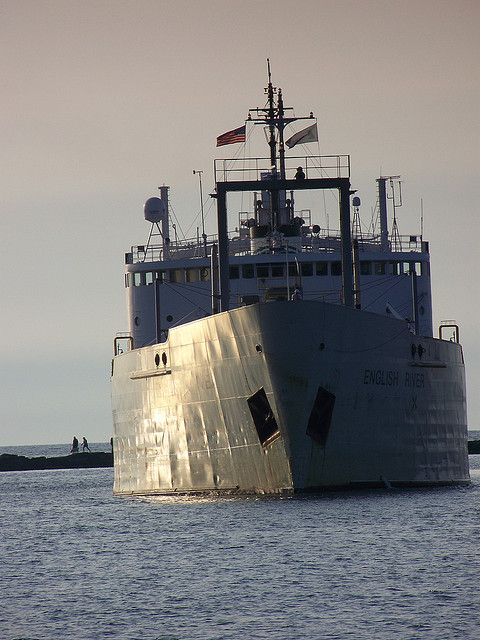
Air lubrication systems are best suited to large ships with flat bottoms. Photo: cseeman (flickr)
“If you think about places in the U.S. where the benefit of fuel savings and reduced emissions would be helpful, it’s the Great Lakes,” Ceccio said.
Great Lakes ships tend to have large, flat bottoms – an ideal shape for the technology because air stays underneath the ship instead of bubbling to the surface.
Ceccio and Simo Makiharju, a graduate student at the University of Michigan, studied the feasibility of air lubrication. The technique requires a blower to inject air under the ship. That costs money to run, so they also compared that cost to the savings from reducing the friction....
