May 5, 2011

Reducing Microconstituents in Biosolids Free Webinar

Reducing Microconstituents in Biosolids: What's the Role for Product Stewardship?Product Stewardship Institute Logo
Join us for a Webinar on May 16 From 2:00 PM - 3:30 PM EST

Professionals in the biosolids management fields are concerned about the increasing presence of microconstituents (e.g. trace synthetic chemicals from personal care products and pharmaceuticals) that appear in biosolids and waste water treatment plants. There is a growing interest in exploring the role that product stewardship could play in addressing this problem, since many of the chemicals that appear in small quantities in wastewater derive from consumer products. While the potential risks to human health and the environment posed by these microconstituents still require research for greater understanding, many of those charged with providing effective wastewater treatment and high quality biosolids products are interested in controlling the source of microconstituents that originate in personal care products and pharmaceuticals, which means addressing how unused and other pharmaceuticals are disposed of and how personal care products are formulated and discarded. This webinar will provide an overview of the microconstituents that are of concern to this professional community and the pathways by which they reach wastewater and biosolids.

Following an overview of product stewardship, participants will discuss potential product stewardship solutions to the problem. The chemical Triclosan, an anti-bacterial agent found in many personal care products, will be used as a focal point for discussion.
beecher
This free webinar is sponsored by the North East Biosolids and Residuals Association (NEBRA), the U.S. Composting Council (USCC), New England Organics, the Northwest Biosolids Management Association (NBMA), the New England Interstate Water Pollution Control Commission (NEIWPCC), the Mid-Atlantic Biosolids Association (MABA), the Virginia Biosolids Council, CDM, and HDR/Hydroqual.
 
Presenters
http://www.rila.org/news/newsletters/rilareportsustainability/May2010/PublishingImages/Scott%20Headshot%20small.jpgNed Beecher, Executive Director, North East Biosolids and Residuals Association (NEBRA)
Scott Cassel, Executive Director, Product Stewardship Institute (PSI)


Space is limited.
Reserve your Webinar seat now at:
https://www3.gotomeeting.com/register/432063022

Alaska's Peak Oil Realities

Energy and Capital: Last year, Alaskan oil took a blow when the USGS cut their estimate for the amount of conventional, undiscovered oil in Alaska's National Petroleum Reserve (NPR) by 90%.

The NPR — once thought to hold 10.6 billion barrels of oil — is now thought to contain about 896 million barrels. The area is located on Alaska's North Slope, where 97% of the state's oil production is found.alaska peak oil

As if the state didn't have enough trouble with Peak Oil...

Even despite two major spikes in oil prices within the last decade, Alaska's oil production simply hasn't been able to recover.

Oh, how the mighty have fallen.

Back in 1988, Alaskan year-over-year crude production increased 3.8%, pumping more than two million barrels per day — making it our largest oil-producing state. But its slight lead over Texas was only temporary.

For the next two decades, Alaska's year-over-year production increased just once!

If things continue at this rate, production could easily affect the performance of the Trans Alaska Pipeline.

Bloomberg reports: "If no new fields come on-line, lower volume makes it more difficult to operate the pipeline because the oil flows more slowly and cools more quickly, increasing the chance of wax buildup and water freezing in the line or gumming up pumping stations."

It doesn't exactly add up to a bright future for Alaska's oil industry. -Energy and Capital

Question from BoB TartanMarine

Is Donald Trump the inspiration for the phrase "Hair-Brained Scheme"? - Classic

‘Why does my gas cost $4.00 per gallon?’

NOTE: I personally think our generation will be know as the generation with gold and burned all up (fossil fuels)
But, Steve Maley does a nice run down on gas prices.. 

Steve Maley - Everybody is asking that question these days. The average nationwide price for all grades this week is $3.96/gallon; Californians are paying on average $4.26, the highest in the nation. 

Why does it cost so much, especially considering that the price was below $2.00/gallon just within the last couple of years?

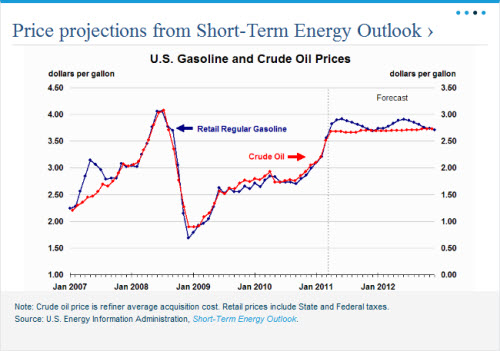
Nearly seventy percent of the price of a gallon of retail gasoline is the price of the crude oil it is refined from. Two graphs from the Energy Information Administration (EIA) make that point. The first shows the price of a gallon of gasoline (left axis) plotted against the price of a gallon of crude oil (right axis). The two move in virtual lock-step; if you know the crude oil price per gallon, add $1.00 and you’ll know the price of gasoline within a few cents. (At $105 per 42-gallon barrel, the per-gallon price of crude is $2.50; add a buck, and you get a gasoline price around $3.50.)

OK, so where does the $1.00 go that’s not paying for the raw product?

Nationwide, the average of state and federal taxes embedded into the price of a gallon of gasoline is 43 cents. We usually think of taxes the other way around, as with sales taxes. If you look at it that way, the effective “sales tax” on gasoline is 13.6%.

But as , tax burdens vary greatly by state.Read more by Steve Maley

New Rechargeable Battery Uses Water

"Scientists at Stanford have developed a battery that uses nanotechnology to create electricity from the difference in salt content between fresh water and sea water.

The mixing entropy battery alternately immerses its electrodes in fresh water and salt wat...

The researchers hope to use the technology to create power plants where fresh-water rivers flow into the ocean. The new 'mixing entropy' battery alternately immerses its electrodes in river water and sea water to produce the electrical power." - GizMag

Obama floats plan to tax cars by the mile driven

The Obama administration has floated a transportation authorization bill that would require the study and implementation of a plan to tax automobile drivers based on how many miles they drive.

The plan is a part of the administration's Transportation Opportunities Act, an undated draft of which was obtained this week by Transportation Weekly.

The White House, however, said the bill is only an early draft that was not formally circulated withn the administration.

“This is not an administration proposal," White House spokeswoman Jennifer Psaki said. "This is not a bill supported by the administration. This was an early working draft proposal that was never formally circulated within the administration, does not taken into account the advice of the president’s senior advisers, economic team or Cabinet officials, and does not represent the views of the president.”

News of the draft follows a March Congressional Budget Office report that supported the idea of taxing drivers based on miles driven.

Among other things, CBO suggested that a vehicle miles traveled (VMT) tax could be tracked by installing electronic equipment on each car to determine how many miles were driven; payment could take place electronically at filling stations.

The CBO report was requested by Senate Budget Committee Chairman Kent Conrad (D-N.D.), who has proposed taxing cars by the mile as a way to increase federal highway revenues.

Obama's proposal seems to follow up on that idea in section 2218 of the draft bill. That section would create, within the Federal Highway Administration, a Surface Transportation Revenue Alternatives Office. It would be tasked with creating a "study framework that defines the functionality of a mileage-based user fee system and other systems." Read more from Pete Kasperowicz, The Hill

Real Estate Managers Find Millio$$ of Reasons to Go Green

GreenBiz - Although large-scale real estate managers were relatively late to the green game, they're still finding plenty of dividends, according to a new profile of the industry.

Interest in energy reduction has "picked up a lot of speed" begun to grow among real estate investment managers, especially since one of the biggest operating expenses for properties is energy, Mr. Belisle said. Plus, reducing operating expense increases return, he said, and there could be federal subsidies or other assistance that could make turning portfolios green even more attractive.

The global real estate division of financial services firm TIAA-CREF, for example, cut the energy used in its holdings by more than 10 percent between 2007 and 2010, and saved $12.5 million per year as a result. And Jones Lang LaSalle last year cut its costs by $128 million, and is on pace to match or exceed that number this year.

Those are some of the top-level findings of a profile of the real estate management industry published this week in Pension & Investments magazine. The article, by Arleen Jacobius, finds -- perhaps not surprisingly, given the outlet -- that at least part of the growth in green in the real estate management industry comes from a push by institutional investors. She writes: GreenBiz Job Board

Real estate investment managers came late to the green game, said Peter Belisle, president of energy and sustainability services in the Los Angeles office of Jones Lang LaSalle. Demand -- particularly from high-profile institutional investors such as the $230.1 billion California Public Employees' Retirement System and the $152.9 billion California State Teachers' Retirement System -- pushed real estate managers into considering sustainability projects.

CalPERS is setting up a new environmental program for real estate, with a proposal expected to come before the system's investment committee later this year. The Sacramento-based system is also working on a plan to integrate environmental, social and governance strategies for all asset classes. That report will be going before the board in August, Clark McKinley, system spokesman, wrote in an e-mailed response to questions. An earlier energy efficiency initiative cut energy use in its core real estate portfolio by 20 percent as of last February, he stated.

TIAA-CREF's Global Real Estate group had first set a goal of a 10 percent reduction in energy used across its portfolio in the two years from 2007 to 2009. Although the company fell a bit short of that goal, it has since passed it, and TIAA-CREF is now on its way toward a goal of 15 percent reductions by the end of the year. Its efforts to date earned the company an Energy Star Partner of the Year award.

Similarly, Jones Lang LaSalle is seeing significant bottom-line benefits to its efficiency efforts. In addition to saving $128 million in energy costs annually, JLL has been leading on a number of green building standards. In 2009, the company enrolled its entire portfolio in the Energy Star for Buildings program. And last summer JLL was one of the first supporters of the Green Lease Action Plan, which lays out three principles to help building owners and building operators work together on operating facilities in the most sustainable ways possible.

Another key driver of the green shift in real estate portfolio management comes from the U.S. Green Building Council. The group's LEED Volume program, which was launched in pilot form in 2006, earlier this year certified more than 500 projects. Hotel chain InterContinental the first participant to be pre-certified under the program, a first step to getting some or all of its 4,500 hotels LEED certified.

Region 5 Economy, Energy and Environment (E3) Sustainability and Green Chemistry Forum

Join the GLRPPR/EPA Region 5 Forum for a Webinar on May 12

Space is limited.
Reserve your Webinar seat now at:
https://www2.gotomeeting.com/register/440261202

The GLRPPR/EPA Webinar provides an opportunity to hear about P2 Programs in the region, ask questions and stay connected:
Agenda:
1.  Opening comments by Julie Guenther, Region 5 EPA
2.  Presentation by IL
     a.   GLRPPR – Bob Iverson
     b.   I-CORE – Mike Springman
3.  Presentation by MN – Phyllis Strong
     a.   P2 Grant work
     b.   Green Chemistry and Design program
     c.   P2 integration program
4.  Presentation by MI – Karen Edlin
     a.   Economy, Energy and Environment (E3)
     b.   Michigan’s Sustainable Hospital Initiative
     c.   Advancing Green Chemistry
5.  Presentation by IN – Jennifer Schick

Free ticket to 2011 SUSTAINABLE ENERGY COALITION

14th Annual Congressional Renewable Energy and Energy Efficiency EXPO + Forum

Where?

Cannon House Office Building – Caucus Room
U.S. House of Representatives
Independence Avenue and New Jersey Avenue SE
Washington, DC

 
When?

Thursday - June 16, 2011

9:30 am - 4:30 pm

What?
On June 16, the Sustainable Energy Coalition - in cooperation with Members of the U.S. House of Representatives and U.S. Senate Renewable Energy & Energy Efficiency Caucuses - will host the 14th annual Congressional Renewable Energy & Energy Efficiency EXPO + Forum.

This year’s EXPO will bring together over fifty businesses, sustainable energy industry trade associations, government agencies, and energy policy research organizations to showcase the status and near-term potential of the cross-section of renewable energy (biofuels/biomass, geothermal, solar, water, wind) and energy efficiency technologies.  The morning program will feature Members of the U.S. Congress while afternoon speakers will discuss the role sustainable energy technologies can play in meeting America’s energy needs.

As Congress, the Administration, the business community, environmental advocates, and American voters search for options to stimulate the economy and “green jobs,” as well as address issues of national security, higher energy costs, increased reliance on energy imports, and the environmental threats associated with energy consumption, the EXPO will help address the role that sustainable energy technologies might play.  This will include not only the technical aspects of renewable energy and energy-efficient technologies but also related issues such as economics, jobs potential, environmental benefits, current and near-term market potential, model programs in the public and private sectors, and institutional, financial and legal barriers.

The EXPO is free, open to the public, and no RSVPs are required.

FOR MORE INFORMATION
 Contact:  Ken Bossong, Sustainable Energy Coalition*  301-270-6477 x.11; kbossong614@yahoo.com

Facebook more dangerous than Assange

Julian Assange in which the controversial WikiLeaks spokesman calls Facebook "the most appalling spy machine that has ever been invented."

demotivational posters - FACEBOOK

He continues, "Here we have the world’s most comprehensive database about people, their relationships, their names, their addresses, their locations and the communications with each other, their relatives, all sitting within the United States, all accessible to US intelligence. Facebook, Google, Yahoo – all these major US organizations have built-in interfaces for US intelligence. It’s not a matter of serving a subpoena. They have an interface that they have developed for US intelligence to use. Now, is it the case that Facebook is actually run by US intelligence? No, it’s not like that. It’s simply that US intelligence is able to bring to bear legal and political pressure on them. And it’s costly for them to hand out records one by one, so they have automated the process. Everyone should understand that when they add their friends to Facebook, they are doing free work for United States intelligence agencies in building this database for them."

HAASE: Your computer is a tool, do not become the tool of your computer.

Smashing - Take back your life... delete them all.
You just got 30 hours a week of your life back... your welcome ;-)

2010: Clean energy investments see 30% increase from 2009

http://cool-green-jobs.com/wp-content/uploads/2009/08/greenjobs.jpgGlobal clean energy finance and investment grew significantly in 2010 to US$243 billion, a 30% increase from 2009, according to recent research.

According to a new report - Who’s Winning the Clean Energy Race? 2010 Edition - released by The Pew Charitable Trusts and data provider Bloomberg New Energy Finance, China continued to solidify its position as the world’s clean energy powerhouse. Its record US$54.4 billion was up 39% from 2009.

Also The Number of new renewables projects leaps in Q1 2011 , According to the EIC Monitor, in the renewable sector the number of new projects increased significantly from 135 in Q4 2010 to 225 in Q1 2011.

The potential investment value of new projects has increased accordingly, up by 56% from US$97.5 billion to US$152 billion.


Was this a rehash of Jan report? Global Clean Energy Investment Reaches Record in 2010: Bloomberg

Spending on nuclear fuel up 15%

EIA - U.S. expenditures on nuclear fuel totaled $4.6 billion in 2009, a 15% increase from 2008
State Energy Data System (SEDS) estimates for nuclear energy, for data year 2009, are available at SEDS Updates.

Where does Uranium come from?? ----> Most of Our Uranium Is Imported

Owners and operators of U.S. civilian nuclear power reactors purchased the equivalent of 53 million pounds of uranium during 2008. Uranium delivered to U.S. reactors in 2008 came from six continents:

  • 14% of delivered uranium came from the United States
  • 86% of delivered uranium was of foreign-origin:
    • 42% was from Australia and Canada
    • 33% originated in Kazakhstan, Russia and Uzbekistan
    • 11% came from Brazil, Czech Republic, Namibia, Niger, South Africa, and the United Kingdom 

Nuclear Power consumes million of gallons of water per day and cause environmental degredation throughout the entirety of the life-cycle analysis.

For more information about Nuclear Power, visit "Energy Explained" by the Energy Information
http://www.eia.doe.gov/energyexplained/

'Motherlode' of Data Seized At Bin Laden Compound

SlashDot - funny-facebook-screenshot-profile-osama-bin-laden-status-update-commets" The raid that killed Osama bin Laden in Pakistan Sunday also turned up an 'intelligence harvest' of computer-based data that was described by an anonymous government source as 'the motherlode of intelligence.'

The data is being sifted through at a secret site in Afghanistan. An unnamed official was quoted by Politico as saying: 'Hundreds of people are going through it now.

It's going to be great even if only 10 percent of it is actionable. They cleaned it out.

Can you imagine what's on Osama bin Laden's hard drive?'"

1 in 7 in U.S. Receive Food Stamps

http://www.economiccollapse.net/wp-content/uploads/food-stamps-chart.jpgWall Street Journal - Growth in the food stamp program appeared to reach a plateau in February — with 14.3% of the population relying on the safety net program.

Enrollment in the program is still high though, with 11.6% more people tapping benefits in February than the same month a year earlier


The number of food stamp recipients was essentially flat in February, the most recent month available, with 44.2 million Americans receiving benefits, according a new report from the U.S. Department of Agriculture. (See a sortable breakdown of the data here.)


Note: Profiting on Poverty JPMorgan Chase is hitting record profits being the largest processor of food stamp benefits in the United States.  - Source Everywhere  

EPA stops monitoring while Fukushima radiation levels rise to highest levels yet?

As it is being reported that "Radiation Readings in Fukushima Reactor Rise to Highest Since Crisis Began" - Bloomberg

The same week EPA ends special monitoring for Fukushima fallout???

Michigan Messenger - Though radiation sampling in recent weeks has shown fallout from Fukushima in rain, drinking water and milk, the U.S. Environmental Protection Agency announced yesterday that it is returning to its regular program of quarterly sampling.

After a thorough data review showing declining radiation levels related to the Japanese nuclear incident, EPA has returned to the routine RadNet sampling and analysis process for precipitation, drinking water and milk.

As always, EPA’s RadNet system of more than 100 stationary monitors will continue to provide EPA scientists near-real-time data on the slightest fluctuations in background radiation levels. Due to the consistently decreasing radiation levels, EPA is evaluating the need to continue operating the additional air monitors deployed in response to the Japan nuclear incident. EPA’s will continue to analyze air filters and cartridges from all air monitors as they arrive at the laboratory and will post the data as available..

In accordance with normal RadNet protocol, EPA will be analyzing milk and drinking water samples on a quarterly basis and precipitation samples as part of a monthly composite. The next round of milk and drinking water sampling will take place in approximately three months.

It is important to note that all of the radiation levels detected by RadNet monitors and sampling have been very low, are well below any level of public health concern, and continue to decrease overtime. EPA continues to work with federal partners to monitor the situation in Japan and stands prepared to accelerate radiation sampling and analysis if the need arises. Data will continue to be available on EPA’s public website.

During the stepped up sampling EPA identified radioactive iodine (I-131) in rainwater at levels that exceed limits for drinking water and in some areas milk was found to have more I-131 than allowed by EPA.

Researchers at the Dept. of Nuclear Engineering at University California Berkeley have documented radioactive cesium in the topsoil in California, which has given rise to concerns that radioactive particles may enter the food supply.

Nuclear experts at Fairewinds Associates are providing ongoing reports on the Fukushima situation, including information on independent testing for fallout in the U.S

EPA's Documerica of Electric cars - Today is yesterday

MSN - Electric cars recall the environment of 1970s America

In this Oct. 1973 photo, participants check out the Exide Battery Sundancer, an early experimental electric car at the First Symposium on Low Pollution Power Systems Development in Ann Arbor, Mich.

Frank Lodge / U.S. National Archives via AP
In the 1970s, the newly formed Environmental Protection Agency hired dozens of freelance photographers to capture thousands of images related to the environment and everyday life in America.

The Documerica project was modeled on the renowned photography program run by the Farm Security Administration during the Great Depression of the 1930s.

Documerica documents a broad slice of life from the 1970s, from belching smokestacks, to a "No gas today" sign dating to the 1973 gasoline crisis, to rugged coal country scenes, to senior citizens in a water exercise class in Florida.

The U.S. National Archives digitized more than 15,000 photographs from the Documerica collection.

As MSN reported, the EPA has embarked on a yearlong campaign to collect photographs from across the United States and around the world for a new project. The public have been invited to upload their pictures to a Flickr page set up for the State of the Environment Photo Project.

How do you think the American environment has changed since the 1970s?
- MSN

May 4, 2011

This is not a good sign... oil, energy and the dollar.

I gave a healthy warning before the 2008 crisis... here is your 2011 edition.
“We are in the danger zone now with prices and how the economy is responding.”  IEA chief economist

ASPO Briefs (clips from recent Peak Oil News dailies are indicated by date and item #)

  • A Russian state study warns the government that it faces a future light crude oil shortage and that it can only sustain its world leading production rates for another 15 years. The annual ministry of natural resources survey painted a bleak Russian energy picture that also pointed to problems in future export rates of natural gas. (4/27, #20) (4/27, #21)
  • Russia decided to halt exports of gasoline and switch the flow to domestic markets to fight shortages and price increases. Deputy Energy Ministry Sergei Kudryashov suggested that the export restrictions would apply only for the month of May and then be followed by higher gasoline export duties aimed at keeping most future sales within Russia. (4/27, #19) (4/28, #25)
  • Japanese factory output suffered a record decline in March as the tsunami crippled supply chains across the economy. The government said production plummeted 15.3 percent in March from February, the biggest decline since records began in 1953, and worse than analysts had expected. (4/25, #17) (4/28, #17)
  • China’s census shows its population grew to 1.34 billion people by 2010, with a sharp rise in those over 60. This census, the first in 10 years, comes after a decade of rapid economic growth that has led to significant social change. The results revealed that almost half of all Chinese - 49.7% of the population - now live in cities, up from about 36% 10 years ago. (4/28, #13)
  • Nepal faces its worst fuel crisis since 1990 as the Nepal Oil Corporation is on the verge of running out of its diesel and petrol stock, informed sources revealed to the Himalayan Times. (4/29, #12) 
  • A 14 percent reduction in its 2011 fiscal-year budget will force the Energy Information Administration to cut back some energy data and analysis. The budget for the fiscal year ending Sept. 30 provides $95.4 million for the EIA, the independent analytical and statistical wing of the Department of Energy, a drop of $15.2 million from the fiscal year 2010 level. (4/30, #3)
  • IEA chief economist, Fatih Birol, said high oil prices are threatening to disrupt a still-fragile global economic recovery. “We are in the danger zone now with prices and how the economy is responding,” said Birol. He also said that oil use is set to increase by as much as three million barrels a day over the next few months, and prices could march higher unless major producers pump out more crude. (4/30, #2)
  • Libya imported gasoline from Italian refiner Saras in early April, taking advantage of a loophole in United Nations sanctions that permits purchases by companies not on a U.N. list of banned entities. Shipping sources with direct knowledge of the transaction said the cargo was transferred to a Libyan ship in Tunisian waters before sailing to Libya. (4/26, #6)
  • Political instability in Libya has slowed the progress of the Kenya-Uganda oil pipeline - one of the most critical regional infrastructure projects in East Africa. Tripoli was financing the project. (4/25, #11)
  • US President Obama reiterated his call to end billions of dollars in tax breaks for oil companies and instead invest in alternative energy sources. Obama said the government should be spending more money on developing new energy sources, such as solar- and wind-power, and encouraging the development of energy-efficient technologies. (4/25, #19) (4/30, #14) (4/30, #15)
  • Without sufficient investments in oil field development and the use of new, advanced technologies, Mexico faces becoming a net oil importer in 10 years, according to research by Rice University’s Baker Institute and Oxford University. Mexico’s oil production peaked at about 3.9 million b/d in 2004. Since 2005, output has fallen by more than 25% to 2.98 million b/d in 2010. (4/30, #12)
  • India is looking at using Turkish banks to pay Iran for crude oil, a senior Indian oil ministry official said. A US official said Turkey’s commercial banks should avoid transactions with Iranian banks the U.S. has identified as conduits for financing Tehran’s nuclear program. (4/28, #8)
  • Iran’s deputy oil minister says the country will increase its crude oil production by more than 100,000 b/d by March 2012. Masjed Soleiman, Yadavaran, Mansouri, and Hengam oilfields are the four main drilling projects that will contribute to the increase. (4/30, #7)
  • With oil prices well above $100, an export bottleneck in Iraq is preventing some of its newly increased oil production from reaching export markets. Ravaged by years of war and international sanctions, the crumbling infrastructure in the south of Iraq is proving inadequate to support increasing production from Iraq’s southern oil fields. (4/25, #6)
  • Venezuela will charge an increased tax in lieu of royalties as long as crude trades above $70 per barrel. “Oil companies are doing well,” Oil Minister Rafael Ramirez said at a press conference in Caracas. “I have the revenue and profit numbers, and this windfall tax is not going to hurt them,” he said. (4/25, #14) (4/27, #7) (4/27, #8)

Who controls the past controls the future. Who controls the present controls the past. - George Orwell

US Debt Rating Should Be 'C' - It's two notches above junk

CNBC - There have been increasing concerns about the fate of United States' prized triple-A sovereign debt rating.
While Standard and Poor's recently downgraded its U.S. debt outlook to negative from stable, implying that a ratings cut could happen in two years, one independent ratings agency has given the U.S. sovereign rating a "C".

It's two notches above junk..." Martin Weiss, President of Weiss Ratings, told CNBC Tuesday.

The grade reflects the U.S. massive debt burden, low international reserves and the volatility in the American economy, he said.

The U.S. government debt is fast approaching the $14.3 trillion ceiling, with the debt-to-GDP ratio close to 100 percent. And a downgrade of U.S. Treasurys - one of the most widely held assets - could theoretically raise borrowing costs and in a worst case scenario, trigger a default on the government's debt obligations.

America's rating was ranked 33rd out of 47 nations, according to Weiss, which began tracking sovereign debt last year.  France and Japan also got a "C" rating, while Only China and Thailand received an "A" rating.

Please read full at CNBC

Bin Laden by the numbers

Natural gas and Nuclear power on active fault lines assessments

NGFast: rapid assessment of impacts of natural gas pipeline breaks at U.S. borders and import points

NGFast Screenshot
New Madrid seismic zone

Challenge
Our nation relies on natural gas to meet about 22% of its energy needs. Within the next 10 years, the use of natural gas is projected to grow by 50% — making security of this resource increasingly important.

Natural gas is transported from production fields and import points to consumers nationwide via high-pressure interstate pipelines. In an emergency involving a pipeline disruption, whether it be natural or man-made, quick response is necessary to limit the impact of the event. Existing modeling systems take days to provide essential assessment data following an event like a pipeline break or a reduction in pipeline flow (resulting from either compressor damage or a low-output condition in production fields brought about by hurricanes or freezing rain).

Solution
NGFast is a new simulation and impact-analysis tool developed by Argonne National Laboratory. This powerful tool allows for rapid, first-stage assessment of the impacts of major pipeline breaks and reductions in flow from import points and production fields. Within minutes of a break, NGFast can generate HTML-formatted graphics and tabular reports to supplement briefing materials for state and federal emergency responders. The model provides summaries, as well as detailed reports (pre-and post-disruption conditions).


Scientific Basis for New Madrid Seismic Hazard is Sound   
GardenNews.biz -USGS Director Welcomes Independent Panel Report Confirming that Scientific Basis for New Madrid Seismic Hazard is Sound

The National Earthquake Prediction Evaluation Council has issued a new report in which independent experts conclude that current USGS estimates for significant earthquake hazards in the New Madrid Seismic Zone—affecting eight central and eastern U.S states—are based on sound science.http://hsv.com/genlintr/newmadrd/quakemap.gif

The Council, a federal advisory committee, recently presented the report to USGS Director Marcia McNutt. Prepared by a panel of scientists from many disciplines and organizations, the report comes during the Bicentennial commemoration of the three violent “New Madrid” earthquakes and hundreds of aftershocks that struck the Mississippi River Valley in 1811-1812.

“I commend NEPEC for assembling an independent expert panel to weigh scientific evidence regarding the threat posed by large earthquakes in the New Madrid Seismic Zone,” said Director McNutt. “This is an important issue that has spurred decades of excellent research on the large earthquakes of 1811 and 1812; the geologic evidence of similar earthquakes in previous centuries; and how our modern cities and towns would be shaken if similar earthquakes were to occur today.”

Professor John Vidale of the University of Washington chaired the independent panel of experts, who concluded in the report that:

The New Madrid Seismic Zone represents a significant hazard for large earthquakes that would cause widespread damage.

This hazard must be accounted for in urban planning and development.

The panel does not support the view of some individuals that the region has “shut down” in its production of large earthquakes.

The current version of the USGS national seismic hazard maps are a good estimate of the overall hazard posed by the New Madrid Seismic Zone and should continue to be used until the next revision of the maps replace them in 2013. Additional research could lower remaining uncertainties and thus potentially lower the potential hazard in future maps.

During the bicentennial anniversary of the earthquakes, scientists and emergency managers are raising awareness of earthquake hazards and providing information to help communities take steps to lessen the impacts of future earthquakes.

Thumbnail of and link to GIP 119 PDF (112 MB)


NEPEC was congressionally established in legislation authorizing the four-agency National Earthquake Hazards Reduction Program. The Council provides advice and recommendations to the USGS Director on earthquake predictions and related scientific research.

The report and an accompanying letter from NEPEC Chairman Terry Tullis are posted on the Council’s website.
More information on earthquake hazards can be found on the USGS website.
www.earthquake.usgs.gov/earthquakes/catalogs/

Facts about the New Madrid Seismic Zone 

The New Madrid Seismic Zone overlaps eight states: Alabama, Kentucky, Mississippi, Tennessee, Illinois, Indiana, Arkansas and Missouri. It is the most seismically active area of the United States east of the Rockies. Scientists are pursuing research on numerous aspects of the hazard; this work has shown that there have been several sequences of big earthquakes during at least the past several thousand years. Because earthquakes in the central and eastern U.S. are more infrequent than in the western U.S., there are fewer observations and therefore greater uncertainties about future hazards.
www.dnr.mo.gov/geology/geosrv/geores/techbulletin1.htm
www.dis.anl.gov/projects/ngfast.html

May 3, 2011

You will believe what "i" tell you, sincerely Internet

The Internet's New Alternate Realityhttp://www.synapseproductions.org/whatson/images/1984web.jpg
LA Times- 'Today, the growth of the Internet has drained the noun "news" of its former authority. If you don't like the facts presented on the sites of established news organizations, you simply keep clicking until you find one whose "facts" accord with your beliefs.'"

"There are no more arbiters of truth," - former White House Press Secretary Robert Gibb
"So whatever you can prove factually, somebody else can find something else and point to it with enough ferocity to get people to believe it. We've crossed some Rubicon into the unknown."

Osama Bin Laden Pronounced Dead…For the Ninth Time

Like Obama, I was saving this one for a rainy day...
Corbett Report: "Osama Bin Laden Pronounced Dead…For the Ninth Time" 

epic fail photos - The Death of Osama bin Laden Roundup

What?
 Is it story/election time again ;-)

SETI Has Suspended Their Search For Alien Life

seti

The SETI Insitute has suspended their search for signals by extraterrestrial life forms due to lack of funding, which has forced a hibernation of their Allen Telescope Array operated by U.C. Berkeley’s Hat Creek Radio Observatory (HCRO).   Read full via San Francisco Chronicle


Haase - They have switched their focus on looking for intelligent life on earth ;-)

Sustainable Community FAIL Aerial of Barcelona, Spain


Photograph by Aldas Kirvaitis on Flickr

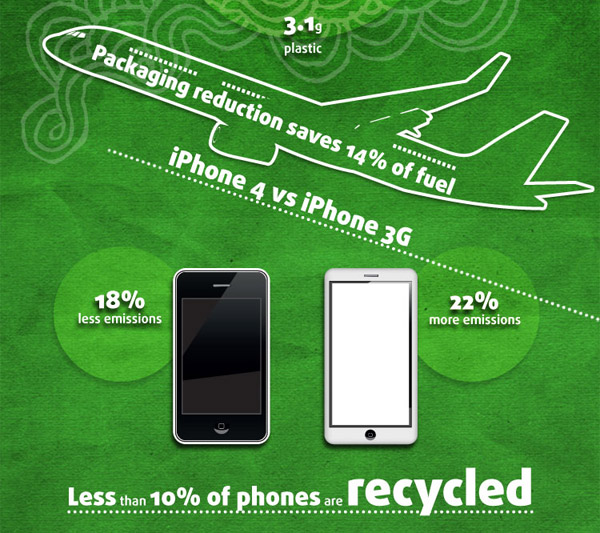
How green is the iPhone


iphone green How green is the iPhone
View infographic in full size

Georgia County Turning Waste into Big Energy Savings

Georgia County Turning Waste into Big Energy Savings: "Gwinnett County, Georgia, is taking some of the grossest stuff on Earth and turning it into some of the greenest stuff on Earth. The county's unique 'Gas to Energy' system will turn gases from digesting biosolids, fats, oils, greases, and other high-strength industrial wastes into energy."

President Obama Sets Goal to Cut Oil Imports by One-Third

President Obama Sets Goal to Cut Oil Imports by One-Third: "Citing high fuel costs and the uncertainty of future energy resources, President Barack Obama outlined his energy security plan by calling for a variety of energy efficiency and renewable energy measures designed to reduce U.S. oil imports up to one-third by 2025."
How again???

PNNL Study: Algae Could Replace 17% of U.S. Oil Imports

PNNL Study: Algae Could Replace 17% of U.S. Oil Imports: "DOE's Pacific Northwest National Laboratory (PNNL) has released a new study that biofuels from U.S.-grown algae could replace 17% of the United States’ imported oil for transportation."

Good Earths and Rare Earths

Good Earths and Rare Earths: "DOE's Ames Laboratory in Iowa is at the center of research to make magnets that require rare earth elements more affordable, because they are used in green energy technologies ranging from wind turbines to electric vehicles."

Wind Power Companies Paid to Stop Producing Electricity

[Wind+Turbine+Failure.jpg]The REF said energy companies were paid £900,000 to halt the turbines for several hours between 5 and 6 April.

According to the REF research, the payments made cost up to 20 times the value of the electricity that would have been generated if the turbines had kept running.

The turbines, at a range of sites across Scotland, were stopped because the grid network could not absorb all the energy they generated.

Details of the payments emerged following research by the Renewable Energy Foundation (REF).

'Very wasteful'
In future we need greater electrical energy storage facilities and greater interconnection with our EU neighbours so that excess energy supplies can be sold or bought where required”

"However, throwing the energy away, and paying wind farms handsomely for doing so, is not only costly but obviously very wasteful.

"Government must rethink the scale and pace of wind power development before the costs of managing it become intolerable and the scale of the waste scandalous."
Read more from the  BBC

May 2, 2011

OSHA to hold combustible dust expert forum May 13

ISHN -  Discussions will include identifying regulatory options that can minimize the costs to small- and medium-sized businesses of reducing or preventing combustible dust hazards, while protecting workers from these hazards. Representatives from various industries, academia, research groups, insurance-underwriter organizations, labor, and government will comprise expert representation.
250px-Imperial_Sugar_Georgia_Two.jpg
OSHA's earlier efforts to address combustible dust hazards included a National Emphasis Program in 2007 that targeted inspection efforts on facilities that create or handle combustible dusts. Results from these inspections indicated that facilities had unusually high numbers of general duty clause violations, indicating a strong need for a combustible dust standard. This effort was followed by publication of an Advance Notice of Proposed Rulemaking in 2009, from which the agency received more than 100 comments. Additionally, OSHA held six stakeholders meetings and conducted a Web chat on combustible dust to expand the opportunity for public and stakeholder participation. The agency recognizes the importance of considering options for addressing combustible dust hazards, particularly as they may affect small facilities, in preparation for convening a Small Business Regulatory Enforcement Fairness Act panel.

Combustible dusts include fine particles, fibers, chips, chunks or flakes that, under certain conditions, can cause a fire or explosion when suspended in air. Types of dusts include metal (for example, aluminum and magnesium), wood, plastic, rubber, coal, flour, sugar and paper, among others.

The forum will be held at 9 a.m. at the Department of Labor, 200 Constitution Ave., N.W., Washington, D.C. There will be limited space available for non-participating observers, so OSHA asks that only one representative from interested organizations register as an observer.
To register as a non-participating observer, contact Bill Hamilton at 202-693-2077 by May 6, 2011.

Piezoelectric MEMS boosts vibration harvester by ten times

Piezoelectric MEMS boosts vibration harvester by ten times: "
A new energy harvester developed by University of Michigan researchers can harness energy from vibrations and convert it to electricity with five to ten times greater efficiency and power than other devices in its class.

Electrical engineers from the University of Michigan claim to have invented a technique for micro-machining piezoelectric MEMS that generate 10-times more energy than conventional energy harvesters. The research team said a penny-sized piezoelectric MEMS could generate enough electricity to power medical implants in the body and wireless sensors on motor vehicles.

It is the most powerful millimeter-scale energy harvester.

'In a tiny amount of space, we've been able to make a device that generates more power for a given input than anything else out there on the market,' said Khalil Najafi, one of the system's developers and chair of Electrical and Computer Engineering.
This new vibration energy harvester is specifically designed to turn the cyclic motions of factory machines into energy to power wireless sensor networks. These sensor networks monitor machines' performance and let operators know about any malfunctions.

The sensors that do this today get their power from a plug or a battery. They're considered 'wireless' because they can transmit information without wires. Being tethered to a power source drastically increases their installation and maintenance costs, said Erkan Aktakka, one of the system's developers and a doctoral student in Electrical and Computer Engineering.

Long-lasting power is the greatest hurdle to large-scale use of pervasive information-gathering sensor networks, the researchers say.

'If one were to look at the ongoing life-cycle expenses of operating a wireless sensor, up to 80 percent of the total cost consists solely of installing and maintaining power wires and continuously monitoring, testing and replacing finite-life batteries,' Aktakka said. 'Scavenging the energy already present in the environment is an effective solution.'

The researchers have built a complete system that integrates a high-quality energy-harvesting piezoelectric material with the circuitry that makes the power accessible. (Piezoelectric materials allow a charge to build up in them in response to mechanical strain, which in this case would be induced by the machines' vibrations.)

'There are lots of energy sources surrounding us. Lightning has a lot of electricity and power, but it's not useful,' Najafi said. 'To be able to use the energy you harvest you have to store it in a capacitor or battery. We've developed an integrated system with an ultracapacitor that does not need to start out charged.'

...In theory, these devices could be left in place for 10 or 20 years without regular maintenance. 'They have a limitless shelf time, since they do not require a pre-charged battery or an external power source,' Aktakka said."

Russia is reconfirming plans to build 32 nuclear reactors by 2020

Russia is planning to build 32 new reactors by 2020.

Russia plans to increase the share of nuclear produced energy to about 23% of total energy production for the whole country, and to about 32% for European Russia, by 2020.

The plan is to achieve this by commissioning 2 GW of capacity a year after 2013 through the construction of standardized nuclear reactors. With funding that is guaranteed, Russia should have 32.3 GW of new nuclear capacity by 2020 – with additional funding, this would rise to 38.1 GW – while 3.7 GW of nuclear capacity would be decommissioned.

Russia’s State Atomic Energy Corporation (Rosatom) has decided to focus on the development of fast neutron reactors (FNRs) to provide the Generation IV component of its future nuclear energy policy. FNRs are designed to burn uranium 238 (U-238) while conventional reactors, such as pressurised water reactors (PWRs), use uranium 235 (U-235) as their fuel.

Rosatom points out that no less than 86.7% of the energy potential of Russia’s natural resources is contained in U-238, while coal contains 8.7%, gas 3.4%, oil 0.8% and U-235 a mere 0.4%. The Russian group also has some 30 years of experience in operating the sodium-cooled BN-600 FNR, which was preceded by the BN-350, BR-5/10 and BN-1/2 FNRs (the last operating during the 1950s). The BN-600 has a capacity of 600 MWe and provides power to the grid and is expected to operate until 2020. Rosatom is now busy with its next FNR, the 880 MWe capacity BN-800, which is expected to enter operation in 2014. However, over the next decade at least, Rosatom will continue to build PWRs (known as VVERs in Russia).

World Nuclear Association on Russian nuclear plans

May 1, 2011

WORD - Obama’s ‘long-form’ birth certificate

Word of the week - Obama’s ‘long-form’ birth certificate won’t silence the “birthers,” who are as wedded to this as the warmists are to global warming (classic ;-)

GE and the Future of Solar [Infographic]