Jan 8, 2012
Thanks to the Oil and Gas Boom, ND, AK and TX Have Regained All Jobs Lost During Recession
Enterprise to Build Pennsylvania-to-Texas Ethane Pipeline - Businessweek
Jan. 3 (Bloomberg) -- Enterprise Products Partners LP, the largest U.S. pipeline partnership by market value, will build a 1,230-mile (1,979-kilometer) line to ship ethane from Pennsylvania to U.S. Gulf Coast petrochemical plants.
The ATEX Express pipeline will have the capacity to transport as much as 190,000 barrels a day, Houston-based Enterprise said in a statement today. The company has commitments from shippers to pay 14.5 to 15.5 cents per gallon.
Chemical companies including Dow Chemical Co. and LyondellBassell Industries NV are using more ethane and other natural-gas liquids from shale formations as a way to replace crude oil-based feedstocks such as naphtha. Enterprise estimates Gulf Coast petrochemical demand for ethane is about 955,000 barrels a day, according to the statement. Ethane is a feedstock for producing ethylene, the main ingredient in plastics.
“Producers want a complete solution and they’re willing to pay more for access,” said Horowitz, who rates Enterprise’s units a “strong buy” and owns none.
Where the Real Jobs Are - NYTimes.com
Daily Kos: Keystone Kabuki: Oil industry threatens Obama with huge political consequences.
On the day that President Obama shows his determination to get America working, regardless of Congressional obstruction, he's being threatened by the American Petroleum Institute. If he doesn't approve the Keystone XL pipeline, there will be huge political consequences.
The oil industry, secure in the knowledge that fuel is the top American export, want the pipeline so that they can continue refining oil into fuel and exporting it overseas. The oil companies cloak their rhetoric with "the national interest," but let's be honest - the only interest being served by refining Canadian tarsands oil and shipping it to South America is the bottom line interest. Similarly, House Republicans hide behind the rhetoric of Keystone XL creating thousands of jobs, but President Obama and the American public should know where the real jobs are. This is simply a naked, shameless threat by an industry that's long ago lost any pretense of caring about the 99%.
How Hawaii can save a billion dollars a year and be on 100% Renewable Energy; Geothermal Resources 2.5 to 7 Times Demand
Maybe if the 5.3 billion crazy mono rail money was invested in saving Hawaii's energy future they could save a billion dollars a year... Just a thought.
cleantechnica - Located as it is about 2,400 miles (3,900 km) WSW of San Francisco about in the middle of the northern Pacific, residents and businesses on the ‘Big Island’ of Hawai’i pay a lot for energy. Imported oil has been the primary fuel, not only for transportation, but for generating electricity in the Hawaiian Islands.
The situation could be radically different, however. The Hawaiian islands are rich in wind, solar, and, as you’d expect given the fact that they sit atop a volcanically active rift in the earth’s oceanic crust,geothermal energy.
“All that is needed is cooperation and initiative to make the move to 100% renewable energy, agreed all the speakers” at a government-sponsored conference in Hilo at which the Hawai’i County Geothermal Working Group released the results of its effort to map the island’s geothermal resources with the aim of identifying those suitable for exploiting to provide clean, reliable baseload electricity, according to apress release from Mayor Billy Kenoi’s office.
Enough Geothermal Energy to Power Hawai’i 3-7x Over
“Hawai‘i County should aim and commit to being 100 percent renewable,” Mayor Kenoi said. “Federal, state, county, community, we’re all in this together. We all recognize our commitment to our children and future generations and the quality of life on Hawai‘i Island.”
Demand for power on Hawai’i Island ranges between 90 megawatts (MW) and 185 MW. In its report, the Geothermal Working Group estimates Hawai’i Island’s geothermal resources have the capacity to produce between 500 MW and 700 MW of electrical power.
“On this island we spend over a billion dollars every year to import oil for our energy needs here on the island,” said Wallace Ishibashi, co-chair of the Geothermal Working Group. “That money can stay right here to build a better community.”
Grand Canyon-Area Uranium Mines to Be Blocked for 20 Years - NYTimes.com
The department, which in 2009 imposed an interim ban that is soon due to expire, now plans a 20-year moratorium on new mines. Western environmental groups have long sought such a measure.
In proposing an extended moratorium last year, the interior secretary, Ken Salazar, cited the potential for pollution in waterways and harm to wildlife, desert vegetation and air quality.
There is perennial dispute over whether uranium contamination detected in the area is natural or caused by humans.
The Center for Biological Diversity, an environmental group, says that at least one creek in Grand Canyon National Park, immediately below an old site known as the Orphan Mine, is contaminated with levels of uranium more than 10 times the federal limit.
Lee Allison, Arizona’s state geologist, citing his office’s work, questioned whether any Colorado River pollution from mining would be detectable, given that about 60 tons of natural uranium flow down the river each year.
Ocean robots could farm fuel from algae - msnbc.com
The biofuel farm contained only a small wind turbine, solar panel and container of green scum packed within a tub-size frame floating on the water. But its design could someday spawn fleets of robotic farms that harness the ocean winds and sunshine to make cheap, algae-based biodiesel fuel for cars, trains and aircraft.
That vision set forth by BEAR Oceanics aims for self-sustaining robot farms capable of steering clear of boats or ships as they relysolely upon wind and solar power to grow algae year-round. The robotic farms would turn algae sludge into 5 gallons of biofuel per day with a sped-up version of the geological process that created Earth's fossil fuels — all without the risks of drilling for oil or fracking for natural gas.
"At this point, you've turned biomass into a biofuel, and you haven't used any chemicals, so that you don't have a toxic waste stream," said Rudy Behrens, an engineer at BEAR Oceanics. "We can do this on a large scale without disrupting the food chain or creating a hazard."
Japan To Shut Down Nuclear Plants After 40 Years
...Concern about aging reactors has been growing because the three units at the Fukushima Dai-ichi plant in northeastern Japan that went into meltdown following the tsunami in March were built starting in 1967. Among other reactors at least 40 years old are those at the Tsuruga and Mihama plants in central Japan, which were built starting in 1970.
Many more of the 54 reactors in Japan will reach the 40-year mark in the near future, though some were built only a few years ago.
The government said Friday that it plans to introduce legislation in the coming months to require reactors to stop running after 40 years...The future of Japan's nuclear policy remains under review. Some people are worried about radiation in the food and water, as well as the health of children, who are more at risk than are adults to sicknesses from radiation exposure.
Record Air Pollution Slams California's Ag Heartland
...It's the worst air quality recorded in a dozen years, and it's the unhealthiest kind_ microscopic, chemical-laden particles that can get into lungs and absorbed into the bloodstream to create health risks in everyone, not just the young and infirm.
The southern San Joaquin half of the valley stretches 200 miles from Stockton to Bakersfield and is home to 4 million people. It traditionally records the highest level of particulate matter and ozone pollution in the United States and has a rate of asthma three times the national average, according to the American Lung Association.
Air quality advocates have argued for years that the local air district's focus on fireplace burn bans ignores other major sources of industrial pollution, such as dairies, feed lots and oil rigs. "The air board's strategy is failing," said Kevin Hall, executive director of the Central Valley Air Quality Coalition.
Air officials say their policies are sound, but there is little they can do with La Nina conditions in the Pacific creating stagnant air.
Without wind and rain, the air sits, trapped as if in a pot with a lid.."When we have weather conditions like this, there is nothing we can do really to meet the federal standards,"...
The air district helped fund a study of 1 million residents in 2011 that found that emergency room visits for asthma and heart attacks went up when particulate pollution went up. That convinced officials that the federal government's standard, which relied on a 24-hour average of air quality, was too high. Small particulates in the bloodstream can break off plaque in the coronary artery, creating a logjam and a heart attack.
"The old level may work for Beijing, China, but we need to bring it down to where it really belongs," said David Lighthall, the district's health science adviser. "We are recognizing that the air quality is different from one time of day to another and we're trying to give people the information they need to make decisions about outdoor exercise."
The district sends advisories to schools and those signed up for email alerts, called "Real Time Outdoor Activity Risk" warnings, whenever the air reaches the "unhealthy" level so that teachers know whether to call off recess and residents can decide to postpone a jog or a bike ride. On Friday morning, for instance, some Fresno residents received an email alert at 10 a.m. working that the air was "Level 5 Very Unhealthy" for everyone, indicating the highest levels of pollution.
..."We are going to need far tighter rules coming out of the air district if we are really going to make progress in meeting federal standards," said Tom Franz of the Bakersfield-based Association of Irritated Residents, one of the groups suing.
Air pollution officials say the technology doesn't yet exist to lessen the valley's pollution and bring the region into compliance, though the district is investing in research and giving grants for things such as the new generation of battery powered leaf blowers and lawn mowers.
Please read more from: http://www.huffingtonpost.com/2012/01/07/californias-central-valle_n_1191290.html
Isaac Newton's List Of Confessions, 1662 - huffington post
Isaac Newton discovered the laws of gravity, revolutionized optics and co-invented calculus, but as a teenager he saw himself as a sinner.
Brain Pickings found a list of confessions that the pious genius wrote at age 19, and it's equal parts endearing and disturbing. On the one hand, the lifelong virgin seemed to be worried about every little thing, including "Making pies on Thy day." But there's a darker side to these private confessions as well, including the fact that he admits to "Striking many" and "Punching my sister."
The confessions were digitized as part of The Newton Project, an ambitious attempt to make accessible all of Newton's writings, from the groundbreaking math that made him famous to the alchemy and mysticism of his later years. It's a vast trove, so don't be surprised if we share more interesting stuff from the writings of the man many consider the world's greatest scientist.
EDF Reactor Extensions May Cost $65 Billion on Safety Review - Bloomberg
Hawaii 20 mile Train to drain 5.3 billion from island in worst economy - NYTimes.com
NYTimes.com... sometime this spring, a $5.3 billion project is scheduled to rise from the Kapolei farmlands that offers powerful evidence of how much this island, a symbol of Pacific tranquillity, is changing. A 40-year battle to build a mass transit line appears to be nearing its end. Barring a court intervention, construction is to begin in March on a 20-mile rail line that will be elevated 40 feet in the air, barreling over farmland, commercial districts and parts of downtown Honolulu, and stretching from here to Waikiki.
Please read more from:
Electric and hybrid car consumer let downs... Drumbeat
Honda sued over mileage in small claims court
TORRANCE, Calif. — A woman who expected her 2006 Honda Civic Hybrid to be her dream car wants Honda to pay for not delivering the high mileage it promised. But rather than joining other owners in a class-action lawsuit, she is going solo in small claims court, an unusual move that could offer a bigger payout if it doesn't backfire.
So far, battery cars coming up short
Add them all up, hybrids, plug-ins and pure battery-electric vehicles, or BEVs, and they accounted for little more than 2% of the U.S. automotive market last year. Remove conventional gas-electric models, such as
the Toyota Prius and Ford Fusion Hybrid, from the equation and more advanced battery vehicles generated barely 20,000 sales.“I’d say they failed,” proclaims Joe Phillippi, chief analyst with AutoTrends Consulting.
Jan 7, 2012
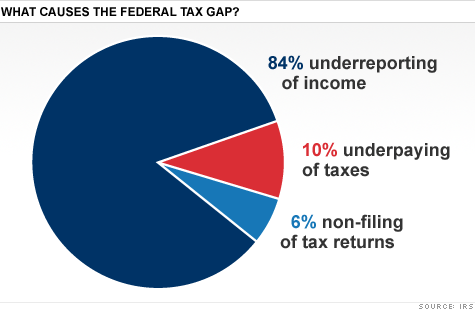
IRS comes up $385 billion short - CNNMoney

That's the net tax gap number -- meaning what didn't get paid even after the $65 billion the IRS managed to collect through audits.
Renewable Energy Now Provides More US Power Than Nuclear : TreeHugger

The latest figures from the Energy Information Agency are out on US sources of energy through September 30th, 2011, with some impressive gains for renewable energy. Through the first nine months of the year renewables produced just under 12% of US energy—an increase of just over one percent from 2010—while nuclear power produced about 10.6%.
Renewable energy as a whole grew 14.4% in 2011 compared to the previous year. As of the end of September, hydropower produced 4.35% of US power, biomass 3.15%, biofuels 2.57%, wind power 1.45%. Geothermal and solar power both came in at under 1% (0.29% and 0.15% respectively)....Please read more from:
This is What the U.S. Would Look Like Without Environmental Protections (PHOTOS) : TreeHugger

Documerica/Public Domain
In the early 1970s, an amazing photojournalism project called Documericacaptured a polluted nation in the midst of establishing its first major environmental protections. Documerica was sponsored by the fledgling E.P.A., which hoped to document and examine the extent of the country's environmental troubles. A team of talented photographers was assembled to shoot, in breathtaking, uncompromising detail, the unchecked air pollution, contaminated waterways, hazardous coal mines, and some truly disturbing waste issues across the U.S.
The National Archives has just published the project online, and the results are stunning. Here's a glimpse of what the nation would look like without environmental protections and the efforts of the E.P.A. to enforce them.
Have you ever wondered, for instance, what it would look like if we were to burn an industrial helping of automobile batteries? If so, you'll be glad to know it looked just like the photo pictured up top.
Below, take a look at the streets of Cleveland, circa 1973.

Frank Aleksandrowicz for Documerica/Public Domain
Russia investing $2 billion in space debris removal
Russian space corporation Energia is planning to invest $2 billion in order to remove space debris. The plan is to build a “pod” that will be used to remove the garbage present in lower orbit of the earth. The pod will be able to run for around 15 years using a nuclear power core and it will use it time in space to remove defunct satellites out of orbit so that they can either land in oceans or burn in the space itself. It is expected that the construction of this pod will get over by 2020 and it will start its mission by 2023. Russian scientists are hopeful that this especially designed pod would be able to remove around 600 defunct satellites in 10 years.
Please read more of Five ways to get rid of space debris by Shahnawaz Naaz
How to Recycle 2011's Old Gadgets for Good Karma, Profit
TSA Interested In Purchasing Dosimeters - Slashdot
Contractor Prevails as OSHA Drops Case : PaintSquare News
Federal officials have withdrawn two serious safety citations against a Mississippi industrial painting contractor with a model safety record, saying the inspections that led to them should not have been allowed. The contractor, however, says the citations themselves were unfounded from the start and wants to dispel any notion that they were dropped on a technicality. ‘Slap in the Face’ “We have been a model contractor,” Curtis McDaniel, Vice President of Industrial Operations and Quality Control for Industrial Corrosion Control Inc., of Gulfport, MS, said in an interview Friday (Jan. 6).
“We spend thousands and thousands of dollars every year training our guys to pick up on hazards and correct them, and for something like this to happen is really a slap in the face.” ICCI is a member of the Mississippi Chapter of the Associated Builders and Contractors (ABC), with whom OSHA has had a partnership since 2000. The partnership recognizes ABC's “Platinum Partner” contractors who have exemplary safety and health programs at their work sites. ICCI has been a Platinum Partner for eight years. ICCI is also QP1 and QP2 certified through SSPC, has NACE-qualified inspectors on staff, and is a member of both NACE and the National Association of Women in Construction. The company has won numerous awards for Excellence in Construction. Citations Announced On Dec. 21, OSHA issued a total of 50 citations against Huntington Ingalls Industries and five subcontractors, including ICCI, for a variety of infractions at Huntington’s Ingalls Shipbuilding yard in Pascagoula, MS. Huntington received 44 citations, and the four other subs received one citation each. ICCI was cited for two serious safety violations and fined $3,808. OSHA accused the company of improperly handling compressed gas cylinders and allowing cables and hoses to become trip hazards. ‘They Called My Guy Over and Wrote Him Up’ McDaniel and his crew were blasting on the starboard side of a ship when Mississippi OSHA inspectors arrived last June, and he said that his work area passed inspection with “no problem.” But then, he said, the inspector went over to the port side, well outside ICCI’s work space, and saw cylinders, cables and hoses lying around. The items did not belong to ICCI. Because no one was working in that area at the time, the inspector “called my guy over from our area and wrote him up,” said McDaniel. “They said, ‘If your guy is in the area, he’s responsible,’” McDaniel recalled. “We said, ‘He wasn’t in that area until you called him over.’” McDaniel added: “We’re blasters and painters; we don’t even use that equipment.” When ICCI confronted OSHA about the citations, McDaniel said, the agency offered to reduce them from Serious to Other than Serious. McDaniel refused, insisting that his company’s record be cleared. A week later, Mississippi OSHA formally deleted the charges against ICCI in what an agency letter called an “informal settlement agreement.” | |||
Feds say no cause yet for Ohio nuke plant cracks - businessweek
There Is More to It than Oil - energybulletin
The end of our industrial lifestyle paradigm will be dictated by Liebig's Law, and by humanity's response to its consequences. Unfortunately, it is impossible to know at this point which increasingly scarce nonrenewable natural resource (NNR) or NNR combination will ultimately prove to be industrialized humanity's limiting factor.
Consequently, humanity's global societal collapse may be triggered by scarcity associated with one or more NNRs other than those commonly considered "most critical" to the perpetuation of our industrial lifestyle paradigm—fossil fuels, or oil .... Please read more from energybulletin.
Joblessness Leads to More Hungry & Homeless Families in U.S. Cities. - fulltextreports
Oil Shock - The No Growth World - EnergyBulletin
In a peak oil world, no further growth is possible. If China grows, somewhere Western consumption must shrink. And "shrinking" isn't pretty says Jeff Rubin. He's the former CIBC markets Chief Economist, speaking at ASPO 2011 in D.C., along with oil market guru Charles Maxwell. "Economy Past Peak Oil" panel plus Radio Ecoshock interview with ASPO Italy founder Professor Ugo Bardi (author of "The Limits to Growth Revisited") on peak oil versus climate change. Please read more
India’s Bajaj Introduces 82 MPG Low-Cost Car/Rickshaw - gas2.org
... According to Indian Auto Blog, the RE60 will run on standard petrol, but due to its low weight (400 kg/880 lbs) and low horsepower (about 15-20 horsepower from the 200 cc, 1-cylinder engine) the RE60 can deliver up to 82 mpg and extremely low emissions.With a top speed of just 70 kph/43 mph, and its very small size and utilitarian looks, the RE60 is a step up from the standard rickshaw, albeit barely. The price point is estimated to be about $2,750, Energy-storage membrane outstrips existing rechargeable batteries and supercapacitors in energy dens - nextbigfuture
More Than a Million Cancer Deaths Avoided in 2 Decades - nextbigfuture
The American Cancer Society estimates that about one-third of cancer deaths in 2012 will be caused by tobacco use and another third will be related to overweight or obesity, physical inactivity, and poor nutrition.
The 5-year relative survival rate for all cancers diagnosed between 2001 and 2007 is 67%, up from 49% in 1975-1977. Cancer death rates are continuing to fall, dropping by 1.8 percent per year in men and 1.6 percent per year in women between 2004 and 2008.
68 page 2012 cancer report - Cancer Facts and figures 2012
Please read more from and If you liked this article, by nextbigfuture, please give it a quick review on ycombinator or StumbleUpon. Thanks
Dodge dart...at least 40 MPG combined city/highway
Fiat has boosted its interest in the Chrysler Group by another 5% following Chrysler’s achievement of the “Ecological Event”—receiving regulatory approval for an automobile based on a Fiat platform or vehicle technology having a fuel efficiency rating of at least 40 combined miles per gallon (5.88 L/100km) and to irrevocably commit to begin assembly in commercial quantities in the US. (Earlier post.)
The increase is effective immediately, and brings Fiat’s interest in Chrysler to 58.5%. The remaining 41.5% of Chrysler’s equity is owned by VEBA.
In late December, Chrysler achieved the Fuel Economy Test for an unadjusted combined rating of 40 mpg with a pre-production version of the Dodge Dart, based upon Fiat architecture technology. (Earlier post.) Yesterday, Chrysler issued an irrevocable commitment to the US Department of the Treasury to begin assembly of such vehicle in a production facility located in the United States.
The all-new Dodge Dart will be made in the United States...Please read more from: http://www.greencarcongress.com/2012/01/fiat-20120105.html
US planning to reduce military spending by $450 to $950 billion over the next decade - nextbigfuture
...Mr. Panetta has concluded that the Army has to shrink even below current targets, dropping to 490,000 soldiers over the next decade, but that the United States should not cut any of its 11 aircraft carriers, according to Pentagon officials and military analysts briefed on the secretary’s budget proposals. The new military strategy is driven by at least $450 billion in Pentagon budget cuts over the next decade. An additional $500 billion in cuts could be ordered if Congress follows through on plans for deeper reductions.
The NY Times has an online military budget planner where people could play at making their own military budget It looks pretty easy to cut back $1.2 trillion over the next decade. It remains to be seen whether the Pentagon will face an 8 percent cut in planned spending over 10 years — about $488 billion out of some $6 trillion — that Panetta has already planned for, or if it will be hit with an additional $500 billion in across-the-board cuts triggered by the failure of the congressional super committee to reach a deficit-reduction deal. Either way, the military will have to do more with less. The $6 trillion in planned defense spending over the next ten years does not include the cost of operations in Afghanistan and other places. Yesterday, Leon Panetta had rolled out the proposed package of cuts that Obama has endorsed.
Average fuel economy of new vehicles sold in December dropped 2.2% to 22.2 mpg - greencarcongress
The average fuel economy of new vehicles sold in the US in December 2011 was 22.2 MPG—a 2.2% drop of 0.5 mpg from November 2011, according to the monthly assessment by the University of Michigan Transportation Research Institute (UMTRI).
The UMTRI Eco-Driving Index (EDI)—an index that estimates the average monthly emissions generated by an individual US driver—stood at 0.85 in October 2011 (a decrease of 15% from October 2007). The EDI takes into account both vehicle fuel economy and distance driven (the latter relying on data that are published with a two-month lag).
| |
| Average sales-weighted mpg. Source: UMTRI. Click to enlarge. |
Brain function starts to decline as early as age 45 - nextbigfuture
Decline in cognitive test scores over 10 years (% change=change/range of text×100) as function of baseline age cohort in men and women, estimated from linear mixed models. P values denote test for linear trend across age categories, derived by entering them as continuous variable Results...Please read more from:
Only one in five Chinese cities have satisfactory air quality for 2.5 micron air quality standard -nextbigfuture
Beijing's Municipal Environmental Protection Bureau is now working to increase its number of monitoring substations, as this will allow it to release real-time PM2.5 data by the end of 2012, said Zhao.
By the Numbers: 400 Percent - whitehouse.gov
whitehouse.gov - Nearly 20 million Americans use payday loans, which offer short-term funds at very high interest rates. Studies have found that the average interest charged on a two-week, $100 loan is about $16—a 400 percent interest rate.
Many people who rely on payday loans are often in desperate need of cash, making them more likely to agree to astronomical interest rates and hefty fees for late payments. But, more often than not, payday loan terms are not clearly explained upfront, if at all. Payday loans end up putting more strain on those who are already struggling financially, including people who have already depleted their resources due to extended unemployment, illness, or emergency, as well as members of the military and their families, who are often targeted by short-term lenders.
Today, the Consumer Financial Protection Bureau, or CFPB, launched the nation’s first program for supervising “non-bank” financial services, an extension of their bank supervision program that began last July. (A non-bank is a company that provides consumer financial services, but doesn’t take deposits or have a bank, thrift, or credit union charter.)
Under this new program, non-banks like payday lenders, as well as private mortgage companies and private education lenders, will be regulated and subject to federal oversight to ensure they play by the rules and don’t take advantage of consumers. CFPB will be able to establish regulations that require payday lenders to disclose borrowers’ obligations and responsibilities in clear, easy to understand terms, so that people know what they are agreeing to when taking out a payday loan. Please read more at whitehouse.gov