Oct 3, 2013

Nuclear Operations at Big Rock Point for Independent Spent Fuel Storage Installation

The U.S. Nuclear Regulatory Commission (NRC) is issuing an exemption in response to a request submitted by Entergy Nuclear Operations, Inc. (ENO) on June 20, 2012, for the Big Rock Point (BRP) Independent Spent Fuel Storage Installation (ISFSI).

Discussion

On September 19, 1997 (ADAMS Legacy Accession No. 9709240386), CEC requested an exemption from the provisions of 10 CFR 50.54(q) that required emergency plans to meet all of the standards of 10 CFR 50.47(b) and all of the requirements of appendix E to 10 CFR part 50 so that the licensee would have to meet only certain EP standards and requirements. Additionally, in a letter dated September 19, 1997 (ADAMS Legacy Accession No. 9709240383), CEC requested approval of a proposed BRP Defueled Emergency Plan (DEP) that proposed to meet those limited standards and requirements.

The NRC approved the requested exemption and the BRP DEP on September 30, 1998 (ADAMS Legacy Accession No. 9810080019). The safety evaluation report (SER) established EP requirements for BRP as documented in the DEP. The NRC staff (staff) concluded that the licensee's emergency plan was acceptable in view of the greatly reduced offsite radiological consequences associated with the decommissioning plant status. The staff found that the postulated dose to the general public from any reasonably conceivable accident would not exceed the U.S. Environmental Protection Agency (EPA) Protective Action Guides (PAGs), and for the bounding accident, the length of time available to respond to a loss of spent fuel cooling or reduction in water level gave confidence that offsite measures for the public could be taken without preparation.

CEC completed moving spent nuclear fuel and Greater-Than-Class-C (GTCC) waste into dry storage at the BRP ISFSI in March of 2003. On September 9, 2004, CEC submitted a request for approval of the BPR Emergency Plan to reflect that only an ISFSI remained at the site (ADAMS Accession No. ML042530611). The NRC approved the BRP ISFSI Emergency Plan on October 13, 2005 (ADAMS Accession No. ML052690042). The NRC staff concluded that the BRP ISFSI Emergency Plan met the emergency planning requirements contained in 10 CFR part 72 for an ISFSI not located on the site of an operating nuclear power reactor, and thus provided for an acceptable level of emergency preparedness. Since this approval, BRP has not requested nor received substantive exemptions from emergency planning requirements.

Revision 4 of the BRP ISFSI Emergency Plan, dated September 9, 2008 (Reference 13), reflects the current conditions, where only the ISFSI and its related support systems, structures, and components remain.

With the EP Final Rule, several requirements in 10 CFR part 50 were modified or added, including changes in §§ 50.47, 50.54, and appendix E. The EP Final Rule codified certain voluntary protective measures contained in NRC Bulletin 2005-02, "Emergency Preparedness and Response Actions for Security-Based Events," and generically applicable requirements similar to those previously imposed by NRC Order EA-02-026, "Order for Interim Safeguards and Security Compensatory Measures," dated February 25, 2002.

In addition, the EP Final Rule amended other licensee emergency plan requirements to: (1) Enhance the ability of licensees in preparing for and in taking certain protective actions in the event of a radiological emergency; (2) address, in part, security issues identified after the terrorist events of September 11, 2001; (3) clarify regulations to effect consistent emergency plan implementation among licensees; and (4) modify certain EP requirements to be more effective and efficient. However, the EP Final Rule was only an enhancement to the NRC's regulations and was not necessary for adequate protection. On page 72563 of the Federal Register notice for the EP Final Rule, the Commission "determined that the existing regulatory structure ensures adequate protection of public health and safety and common defense and security."

3.0 Regulatory Evaluation

In the Final Rule for Storage of Spent Fuel in NRC-Approved Storage Casks at Power Reactor Sites (55 FR 29181; July 18, 1990), the NRC amended its regulations to provide for the storage of spent nuclear fuel under a general license on the site of any nuclear power reactor. In its Statement of Considerations (SOC) for the Final Rule (55 FR 29185), the Commission responded to comments related to emergency preparedness for spent fuel dry storage, stating, "The new 10 CFR 72.32(c) . . . states that, `For an ISFSI that is located on the site of a nuclear power reactor licensed for operation by the Commission, the emergency plan required by 10 CFR 50.47 shall be deemed to satisfy the requirements of this Section.' One condition of the general license is that the reactor licensee must review the reactor emergency plan and modify it as necessary to cover dry cask storage and related activities. If the emergency plan is in compliance with 10 CFR 50.47, then it is in compliance with the Commission's regulations with respect to dry cask storage."

Please read on a follow: https://scout.sunlightfoundation.com/item/regulation/2013-24302/nuclear-regulatory-commission-entergy-nuclear-operations-inc-big-rock-point-independent-spent-fuel-storage-installation

Oct 2, 2013

National Organic Program “Inert ingredients exempt from the requirements"

Oct 2, 2013 — Pre-release — Final Rule

DEPARTMENT OF AGRICULTURE 
7 CFR Part 205 [Document Number AMS-NOP-11-0003; NOP-10-13FR] 
National Organic Program (NOP); Sunset Review (2013) 
AGENCY: Agricultural Marketing Service, USDA. 
ACTION: Final rule. 
SUMMARY: This final rule addresses recommendations submitted to the Secretary of Agriculture (Secretary) by the National Organic Standards Board (NOSB) following their November 2011 and May 2012 meetings. These recommendations pertain to the 2013 Sunset Review of substances on the U.S. Department of Agriculture's (USDA) National List of Allowed and Prohibited Substances (National List). Consistent with the recommendations from the NOSB, this final rule continues the allowed uses of multiple synthetic and nonsynthetic substances and the prohibition of one nonsynthetic substance on the National List (along with any restrictive annotations). This rule also removes one synthetic substance from the National List. 

...under the 2013 Sunset review. Based on its review, the NOSB provided the following recommendations for consideration by the Secretary: (1) renew multiple exemptions and one prohibition without change; (2) remove an exemption for one synthetic substance, tartaric acid; and (3) amend the exemptions for two synthetic substances, EPA List 3–3 Inerts of unknown toxicity and cellulose, and one nonsynthetic substance, carrageenan. The NOSB also issued second recommendations for EPA List-3 Inerts, cellulose, and carrageenan for the purpose of renewing their existing listings if carrying out the NOSB recommendations to restrict these substances was not feasible. Based on the NOSB recommendations, AMS published a proposed rule in the Federal Register (78 FR 25879) on May 3, 2013, to address the continued use or prohibition of these substances on the National List in organic production and handling. Comments received on the proposed rule and AMS' response is addressed in

DATES: This rule is effective November 3, 2013. 

Economics of Sanitation Initiative Study Reveals Annual Economic Losses of 1.5% of GDP

Discover What's a Toilet Worth? 
Nicaragua joins the global study Economics of Sanitation Initiative (ESI), conducted by the Water and Sanitation Program (WSP) in more than 25 countries throughout Asia and Africa. The study in Nicaragua assessed the economic losses in health, tourism, lost time, water resources and other welfare implications caused by lack of sanitation. The main findings, published in the new WSP report, Economic Impact of Sanitation in Nicaragua (Phase I), include:

The economic losses caused by the lack of sanitation and hygiene in 2009 were US$95 million (C$1,900 million), equivalent to 1.5% of its GDP. 
The 75% of economic losses correspond to Health, accounting US$70.3 million to the sector, 13% correspond to Tourism accounting US$12 million in losses.
The lack of sanitation causes great economic losses, not only in households, but also at commercial and public level. e.g., the practice of open defecation and use of shared facilities led to losses estimated at US$8.7 million.
The findings support the need for more investment in sanitation infrastructure, in promoting better hygiene practices and in direct investments to urban and rural areas poor. 

Ultimately, this study calculates the savings that could be attained and proposes recommendations prioritizing the most vulnerable segments.

The new report is also available in Spanish.
For more information, visit wsp.org/ESI


Bill to Curtail Prop 65 Lawsuits Expects Governor’s Signature

A bill, intended to curtail lawsuits against companies accused of failing to comply with California's Proposition 65 requirements for posting warnings on potentially harmful chemicals, was passed by the California Assembly on Sept. 11 and is awaiting Gov. Jerry Brown's signature. The measure passed the California Senate on Sept. 10.

Proposition 65 (Prop 65) requires businesses to notify Californians about significant amounts of chemicals in the products they purchase, in their homes or workplaces, or that are released into the environment. Consumers have the right to sue companies they believe to be in violation of the law, which allows for fines of $2,500 per day for violations.

A.B. 227, introduced in February by Assemblyman Mike Gatto (D-Burbank), originally would have generally allowed the ability to cure a Prop 65 warning violation. As it was sent to the Governor, however, it was narrowed substantially and would require a person filing an enforcement action in the public interest to provide a notice in a proof of compliance form for Prop 65 warning violations and exposures related only to food or beverage preparation, alcoholic beverages, smoking on premises where smoking is allowed, and engine exhaust in parking lots reserved for non-commercial vehicles. The bill would prohibit an enforcement action from being filed by that person, and would prohibit the recovery of certain payments or reimbursements, if the notice to the violator alleges a failure to provide a clear and reasonable warning for those specified exposures and, within 14 days after receiving the notice, the alleged violator corrects the alleged violation, pays a civil penalty in the amount of $500 per facility or premises, and notifies the person bringing the action that the violation has been corrected pursuant to the specified  proof of compliance form. 

"A.B. 227 strikes a balance by helping businesses avoid senseless litigation while preserving the public's ability to obtain proper warnings about dangerous chemicals," Gatto said. "It shouldn't cost California's small businesses thousands of dollars because of issues with a $20 sign." According to his office, some businesses have paid $10,000 or more to settle claims.

Please read on at:

CARB Approves Amendments to the Aerosol Coatings and Consumer Products Regulations

On Sept. 26, the California Air Resources Board (CARB) commissioners approved proposed amendments to the Aerosol Coatings Regulation, the Consumer Products Regulation, and Method 310, the test method used to calculate volatile organic compounds (VOC) in consumer products and reactive ingredients in aerosol coatings. ACA and its Caulks, Sealants and Adhesives and Spray Paint Manufacturers Committees have been very actively engaged with CARB throughout the development of this rulemaking, providing multiple sets of comments and data, proposing new standards and categories, discussing the nuances of definitions and testing methods, and considering solvent substitutions and reformulations. The importance of these efforts cannot be understated: while many of the new reactivity standards for aerosol coatings are extremely challenging, ACA's efforts to mitigate more onerous standards was largely successful. ACA and many of its members participated in several CARB-held public workshops, offering alternative proposals for several of the product categories, and also hosted an Aerosol Technology Seminar for CARB, intended to provide CARB staff a better understanding of the aerosol delivery system, to highlight specific formulation challenges for aerosol coatings and aerosol adhesives, and to demonstrate the significant impact that major changes to the standards for aerosol coatings and adhesives will have on manufacturers, formulators, fillers, and marketers.

ACA's efforts began in earnest more than a year ago when reviewing CARB's preliminary data summaries for aerosol coatings and aerosol adhesives. The preliminary data summaries — for both currently regulated products and categories not currently regulated by a reactivity standard in the aerosol coatings regulation — are the reported results of the agency's data collection and analysis. These points became the database upon which a Product Weighted Maximum Incremental Reactivity (PWMIR) standard is based and which ultimately result in stricter air quality standards for the regulated products. The reactivity standard regulates VOC emissions in a product based on its likelihood of reacting to form ozone.

CARB had said that the goal for this rulemaking is the maximum feasible VOC emission reductions, including the four tons per day required emissions reductions for the current State Implementation Plan (SIP). ACA, on several occasions, has stressed to CARB that the 2010 ARB Survey results indicate that aerosol coatings are formulated below the current reactivity standards. By ACA calculations, this has resulted in an additional 2.23 tons per day of emission reductions that are not included in the total emissions reductions for this rulemaking. While understanding the complexities involved in attempting to recognize these emission reductions and apply them to California's current SIP requirements, ACA continues to seek some appropriate resolution which accounts for these "lost" emission reductions — reductions which have resulted in better air quality.

The proposed rule provides that the newly proposed PWMIRs for General Categories and Specialty Category A become effective on Jan. 1, 2017, while the Specialty Category B products must meet the new revised standards by Jan.1, 2015. The General Categories include the largest categories by volume, including Clears, Flat, Non Flat, and Primers, and make up more than 90 percent of the products reported in the survey. According to the ARB 2010 Survey, the Non Flat category is the largest, at 1,053 products reported. There are 225 products reported in the Flat category, 251 products reported in the Clear category, and 226 reported in the Primer category. Reformulating over 1,700 formulas will take some aggressive and careful management by manufacturers, which would be virtually impossible without the bifurcated compliance deadline.

CARB, however, did adjust the proposed mass-based standards for aerosol adhesives, increasing the standard for web spray adhesives from 30 to 40 percent, and developed a new subcategory for screen print adhesives with a VOC content standard of 55 percent.

Please read on at:


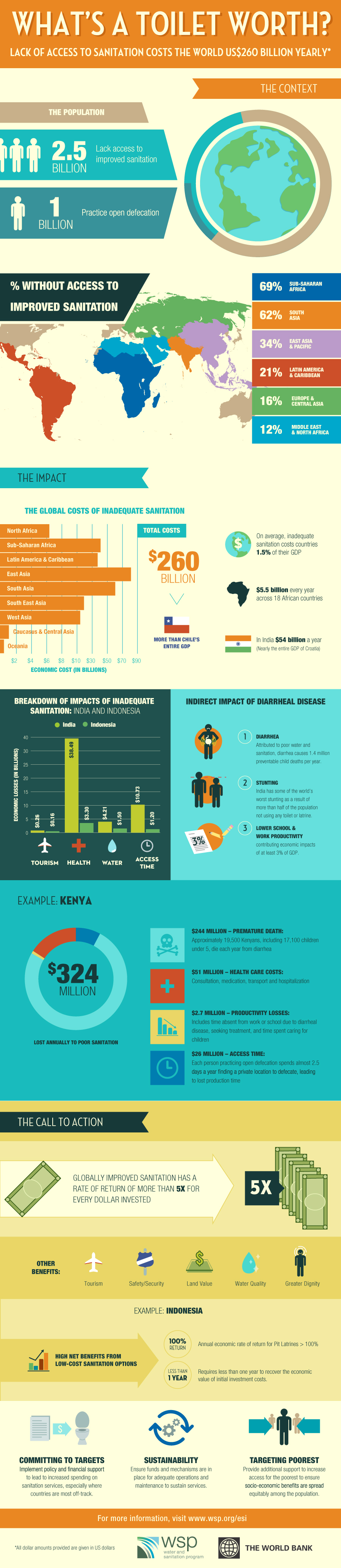
Infographic: What's a Toilet Worth? $260 Billion a year #WATER

Click image for full resolution.

Regulatory Reminder: Nearing SCAQMD Rule 1113 Compliance Dates

Posted by David DarlingCalifornia's South Coast Air Quality Management District (SCAQMD) on Sept. 6 adopted amendments to Rules 1113, volatile organic compound (VOC) limits for architectural and industrial maintenance (AIM) coatings, and Rule 314, AIM fees. The adopted Rule 314 amendments include: exempting small manufacturers from fee requirements; removal of the ability to 'group' products; added, amended, and deleted definitions; requiring big box retailers to submit their annual reports to the district and manufacturers, and include a list of stores where the products were sold; and updating the fee rate and removing the outdated phase-in rates. Information on Rule 314 is available at  http://www.aqmd.gov/hb/attachments/2011-2015/2013Sep/2013-Sep6-034.pdf

The adopted Rule 1113 amendments include exempting small coating containers with a capacity of two fluid ounces or less from labeling requirements and amending and deleting definitions, but did not include the addition of Test Method 313. Information on Rule 314 is available at http://www.aqmd.gov/hb/attachments/2011-2015/2013Sep/2013-Sep6-035.pdf


ACA would also like to remind members of the fast-approaching [B]Jan.1, 2014 compliance deadline[/B] SCAQMD Rule 113. Notably, 11 categories have lower VOC limits, colorant VOC limits, and labeling requirements for small containers (e.g., date code and VOC content).

The following provides a summary of SCAQMD rule compliance deadlines for amended Architectural Coatings Rule 1113, which take effect for the first time during the calendar year 2013, as well as rule requirements that must be complied with by Jan.1, 2014. Please note that, as new rules are adopted and current rules are amended or rescinded, compliance deadlines may change.

Read on at: http://www.paint.org/news/industry-news/item/1314-reminder-nearing-scaqmd-rule-1113-compliance-dates.html

Asthma related to cleaning agents: a clinical insight

Introduction

In recent years, there has been a growing concern about the potential role of exposure to cleaning products in the initiation and aggravation of asthma.1 ,2 Epidemiological surveys have consistently documented increased prevalence3–5 and incidence6–8 rates of asthma in workers exposed to cleaning materials and/or disinfectants, especially in domestic cleaners3,4 and healthcare workers.9–12 In addition, some studies have reported an increased risk of work-related asthma symptoms in exposed workers.5 ,12 ,13

However, there is still limited knowledge on the specific exposures and pathophysiological mechanisms involved in cleaning-related asthma.1 ,2 Cleaning materials typically contain a wide variety of ingredients, some of which are respiratory irritants, such as chlorine-releasing agents and ammonia, while others are potential airway sensitizers.14 ,15 Asthma in cleaners has been mostly associated with the irritant effects of cleaning products, which may exacerbate asthma and, at high exposure levels, cause acute irritant-induced asthma (or 'reactive airways dysfunction syndrome').10 ,16–19 Nevertheless, occasional case reports have ascribed occupational asthma (OA) due to specific airway hypersensitivty to components of detergents or disinfectants.2 Overall the determinants of cleaning-related asthma symptoms remain largely uncertain since most available studies have relied on self-reported symptoms or physician-based diagnosis. Only two studies have investigated the effects of cleaning exposures on peak expiratory flow (PEF) variability with inconsistent results.20 ,21

Therefore, the data of participants who completed specific inhalation challenges (SICs) with the cleaning agents and/or disinfectants suspected of causing their work-related asthma symptoms were reviewed in order: (1) to determine the prevalence and causes of asthmatic reactions induced by these agents and (2) to compare the clinical features as well as the changes in non-specific airway hyper-responsiveness (AHR) and sputum cell counts in participants with positive or negative responses to SIC.

Methods

This study was a retrospective analysis of the charts of all participants investigated through an SIC in our tertiary centre during the period of 1992–2011 for asthma symptoms related to cleaning products and/or disinfectants. The study was approved by the Comité d'éthique médicale of the Centre Hopitalier Universitaire de Mont-Godinne; approval number 84/2012.

Subjects

In our centre, SICs with the occupational agent(s) suspected of causing work-related symptoms are routinely performed to diagnose OA provided that the baseline forced expiratory volume in 1 s(FEV1) is equal to or above 60% of the predicted value.22 The participants are referred either by their attending physicians or by the Belgian Workers' Compensation Board (WCB). All French-speaking workers submitting a claim for work-related asthma to the WCB are referred to our centre in order to perform an SIC procedure.

The participants were those who completed an SIC procedure with cleaning agents and/or disinfectants were identified from a database of 713 participants who underwent an SIC for possible work-related asthma from 1992 up to 2011. Professional cleaners who had been challenged with latex gloves (n=23) or non-cleaning chemicals present at the workplace (n=3) were excluded from this analysis.

Specific inhalation challenges

SICs were completed according to a standardised protocol, which remained unchanged throughout the study period.23 On the first test day, a 'control' challenge was performed by exposing the participants to a paint diluent containing a mixture of alkyl esters, ketones and aromatic hydrocarbons nebulised in a 5 m3 challenge room for 30 min in order to ensure that fluctuations in FEV1 were ≤12%. On the following day(s), the participants were challenged with the cleaning product(s) suspected of causing their asthma symptoms at work. Exposure to these products was generated through a 'realistic' approach aimed at reproducing as close as possible the conditions of exposure at the workplace.24 The tested cleaning materials and the mode of exposure during SIC were selected based on the participants' interview, the Material Safety Data Sheets and, most often, an analysis of the job exposure by WCB''s hygienists. The cleaning agents were diluted in cold or heated water, brushed on a cardboard and/or sprayed according to the collected information.

The duration of exposure to the cleaning products was gradually increased (ie, 1, 4, 10, 15, 30 and 60 min) on the same day until a ≥20% fall in FEV1 occurred or a cumulative exposure of 2 h was completed. Spirometry was obtained at baseline and serially after exposure for a total of at least 6 h. An SIC was considered positive when a sustained ≥20% fall in FEV1 was recorded. The level of AHR to histamine was determined at the end of the control day (ie, baseline value), 7 h after the end of each active challenge when the FEV1 was within 10% of baseline value, and 24 h after the last active challenge.25 AHR was expressed as the provocative concentration of histamine causing a 20% fall in FEV1 (PC20).22 Since March 2006, sputum cell counts were assessed at the end of the control day and 7 h after the end of active challenges (ie, after the assessment of AHR and administration of an inhaled bronchodilator). Sputum was induced through the inhalation of increasing conc

Please read full at: http://bmjopen.bmj.com/content/3/9/e003568.full?sid=e2e75ce0-58ff-4e13-b51d-75a73f839193

Asthma related to cleaning agents: a clinical insight

  1. Olivier Vandenplas1,2,
  2. Vinciane D'Alpaos1,
  3. Geneviève Evrard1,
  4. Jacques Jamart3,
  5. Joel Thimpont2,
  6. François Huaux4,
  7. Jean-Christophe Renauld5

+ Author Affiliations

  1. 1Department of Chest Medicine, Centre Hospitalier Universitaire de Mont-Godinne, Université Catholique de Louvain,Yvoir, Belgium
  2. 2Fonds des Maladies Professionnelles, Brussels, Belgium
  3. 3Scientific Support Unit, Centre Hospitalier Universitaire de Mont-Godinne, Université Catholique de Louvain, Yvoir, Belgium
  4. 4Industrial Toxicology and Occupational Medicine Unit, Université Catholique de Louvain, Brussels, Belgium
  5. 5Experimental Medicine Unit, Ludwig Institute for Cancer Research, Université Catholique de Louvain, Brussels, Belgium
  1. Correspondence to Dr Olivier Vandenplas; olivier.vandenplas@uclouvain.be

What you need to know about Government Shutdown. Breaks EPA down to 7% staff - Suspending Superfund cleanups and dramatically reduces enforcement

The federal government shutdown will dramatically alter the activities of the U.S. Environmental Protection Agency (EPA). The agency will operate with less than seven percent of its employees during the government shutdown, according to the agency's contingency plan. Retained staff will focus on agency operations that are necessary to protect human life or property and projects that are funded with unexpired appropriations. We have summarized below what our environmental clients should know and how the government shutdown affects the EPA.
 
Superfund cleanups suspended
Cleanup at 505 of 800 national Superfund sites will be stopped during the shutdown, according to an EPA spokesperson. Projects will continue only where "a failure to maintain operations would pose an imminent threat to human life."
 
Current and future EPA enforcement matters reduced
The EPA has exempted only 182 of the 804 employees in the Air and Water enforcement divisions from furloughs. EPA attorneys in the middle of enforcement matters, counseling, litigation, or administrative hearings will only be allowed to continue their work to the extent that it is either funded by appropriations not affected by the shutdown, or it is needed to "protect human life and property from imminent threat." Expect U.S. Department of Justice and EPA attorneys to request stays and other deadline extensions in litigation proceedings.
 
The EPA will generally stop incurring new obligations during the shutdown. However, some obligations, such as responding to environmental emergencies, are exempted from the contingency plan. Clients can also expect permit applications to be delayed because of the decrease in personnel.
 
Rule promulgation likely delayed
The government shutdown may also delay the rule promulgation process for new power plant emission standards released on September 20, 2013 and renewable fuel volume standards expected in 2014. The EPA will likely attempt to stay on schedule with rulemaking procedures, but delays may result depending on the length of the shutdown.
 
Conclusion
The EPA will reduce the number of its working employees from 16,208 to 1,069 people during the government shutdown. As previously stated, clients should expect this change to delay application approvals and rulemaking procedures. Moreover, the EPA will not be opening new matters while the government remains shutdown unless there is an imminent threat to human health or property. Superfund cleanups will be suspended at a majority of sites nationwide. Michael Best will continue to monitor the implementation of EPA's shutdown contingency plan and will help clients navigate the ever changing regulatory landscape.

About 40 Percent Of All Food In The United States Is Thrown In The Garbage I.e. landfills

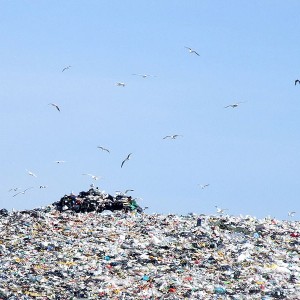
Landfill

Could that headline actually be true?  Do Americans waste about 40 percent of all the food that we produce?  That sounds like an absolutely crazy number, but it is actually quite accurate according to a study conducted by the Natural Resources Defense Council.  What the NRDC discovered is that approximately 40 percent of our total food supply is either thrown into dumpsters by grocery stores, is discarded by restaurants, never gets harvested on our farms, or is thrown into the garbage by consumers in their homes.  Even though 47 million Americans are on food stamps and millions of children go to bed hungry in this country every single night, we continue to waste approximately 263 million pounds of food every single day of the year.  One day people will look back and regard us as probably the most wasteful society in the history of the planet.

So where does all of that food go?

Well, according to a recent Seattle Times article, "food waste" takes up more space in our landfills than anything else does...

Last year, the NRDC found that Americans throw out as much as 40 percent of the country's food supply each year, adding up to $165 billion in losses.

Food waste makes up the largest portion of solid trash in landfills, according to researchers.

Some $900 million of expired food is dumped from the supply chain annually, much of it a result of confusion. Misinterpreted date labels cause the average American household of four to lose as much as $455 a year on squandered food, according to researchers.

The expired food that gets wasted is one of my personal pet peeves.


Human Powered iPhone charging, Dynamo puts the squeeze on powering phones

The Mipwr Dynamo is an iPhone case with a hidden lever that can be pressed down repeatedly...

There are already a number of gadgets available that are powered through good old-fashioned mechanical energy, but those usually involve cranks that can be uncomfortable to use and bulky to carry around. Mipwr Dynamo represents a different approach: it's an iPhone case with a hidden lever that can be pressed down repeatedly to charge the battery, but is still slim enough to fit in your pocket... Continue Reading Mipwr Dynamo puts the squeeze on iPhone charging 

Shared via feedly // published on Gizmag Emerging Technology Magazine // visit site

TomTato plant grows both tomatoes and potatoes

The TomTato consists of the top of a cherry tomato plant and the bottom of a white potato ...
We've seen a number of innovations that allow for gardening in small spaces, including a , a that shows you where to plant specially-prepared seeds, and a system that lets you grow in your window. The TomTato, however, is in a league of its own – it's a single plant that produces both tomatoes and potatoes at the same time. Shared via feedly // published on Gizmag Emerging Technology Magazine // visit site

Oct 1, 2013

EPA issues rule requiring new coal plants to capture, store CO2; critics say it will destroy industry

The Environmental Protection Agency proposed a rule Friday requiring new coal-fired power plants to limits carbon-dioxide emissions to levels that are impossible with current technology. The rule, which would take about a year to finalize, would effectively require carbon to be captured and stored. A court challenge is likely. 

EPA called the rule the "first uniform national limits on the amount of carbon pollution that future power plants will be allowed to emit," Jean Chemnick reports for Environment and Energy News. "The proposed standards are in line with investments in clean-energy technologies that are already being made in the power sector." EPA is expected to issue rules governing existing plants.

"Last year, the Congressional Budget Office concluded that it was unlikely the technology would become cost-competitive anytime soon," Brad Plumer writes for The Washington Post. "Power plants that can capture and store their carbon are initially expected to cost about 75 percent more than regular coal plants."

"The coal industry says the CCS mandate would effectively end new coal-fired electric generation in the U.S.," Chemnick writes. American Coalition for Clean Coal Electricity President and CEO Mike Duncan told Chemnick, "The EPA's proposal confirms the administration is talking out of both sides of its mouth when it comes to meaningful, long-term energy policy. Despite their talk about an 'all of the above' approach to energy, the EPA is banning the construction of modern coal plants, resulting in fewer fuel choices in the market. Fewer energy choices could cause American consumers to pay the ultimate price of higher energy bills." (Read more)

"In theory, this could mean a moratorium on all new coal plants for decades to come," Plumer writes. "In practice, though, the rule may not change much. The power industry has been building very few coal plants in recent years anyway, in part because cheap natural gas has made them uneconomical. . . . Read more Shared via feedly // published on The Rural Blog // visit site

U.S. Nuclear Power in Decline, billion$ at stake via @Sustainablog

By J. Matthew Roney Shared via feedly // cross posted from Sustainablog // visit site
Nuclear power generation in the United States is falling. After increasing rapidly since the 1970s, electricity generation at U.S. nuclear plants began to grow more slowly in the early 2000s. It then plateaued between 2007 and 2010—before falling more than 4 percent over the last two years. Projections for 2013 show a further 1 percent drop. With reactors retiring early and proposed projects being abandoned, U.S. nuclear power's days are numbered.

U.S. Net Electricity Generation from Nuclear Power, 1960-2013

The nuclear industry's troubles began well before the 1979 accident at Pennsylvania's Three Mile Island nuclear plant sowed public mistrust of atomic power. In 1957, the country's first commercial nuclear reactor was completed in Pennsylvania. By the mid-1960s, excitement over an energy source predicted to be "too cheap to meter" had created a frenzied rush to build reactors. But utilities soon pulled back on the throttle as the realities of construction delays and cost overruns sank in. Annual orders for new reactors, which peaked at more than 40 in 1973, fell sharply over the next several years. The two reactor orders placed in 1978 would be the last for three decades.

Of the 253 reactors that were ordered by 1978, 121 were canceled either before or during construction, according to the Union of Concerned Scientists' David Lochbaum. Nearly half of these were dropped by 1978. The reactors that were completed—the last of which came online in 1996—were over budget three-fold on average.

By the late 1990s, 28 reactors had permanently closed before their 40-year operating licenses expired. A number of factors played a role in this, including cost escalation, slower electricity demand growth, and a changing regulatory environment. Despite these closures, the United States was still left with 104 reactors totaling some 100 gigawatts (100,000 megawatts) of generating capacity—by far the most of any country.

Then, spurred on by new tax credits and loan guarantees promised in the 2005 Energy Policy Act—as well as by high prices for natural gas, a competing fuel—the industry has recently had visions of a "nuclear renaissance." By 2009, utilities were planning more than 30 new reactors. But in the years since, the vast majority of these plans have been shelved. Even with huge subsidies, private lenders still see new nuclear projects as too risky to finance. Meanwhile, the U.S. shale gas production boom sent natural gas prices plummeting, further darkening nuclear's prospect.

In 2012, the U.S. Nuclear Regulatory Commission (NRC) approved four new reactors for construction, two each at the Vogtle plant in Georgia and the Summer plant in South Carolina. These reactors are all of the same commercially untested design, purportedly quicker to build than previous plants. Both projects benefit from fairly new state laws that shift the economic risk to ratepayers. These "advanced cost recovery" laws, also passed in Florida and North Carolina, allow utilities to raise their customers' rates to pay for new nuclear plants during and even before construction—regardless of whether the reactors are ever finished.

Construction at both sites began in March 2013. Even as the first concrete was poured at the $14-billion Vogtle project, it was reportedly 19 months behind schedule and more than $1 billion over budget. The Summer project, a $10 billion endeavor, also quickly ran into problems. In June its owner, Scana Corp., admitted that it was running about a year behind and faced $200 million in additional costs. With these delays, the earliest projected completion date for any of these reactors is some time in late 2017.

The only other reactor currently under construction in the United States is Watts Bar 2 in Tennessee. It broke ground in 1972 and, after being on hold for two decades, was finally scheduled for completion in 2012. But that year, the owner—the Tennessee Valley Authority—announced it would be delayed again until 2015 and that the cost of the project would rise by up to 80 percent, to $4.5 billion.

Several utilities have recently dropped plans for new reactors or for "uprates," where an existing reactor's generating capacity is increased. For example, in May 2013 Duke Energy suspended its application to the NRC for two proposed reactors in North Carolina, citing slow electricity demand growth. Then in August, Duke pulled plans for a two-reactor, $24.7-billion project in Florida, on which it had already spent—and mostly recovered from its ratepayers—$1 billion. The company worried that mid-2013 amendments to the state's advanced cost recovery law would make it more difficult to fund ongoing projects with higher customer bills.

In June, the nation's largest nuclear utility, Exelon, canceled uprate projects at plants in Pennsylvania and Illinois. (These are two of at least six uprates dropped by utilities in 2013 as of early September.) Just over a month later, the French utility Électricité de France (EDF) announced it was bowing out of a partnership with Exelon that operates nuclear plants in New York and Maryland. In fact, EDF will no longer pursue U.S. nuclear projects at all, instead focusing its U.S. efforts on renewables.

This year has also already witnessed the permanent shutdown of four reactors totaling 3.6 gigawatts of capacity. The first to fall was Duke's Crystal River reactor in Florida. Although the plant was licensed to run until 2016, Duke decided to close it rather than pay for needed repairs. Then Dominion Energy's 39-year-old Kewaunee reactor in Wisconsin closed, citing competition from low gas prices. It had recently been approved to operate through 2033. And in June, Southern California Edison shuttered its two San Onofre reactors after 18 months of being offline due to a leak in a brand new steam generator. These retirements leave the United States with 100 reactors, averaging 32 years in operation. (France is second, with 58 reactors.)

More closures will soon follow, particularly among the roughly half of U.S. reactors in so-called merchant areas where nuclear competes with other technologies and prices are set by the market. A 2013 report by Mark Cooper at the Vermont Law School indicates that there are nine merchant reactors that, like Kewaunee, were granted 20-year life extensions but are especially at risk of closure. Epitaphs are already being written for two of them: Vermont's lone nuclear power plant will close in 2014, and the country's oldest reactor, Oyster Creek in New Jersey, will retire by 2019.

"Regulated" areas, where state authorities set electricity prices such that nuclear operators are guaranteed a profit, contain the rest of the U.S. reactors. Even for many of these plants, the economics may not allow for survival much longer. According to Credit Suisse, the cost of operating and maintaining the aging reactor fleet is rising at 5 percent a year and the nuclear fuel cost is growing even faster, at 9 percent annually. Wind and solar power costs, on the other hand, continue to drop as their electric output grows rapidly.

Dealing with nuclear waste is another expensive proposition. Over the past 30 years, the U.S. government has spent some $15 billion trying to approve a central repository for nuclear waste, and for most of that time the only site under consideration has been Nevada's Yucca Mountain. Amid concerns about the site's safety and its extreme unpopularity in Nevada, the Obama administration has moved to abandon the project entirely and explore other options.

A federal appeals court ruled in August 2013 that the NRC must resume reviewing the site's suitability. In the meantime, the waste keeps accumulating. The 75,000 tons of waste now stored at 80 temporary sites in 35 states is projected to double by 2055. All this has implications for nuclear power's prospects for expansion: nine states, including California, Connecticut, and Illinois, have prohibited new nuclear plants until a solution to the waste issue is found.

The low level of liability for nuclear operators in case of an accident also puts taxpayers on the hook. Plant owners pay into an insurance pool of just $12 billion; the public would cover any further damages. For comparison, cleanup and compensation for the 2011 Fukushima nuclear disaster in Japan is projected to cost at least $60 billion. The Natural Resources Defense Council estimates that a catastrophic accident at New York's Indian Point plant could cost 10 to 100 times that amount. This risk will be underscored on September 29, 2013, when one of Indian Point's two reactors becomes the first ever to operate with an expired license.

If the reactors now under construction in Georgia and South Carolina actually come online, they are projected to generate electricity that is much more expensive than nearly any other source, including wind and solar power. New nuclear plants are simply too expensive to replace the aging fleet. And with uprate proposals for existing reactors being pulled, it appears the industry cannot depend on this option to increase capacity much either.

The NRC has approved 20-year operating life extensions for more than two thirds of existing U.S. reactors; most of the rest will probably be granted extensions as well. Even if these units reach the end of their licensed life—which past experience says is unlikely—if no new plants come online to replace them, the last U.S. reactor will be shut down by the late 2050s. Any industry hopes ride heavily on the success of the Vogtle and Summer projects. As U.S. Energy Secretary Ernest Moniz said in a recent interview, if these plants now under construction keep racking up huge cost overruns and delays, "it is very hard to see a future for nuclear power plants" in the United States.

Data and additional resources available at www.earthpolicy.org

Because the Land Is Ours – The Rights of indigenous people v. Carbon Trading via @Sustainablog

By Tory Field and Beverly Bell; Part 29 of the Harvesting Justice series.

Inatoy Sidsagi and his cousin Esteban Herrera, from the indigenous Kuna Yala (also known as Guna Yala) nation in Panama, make up the indigenous rap group Kunarevolution. They rap about Mother Earth and the Kuna's inalienable right to protect her lands and waters.

The Kuna Yala people recently prevailed over a threat to their lands, in the form of carbon tradingREDD (Reducing Emissions from Deforestation and Forest Degradation) is a global program promoted by the U.N., industrialized nations, and international financial institutions like the World Bank. REDD allows countries and corporations to buy "clean-air" credits from countries with undeveloped forests. In exchange, governments, indigenous nations, and other groups agree to preserve areas of their forests, with the rationale that the trees' absorption of carbon, the element that causes global warming, will counteract damage done by industrial polluters. (Editor's note: we published a post promoting REDD projects last year)

In October 2011, the US-based Wildlife Works Carbon presented a REDD proposal to the Kuna Yala. The fifty-one communities spent a year and a half in consultation. In June 2013, the Kuna Yala general congress voted to reject the corporate proposal. They declared, further, their complete withdrawal "from all discussions at the national and international level on the REDD issue" and a prohibition on "organizing events, conferences, workshops and other activities on the issue."

We interviewed the hip-hop artist Inatoy Sidsagi from a liberated territory of the Lenca indigenous people of Honduras, in a building plastered with stickers reading, "REDD: No capitalism in our forests." Inatoy told us, "The rejection of REDD is for the patrimony. Having accepted it would have complicated life for future generations. Why? Because the land is ours. We are bound and obliged to leave it for perpetual use. REDD would have been a betrayal for the long-term, with many consequences – cultural ones, but even more, our possibility to be a people, to be a nation. It would have been the end of us as a people."

Because indigenous nations and communities have preserved their forests so well, they are everywhere being targeted by REDD projects. What may sound like dry policy is in fact a contest in who has control over the land, the air, and future: those who have stewarded the earth for millennia, or those who want to buy and sell it as merchandise.

First among the problems of REDD is that it allows industries to pay to continue polluting. When corporations can buy the right to contaminate the air instead of changing their destructive practices, everyone and everything suffers.

Second, REDD's very premise – attaching a monetary value to the ecological role of forests – commodifies what indigenous peoples say should never be commodified. Gustavo Castro Soto, co-coordinator of Otros Mundos in Chiapas, Mexico, said, "When a natural function like forest respiration becomes a product with a price, it's easy to see who's going to end up with control of the forests."

Third, the market-based approach raises questions about who "owns" the forests in the first place. Agreements made with local or national governments, or with some indigenous "leaders" who may falsely claim to represent their people, cannot be trusted to protect the communities that live in the areas affected, or the earth itself.

The fourth problem concerns the kind of activities REDD allows. Tree plantations, vast fields of a single variety like oil palm or eucalyptus, are planted for quick harvest and large profit. By the U.N.'s definition, these ecologically destructive plantations can be counted as forests. This means that corporations and governments can log biologically diverse jungles and ancient woods, create plantations in their place, and collect REDD payments.

Fifth, REDD regulations can prohibit traditional indigenous agricultural practices and cause indigenous communities to be evicted. For an excellent analysis of even more dangers of REDD, please see "No Rights of Nature, No Reducing Emissions" by Jeff Conant and Anne Petermann.

Indigenous nations and social movements around the world have been denouncing REDD. To amplify their dissent, they have been forming alliances, gathering at international climate talks, and protesting. They insist on upholding an old concept which has recently been gaining currency as Mother Earth rights. This means that rights of the earth are intrinsic, and cannot be given or taken away by government or international institution. The framework is being used both to spread the worldview that the riches of nature should not be considered commodities to be bought and sold, and to mobilize people to unified action.

Tom Goldtooth of the Indigenous Environmental Network and Dr. Daniel Wildcat of Haskell Indian Nation University wrote, "Goldtooth and Wildcat continued, "Our Indigenous lifeways are the original 'green economies.' This is more than an abstract philosophy. Our Mother Earth is the source of life. Water is her lifeblood. The well-being of the natural environment predicts the physical, mental, emotional and spiritual longevity of our Peoples. Mother Earth's health and that of our Indigenous Peoples are intrinsically intertwined. When our homelands are in a state of good health our Peoples are truly healthy. This inseparable relationship must be respected for the sake of our future generations and for the well-being of the Earth herself."

Goldtooth and Wildcat continued, "As Indigenous Peoples, we are accepting the responsibility designated by our prophecies to tell the world that we must live in peace with each other and the Earth to ensure harmony within Creation."

At the December 2011 UN Conference in South Africa, a new coalition, the Global Alliance of Indigenous Peoples and Local Communities against REDD and for Life, called for a moratorium on REDD. "We are here to express our concern about the false solutions that have made a business out of climate change," said Marlon Santi, former president of the National Confederation of Indigenous Nationalities of Ecuador.

You can order Harvesting Justice and find action items, resources, and a popular education curriculum on the Harvesting Justice website. Harvesting Justice was created for the US Food Sovereignty Alliance, check out their work here.

Read more from Other Worlds here, and follow us on Facebook and Twitter!

Copyleft Other Worlds. You may reprint this article in whole or in part. Please credit any text or original research you use to Tory Field and Beverly Bell, Other Worlds.


Shared via feedly // published via Sustainablog // visit site

Air Pollution Deaths Around The World [Infographic]

Air Pollution Deaths Around The World
Earth Observatory image by Robert Simmon based on data provided by Jason West

You've probably seen those photos of Beijing on a bad pollution day. Such days come and go, but the effects of even small amounts of increased pollution may linger in a population for a long time. Several studies have established that different air pollutants reduce people's lifespans.

In a new study, a team of international scientists estimated how many people die each year from the effects of air pollution all over the world. This map shows their numbers.

The map's colors don't actually show absolute numbers of deaths. Instead, they say how many more people in a region died from air pollution in 2000 than in 1850. The colors indicate the number of increased deaths per 386 square miles, an area about the size of Dallas. That means that in the worst parts of northern China and India, there are now 1,000 more deaths from air pollution per Dallas-sized area than there were in 1850.

There are a few places around the world in which air conditions were better in 2000 than they were in 1850. One big improved patch includes the U.S.'s southeastern states, where Antebellum farmers used to burn vegetation to clear the ground, throwing a lot of particulate matter into the air. Improved areas in India and Africa are likely due to climate change, which can alter the rate at which different chemical reactions occur in the air and how the atmosphere circulates.

Shared via feedly // Please continue reading published on Popular Science // visit site