Aug 26, 2006
Ocean GeoTherm to eliminate air conditioning (by RMI)
"RMI's Simple cooling technologies that run a pipe into the ocean can be used to eliminate air conditioning in these projects." » original news

2007 windfarms enough to power about 3.8 million typical American homes.
Wind farms are going up across the country at a rapid pace. This month, the United States passed the 10,000-megawatt mark in installed wind turbine capacity, according to the American Wind Energy Association, which projects that by the end of next year, that number will reach 15,000 megawatts -- enough to power about 3.8 million typical American homes. » original news
Bank Study Finds ethanol an "insufficient" replacement for oil.
Based on the study, ethanol production at its current rate would total around 30 billion gallons of fuel by 2020. Unfortunately, oil consumption for vehicles alone totaled 320 billion gallons just for 2005.
They concluded the only way ethanol could be a viable alternative would be production from many sources since current crops such as sugar and corn are subject to seasonal variation. Such multi-source production, continued the bank, is near impossible since it would require companies to set up production multi-nationally. Current high tariffs and other market restrictions by individual countries currently make such a scenario near-impossible.
Source: Macauhub
They concluded the only way ethanol could be a viable alternative would be production from many sources since current crops such as sugar and corn are subject to seasonal variation. Such multi-source production, continued the bank, is near impossible since it would require companies to set up production multi-nationally. Current high tariffs and other market restrictions by individual countries currently make such a scenario near-impossible.
Source: Macauhub
Aug 25, 2006
Six Steps to Cut Global Warming Pollution in the United States
The United States has a responsibility to take leadership in reducing global warming pollution.
Taking these six steps could reduce U.S. carbon dioxide emissions by about 23 percent and global warming emissions by about 19 percent by 2020.
1) Stabilize vehicle travel.
2) Increase vehicle fuel economy standards to 40 MPG
3) Replace 10 percent of vehicle fuel with biofuels or other clean alternatives.
4) Reduce energy consumption in homes, business and industry by 10 percent from current levels.
5) Obtain 20 percent of our electricity from new renewable energy sources.
6) Hold emissions from other sources to current levels.
Table ES-1. Global Warming Emission Impact of the Six Steps (million metric tons carbon dioxide equivalent) Strategy Savings MMTCO2E Stabilize Vehicle Travel 0* 40 MPG Fuel Economy and Heavy-Duty Truck Fuel Economy Standards 383 10% of Transportation Fuel from Renewables 61 10% Reduction in Energy Consumption 400 20% of Electricity from New Renewables 511 Total Savings 1355 2004 U.S. Global Warming Emissions 7122 Reduction Relative to 2004 19% * Avoids increase in emissions resulting from projected increases in vehicle travel between now and 2020.
Taking these six steps could reduce U.S. carbon dioxide emissions by about 23 percent and global warming emissions by about 19 percent by 2020.
1) Stabilize vehicle travel.
2) Increase vehicle fuel economy standards to 40 MPG
3) Replace 10 percent of vehicle fuel with biofuels or other clean alternatives.
4) Reduce energy consumption in homes, business and industry by 10 percent from current levels.
5) Obtain 20 percent of our electricity from new renewable energy sources.
6) Hold emissions from other sources to current levels.
Table ES-1. Global Warming Emission Impact of the Six Steps (million metric tons carbon dioxide equivalent) Strategy Savings MMTCO2E Stabilize Vehicle Travel 0* 40 MPG Fuel Economy and Heavy-Duty Truck Fuel Economy Standards 383 10% of Transportation Fuel from Renewables 61 10% Reduction in Energy Consumption 400 20% of Electricity from New Renewables 511 Total Savings 1355 2004 U.S. Global Warming Emissions 7122 Reduction Relative to 2004 19% * Avoids increase in emissions resulting from projected increases in vehicle travel between now and 2020.
Researchers work to make LED lighting 3 times more efficient
A team of researchers from Rensselaer Polytechnic Institute has received $1.8 million in federal funding to improve the energy efficiency of green light-emitting diodes (LEDs). As part of the U.S. Department of Energy's (DOE) Solid-State Lighting Program, the team aims to close the "green gap" in LED technology by doubling or tripling the power output of green LEDs in three years, an advance that ultimately could lead to the replacement of incandescent and fluorescent lamps in general illumination applications.
The prime contender to meet this goal, according to Wetzel, is a white-light unit made from a combination of high-performance red, blue, and green LEDs. Researchers have made major strides in advancing the design of red and blue LEDs, but the technology behind green LEDs has lagged behind substantially, he says.
He plans to focus instead on aspects of the "piezoelectric effect" - a property of some materials that causes them to produce an electrical field when pressure is applied. By controlling this effect, he and his colleagues hope to develop a process to make higher-intensity green LEDs that convert electricity into light more efficiently.
Read more here
The prime contender to meet this goal, according to Wetzel, is a white-light unit made from a combination of high-performance red, blue, and green LEDs. Researchers have made major strides in advancing the design of red and blue LEDs, but the technology behind green LEDs has lagged behind substantially, he says.
He plans to focus instead on aspects of the "piezoelectric effect" - a property of some materials that causes them to produce an electrical field when pressure is applied. By controlling this effect, he and his colleagues hope to develop a process to make higher-intensity green LEDs that convert electricity into light more efficiently.
Read more here
Biofuels may strain U.N. goals of ending hunger
STOCKHOLM (Reuters) - Rising production of biofuels from crops might complicate U.N. goals of ending hunger in developing countries, where 850 million people do not have enough to eat, a senior U.N. official said on Wednesday.
Full reuters read here
 "There's a huge potential for biofuels but we have to look at ... competition with food production," said Alexander Mueller, assistant Director General of the U.N. Food and Agriculture Organization (FAO).
Production of fuels from sugar, maize, soybeans and other corps is surging, spurred by oil prices above $70 a barrel and a drive for more environmentally friendly fuels from renewable sources.
"This is a completely new issue, we only know that this has impact on the question of feeding the world," he told a news conference during a meeting of 1,500 water experts in Stockholm.
Still, he said that a surge in biofuels production in the past year or two had not hampered food supplies. "We have to find out what the situation will be in 5 to 10 years ... a lot of research has to be done," he said.
Biofuels now make up only a fraction of a percent of world energy use but have an economic potential to rise to perhaps 6 percent by 2050, according to rough FAO estimates.
"This is an emerging issue with no clear figures and no guidelines," Mueller said. The rise of biofuels could also strain world water supplies -- about one in three people live in areas where water is scarce, he said.
He also said that the world would need better management of fresh water to "feed all the people and to produce energy for the world."Full reuters read here
Schools to use 'green' cleaning supplies for safety reduce children's exposure to chemicals
Concerns about the harmful health effects chemicals can have, especially on children, and a realization that cleaners with reduced amounts of potentially dangerous ingredients are increasingly available prompted the legislation, which takes effect Sept. 1.
Children, especially young ones, are more likely to come into contact with cleaning chemicals, and they are more vulnerable than adults because of their size and age, she said.
A statement on the Office of General Services' Web site said the agency anticipates working with the Design for the Environment program, among others, in updating regulations, but any changes will be based on "solid scientific studies and research."
Potential harmful effects of cleaners, waxes and deodorizers are skin and eye irritation, asthma attacks, and neurological impacts, Wood said. Some parents have taken their children out of school because of exposure to chemicals there, she said.
"If there is a single ingredient in any cleaning product that will cause an asthmatic attack, it would be the fragrance, and there are a lot of children with asthma in our schools," she said.
Prices of the environmentally friendly cleaners are comparable to others on the market, said Christine Burling, a spokeswoman for the state Office of General Services.
Mercury remains a major concern in Great Lakes
"Mercury deposits on land run into water bodies and enter the bodies of fish that subsequently are consumed by wildlife and humans. Mercury then is absorbed into brain matter and causes irreparable damage, said Hydrologist and geochemist David Krabbenhoft"
"This isn't a state problem or a regional problem. This is a worldwide problem," he said.
"This isn't a state problem or a regional problem. This is a worldwide problem," he said.
Coal is the last remaining major cause of mercury pollution that remains unregulated, Krabbenhoft said, and there is no way to know what effect emissions in Asia, Africa and Europe will have on North America and the rest of the world.
WPS doesn't mind making pollution control changes, but all energy companies need a set of emissions rules to plan for the future, while meeting consumer demand and working with environmental and regulatory agencies. WPS aren't in compliance all the time with federal air quality standards and there is no reason for it, apart from being downwind from highly populated and industrial areas elsewhere in the Midwest.
"That's the way the wind blows, literally," McCann said.
Ethanol business a "modern day gold rush"?
Companies are building $10, ooo,ooo plants accross the Midwest to get in on the gov. subs for corn and fuel completely bullish on ethanol's future, saying the next decade will see annual demand reach 20 billion gallons.
"I think there's still room in the industry," he told the Dispatch. "There's quite a long way to go before it's built out. [But,] it's a commodity business. You have to get ready for when times may not be so good."
Full read at St. Louis Dispatch article
"I think there's still room in the industry," he told the Dispatch. "There's quite a long way to go before it's built out. [But,] it's a commodity business. You have to get ready for when times may not be so good."
Full read at St. Louis Dispatch article
one per cent of the energy contained in the subsurface aquifers could dwarf the remaining oil and gas reserves
An Untapped Endowment
Geothermal Engines Possible for Pump Jacks?
One new technology that Dr. Ian Potter will evaluate is Arizona-based Deluge Inc.’s Natural Energy Engine, a non-combustible engine that uses geothermal energy, essentially replacing conventional diesel- or gasoline-powered pump jacks at wellheads.
The engine contains high-pressure, liquefied carbon dioxide that is heated and cooled, causing expansion and contraction. This change in volume pushes and pulls on a piston, creating mechanical energy.
Dr. Rick Richardson, P.Geol., former manager of the Alberta Geological Survey, estimates that even one per cent of the energy contained in the subsurface aquifers could dwarf the remaining oil and gas reserves in the basin.
“We have a huge resource endowment that’s untapped, combined with a huge oil and gas infrastructure,” explains Dr. Richardson, who recently retired and is now consulting to the Alberta Geological Survey. “The Earth is always producing heat and transferring it into aquifers.” The study, he says, will focus on non-potable and saline underground aquifers.
“We’re tying to match the geology to the technology. You can’t just do it anywhere — there has to be an end user with fairly substantial heating and cooling needs.”
Geothermal technology is improving, oil and gas is becoming less abundant — and researchers are looking seriously at a new resource: water heated by the Earth itself.
At present, there are more than 30,000 heat pump installations in personal residences and commercial facilities across Canada. At Springhill, N.S., heat pumps extract energy from 18 C waters in a flooded coal mine to heat and cool a nearby industrial complex.
Natural Resources Canada’s Office of Energy Efficiency reports that the Springhill geothermal project offsets the need for oil-fired electrical power generation, creating an annual energy savings of $45,000.
New device cuts gas engine air pollution
Two U.S. scientists say they've developed a light-weight, relatively inexpensive way of reducing unburned hydrocarbon air pollutants from gasoline engines.
United Press International, Inc.
Researchers Marcus Ashford and Ronald Matthews of the University of Alabama say when you start your car on a hot summer day, barely 20 percent of the gasoline injected into the engine vaporizes and powers the engine. The rest becomes part of the engine's emissions of unburned hydrocarbon air pollutants.
On a cold winter day, they said, the waste and pollution is much worse. Multiply by 230 million cars in the United States and the picture is much, much worse.
Their so-called on-board distillation system targets the root cause of such waste: gasoline's relatively low volatility, or ease in changing from a liquid to a gas. High-volatility components are separated from gasoline and stored for use after startup, until the engine and other components warm and become more efficient.
The system would add about five pounds to a car's weight and less than $100 to its cost when in full production, the scientists estimate.
The research is to appear in the Sept. 15 issue of the journal Environmental Science & Technology.United Press International, Inc.
Aug 24, 2006
Wisconsin Faces Competition In Becoming Renewable Energy Leader
"I think these other states are really forthcoming with incentives and trying to drive the industry," said Jeff Pietrick, vice president of North Prairie Productions. "We're certainly in favor of incentives and all, but I think there's a natural progression here in Wisconsin agriculture to make it work."
Investors said the race is far from over and that Wisconsin is on its way to a promising start.
"Do we have to catch up? Yeah, maybe a little bit," said Pietrick. "But , ultimately, we're going be leading this industry, here in Wisconsin.
"The focus of Wisconsin's bio-grant program isn't limited to fuel products. The state hopes to expand development of new bio-based building materials such as biodegradable plastics and concrete products.
Wisconsin Faces Competition In Becoming Renewable Energy Leader
Investors said the race is far from over and that Wisconsin is on its way to a promising start.
"Do we have to catch up? Yeah, maybe a little bit," said Pietrick. "But , ultimately, we're going be leading this industry, here in Wisconsin.
"The focus of Wisconsin's bio-grant program isn't limited to fuel products. The state hopes to expand development of new bio-based building materials such as biodegradable plastics and concrete products.
Wisconsin Faces Competition In Becoming Renewable Energy Leader
Biofuel hopes outrunning reality (returning to the past)
"In response to the 1970s oil crisis, there was a boom in the interest in alternative fuels including government programs to provide incentives. Once oil prices dropped, the interest in alternative fuels waned and government programs supporting such efforts died away," said Robert Edwards, a partner in the energy and project finance at Washington-based law firm Hunton & Williams. "It is possible that this cycle may be different. However, it is challenging to devise the appropriate public policy response."
Nations such as Japan and the U.S. are looking for viable alternatives to petroleum, but promising technologies will not replace current sources to any great degree for years, analysts say. One expert says until the U.S. stops thinking of cheap, reliable oil as its "birthright," progress toward energy security will never be achieved.
Nations such as Japan and the U.S. are looking for viable alternatives to petroleum, but promising technologies will not replace current sources to any great degree for years, analysts say. One expert says until the U.S. stops thinking of cheap, reliable oil as its "birthright," progress toward energy security will never be achieved.
Yet there still remains optimism about developing alternative energy sources, even if the pay-off may be a long time coming.
"Biodiesel can only supply about 10 percent of the demand for fuel oil, it is essential that we move forward with it. No alternative energy source can fully replace oil, and we will need to develop all forms in order to make the transition," said Chrism Bachmann, assistant professor of integrated science and technology at James Madison University in Harrisonburg, Va. He also pointed out that "once all the oil is gone -- within 40 years -- and eventually coal as well, we will need every form of alternative energy to replace them."
8 Million Acres in Alaska for Drilling
Environmentalists are especially concerned because 373,000 acres north of the reserve's wetland-rich Teshekpuk Lake will also be offered for lease for the first time.
About 183,200 acres relinquished since a 2002 lease sale will also be reoffered to energy companies.
The reserve is estimated to hold between 5.9 billion and 13.2 billion barrels of recoverable oil and 39 trillion to 83 trillion cubic feet of natural gas. Two billion barrels of oil may be around Teshekpuk Lake alone.
"This is a significant amount of oil that will help decrease our dependence on imported oil," said BLM Acting Alaska Director Julia Dougan.
The United States consumes close to 21 million barrels of oil a day and must import 60 percent of that amount.
Source Reuters
Indian Activists Plan Coca-Cola, Pepsi Blockades
'Quit India' campaign targeting the global giants...
they wanted Coke and Pepsi thrown out of the country entirely as their drinks were not nutritious and accused the companies of contaminating the land and depleting the groundwater around their factories in India.
'We will blockade the movement of their trucks to remind these corporations that it's not just the government they have to convince, but 1.2 billion Indians,'"
Remember This all started when pesticides were found!
Source Reuters
they wanted Coke and Pepsi thrown out of the country entirely as their drinks were not nutritious and accused the companies of contaminating the land and depleting the groundwater around their factories in India.
"These are corporate bulls in the garden of India,"
'We will blockade the movement of their trucks to remind these corporations that it's not just the government they have to convince, but 1.2 billion Indians,'"
Remember This all started when pesticides were found!
Source Reuters
China Says Contains Chemical Spill in River
"China has contained a chemical spill that threatened water supplies for millions and triggered panic buying of bottled drinking water, state media said on Thursday. "
The government bought in more than 1,000 soldiers and firefighters to stop the pollution drifting, the newspaper said.
In Harbin, where the November spill cut water supplies to millions, alarmed residents rushed to shops to stock up on bottled water, the newspaper added, though officials assured people there was no problem.
China has experienced a series of industrial accidents that have contaminated rivers.
Earlier this month, a ship carrying more than 200 tonnes of sulphuric acid ran aground near the eastern Chinese city of Hangzhou, leaking chemicals into an ancient canal.
And in June, a truck carrying coal tar overturned, dumping the load into the Dasha River in the northern province of Shanxi and contaminating water supplies for 50,000 people.
Source:
China Targets Rising Mountain of High-Tech Junk
The US needs to think long and hard about this program
"The State Environmental Protection Administration said a new policy issued on its Web site (www.zhb.gov.cn) on Wednesday would encourage 'polluter responsibility' for electronic waste.
'Our country's volume of discarded domestic appliances and electronic products has grown rapidly for years on end,' an unnamed official said in the announcement.
'The scatterered, backward handling of electronic junk in family workshops is a serious threat to our fragile environment and human health'.
The official targeted illegal imports of discarded computers and other often toxic digital refuse from rich countries.
www.zhb.gov.cn
"The State Environmental Protection Administration said a new policy issued on its Web site (www.zhb.gov.cn) on Wednesday would encourage 'polluter responsibility' for electronic waste.
'Our country's volume of discarded domestic appliances and electronic products has grown rapidly for years on end,' an unnamed official said in the announcement.
'The scatterered, backward handling of electronic junk in family workshops is a serious threat to our fragile environment and human health'.
The official targeted illegal imports of discarded computers and other often toxic digital refuse from rich countries.
www.zhb.gov.cn
NEW BP green washing consumer scheme for drivers
Yikes! Why contribute to a worthy cause when Big Petro needs your Eco Money!
BP says ( this on www.targetneutral.com) the scheme is open to all motorists, BP says it will make an additional contribution to scheme members who buy their petrol at BP stations and who use a Nectar card.
Independent Online Edition > Business News
BP says ( this on www.targetneutral.com) the scheme is open to all motorists, BP says it will make an additional contribution to scheme members who buy their petrol at BP stations and who use a Nectar card.
Independent Online Edition > Business News
Aug 23, 2006
New hazardous waste manifest form Effective September 5, 2006!
 Effective September 5, 2006, a new hazardous waste manifest form must be used by hazardous waste generators, transporters and disposal/treatment facilities for new shipments of hazardous waste. For a quick overview of the new form and its use see: http://www.pneac.org/hazwastemanifest/
Please pass along this link to co-workers, colleagues, and any other persons/organizations who would benefit from this timely, important information.
If you find this information helpful and would like to voice your affirmation for similar products, please take two minutes to complete the user survey at the PNEAC home page at www.pneac.org. EPA relies on these results to make decisions about how to improve compliance assistance efforts.
Thirsty lawns a target
Whether it's learning from the riots over water shortages in China, problems involving the low flow in Colorado rivers or brewing controversy about Waukesha County communities' thirst for Lake Michigan water, minimizing conflict depends on having conservation plans in place quickly,
Lawn watering, especially irrigation systems, was the repeated target of criticism from symposium speakers. Vickers, a Massachusetts conservationist, said the No. 1 drinking problem in the United States is not alcohol, but lawns.
Ambs said that with new laws on groundwater use in place, and a pending nationwide agreement on regulating Great Lakes water, it is time for the state to implement water conservation plans.
"If we do this right, it is my firm belief that Wisconsin will be the center of the water belt of the United States," Ambs said. "This is really what I challenge people and urge people to think about and look to the future, for Wisconsin is a state woven in a fabric drenched in water.
"We have an abundant resource but it is not unlimited. If we do this right, I am firmly convinced . . . that it is a key cornerstone to the future of our economy. If we have a good sustainable water use plan for the future, in another 20 to 25 years it is my prediction that a lot of folks are going to be looking back at the Midwest because the Southwest and the Southeast portions of this country cannot sustain their growth.
"They don't have the water. They're stealing it now to make growth happen."
Full JS online read here
"Wisconsin’s Road to Water Wisdom"
Been There, Done That
Wisconsin state Senator Neal Kedzie remembers that a similar impasse occurred in the Badger State four years ago. He says that what broke the gridlock in Wisconsin was a highly unusual alliance of farmers and environmentalists, traditionally dogged adversaries who formed to advance a smarter water withdrawal policy in Wisconsin.
“[That alliance] was enough to move me," said the rough-riding Republican from Elkhorn, who chairs Wisconsin’s Natural Resources and Transportation Committee. “It showed us that there was a willingness between diverse interests to have a serious dialogue on this issue.”
A Potent Partnership “Our message was simple,” recalled Todd Ambs, then executive director of the River Alliance, now head of the state Department of Natural Resources’ Water Division. “This is Wisconsin. It’s not Arizona, or New Mexico, or California. We are blessed with plenty of water. We don’t have to pit one water user against another. But we do have to figure out a strategy for sustaining this resource for future generations before the crisis hits.” "Figuring out how all these competing water sources can coexist is a top priority for our economy, our environment, and our quality of life.”
In Wisconsin, that anti-regulatory argument began unraveling in 2000, when the River Alliance of Wisconsin joined the Wisconsin Potato and Vegetable Growers Association to kick off the search for a solution to the state’s sharply declining groundwater levels. The partnership came partly in response to growing awareness that major economic centers like Green Bay, growing suburbs such as Waukesha, and inland communities like Madison pump groundwater faster than nature can replenish it.
Top tips to going green.
 Simple things that everyone can fit into their everyday lives….
Also, don't forget to read my 2006 EarthDay top 10 list!
- Recycle waste cans, bottles, jars, plastics and newspapers. Most local authorities run schemes to recycle this sort of waste. If your local authority runs a scheme use it! Cancel junk mail – In the USA, register with the Direct Marketing Association to stop 75% of junk mail.
- Where you can, avoid supermarkets. Most of the food has travelled many hundreds and often thousands of miles before it gets to the supermarket shelf. Try to buy seasonal locally produced food. Check out farmers' markets and farm shops and even local, independent stores. Think of the food miles that are saved. Find your local farmers' market in the USA.
- Save energy. Not only will this reduce the CO2 output from power stations it will also save you money. Switch things off when they're not being used. Only run your dishwasher or washing machine when it is full. Fit thermostats on radiators and turn the heating. Turning down your heating by just 1 degree can save 10% off your heating bill! Draught-proof windows and doors and insulate loft and cavity walls. If you use air conditioning to keep cool, turn the thermostat up a little. Switch to low energy light bulbs. You could also switch energy supplier to one that supplies electricity that is generated by wind power or hydro - look for the green energy.
- If you want to get rid of something that you no-longer use, Freecycle it. The Freecycle Network is made up of many individual groups across the globe. It's a grassroots and entirely non-profit movement of people who are giving (& getting) stuff for free in their own towns.
- Save water. Have showers instead of baths. Don't use sprinklers or water hoses. Always turn the tap off when brushing your teeth!
- Use your car less. For short trips, walk or cycle instead. For longer journeys, use the bus or carpool.
- If you have space for a compost bin, compost all organic waste.
- Start using rechargeable batteries. The average household uses 21 batteries a year. The US generates 40,000 tonnes of waste general purpose batteries every year, but less than 1,000 tonnes are recycled.
- Use eco-friendly cleaning products and toiletries.
Air pollution has damaged many parks - and it could get much worse
1 in 3 U.S. National Parks Polluted

- "Air pollution threatens the very essence of what Americans value most about our national parks," said Wenzler. "Pollution destroys habitat for plants and animals, endangers the health of park visitors and staff, damages the symbols of our nation's heritage, and clouds once-majestic horizons in our national parks. The good news is we don't have to sacrifice our national treasures to meet our growing energy demands."
- Finish the job of cleaning up outdated power plants
- Require new power plants to use the lowest polluting technologies
- Protect wildlife by limiting the amount of air pollution deposited in the parks
- Ensure that legal limits on park air pollution are not exceeded
- Eliminate toxic "hot spots" by enacting stronger power plant mercury controls
- Address climate change by reducing carbon dioxide emissions
- Expand programs to monitor and reduce air pollution in the parks
- Promote clean, renewable domestic energy supplies
- Fully fund the National Park System
- Encourage concerned citizens to minimize their contribution to air pollution in the parks
NPCA's report offers ten recommendations for cleaning the air in the national parks:
Looking to green up your life?
You could car pool to work, sip fair trade coffee, swaddle your tyke in organic cotton, spend vacations saving rain forests, bank your retirement on socially responsible investments, even power your home from a low-pollution utility.
 "The more of us who individually make these choices makes it possible and culturally accessible for millions of others to make the same choices," she says. "And in the process, we can transform our society."
The flaw in the eco-consumer movement is the assumption that uncoordinated individual spending can effect meaningful change, he says.
But if you are trying to save the world, here are a few tips to make sure your eco-spending matters:
-- Shop local. The environmental benefit of organic grapes is offset by the energy consumed when they are shipped from afar.
-- Use trusted brands and products that are certified green (such as "organic," a term which is government regulated).
-- Coordinate with others to get the most impact from your spending.
-- Use green products, but don't use them as an excuse to indulge. Consume less overall.
Source: Associated Press
The flaw in the eco-consumer movement is the assumption that uncoordinated individual spending can effect meaningful change, he says.
But if you are trying to save the world, here are a few tips to make sure your eco-spending matters:
-- Shop local. The environmental benefit of organic grapes is offset by the energy consumed when they are shipped from afar.
-- Use trusted brands and products that are certified green (such as "organic," a term which is government regulated).
-- Coordinate with others to get the most impact from your spending.
-- Use green products, but don't use them as an excuse to indulge. Consume less overall.
Source: Associated Press
YIKES - federal funding chop for planting trees on Milwaukee Public Schools grounds.
The Americans for Prosperity Foundation held a news conference at O'Donnell Park to attack a provision in the Interior Department appropriations bill that earmarks $350,000 for urban tree planting. Foundation President Tim Phillips and other speakers, including County Executive Scott Walker and several Republican political candidates, said they weren't opposed to trees but thought $350,000 was too much for 3,000 trees.
Phillips said such earmarks are part of a pattern that leads to "pork-barrel spending." The organization believes members of Congress should submit earmark requests with their names attached early in the budget process instead of adding them anonymously at the last minute, Phillips said.
In fact, the money did not go for trees alone but was part of a $700,000 city program of replacing asphalt with grass and trees at schools, after a study showed it would help cut Milwaukee Metropolitan Sewerage District overflows, said Eileen Force, Mayor Tom Barrett's spokeswoman.
Sen. Herb Kohl (D-Wis.), who claimed credit for the provision, has never slipped earmarks anonymously into an appropriations bill just before passage, said his spokeswoman, Lynn Becker.
China's urban water supplies face severe test
 China was now at a "crossroads" in dealing with its urban water problems, said Qiu Baoxing, vice construction minister, but he ruled out a large rise in tariffs to encourage water conservation, saying low Chinese incomes would not permit such a move.
 "The reasons for this serious situation are many, but there are three main areas that have not been brought under effective control -- waste water discharge in cities, industrial effluent and agricultural pollution," he said.
Per capita water resources in the world's most populous country are less than a third of the global average, and falling.
A drought this summer in southwestern China's Chongqing city and Sichuan province has left more than 18 million people short of drinking water -- greater than the population of the Netherlands.
In China's rapidly growing cities, where people from the much poorer countryside have flocked in the last few decades, hoping to share in the country's economic growth, almost half of all waste water is simply dumped untreated into rivers and lakes.
Leaky pipes and over-use of groundwater have exacerbated the situation, he added, and have even led to severe subsidence problems in some cities.Northern China, where a third of the country's population lives, also suffers from increasingly dry conditions, the official said, reducing the amount of water available.
Qiu said the government would spend more than 1 trillion yuan (US$125.5 billion) in the next five years on new sewage works, pipes, desalinisation plants and projects like the massive South-North water diversion scheme.
"We are standing at a crossroads," said Qiu, who admitted to only using bottled water to make tea because of poor tap water quality in Beijing.
Conservation efforts in some cities including Beijing, which is preparing for a self-styled "green" Olympics in 2008, have helped cut water consumption. Zhang Yue, deputy head of the ministry's urban construction department, said Beijing used 500 million tonnes less water in 2005 than in previous years.
But Qiu said that raising low water prices to promote conservation was not an easy option. He said that water costs of US$5 a tonne as in Boston, or 2.5 euros a tonne in France, would not work in China.
US livestock feeding operations to ensure they comply with clean air laws.
Environmental Protection Agency said on Tuesday it will begin a nationwide survey this winter on air pollutants spewed by US livestock feeding operations to ensure they comply with clean air laws.
The agency said it has approved 2,568 such agreements, representing 1,856 swine, 468 dairy, 204 egg-laying and 40 broiler chicken operations at almost 6,300 farms. Feeding operations can include more than one farm. Beef cattle were excluded because they generally are raised out of doors.
"This approach will achieve compliance with environmental laws much faster than any other enforcement mechanism," the agency said. Environmental groups have said the actual result will be to delay enforcement of air pollution rules on factory farms.
However, once the agency publishes it emissions-estimating methodology, feeding operations that committed violations would have to pay penalties from US$200 to US$100,000 based the number of animals they maintain and then assure compliance with relevant federal clean air rules.
Illinois Plans to Tap Local Energy Sources

Illinois Gov. Rod Blagojevich, plan was the most ambitious of any state and involves constructing dozens of plants to make ethanol, electricity and natural gas -- and send the carbon dioxide the plants emit through a new pipeline to pump up the state's oil production and then sequester the greenhouse gas underground.
"No other state has the combination of natural resources that we have here in Illinois," Blagojevich said in a statement.
"We're the nation's leading producer of soybeans. We're the No. 2 producer of corn. And we have the nation's third-largest reserves of coal," he said.
Environmentalists agreed. "It looks like a very smart, political move by the governor and one that has real potential benefits in terms of both cleaner coal and reducing oil consumption," said Frank O'Donnell of the group Clean Air Watch.
"Obviously, the devil may be in the details. But it looks to be a good-faith effort to use local energy," O'Donnell said.
Scientists Extend Time Ozone Layer Needs to Repair Itself

The good news is, the ozone layer is finally on the mend after decades of degradation, scientists say. The bad news is the ozone layer will take longer to repair itself than originally predicted. That's because the protective layer, which filters dangerous solar radiation, is repairing itself more slowly than forecast.
The level of ozone-depleting substances, while on the decline, is not being withdrawn from the atmosphere fast enough, making the recovery of the ozone layer a drawn out action.
"While these latest projections of ozone recovery are disappointing, the good news is that the level of ozone-depleting substances continues to decline from its 1992-94 peak in the troposphere and the 1990s peak in the stratosphere," said World Meteorological Organization (WMO) secretary-general Michel Jarraud.
Wisconsin State writing clean-air rules

State officials are writing the toughest regulations in more than 15 years - that are designed to crack down on emissions from coal-burning power plants and other industrial sources...
The new limits will affect a suite of pollutants that are responsible for everything from respiratory illnesses to making fish unhealthy to eat.
Ironically, the changes come as Wisconsin's air is getting cleaner. Measures of most major pollutants have fallen over the last 20 years, DNR figures show, because of regulations now in place.
But even though the emissions picture is improving, state and federal officials insist Wisconsin's air must get cleaner.
"We are not there yet, but we are so close," "There is a human health cost to living with polluted air," Henry Anderson recently told a group being briefed on the regulations.
Environmentalists say the regulations are overdue, and they are pressing the Department of Natural Resources for greater reductions, especially from the state's fleet of coal-burning power plants.
"Whatever problem we are trying to fix, a lot of it is attributable to coal plants,"
The new regulations should make air easier to breathe, especially in southeastern Wisconsin. Air quality is improving in the region, but it continues to violate federal ozone standards. Ozone creates smog and poses serious health risks.
Wisconsin is required to meet federal ozone standards by summer of 2009, but the DNR is mulling whether to ask federal regulators to push back that date.
Important JS Online Article
Aug 22, 2006
WDNR - DNR Hearings set on identifying acceptable forestry practices
MADISON – Clearly identifying scientifically-based and acceptable forestry practices helps to protect not only the ecological, economic and social values of Wisconsin’s forests, but it also helps to protect the rights of property owners to practice sustainable forestry on their woodlands. People will have an opportunity to work with state forestry officials in defining generally accepted forestry management practices in a series of public hearings scheduled for Aug. 29-31.
“Generally accepted forestry management practices are based on the long standing principle of sustainable forest management,” said Darrell Zastrow, director of the DNR Office of Forest Sciences. “Sustainable forestry assures a steady supply of raw materials for our economy, abundant recreational opportunities and environmental protection for present and future generations.”
Guidelines forming the basis of Wisconsin’s sustainable forest management practices are published in the 2003 document, Wisconsin Forest Management Guidelines available on the DNR Web site.
The public hearings will be held:
- August 29, Rhinelander – 4 p.m. in the Conference Room, DNR Service Center, 107 Sutliff Ave.
- August 30 Eau Claire – 4 p.m. in Room 150, State Office Building, 718 W. Clairemont Ave.
- August 31, Fitchburg – 1 p.m. in the Gathering Waters Room, DNR South Central Region Hdqrs., 3911 Fish Hatchery Road.
FOR MORE INFORMATION CONTACT: Carmen Wagner - (608) 266-1667
R3 Awards for excellence in waste reduction, reuse and recycling in Wisconsin

When: October 12 from 5 - 7 p.m.
Where: Retzer Nature Center, Waukesha
WasteCap Wisconsin is awarding excellence in waste reduction, reuse and recycling with the R3 Awards, the first awards ceremony for WasteCap members, friends and project partners. Come network with professionals from the construction, design, waste hauling, recycling and environmental industries as this unique awards ceremony. For more information and to view a list of nominees, click here.
China officials in more "hot" water & climate
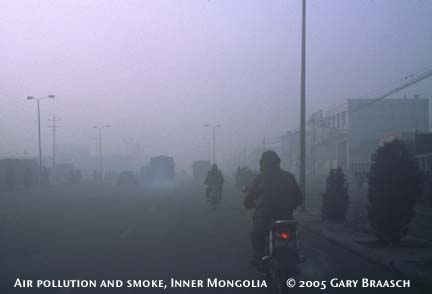
China officials have routinely emphasized economic growth at the expense of the environment. However, widespread air and water pollution, along with a series of large-scale industrial accidents, have prompted Beijing to question its development priorities.
The official Xinhua news agency on Monday quoted Zhou as saying that in some counties, only 30 percent of projects had been checked for pollution-control compliance before receiving construction licenses. He says even when plans do meet environmental standards, the required emission-control measures are often not implemented.
Full read
Decades-old uranium has escaped its boundaries into residents water

“I was surprised to see that,” Snyder said... until started testing for uranium, Snyder had never thought of it being in his water.
They also collected 50 well water samples, with relatively good results. Of the eight properties that surround the Forest Service area, five families own ranches. Only one of the wells was contaminated, he said. “One well had five times the background amount of uranium,” he said. Schwalm would not release the name of the family whose well was affected. “The family was immediately informed of the hazard,”
Full story here
Honored... Lynton Caldwell, Helped Write EPA Act of 1969

Lynton Keith Caldwell, who helped shape the nation's environmental policy requiring environmental impact studies for major projects, died Tuesday at his Bloomington, Ind., home. He was 92.
Emmi said her father made life an adventure.
"What I got from him was a way of looking at the world, and I've spent a lot of my life working on environmental policy, too," she said.
Lynton will be missed by us all.... Chris
Subscribe to:
Posts (Atom)