Showing posts with label Energy. Show all posts

Feb 17, 2011

China/Japan decades ahead on Nuclear programs.

Just like peak OIL, China has a plan for depleting uranium and mounting nuclear waste problems.
chn-hdr.jpg
Register UK - China has committed itself to establishing an entirely new nuclear energy program using thorium as a fuel, within 20 years. The LFTR (Liquid Fluoride Thorium Reactor) is a 4G reactor that uses liquid salt as both fuel and coolant. China uses the more general term TMSR (Thorium Molten-Salt Reactor).
A private company founded by Kazuo Furukawa, designer of the Fuju reactor, called International Thorium Energy and Molen-Salt Technology Inc (iThEMS) aims to produce a small (10 MW) reactor within five years. Furukawa is aiming for a retail price of 11 US cents per kWh (6.8p per kWh). The Capital of IThEMS is expected to increase to 50 million Japanese yen soon (US$600,000, but they need $300 million to push ahead)
The UK Guardian describes the move by China to develop thorium nuclear reactors
Thorium Energy Conference- The Chinese announcement refers to a 20 year program, but rapid progress can be expected in the next 5 years towards a demonstration plant. China's program is well funded but Japan's is not well funded. Japan and other countries could be motivated to step up funding with true competition from China.

MiniFUJI

Development of the micro-mini thorium molten-salt power plant 'miniFUJI'.
Since smaller thorium molten-salt power plant is easier to construct, we will develop the 10,000kW micro-mini thorium molten-salt power plant 'miniFUJI' within five years. This micro-mini power plant is planned as a local power plant to meet the high need of power supply for servers in information industry and for the stations of charging electric vehicles.

Scaling thorium up to global scale

A Road Map for the Realization of Global-scale Thorium Breeding Fuel Cycle This describes a 5-7 year doubling time for the Uranium 233 that is needed to start the molten salt thorium reactors.
The Thorium Molten-Salt Nuclear Energy Synergetic System [THORIMS-NES], described here is a symbiotic system, based on the Thorium-Uranium-233 cycle. ...FUJI reactor and the AMSB can also be used for the transmutation of long-lived radioactive elements in the wastes, and has a high potential for producing hydrogen-fuel in molten salt reactors. The development and launching of THORIMS-NES requires the following three programs during the next three decades: (A) pilot plant: miniFUJI (7-10 MWe): (B) small power reactor: FUJI-Pu (100-300MWe). (C) fissile producer: AMSB for globally deploying THORIMS-NES
How much uranium-233 do we need? Well, most of the studies done by Oak Ridge in the 1960s indicated that we could start a one-gigawatt thorium reactor with about 1 tonne of uranium-233. How much do we have right now? About one tonne. So we could only start one reactor, right? With uranium-233, yes, but we need to go about quickly "converting" our fissile materials into uranium-233 so we can start more. 

We don't have to limit ourselves to just uranium-233 to start these thorium reactors. We can use the highly-enriched uranium that we're recovering from all of the nuclear weapons that we are decommissioning to help us. We can use the plutonium we're recovering from those weapons. We can use the plutonium that's been generated in our reactors over the last sixty years to help us. By using slowed-down neutrons and thorium, the startup power of this fuel is magnified by about 1000 to 1500% over a fast reactor...a fast reactor that is a cousin to the liquid-fluoride thorium reactor, except it will be one that will use liquid-chloride salts that are chemically stable as a fuel and coolant, not the liquid-sodium-metal that is currently proposed. Again, just like other fast reactors it will take 5-10 tonnes of these transuranics to produce a gigawatt of power. So what have we bought by this approach? Just this—in these liquid-chloride reactors we will jacket the reactor with a thorium blanket and make new uranium-233 even as we are destroying plutonium. That means that for each year we burn plutonium, we'll make enough uranium-233 to start a new LFTR. Compared to the fast reactor approach where you're trying to breed plutonium to build more fast breeders, and it takes 20-30 years to produce enough new fuel in a fast reactor to start another one, we won't be using these chloride fast reactors to start other fast reactors. We'll be using them to make the fuel to start fluoride thorium reactors that use slowed-down neutrons.

With this approach, plutonium from weapons and reactor fuel will start about 70 chloride fast reactors. Each one will make enough uranium-233 each year to start 70 new LFTRs at a gigawatt each. That means that in less than 20 years we could have 1000 LFTRs online, generating all of the energy our nation needs, all the while we're burning down and destroying the plutonium we've generated over the last 60 years for weapons and from reactor operation. Compare that to the standard fast breeder approach where in 20 years the 70 fast breeders we started have generated enough new fuel for another 70 fast breeders and you can see really quickly how fast uranium-233 and slowed-down neutrons can let you move ahead and replace coal and other fossil fuels.
So a country like say China that has Plutonium and highly enriched Uranium and was less concerned about using it, can start up a lot of Thorium reactors... if China was primarily concerned with making an energy transition off of coal which was killing almost one million Chinese per year from air pollution.

Read full from
NBF -  "China's Thorium Reactor and Japan's targets 10 MW thorium miniFuji for 2016"

Haase - Someone may want to ask Clinton and Congress what happened to the future of Fast Reactors in the U.S. Spoiler "We would already have them online, with no coal crisis and no waste to put in Yucca." 

Mar 28, 2010

Economic summary by CIA - "Just the facts, ma'am"

02022010a.jpg
Updated from March Post:
I still dream in color, yet our nations 'economic load' and lack of growth to ever catch up has my children's dreams solidified in gray ... our gray debt cloud is making a previously unsustainable problem, epic.


"Men fight for liberty and win it with hard knocks. Their children, brought up easy, let it slip away again, poor fools. And their grandchildren are once more slaves." - D.H. Lawrence


Haase - Short Answer:
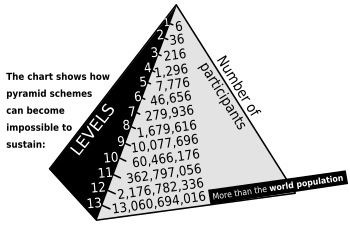
We built a national pyramid scheme that encouraged everyone at the top
(top earns) to  spend and build far beyond sustainable  limits of the middle tier (middle class).  When the people at the bottom tier (creditors) of the scheme wanted to collect... the jig was up.
And Bernard Madoff was set as world example.
350px-Pyramid_scheme.svg.png
Then we dumped a truck full of 'monopoly money' on the problem to 'fix it'...this was like giving a college student a new credit card after they maxed out the first one on 'beer and pizza'

HTML clipboard
WIKI summary- At the end of fiscal year 2009, the gross debt was 83.4% of GDP that equates to over $30400 per person U.S. population, with less than half the population working... in other words - The working class is currently in personal debt and carrying a GOV debt load of over 60,800 per worker...
How we got here and were we are going:

CIA..."Soaring oil prices between 2005 and the first half of 2008 threatened inflation and unemployment, as higher gasoline prices ate into consumers' budgets. Imported oil accounts for about two-thirds of US consumption. Long-term problems include inadequate investment in economic infrastructure, rapidly rising medical and pension costs of an aging population, sizable trade and budget deficits, and stagnation of family income in the lower economic groups. The merchandise trade deficit reached a record $840 billion in 2008 before shrinking to $450 billion in 2009. The global economic downturn, the sub-prime mortgage crisis, investment bank failures, falling home prices, and tight credit pushed the United States into a recession by mid-2008. GDP contracted till the third quarter of 2009, making this the deepest and longest downturn since the Great Depression. "


"The Pew Trust has done the math and it turns out the the economic crash of 2008 incurred about $108,000 per US household in costs and stock and house-price losses:
U.S. households lost on average nearly $5,800 in income due to reduced economic growth during the acute stage of the financial crisis from September 2008 through the end of 2009.[1] Costs to the federal government due to its interventions to mitigate the financial crisis amounted to $2,050, on average, for each U.S. household. Also, the combined peak loss from declining stock and home values totaled nearly $100,000, on average per U.S. household, during the July 2008 to March 2009 period. This analysis highlights the importance of reducing the onset and severity of future financial crises, and the value of market reforms to achieve this goal."
The Impact of the September 2008 Economic Collapse (via The Consumerist)

Cash, Carry and Energy Break down:
GDP - per capita (PPP):
$46,400 (2009 est.)http://www.areppim.com/ressources/us_incxdebtcap_300x300.png

GDP - real growth rate:
-2.4% (2009 est.)

Population: (VIA census)
308,954,672

Labor force:
154.5 million (includes unemployed) (2009)
140.5 Minus unemployed

Budget:
revenues: $1.914 trillion
expenditures: $3.615 trillion (2009 est.)

Public debt: 52.9% of GDP (2009 est.)


U.S. is #1 in the following sectors:
Electricity - consumption: 3.873 trillion kWh (2008 est.)
Oil - consumption:
19.5 million bbl/day (2008 est.)
Natural gas - consumption: 657.2 billion cu m (2008 est.)
Natural gas - imports: 112.7 billion cu m (2008 est.)
Debt - external:
$13.45 trillion (30 June 2009)


All of this is not very encouraging considering the 'majority' of politicians believe the economy could collapse again... Knowing that we have built current debt pay off models under the false pretense that 'not only will the GDP grow, but the economy will rebound and return to past growth levels'.

--------------------------------------------------------------------
Update: Insolvent?
"...In FY2009, the U.S. government collected $2.1 trillion in revenue (15% of GDP) and spent almost $3.5 trillion (25% of GDP). Between FY2008 and FY2009, outlays increased by $535 billion, while revenues fell by $419 billion. The deficit in FY2009 was $1,414 billion, or 9.9% of GDP, sharply higher than deficits in recent years." -  Open CRS
-------------------------------------------------------------------- 
CBO report: Debt will rise to 90% of GDP
-------------------------------------------------------------------- 
Wall Street Journal,: "President Barack Obama asserted that the government "simply cannot continue to spend as if deficits don't have consequences; as if waste doesn't matter; as if the hard-earned tax dollars of the American people can be treated like Monopoly money; as if we can ignore this challenge for another generation."

The proposed budget:
  • The budget would permanently expand the federal government by 3 percent of gross domestic product over 2007 prerecession levels.
  • Taxes would be raised on all Americans by nearly $3 trillion over the next decade.
  • It would raise taxes for 3.2 million small businesses and upper-income taxpayers by an average of $300,000 over the next decade.
  • For every dollar spent in 2010, 42 cents would be borrowed.
  • Would run a $1.6 trillion deficit in 2010 -- $143 billion higher than the recession-driven 2009 deficit.
  • Would leave permanent deficits that top $1 trillion as late as 2020.
  • Would dump an additional $74,000 per household of debt into the laps of our children and grandchildren.
  • Would double the publicly held national debt to over $18 trillion.
Read full from Source Wall Street Journal, March 10, 2010.


Haase - But, "Don't cry for me Argentina" 
-----------------------------------------------------------------------------------------
Related? 
We're Number 61!
One item that doesn't fall into the it-could-be-worse department—see above—is the U.S. corporate income tax. It's already about as bad as can be. This year, American businesses may spend 89 cents preparing their taxes for every dollar they pay in taxes.
In a new estimate, David Keating of the National Taxpayers Union estimates that the cost of compliance with the corporate tax is $159.4 billion—or 89% of expected tax collections for fiscal 2009, and 54% for 2008. That includes the ...

The Huge, Hidden Tax You Pay for Government
 Taxpayers rushing to fill out and file their form 1040 today may think their obligation to the federal government is complete. But it's really just beginning. Although Americans paid more than $900 billion in income taxes last year, there's a far larger tax bill hidden from view. That tax is regulation. 

NY Post - How 'soaking the rich' clobbers you 


Nearly half of American tax filers didn't have to pay any federal income tax last year...Just a decade ago, two-thirds of American tax filers still paid into the tax system. But both Democrats and Republicans have spent the last quarter-century inventing and expanding all kinds of voter-friendly tax breaks. Easy-to-use tax software has helped people get every dollar -- something that was once less common, because it simply wasn't worth the bother. …..But everyone should have to pay something -- and anyone who earns enough to have cable TV can pay something toward their own national defense, too. A big majority of people, in fact, should pay enough to be annoyed on April 15 rather than excited. Otherwise, the politicians will figure they can just keep spending without angering a critical mass of voters.


As it is, Washington just figures that when it comes time for tax hikes to pay for all the spending we're doing with borrowed money, the "rich" will pay.


Feb 1, 2010

Why our nuclear energy future is so predictably dismal.

Will we take the good with the bad in address this?
Shouldn't all funding be halted until we address sustainable funding, regulatory and waste issues that have plagues the 'renaissance' since the 70's?

A question to those in .gov who read this blog - Where was the payback from our original nuclear investment (including cradle to grave economic analysis) and how would that compare if there were equal investments in sustainable energy programs that have inarguably proven to more profitable?  "Current capacity doesn't give you that much insight into what technology will win the race," Schilling said. "Instead, investors should be looking at the shape of the performance trajectory."


The NY Times reports - The Obama administration moved vigorously on two fronts Friday to promote nuclear power, proposing to triple federal loan guarantees for new projects and appointing a high-level panel to study what to do with nuclear waste.

Administration officials confirmed that their federal budget request next week for 2011 would raise potential loan guarantees to more than $54 billion from $18.5 billion.

The newly formed panel will examine a vastly expanded list of options for nuclear waste, including a new kind of nuclear reactor that would put some of it to use. The current $18.5 billion in loan guarantees were provided in the 2005 Energy Act, but have not been disbursed because of long bureaucratic delays. The Energy Department has said it is set to start issuing those soon. Because the loan guarantees are supposed to cover 80 percent of the construction cost, the current sum now available would cover only about three projects.


DAILYMAIL - President Obama is planning to increase spending on America's nuclear weapons stockpile just days after pledging to try to rid the world of them. In his budget to be announced on Monday, Mr Obama has allocated £4.3billion to  maintain the U.S. arsenal - £370million more than George Bush spent on nuclear weapons in his final year. The Obama administration also plans to spend a further £3.1billion over the next five years on nuclear security.

Timeline of the  vigorous shift towards nuclear power


There are two parts to this curve, the left hand side where no carbon price is actually necessary to deliver the reductions, and the right hand side where a carbon price is needed.

When everything tangible is right then the left IS wrong....  
Haase - Apparently 'geothermal' is so far to the left it is off the chart!


Just $3.3 billion* in R&D spending could propel geothermal energy to be the cheapest energy technology, even beating fossil fuels on a cost-per-kilowatt-hour basis, according to a new study. 
*The study included data from the U.S. Department of Energy's National Renewable Energy Laboratory on the cost per kilowatt-hour at active power generation projects in 2005:
  • Geothermal, $0.031 to $0.08
  • Wind, $0.043 to $0.055 
  • Biomass, $0.066 to $0.08
  • Solar, $0.11 to $0.31
  • Hydroelectric, $0.006 
  • Coal $0.021
  • Nuclear, $0.022
Haase - "History, learn from it or be become it"

Dec 24, 2009

Next Generation Reactors Help Reduce Nuclear Waste

ScienceDaily Advanced technologies offer ways of reducing the quantity of nuclear waste. "New types of nuclear power plants can switch to a closed fuel cycle. It means that nuclear waste wouldn't be buried as such; instead, it would be chemically dissolved and the recyclable component re-processed into new fuel. As a result, many of the most long-lived radioactive substances could be used at new types of facilities," says Professor Riitta Kyrki-Rajamäki of Lappeenranta University of Technology.

Professor Kyrki-Rajamäki heads the New Type Nuclear Reactors project which is part of the Sustainable Energy Research Programme launched by the Academy of Finland. Very much different from the existing light water reactors, the new types of reactors have already attracted worldwide interest.

The New Type Nuclear Reactors project studies what is known as 'fourth-generation nuclear reactors'. The purpose of the project is to improve the analysis capabilities in view of these Gen IV reactors -- in other words, the development and application of new computational and experimental methodologies for studying the reactors. The main fields of science involved are reactor physics, reactor dynamics, materials technology, thermal hydraulics, and computational fluid dynamics.

While the use of nuclear energy does not generate significant emissions of greenhouse gases or fine particles, the inexpensive uranium resources required for light water reactors will only last for the next 200 years. If the number of nuclear power plants increases, the resources will be depleted even faster. Currently, there are some 450 units in operation with around 50 more being built. "The transition to new types of reactors over the next few decades would guarantee that the existing reserves of raw material for nuclear fuel last for thousands of years to come," explains Professor Kyrki-Rajamäki. Please read ful at ScienceDaily

Dec 22, 2009

Uranium Is So Last Century... Enter Thorium

Little progress in 50 year old theory - reinventing cold war energy
WIRED- Published in 1958 ....what caught Sorensen's eye was the description of Weinberg's experiments producing nuclear power with an element called thorium.
..., during which he became convinced that thorium could solve the nuclear power industry's most intractable problems. After it has been used as fuel for power plants, the element leaves behind minuscule amounts of waste. And that waste needs to be stored for only a few hundred years, not a few hundred thousand like other nuclear byproducts.

Because it's so plentiful in nature, it's virtually inexhaustible. It's also one of only a few substances that acts as a thermal breeder, in theory creating enough new fuel as it breaks down to sustain a high-temperature chain reaction indefinitely. And it would be virtually impossible for the byproducts of a thorium reactor to be used by terrorists or anyone else to make nuclear weapons.

Weinberg and his men proved the efficacy of thorium reactors in hundreds of tests at Oak Ridge from the '50s through the early '70s. But thorium hit a dead end. Locked in a struggle with a nuclear- armed Soviet Union, the US government in the '60s chose to build uranium-fueled reactors — in part because they produce plutonium that can be refined into weapons-grade material. The course of the nuclear industry was set for the next four decades, and thorium power became one of the great what-if technologies of the 20th century.

The concept of nuclear power without waste or proliferation has obvious political appeal in the US, as well. The threat of climate change has created an urgent demand for carbon-free electricity, and the 52,000 tons of spent, toxic material that has piled up around the country makes traditional nuclear power less attractive. President Obama and his energy secretary, Steven Chu, have expressed general support for a nuclear renaissance. Utilities are investigating several next-gen alternatives, including scaled-down conventional plants and "pebble bed" reactors, in which the nuclear fuel is inserted into small graphite balls in a way that reduces the risk of meltdown.

Those technologies are still based on uranium, however, and will be beset by the same problems that have dogged the nuclear industry since the 1960s. It is only thorium, Sorensen and his band of revolutionaries argue, that can move the country toward a new era of safe, clean, affordable energy.

CEO Seth Grae thinks it's better business to convert existing reactors than it is to build new ones. "We're just trying to replace leaded fuel with unleaded," he says. "You don't have to replace engines or build new gas stations."...For Sorensen, putting thorium into a conventional reactor is a half measure, like putting biofuel in a Hummer. But he acknowledges that the seed-and-blanket design has potential to get the country on its way to a greener, safer nuclear future. "The real enemy is coal," he says. "I want to fight it with LFTRs — which are like machine guns — instead of with light-water reactors, which are like bayonets. But when the enemy is spilling into the trench, you affix bayonets and go to work."

The thorium battalion is small, but — as nuclear physics demonstrates — tiny forces can yield powerful effects.

Please read full at WIRED

Dec 7, 2009

Is Nuclear Power the Way to Go?

Bachman - Is nuclear power the only option to replace finite fossil fuels or can decentralized energy sources such as wind and solar, along with conservation and efficiency, fill the gap?

A nuclear advocate and a critic tackled these questions in a heated debate in November at a Michigan environmental conference. At odds were 1970s-era activists Patrick Moore, a Greenpeace co-founder and now a nuclear supporter, and Harvey Wasserman, an anti-nuke crusader from Columbus, who coined the expression, "No Nukes."

Moore claimed that wind and solar energy, now accounting for less than one percent of total production, will never replace fossil fuels because they are too intermittent and expensive. "You can't run factories, schools and hospitals on sources that will disappear for days at a time," he said.


Actually, he has a point. Even with double-digit growth rates, wind and solar along with geothermal remain a miniscule portion of total energy use. While green techno-enthusiasts may claim that a growing industrial world could be run on scaled-up renewable sources, the numbers suggest otherwise.

Wasserman, author of SOLARTOPIA! Our-Green Powered Earth, A.D. 2030, argued that a combination of renewable energy sources, increased efficiency and a new transportation infrastructure would better solve the climate crisis and energy problems than nuclear power, which he described as a "failed 20th century technology." Wasserman detailed a long list of nuclear power's woes—its high cost (about $10 billion or more per plant and rising), the potentially catastrophic health and safety effects from everyday radiation emissions and possible meltdowns and other accidents, the inability of the industry to get private funding and insurance and the unresolved issue of the disposal of high-level radioactive waste.

With these concerns, it's no wonder that a new nuclear plant hasn't been commissioned in the U.S. in some three decades. But the pressure for new nuclear plants will continue until what is truly the most cost-effective, clean, renewable, safe energy source is embraced—namely conservation—in the form of massive energy curtailment which embraces lifestyle changes in food, housing, transportation and other sectors.

But neither debater spoke of the promise of a rapid and deep reduction in per capita energy use from personal behavioral changes. Energy efficiency, promoted by Wasserman, relies much on unknown technological advances and has been shown to increase rather than decrease the rate of consumption of a resource (known as Jevons' Paradox). We have more efficient cars, but tend to drive them more and our homes are more energy-efficient than 40 years ago, but twice as large.

Whether nuclear power is the safest, cleanest, cheapest energy source available, or the most deadly, polluting and expensive, the real issue might be the fundamental nature of power generation in the 21st century, a point which Wasserman hammered home. "The entire structure of centralized control [of energy] by large corporations is the problem," he said.

So renewable sources such as wind, solar, geothermal and biomass, when combined with radical conservation measures—local food production, other local production, sharing and exchange systems, such as ride-sharing and local currencies and credit—may be our best options because they are decentralized and under the control of communities, businesses and homeowners.

As Wasserman concluded in deriding nuclear power, "We are not only getting away from a failed technology, we are moving from a failed paradigm and that is centralized control."

Read full by Megan Quinn Bachman at the post carbon institute

Dec 1, 2009

Nuclear power: less effective than energy efficiency and renewable energy?

The LA Tmes has a post on the effectiveness of nuclear power for mitigating global warming - Nuclear power: less effective than energy efficiency and renewable energy...
The Environment California Research & Policy Center concluded that launching a nuclear power industry nearly from the ground up is too slow and expensive a process. Energy efficiency standards and renewable energy options are better solutions, researchers said.

Currently, no new nuclear reactors are under construction in the country, and no U.S. power company has ordered a nuclear plant since 1978. All orders for nuclear facilities after fall 1973 were eventually canceled, according to the report.

Meanwhile, building a reactor would probably take around a decade – 2016 at the earliest, the study suggested. Without an existing infrastructure, manufacturing reactor parts with the dearth of trained personnel would be difficult.

But even if the nuclear industry managed to build 100 reactors by 2030, the total power produced would reduce total U.S. emissions only 12% over the next 20 years, which Environment California deemed "far too little, too late."

The $600-billion upfront investment necessary for the 100 reactors would slice out twice as much carbon pollution in that period if invested in clean energy, according to the report. And given the costs of running a power plant, clean energy could deliver five times as much progress per dollar in lowering pollution - LA Tmes

Cross Posted From PeakEnergy Big Gav in nuclear power

Nov 28, 2009

Nuclear plants did not replace coal and gas plants, they joined them.

From How (not) to resolve the energy crisis]

Piling up energy sources... what is happening is not a new phenomenon either. What we are doing for more than 100 years now, is piling up energy sources. Today (in the Netherlands, Spain, the US and worldwide) the absolute amount of coal consumed for electricity production is much larger than one century ago, when there was no talk of gas, oil and nuclear. The dirty coal of the beginning of the industrial revolution was not replaced by cleaner gas plants. The gas plants joined the coal plants.

US consumption by source 1845 2001 Next, nuclear plants did not replace the existing coal and gas plants, they joined them. Today, with renewable energy, the same thing is happening. They address an energy demand that did not exist before. We use renewable energy sources to power an ever growing plethora of energy-sucking gadgets - and this will not get us anywhere.

Up until now, newer and cleaner energy sources have always been used to enlarge energy production, not to make it "greener" (see for instance the image on the left, depicting US energy consumption from 1845 to 2001, source).

The so-called greening of our electricity production, which generates so much talk, is still 100 percent wishful thinking. We are not one step further than 5, 10, 20 or even 100 years ago. On the contrary, things get worse every day.


Relative versus absolute figures

Much more important than what we do, is what we don't do. The key to progress is scaling down non-renewable energy production, or at least keeping it at the same level. Instead of aiming for the development of more renewable energy, policymakers should do anything in their power to make sure that not one more kilowatt of non-renewable energy is added. 


United States

For instance, imagine that the US indeed realises the very ambitious goal of generating 25 percent of their electricity consumption by renewables, and let's assume it takes them 5 years longer as planned. According to the projections of the IEA, US electricity demand will grow by 26 percent (16 to 36 percent) from 2007 to 2030. This means that the 3,800,000 GWh of today will be 4,788,000 GWh by 2030. When everything goes to plan, about 1,244,880 GWh of that will then be renewable (that is 3 times the worldwide renewable electricity capacity today).

But, this is scarcely more than the 988,000 GWh of electricity demand that will be added during that period. So even if this ambitious goal would be realised, the US would still be as dependent on fossil fuels as it is today. Limiting electricity demand to current levels and not building any renewable electricity generating capacity would yield the same result. Limiting electricity demand to current levels and greening 25 percent of the existing electricity production would bring real progress.

Worldwide

Worldwide energy consumption der spiegel The rise of renewable energy is of secondary importance. What matters is that the absolute amount of burned up fossil fuels lowers. Only then would we become less dependent on non-renewable energy sources and on foreign energy suppliers, and only then would we lower CO2-emissions.

On a global scale, the futility of the present approach is even more obvious. The total amount of renewable electricity worldwide (excluding hydro*) rose from 31,000 GWh in 1980 to 414,000 GWh in 2006 - a rise of 1,300 percent or an absolute increase of 383,000 gigawatt-hours.

Yet, the amount of electricity generated by coal and gas doubled in that same period, which comes down to an absolute increase of 6,355,900 GWh. So, we added around 20 times more non-renewable sources than renewable sources. Total global electricity production rose from 8,027,000 Gwh to 18,008,000 Gwh, a rise of 250 percent. If we look at total energy production instead of just electricity production, the preponderance of fossil fuels is even larger (see the image above, courtesy of Der Spiegel).

Much more important than what we do, is what we don't do.

Right now we try to match our energy production to an ever increasing demand. But, we could also try to match our demand to a fixed supply. Considering the circumstances, this would be a much more realistic and intelligent strategy. An even better strategy is the "oil depletion protocol", an idea of author Richard Heinberg. He proposes an international agreement to lower oil production and consumption each year with 2.6 percent. We can wait until the geological, economical or geopolitical reality lowers the availability of fossil fuels, but if we anticipate that reality now then we definitely have more of a chance to make a successful transition to a durable, less energy-intensive society.


Not China's fault - Last, but not least, the IEA notes that the rise of energy use is largely on account of non-western countries, with China ahead. But, this does not clear us at all. As the IEA calculated in a former report, almost 30 percent of energy use in China comes from the production of export goods - from bicycles over jeans to solar panels.

 Western countries succeed in limiting the rise of their energy consumption because they have outsourced ever more energy use. Moreover, the IEA states in its last report, non-OECD countries are, in spite of their high share in current energy use, only responsible for 42 percent of the CO2-emissions since 1890 - with a much bigger population. This means that - in a fair world - we would have to reduce our energy use much more than them.

Pleas read full from the energy bulletin

Nov 19, 2009

The nuclear option: too slow, too costly...

VIA the BigGav Crikey's Bernard Keane has given up covering the CPRS but he does still have the energy to consider the nuclear power industry's long, painful attempt to maintain some relevance by claiming it is a solution to climate change - The nuclear option: too slow, too costly. ...hope springs eternal in Liberal hearts. In Tuesday's joint partyroom meeting, Julie Bishop pointed out that "19 out of 20" G20 countries are pursuing nuclear power.
Today, let's consider whether the rest of the world is going nuclear in the way that proponents suggest.

First, some bald numbers taken from the German Government-commissioned World Nuclear Industry Status Report from August this year.

There are currently 435 reactors operating worldwide, nine less than in 2002. There are 52 reactors listed as "under construction" (more on that later), down from a peak in 1979 of 233 and 120 in 1987. No new plants were connected anywhere in 2008. The last plant to come online was the Romanian plant Cernavoda-2, which took 24 years to build. Reactors now provide slightly less power worldwide than they did two years ago.

By way of context, the 2 GW of nuclear power connected in 2006-07 was equal to one tenth of the wind power installed globally in 2007. More than double the amount of wind power was installed in the U.S. alone in 2007.

Clearly the nuclear industry is yet to begin recovering from the slump in reactor building worldwide after its peak in the mid-1980s.

That poses two problems for any "nuclear renaissance" and its capacity to provide a legitimate, timely response to climate change...

It's not radioactivity or scare campaigns that are the nuclear industry's biggest problem, it's the maths. The numbers show that for decades to come, it will offer less and less of a solution to climate change, and it simply takes too long and costs too much to develop
More from the BigGav on energy

Also from TOD: The Coming Nuclear Crisis
Perhaps the most worrying problem is the misconception that uranium is plentiful. The world's nuclear plants today eat through some 65,000 tons of uranium each year. Of this, the mining industry supplies about 40,000 tons. The rest comes from secondary sources such as civilian and military stockpiles, reprocessed fuel and re-enriched uranium. "But without access to the military stocks, the civilian western uranium stocks will be exhausted by 2013, concludes Dittmar.

It's not clear how the shortfall can be made up since nobody seems to know where the mining industry can look for more.

Nov 17, 2009

Obama's Radioactive Regulator and Chu's $100 billion nuclear start

MotherJones - Why did the White House pick a cheerleader for nuclear energy to oversee the industry?

Should a booster of nuclear power with undisclosed business connections to nuclear energy firms be allowed to regulate the industry? By nominating William Magwood to serve on the Nuclear Regulatory Commission, President Barack Obama is doing just that. More at MotherJones


(Bloomberg) Chu told reporters on Capitol Hill the loan guarantee program for developers of new nuclear power plants is “clearly inadequate” to make the construction of new nuclear reactors in the U.S. financially viable.

The NEI said Congress should approve another $100 billion in loan guarantees for nuclear plants and other energy sources that don’t emit carbon dioxide. When asked about the NEI proposal, Chu said the Obama administration is “looking at all the things that are within our control to actually restart the nuclear industry.”

Nov 15, 2009

How Green Are Your Nukes?

Reason - The role that nuclear power might play in addressing the problem of man-made global warming is fiercely disputed among environmentalists. Two new books by big names in the movement stake out the boundaries of that debate. On the pro-nuclear side stands Whole Earth Discipline: An Ecopragmatist Manifesto, by Stewart Brand. And parked in the (more or less) anti-nuclear corner is Our Choice: A Plan to Solve the Climate Crisis, by Al Gore. A self-described "green," Stewart Brand founded and edited the counterculture Whole Earth Catalog back in 1968. In his first book, Earth in the Balance (1992), then-Sen. Al Gore argued, "We must make the rescue of the environment the central organizing principle for civilization."

Stewart Brand
Once an opponent of nuclear power, Stewart Brand is now a big backer. With regard to the safety, cost, waste handling, and weapons potential of nuclear power, Brand writes, "I've learned to disbelieve much of what I've been told by my fellow environmentalists."
...Brand bases his support for nuclear power on four considerations: baseload, footprint, portfolio, and government-scale. Brand enthusiastically hails the fact that in the 21st century most of humanity will dwell in cities and cities need a steady supply of lots of electricity. Baseload power is the minimum amount of consistent power that utilities must supply to their customers. Brand points out that there are currently only three sources for baseload power: fossil fuels, hydro, and nuclear. Brand dismisses solar and wind as baseload power sources because of their intermittency—the sun doesn't always shine and the wind doesn't always blow.

But what about the costs? Brand breezily waves them aside. "We Greens are not economists," writes Brand. "We don't really care about money. Our agenda is to protect the natural environment, not taxpayers or ratepayers."

Al Gore
Gore notes that in the 1960s, the old Atomic Energy Commission predicted that the United States would have 1,000 nuclear power plants operating by the year 2000. That didn't happen. Instead only 104 plants are currently operating and they generate about 20 percent of the nation's electricity. Construction costs for building a nuclear power plant have increased from $400 million in the 1970s to $4 billion by the 1990s and building times doubled. Gore highlights bottlenecks that could choke any nuclear renaissance, including the fact that critical components such as containment facilities to house reactors are currently being produced by only one Japanese company.

Gore declares, "Once the world chooses to set ambitious goals for scaling up solar electricity development and commits to the investments necessary to further improve the technologies involved, there is no question that solar energy will provide a major percentage of the world's electricity." Brand would certainly argue that exactly the same thing can be said of nuclear energy.

Recently Center for American Progress blogger Matt Yglesias properly accused generally pro-nuclear power American conservatives of favoring "nuclear socialism." For example, Senate Republicans proposed legislation earlier this year aimed at building 100 nuclear power plants over the next two decades. It's pretty clear that Brand falls into that camp. On the other hand, Gore can fairly be accused of solar socialism.In this debate among environmentalists, ecopragmatist Brand wins. If man-made climate change is a big problem, then it doesn't make sense to rule out in advance energy technologies that could contribute to substantially reducing greenhouse gas emissions. Of course, costs matter. The best way to figure out which technologies are cheapest is to set a price on greenhouse gas emissions and let various energy sources compete among themselves.

No subsidies needed.

Please read full at Reason

Oct 21, 2009

Report Examines Hidden Costs of Energy

A new report from the National Research Council examines "hidden" costs of energy production and use -- such as the damage air pollution imposes on human health -- that are not reflected in market prices of coal, oil, other energy sources, or the electricity and gasoline produced from them. The report estimates dollar values for several major components of these costs. The damages the committee was able to quantify were an estimated $120 billion in the U.S. in 2005, a number that reflects primarily health damages from air pollution associated with electricity generation and motor vehicle transportation. The figure does not include damages from climate change, harm to ecosystems, effects of some air pollutants such as mercury, and risks to national security, which the report examines but does not monetize.

Requested by Congress, the report assesses what economists call external effects caused by various energy sources over their entire life cycle -- for example, not only the pollution generated when gasoline is used to run a car but also the pollution created by extracting and refining oil and transporting fuel to gas stations. Because these effects are not reflected in energy prices, government, businesses and consumers may not realize the full impact of their choices. When such market failures occur, a case can be made for government interventions -- such as regulations, taxes or tradable permits -- to address these external costs, the report says.


The committee that wrote the report focused on monetizing the damage of major air pollutants -- sulfur dioxide, nitrogen oxides, ozone, and particulate matter – on human health, grain crops and timber yields, buildings, and recreation. When possible, it estimated both what the damages were in 2005 (the latest year for which data were available) and what they are likely to be in 2030, assuming current policies continue and new policies already slated for implementation are put in place.


The committee also separately derived a range of values for damages from climate change; the wide range of possibilities for these damages made it impossible to develop precise estimates of cost. However, all model results available to the committee indicate that climate-related damages caused by each ton of CO2 emissions will be far worse in 2030 than now; even if the total amount of annual emissions remains steady, the damages caused by each ton would increase 50 percent to 80 percent.


Damages From Electricity Generation

Coal accounts for about half the electricity produced in the U.S. In 2005 the total annual external damages from sulfur dioxide, nitrogen oxides, and particulate matter created by burning coal at 406 coal-fired power plants, which produce 95 percent of the nation's coal-generated electricity, were about $62 billion; these nonclimate damages average about 3.2 cents for every kilowatt-hour (kwh) of energy produced. A relatively small number of plants -- 10 percent of the total number -- accounted for 43 percent of the damages. By 2030, nonclimate damages are estimated to fall to 1.7 cents per kwh.


Burning natural gas generated far less damage than coal, both overall and per kilowatt-hour of electricity generated. A sample of 498 natural gas fueled plants, which accounted for 71 percent of gas-generated electricity, produced $740 million in total nonclimate damages in 2005, an average of 0.16 cents per kwh. As with coal, there was a vast difference among plants; half the plants account for only 4 percent of the total nonclimate damages from air pollution, while 10 percent produce 65 percent of the damages. By 2030, nonclimate damages are estimated to fall to 0.11 cents per kwh. Estimated climate damages from natural gas were half that of coal, ranging from 0.05 cents to 5 cents per kilowatt-hour.


The life-cycle damages of wind power, which produces just over 1 percent of U.S. electricity but has large growth potential, are small compared with those from coal and natural gas. So are the damages associated with normal operation of the nation's 104 nuclear reactors, which provide almost 20 percent of the country's electricity. But the life cycle of nuclear power does pose some risks; if uranium mining activities contaminate ground or surface water, for example, people could potentially be exposed to radon or other radionuclides; this risk is borne mostly by other nations, the report says, because the U.S. mines only 5 percent of the world's uranium. The potential risks from a proposed long-term facility for storing high-level radioactive waste need further evaluation before they can be quantified. Life-cycle CO2 emissions from nuclear, wind, biomass, and solar power appear to be negligible when compared with fossil fuels.


Damages From Heating

The production of heat for buildings or industrial processes accounts for about 30 percent of American energy demand. Most of this heat energy comes from natural gas or, to a lesser extent, the use of electricity; the total damages from burning natural gas for heat were about $1.4 billion in 2005. The median damages in residential and commercial buildings were about 11 cents per thousand cubic feet, and the proportional harm did not vary much across regions. Damages from heat in 2030 are likely to be about the same, assuming the effects of additional sources to meet demand are offset by lower-emitting sources.


Damages From Motor Vehicles and Fuels

Transportation, which today relies almost exclusively on oil, accounts for nearly 30 percent of U.S. energy demand. In 2005 motor vehicles produced $56 billion in health and other nonclimate-related damages, says the report. The committee evaluated damages for a variety of types of vehicles and fuels over their full life cycles, from extracting and transporting the fuel to manufacturing and operating the vehicle. In most cases, operating the vehicle accounted for less than one-third of the quantifiable nonclimate damages, the report found.


Damages per vehicle mile traveled were remarkably similar among various combinations of fuels and technologies -- the range was 1.2 cents to about 1.7 cents per mile traveled -- and it is important to be cautious in interpreting small differences, the report says. Nonclimate-related damages for corn grain ethanol were similar to or slightly worse than gasoline, because of the energy needed to produce the corn and convert it to fuel. In contrast, ethanol made from herbaceous plants or corn stover -- which are not yet commercially available -- had lower damages than most other options.

Please read full press release here

Oct 20, 2009

Aging Nuclear Plants safety implications of running past theoretical life.

Current Nuclear Plants still leave tax payers in debt billions after service lifespan while running beyond that life to squeeze out amortize costs while further adding waste on to a pile radioactive stockpile destined for nowhere while fuel sources get more scare than oil? Nuclear energy answers are in this blog, but the current program is in more trouble than our nations job market and economy.

NY Times ...Contractors generally designed plants to last for 40 years — a standard enshrined in the United States in the adoption by the Nuclear Regulatory Commission, or N.R.C., of a 40-year licensing regime. A large part of the world's installed nuclear power capacity is now coming to the end of that designed life span.

Caught between approaching retirement deadlines and public opposition to new plants, industry operators are pushing to extend the life of their plants to 60 or even 80 years — and this despite problems of premature aging of major components that have already obliged many to replace their plants' steam generators at heavy capital expense.

Running plants longer is one way to recoup the extra cost and raise returns on investment over the full life of the plant. But it has safety implications.

The 40-year life span was a design specification, said Guillaume Wack, director for nuclear plants at the Autorité de Sûreté Nucléaire, or A.S.N., the French nuclear regulator.

"It's like a car," Mr. Wack said in an interview. "The manufacturer says it will run for 100,000 kilometers" — 60,000 miles — "and last two years. That's the theoretical life...

...Since the 1970s, regulators and operators have identified premature aging problems including vibrations in pipes, with consequent cracking, leaks and ruptures that in turn cause severe corrosion, leading to worse leaks and ruptures. Some of these result from high fuel burn rates, Mr. Wack said.
Most plants worldwide have, in fact, already replaced their generators, at a cost of around $50 million for each new generator, after operating for 20 years or less, according to Steve Kerkedes, press officer for the Nuclear Energy Institute, an industry lobby group.

The problem is further complicated by the fact that each reactor heats three or four generators. Anything done to one must also be reproduced on the others in order to avoid pressure imbalances: If one generator has to be changed, all the others must be swapped out, Mr. Wack said.
Most plants worldwide have, in fact, already replaced their generators, at a cost of around $50 million for each new generator, after operating for 20 years or less, according to Steve Kerkedes, press officer for the Nuclear Energy Institute, an industry lobby group.


While extending the operating life beyond 40 years may help to amortize that cost, it intensifies another problem — finding replacements for other components. Manufacturers are few, and the backlog for many parts is long.


...Still, there is no proof that the reactor vessel or the containment building is sufficiently robust to last beyond 40 years. Cracks in vessel heads, the lids that cover reactor vessels, were discovered in various reactors around the world as long ago as 1991, French and U.S. regulatory documents show.

In addition, N.R.C. documents show, design flaws identified in 1991 raise the specter of possible long-term fatigue degradation in the reactor vessels themselves due to the heat and high radiation to which they are subjected. A leak in the reactor vessel would result in a core meltdown — the most serious accident possible — with an inevitable release of radioactive materials, Mr. Wack said.

This year, some plants in the United States will hit the 40-year mark but will continue to operate under licenses that have already been renewed. Please read full at NY Times

Insane defined - $2.5 trillion needed for carbon capture 'demonstration' projects

Carbon Capture and Storage (C.C.S.) is a unstable, unreliable, unproven, 'reactive' form of carbon suppression NOT reduction in use or abuse. Yet that is not stopping the $Trillions$ of dollars fed by hopeless dreamers that is can 'fix' global carbon emissions...  the United States has allocated over $4 billion.

Energy czars persuade the persuadable to continue a future built by destroying finite resources
 
"the greenest energy is that which you needn't ever produce
"

NOW the executive director of the International Energy Agency, is supporting that $2.5 to $3 trillion should be invested in carbon capture and storage (C.C.S.) projects from 2010 to 2050, or 6 percent of the overall investment needed to reduce greenhouse gas emissions by 2050, according to the International Energy Agency.

The agency recently unveiled a roadmap at the Carbon Sequestration Leadership Forum in London to give policymakers and industry leaders milestones and steps for reducing emissions. The roadmap includes plans to build 100 C.C.S. demonstration projects by 2020, and increase that to 3,100 projects by 2050. Read full from EcoSeed

Nevermind that:


EPA and "policy" experts not buying it? Better read more about it here: