NY Times - More than 20 percent of the nation's water treatment systems have violated key provisions of the Safe Drinking Water Act over the last five years, according to a New York Times analysis of federal data.
That law requires communities to deliver safe tap water to local residents. But since 2004, the water provided to more than 49 million people has contained illegal concentrations of chemicals like arsenic or radioactive substances like uranium, as well as dangerous bacteria often found in sewage.
Regulators were informed of each of those violations as they occurred. But regulatory records show that fewer than 6 percent of the water systems that broke the law were ever fined or punished by state or federal officials, including those at the Environmental Protection Agency, which has ultimate responsibility for enforcing standards.
Read full at NY Times
Dec 10, 2009
Antibiotic resistance estimated to cost $20 billion a year
Antibiotic-resistant infections cost patients, their families, and the U.S. healthcare system $20 billion a year, according to a new study. The researchers estimated that there were 900,000 such infections nationwide in 2000, extrapolated from the infections seen in one Chicago hospital. Antibiotic-resistant bacteria develop in response to the overuse of antibiotics in both human medicine and food animal production. Read an article about the study, or read the study abstract in Clinical Infectious Diseases.

Dec 9, 2009
Quit Smoking in 2010... or new year is going to suck
Tragic - The Most Preventable Cause of Cancer will claim millions each year...
Please try harder to quit - We love you enough... do you?
Tobacco Free Initiative: publications
HTML clipboard
Smoking FACT's:
A $500 Billion Hole in Global Economy - The global economy lost a staggering US$500 billion due to tobacco use. These economic costs come as a result of lost productivity, misused resources, missed opportunities for taxation, and premature death.
* Because 25 percent of smokers die and many more become ill during their most productive years, income loss devastates families and communities.
* Cigarettes are the world's most widely smuggled legal consumer product. In 2006, about 600 billion smuggled cigarettes made it to the market, representing an enormous missed tax opportunity for governments, as well as a missed opportunity to prevent many people from starting to smoke and encourage others to quit.
* Tobacco replaces potential food production on almost 4 million hectares of the world's agricultural land, equal to all of the world's orange groves or banana plantations.
* In developing countries, smokers spend disproportionate sums of money relative to their incomes that could otherwise be spent on food, healthcare, and other necessities.
Burden Shift to the World's Poorest Countries... read full at ScienceDaily
Please try harder to quit - We love you enough... do you?
Tobacco Free Initiative: publications
Smoking FACT's:
- Tobacco use will drain nearly 20% of the household income of smokers' families
- Smoking related-diseases kill one in 10 adults globally, or cause four million deaths. By 2030, if current trends continue, smoking will kill one in six people.
- Smoking is the single largest preventable cause of disease and premature death. It is a prime factor in heart disease, stroke and chronic lung disease.
- More than 4,000 toxic or carcinogenic chemicals have been found in tobacco smoke.
- One British survey found that nearly 99% of women did not know of the link between smoking and cervical cancer.
- One survey found that 60% of Chinese adults did not know that smoking can cause lung cancer while 96% were unaware it can cause heart disease.
- At least a quarter of all deaths from heart diseases and about three-quarters of world's chronic bronchitis are related to smoking.
- Smoking-related diseases cost the United States more than $150 billion a year.
- 46 million Americans (20.6 percent) are current cigarette smokers in 2008,and indicate an alarming trend, because smoking is the leading preventable cause of death, killing more than 443,000 people every year and costing the nation $96 billion in health care costs annually.
A $500 Billion Hole in Global Economy - The global economy lost a staggering US$500 billion due to tobacco use. These economic costs come as a result of lost productivity, misused resources, missed opportunities for taxation, and premature death.
* Because 25 percent of smokers die and many more become ill during their most productive years, income loss devastates families and communities.
* Cigarettes are the world's most widely smuggled legal consumer product. In 2006, about 600 billion smuggled cigarettes made it to the market, representing an enormous missed tax opportunity for governments, as well as a missed opportunity to prevent many people from starting to smoke and encourage others to quit.
* Tobacco replaces potential food production on almost 4 million hectares of the world's agricultural land, equal to all of the world's orange groves or banana plantations.
* In developing countries, smokers spend disproportionate sums of money relative to their incomes that could otherwise be spent on food, healthcare, and other necessities.
Burden Shift to the World's Poorest Countries... read full at ScienceDaily
Concern for climate change on fast decline
Source: Nielsen and the Oxford University Institute of Climate Change
Concern for climate change has declined in the past two years with many countries recording a double digit fall, according to new research released today by The Nielsen Company and the Oxford University Institute of Climate Change. In the latest round of the survey, conducted in October 2009, 37 percent of global consumers said they were very concerned about climate change... North America with 25 percent of respondents saying they were "very concerned" about climate change. Full Document
Link by Shirl Kennedy docUticker
Dec 8, 2009
EPA final rule to help reduce water pollution from construction sites.
The U.S. Environmental Protection Agency today issued a final rule to help reduce water pollution from construction sites. The agency believes this rule, which takes effect in February 2010 and will be phased in over four years, will significantly improve the quality of water nationwide.
Construction activities like clearing, excavating and grading significantly disturb soil and sediment. If that soil is not managed properly it can easily be washed off of the construction site during storms and pollute nearby water bodies.
The final rule requires construction site owners and operators that disturb one or more acres to use best management practices to ensure that soil disturbed during construction activity does not pollute nearby water bodies.
In addition, owners and operators of sites that impact 10 or more acres of land at one time will be required to monitor discharges and ensure they comply with specific limits on discharges to minimize the impact on nearby water bodies. This is the first time that EPA has imposed national monitoring requirements and enforceable numeric limitations on construction site stormwater discharges.
Soil and sediment runoff is one of the leading causes of water quality problems nationwide. Soil runoff from construction has also reduced the depth of small streams, lakes and reservoirs, leading to the need for dredging. Final Effluent Guidelines
Nearly unlimited energy and fresh drinking water using geothermal heat.
Linked from the BigGav
The University of Queensland thinks that geothermal energy could be used to produce fresh water via reverse osmosis in the outback - Cheap fresh water for Queensland country towns using geothermal heat.
The University of Queensland thinks that geothermal energy could be used to produce fresh water via reverse osmosis in the outback - Cheap fresh water for Queensland country towns using geothermal heat.
"A geothermal-powered desalination plant in that range can easily provide the entire fresh water needs for an outback city at the cost of around 80 cents to $1.60 per kilolitre."
Read more from University of Queensland
Latest Protection Acts from CBO
- H.R. 515, Radioactive Import Deterrence Act ...would prohibit the Nuclear Regulatory Commission (NRC), with certain exceptions specified by the bill, from issuing licenses to import certain types of low-level radioactive waste. Based on information from the NRC, CBO estimates that the proposed prohibition would not significantly affect net spending by the agency; any such spending would be subject to appropriation and largely offset by certain fees that the NRC is authorized to collect from regulated entities. Enacting the bill would not affect direct spending or revenues.
- H.R. 3644, Ocean, Coastal, and Watershed Education Act...would reauthorize—through 2015—and expand two National Oceanic and Atmospheric Administration (NOAA) grant programs aimed at enhancing environmental education related to water resources... would cost $139 million over the 2011-2014 period and $48 million after 2014.
- S. 1224, Chesapeake Bay Science, Education, and Ecosystem Enhancement Act of 2009...would reauthorize the Chesapeake Bay Office of the National Oceanic and
Atmospheric Administration (NOAA). The bill would authorize appropriations totaling $79 million over the 2011-2014 period to support certain activities carried out by the Chesapeake Bay Office. The bill also would authorize that office to accept donations of funds, property, and services for use in implementing its programs.
- S. 850, Shark Conservation Act of 2009...would prohibit certain activities that may involve shark finning (the practice of removing a shark's fins and discarding its carcass). The bill also would direct the National Oceanic and Atmospheric Administration (NOAA) to identify foreign nations that do not sufficiently regulate fishing practices that harm sharks.
- S. 1472, Human Rights Enforcement Act of 2009...would direct the Attorney General to establish a section within the Criminal Division of the Department of Justice (DOJ) to enforce the laws against serious human rights offenses.
Dec 7, 2009
World's Leading Scientist Fighting Against Global Warming is Opposed to Cap And Trade
Cap and Trade - "will not work", and it is "a Ponzi-like ... scheme".
- The economists who invented cap-and-trade say that it won't work for global warming
- Many environmentalists say that carbon trading won't effectively reduce carbon emissions
- European criminal investigators have determined that there is a tremendous amount of fraud occurring in the carbon trading market.
- Former U.S. Undersecretary of Commerce for Economic Affairs Robert Shapiro says that the proposed cap and trade law "has no provisions to prevent insider trading by utilities and energy companies or a financial meltdown from speculators trading frantically in the permits and their derivatives."
- Our bailout buddies over at Goldman Sachs, JP Morgan, Morgan Stanley, Citigroup and the other Wall Street behemoths are buying heavily into carbon trading (see this, this, this, this, this and this). As University of Maryland professor economics professor and former Chief Economist at the U.S. International Trade Commission Peter Morici writes:
Obama must ensure that the banks use the trillions of dollars in federal bailout assistance to renegotiate mortgages and make new loans to worthy homebuyers and businesses. Obama must make certain that banks do not continue to squander federal largess by padding executive bonuses, acquiring other banks and pursuing new high-return, high-risk lines of businesses in merger activity, carbon trading and complex derivatives. Industry leaders like Citigroup have announced plans to move in those directions. Many of these bankers enjoyed influence in and contributed generously to the Obama campaign. Now it remains to be seen if a President Obama can stand up to these same bankers and persuade or compel them to act responsibly.
In other words, the same companies that made billions off of derivatives and other scams and are now getting bailed out on your dime are going to make billions from carbon trading.
Science Trumps Special Interests In EPA Ethanol Blend Decision
Environmental Working Group - The Environmental Protection Agency (EPA) announced today that it would wait until mid-2010 to decide on whether to grant a waiver request that would allow for the use of up to 15 percent ethanol in gasoline. Growth Energy, an ethanol trade and lobby group, requested the waiver. EPA based their decision on the need to conduct more tests to determine a higher blend's impact on engines.
Link Source NexRegThe corn-ethanol industry has lobbied fiercely for the increase in blend limit, claiming that a government-forced increase in ethanol use would create over 130,000 new jobs. But a new EWG report, citing independent university and government research, concludes that ethanol lobbyists have dramatically exaggerated the employment benefits of their proposal, even as automakers and small engine manufacturers warn that a higher ethanol blend could cause serious damage to millions of motors in vehicles, boats and lawn equipment.
Is Nuclear Power the Way to Go?
Bachman - Is nuclear power the only option to replace finite fossil fuels or can decentralized energy sources such as wind and solar, along with conservation and efficiency, fill the gap?
A nuclear advocate and a critic tackled these questions in a heated debate in November at a Michigan environmental conference. At odds were 1970s-era activists Patrick Moore, a Greenpeace co-founder and now a nuclear supporter, and Harvey Wasserman, an anti-nuke crusader from Columbus, who coined the expression, "No Nukes."
Moore claimed that wind and solar energy, now accounting for less than one percent of total production, will never replace fossil fuels because they are too intermittent and expensive. "You can't run factories, schools and hospitals on sources that will disappear for days at a time," he said.
Actually, he has a point. Even with double-digit growth rates, wind and solar along with geothermal remain a miniscule portion of total energy use. While green techno-enthusiasts may claim that a growing industrial world could be run on scaled-up renewable sources, the numbers suggest otherwise.
Wasserman, author of SOLARTOPIA! Our-Green Powered Earth, A.D. 2030, argued that a combination of renewable energy sources, increased efficiency and a new transportation infrastructure would better solve the climate crisis and energy problems than nuclear power, which he described as a "failed 20th century technology." Wasserman detailed a long list of nuclear power's woes—its high cost (about $10 billion or more per plant and rising), the potentially catastrophic health and safety effects from everyday radiation emissions and possible meltdowns and other accidents, the inability of the industry to get private funding and insurance and the unresolved issue of the disposal of high-level radioactive waste.
With these concerns, it's no wonder that a new nuclear plant hasn't been commissioned in the U.S. in some three decades. But the pressure for new nuclear plants will continue until what is truly the most cost-effective, clean, renewable, safe energy source is embraced—namely conservation—in the form of massive energy curtailment which embraces lifestyle changes in food, housing, transportation and other sectors.
But neither debater spoke of the promise of a rapid and deep reduction in per capita energy use from personal behavioral changes. Energy efficiency, promoted by Wasserman, relies much on unknown technological advances and has been shown to increase rather than decrease the rate of consumption of a resource (known as Jevons' Paradox). We have more efficient cars, but tend to drive them more and our homes are more energy-efficient than 40 years ago, but twice as large.
Whether nuclear power is the safest, cleanest, cheapest energy source available, or the most deadly, polluting and expensive, the real issue might be the fundamental nature of power generation in the 21st century, a point which Wasserman hammered home. "The entire structure of centralized control [of energy] by large corporations is the problem," he said.
So renewable sources such as wind, solar, geothermal and biomass, when combined with radical conservation measures—local food production, other local production, sharing and exchange systems, such as ride-sharing and local currencies and credit—may be our best options because they are decentralized and under the control of communities, businesses and homeowners.
As Wasserman concluded in deriding nuclear power, "We are not only getting away from a failed technology, we are moving from a failed paradigm and that is centralized control."
Read full by Megan Quinn Bachman at the post carbon institute
A nuclear advocate and a critic tackled these questions in a heated debate in November at a Michigan environmental conference. At odds were 1970s-era activists Patrick Moore, a Greenpeace co-founder and now a nuclear supporter, and Harvey Wasserman, an anti-nuke crusader from Columbus, who coined the expression, "No Nukes."
Moore claimed that wind and solar energy, now accounting for less than one percent of total production, will never replace fossil fuels because they are too intermittent and expensive. "You can't run factories, schools and hospitals on sources that will disappear for days at a time," he said.
Actually, he has a point. Even with double-digit growth rates, wind and solar along with geothermal remain a miniscule portion of total energy use. While green techno-enthusiasts may claim that a growing industrial world could be run on scaled-up renewable sources, the numbers suggest otherwise.
Wasserman, author of SOLARTOPIA! Our-Green Powered Earth, A.D. 2030, argued that a combination of renewable energy sources, increased efficiency and a new transportation infrastructure would better solve the climate crisis and energy problems than nuclear power, which he described as a "failed 20th century technology." Wasserman detailed a long list of nuclear power's woes—its high cost (about $10 billion or more per plant and rising), the potentially catastrophic health and safety effects from everyday radiation emissions and possible meltdowns and other accidents, the inability of the industry to get private funding and insurance and the unresolved issue of the disposal of high-level radioactive waste.
With these concerns, it's no wonder that a new nuclear plant hasn't been commissioned in the U.S. in some three decades. But the pressure for new nuclear plants will continue until what is truly the most cost-effective, clean, renewable, safe energy source is embraced—namely conservation—in the form of massive energy curtailment which embraces lifestyle changes in food, housing, transportation and other sectors.
But neither debater spoke of the promise of a rapid and deep reduction in per capita energy use from personal behavioral changes. Energy efficiency, promoted by Wasserman, relies much on unknown technological advances and has been shown to increase rather than decrease the rate of consumption of a resource (known as Jevons' Paradox). We have more efficient cars, but tend to drive them more and our homes are more energy-efficient than 40 years ago, but twice as large.
Whether nuclear power is the safest, cleanest, cheapest energy source available, or the most deadly, polluting and expensive, the real issue might be the fundamental nature of power generation in the 21st century, a point which Wasserman hammered home. "The entire structure of centralized control [of energy] by large corporations is the problem," he said.
So renewable sources such as wind, solar, geothermal and biomass, when combined with radical conservation measures—local food production, other local production, sharing and exchange systems, such as ride-sharing and local currencies and credit—may be our best options because they are decentralized and under the control of communities, businesses and homeowners.
As Wasserman concluded in deriding nuclear power, "We are not only getting away from a failed technology, we are moving from a failed paradigm and that is centralized control."
Read full by Megan Quinn Bachman at the post carbon institute
Dec 4, 2009
CBO Report Use of Agricultural Offsets to Reduce Greenhouse Gases
CBO's Assistant Director for Microeconomic Studies, Joseph Kile, testified before the House Agriculture Committee's Subcommittee on Conservation, Credit, Energy, and Research on the use of agricultural offsets as part of a cap-and-trade program for reducing greenhouse gases.  Discussions about reducing greenhouse gases often focus on limiting the use of fossil fuels to generate electricity or power cars and trucks, yet a variety of other actions—including changing methods of farming and lessening deforestation—could also reduce the concentration of greenhouse gases in the atmosphere. Those activities, which would not be subject to limits on emissions under a cap-and-trade program, would have the potential to "offset" the burden of reducing emissions and reduce the net cost of achieving the environmental objective. This testimony draws upon CBO's August 2009 brief on the use of offsets as well as our analysis of H.R. 2454, the American Clean Energy and Security Act of 2009, which was passed by the House of Representatives.
H.R. 2454 would set an annual limit, or cap, on greenhouse-gas emissions for each year between 2012 and 2050 and would distribute "allowances," or rights to produce those emissions. After the allowances were distributed, regulated entities—those that generate electricity or refine petroleum products, for example—would be free to trade them, so entities that could reduce their emissions at lower costs would sell allowances to others facing higher costs.
The provisions of H.R. 2454 reflect the fact that a variety of other actions such as changing agricultural practices can also reduce the concentration of greenhouse gases in the atmosphere. Those actions have the potential to lessen the extent to which more costly actions would have to be undertaken to meet a chosen target for total greenhouse-gas emissions. Under the bill, regulated entities would be allowed to use offsets in lieu of reducing their emissions or purchasing allowances. Yet the difficulty of verifying offsets raises concerns about whether the specified overall limit on emissions would actually be met. Such concerns may be especially acute when, as under H.R. 2454, allowable offsets include actions taken outside the United States.
Read more testimony key points from CBO Blog
Dec 2, 2009
Public Workshop on impacts of reduced Economic Activity on Emissions .
Notice of Public Workshop to discuss the impacts of reduced Economic Activity on Emissions from vehicles subject to the In-use On-road Heavy-duty Diesel-Fueled Vehicle Regulation - See ARB's Workshop Calendar for details
DOE's technical analysis of wind energy facilities' impacts on the property values?
On December 2nd, DOE's Lawrence Berkeley National Laboratory released a technical analysis of wind energy facilities' impacts on the property values of nearby residences. 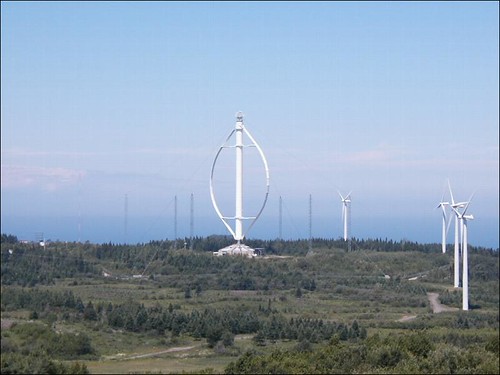 The research, funded by DOE's Wind and Hydropower Technologies Program, is the most comprehensive and data-rich analysis on the subject to date.
My comments:
I have a hard time with this analysis when T.Boone comments on WindFarms was
"There are no turbines on my ranch, because I think they are ugly." Source
Most would agree, and once the idea of "green looking cool" wears off in the media so will the value of surrounding homes...
The research, funded by DOE's Wind and Hydropower Technologies Program, is the most comprehensive and data-rich analysis on the subject to date. Using a combination of different analytic approaches, the investigation finds no evideHTML clipboard nce that prices of homes surrounding wind facilities are consistently, measurably, and significantly affected by either the view of wind facilities or the distance of the home to those facilities. Though the analysis cannot dismiss the possibility that individual homes or small numbers of homes have been or could be negatively impacted, it finds that if these impacts do exist, their frequency is too small to result in any widespread, statistically observable impact.
The full report, "The Impact of Wind Power Projects on Residential Property Values in the United States: A Multi-Site Hedonic Analysis," is available on the Environmental Impacts and Siting of Wind Projects page.
Full story at from EERE News Alerts
For more information on the DOE's Wind and Hydropower Technologies Program, see the Wind and Hydropower Technologies Program Web site.
My comments:
I have a hard time with this analysis when T.Boone comments on WindFarms was
"There are no turbines on my ranch, because I think they are ugly." Source
Most would agree, and once the idea of "green looking cool" wears off in the media so will the value of surrounding homes...
Energy Literacy - gauge whether your politicians are faking it on commitments
From Boing² ... On the day before Thanksgiving, while everyone was distracted buying (or pardoning) turkeys, the Obama team announced that the president will go to Copenhagen and promise to try to commit to a carbon reduction schedule for the United States. (More links 1, 2, 3)

So, in light of this science, how can we understand what Obama's pledge means?
... assess the pseudo-commitment (meaning unratified by Congress) that Obama will present in Copenhagen. According to the New York Times, "Mr. Obama will tell the delegates that the United States intends to reduce its greenhouse gas emissions 'in the range of' 17 percent below 2005 levels by 2020 and 83 percent by 2050, officials said."
The first problem here is that most nations, including Europe, are committing to reductions based on 1990 levels, but the US is basing its reductions on 2005 levels. Here's the historical US data.
And I've put it into a public spreadsheet for you to see. This spreadsheet assumes meeting these targets with a linear fit between 2010 & 2020, and the same from 2021-2050. That is very likely an optimistic assumption.
As you'll note, a 17% reduction over 2005 levels means only a 0.3% reduction over 1990 levels.
I don't think public policy alone, whether from individual government or the entire international community, will meet the climate challenge. Individuals will need to lead by example and make personal reductions by demanding products and services that will meet the real climate challenge. Fundamentally, that means massive installation of zero carbon energy generation technologies, and likely quite large reductions in personal energy use. It would be fantastic if we re-defined the climate challenge in terms of how we do both of those things while increasing the quality of our lives. Unless individuals do this, it is unlikely that governments will see the demand for action and act appropriately.
The main criticisms and resistance to climate action are often because we frame it as a challenge of denying ourselves and negatively impacting our lives and economy. By framing it instead as a "how do we improve our quality of life?" question, more people are engaged in the debate and the actions we need. It's no longer a purely technological fix; we can more accurately frame the problem for what it is: a challenge for us all, where we can win if we think clearly about what we are trying to achieve.
That's a better quality of life for all.
Read more at the Boing²
LED life-cycle assessment
Light Emitting Diodes are among the most energy-efficient light sources available on the market. LED lamps are already today more than five times more efficient than incandescent lamps and future technical achievements offer additional potential for the coming years.
At present, artificial lighting accounts for around 19% of global electricity consumption – that corresponds to 2.4% of worldwide primary energy consumption. 70% of the energy used for artificial lighting is consumed by lamps for which there are more energy-efficient alternatives. Simply replacing conventional light sources with LEDs would theoretically halve global electricity consumption for lighting. The potential savings are therefore enormous.
Apart from direct input of raw materials, the energy input, materials and emissions associated with the retrieval of resources are recorded. The results allow for conclusions not only on resource consumption and primary energy input but also acidification, eutrophication, the greenhouse effect, ozone depletion and toxicity.
Comparing the primary energy demand it´s clear that the use phase in the overall life cycle is dominating and that manufacturing is negligible.

Independent experts are currently verifying the study. A summary will be available in October on this website.
Detailed process analysis / Executive Summary
Another great lead to a link from Shirl Kennedy of the DocuTicker (thanks!)
Ten popular myths about America’s energy sources, uses, and risks.
"Energy policy must be based on facts, not myths," "If based on myths, energy policy could easily curtail our energy supply, drive up prices, and even increase pollution, all without an increase in energy security."- Tanton.
The Pacific Research Institute, confronts ten popular myths about America's energy sources, uses, and risks.
The report challenges conventional discourse about energy propagated by politicians, celebrities, and the media. Using data from the U.S. Department of Energy and the Energy Information Administration, Top Ten Energy Myths clearly outlines the types of fuel most used in the U.S.—where they come from, the risks involved, and the potential for alternative technologies.
Top Ten Energy Myths clearly outlines the types of fuel most used in the U.S.—where they come from, the risks involved, and the potential for alternative technologies.
"Contrary to common belief, new technology has greatly reduced the environmental risk of oil extraction, and renewable energies such as solar and wind will not increase our energy security," said Mr. Tanton. "There is a plethora of unexplored options for securing energy in America through domestic sources, but misled confidence in renewable technologies and increased efficiency are hampering common-sense energy policy."
"If our goal is to lower prices, trim emissions and sustain access to energy, then policy makers, the media, and the public should reject energy myths and stick to the path of facts and reality,"
The list of top ten myths in the report are... read at Pacific Research Institute
Source link By Shirl KennedyDocuTicker
Dec 1, 2009
Fuel Economy Rises 5th Straight Year & New Light Labeling Standard?
FTC Proposes New Output-Based Labels for Light Bulbs - The Federal Trade Commission (FTC) is proposing a new way to label light bulbs in order to address newer energy-efficient technologies. The proposal calls for an emphasis on light output rather than energy consumption.
EPA: Fuel Economy for New Vehicles Rises for Fifth Straight Year - The average fuel economy for cars and light trucks has increased only slightly for model year 2009, according to the U.S. Environmental Protection Agency (EPA). The report also notes that fuel economy has steadily increased and carbon dioxide emissions have steadily decreased since 2004.
Also DOE awards $620 Million for Smart Grid and Energy Storage in Recovery Act funds to 16 Smart Grid demonstration projects in 21 states, as well as 16 large-scale energy storage projects.
Read more from DOE EERE Network News
Nuclear power: less effective than energy efficiency and renewable energy?
The LA Tmes has a post on the effectiveness of nuclear power for mitigating global warming - Nuclear power: less effective than energy efficiency and renewable energy...
The Environment California Research & Policy Center concluded that launching a nuclear power industry nearly from the ground up is too slow and expensive a process. Energy efficiency standards and renewable energy options are better solutions, researchers said.
Currently, no new nuclear reactors are under construction in the country, and no U.S. power company has ordered a nuclear plant since 1978. All orders for nuclear facilities after fall 1973 were eventually canceled, according to the report.
Meanwhile, building a reactor would probably take around a decade – 2016 at the earliest, the study suggested. Without an existing infrastructure, manufacturing reactor parts with the dearth of trained personnel would be difficult.
But even if the nuclear industry managed to build 100 reactors by 2030, the total power produced would reduce total U.S. emissions only 12% over the next 20 years, which Environment California deemed "far too little, too late."
The $600-billion upfront investment necessary for the 100 reactors would slice out twice as much carbon pollution in that period if invested in clean energy, according to the report. And given the costs of running a power plant, clean energy could deliver five times as much progress per dollar in lowering pollution - LA Tmes
Cross Posted From PeakEnergy Big Gav in nuclear power
The Environment California Research & Policy Center concluded that launching a nuclear power industry nearly from the ground up is too slow and expensive a process. Energy efficiency standards and renewable energy options are better solutions, researchers said.
Currently, no new nuclear reactors are under construction in the country, and no U.S. power company has ordered a nuclear plant since 1978. All orders for nuclear facilities after fall 1973 were eventually canceled, according to the report.
Meanwhile, building a reactor would probably take around a decade – 2016 at the earliest, the study suggested. Without an existing infrastructure, manufacturing reactor parts with the dearth of trained personnel would be difficult.
But even if the nuclear industry managed to build 100 reactors by 2030, the total power produced would reduce total U.S. emissions only 12% over the next 20 years, which Environment California deemed "far too little, too late."
The $600-billion upfront investment necessary for the 100 reactors would slice out twice as much carbon pollution in that period if invested in clean energy, according to the report. And given the costs of running a power plant, clean energy could deliver five times as much progress per dollar in lowering pollution - LA Tmes
Cross Posted From PeakEnergy Big Gav in nuclear power
New EPA Data on State, Federal Enforcement in Waste and Air Pollution Shows Increased Inspections and Penalties
NPCA - EPA data released early in November demonstrates that federal and state regulators assessed more in penalties in West Virginia for Clean Air Act violations in fiscal year 2008 than in any other state — $15.3 million — while Florida topped all states in penalties for violations of federal waste law at $2.4 million. Ohio was second in the nation for air pollution penalties at $11.6 million. Data marks increased inspections and penalties.
"This is part of EPA's ongoing commitment to increase transparency and promote the public's right to know by improving access to available data," EPA said about a new website, http://www.epa-echo.gov/echo/, which allows the public to compare toxic release data with compliance data from facilities.
According to the EPA report which included state level information on the universe, compliance status, and enforcement by Resource Conservation and Recovery Act (RCRA Subtitle C) regulatory authorities for active RCRA facilities... The state with the highest rate of inspections of waste sites covered by RCRA was Nevada, at 38.6 percent of 1,848 facilities, California had a 1 percent inspection rate???
In Clean Air Act enforcement, states assessed $66.3 million in penalties in 2008, and EPA assessed $42 million.
Please read full at Source
Nov 28, 2009

Nuclear plants did not replace coal and gas plants, they joined them.
From How (not) to resolve the energy crisis]
Piling up energy sources... what is happening is not a new phenomenon either. What we are doing for more than 100 years now, is piling up energy sources. Today (in the Netherlands, Spain, the US and worldwide) the absolute amount of coal consumed for electricity production is much larger than one century ago, when there was no talk of gas, oil and nuclear. The dirty coal of the beginning of the industrial revolution was not replaced by cleaner gas plants. The gas plants joined the coal plants.

Up until now, newer and cleaner energy sources have always been used to enlarge energy production, not to make it "greener" (see for instance the image on the left, depicting US energy consumption from 1845 to 2001, source).
The so-called greening of our electricity production, which generates so much talk, is still 100 percent wishful thinking. We are not one step further than 5, 10, 20 or even 100 years ago. On the contrary, things get worse every day.
Relative versus absolute figures
Much more important than what we do, is what we don't do. The key to progress is scaling down non-renewable energy production, or at least keeping it at the same level. Instead of aiming for the development of more renewable energy, policymakers should do anything in their power to make sure that not one more kilowatt of non-renewable energy is added.
United States
For instance, imagine that the US indeed realises the very ambitious goal of generating 25 percent of their electricity consumption by renewables, and let's assume it takes them 5 years longer as planned. According to the projections of the IEA, US electricity demand will grow by 26 percent (16 to 36 percent) from 2007 to 2030. This means that the 3,800,000 GWh of today will be 4,788,000 GWh by 2030. When everything goes to plan, about 1,244,880 GWh of that will then be renewable (that is 3 times the worldwide renewable electricity capacity today).
But, this is scarcely more than the 988,000 GWh of electricity demand that will be added during that period. So even if this ambitious goal would be realised, the US would still be as dependent on fossil fuels as it is today. Limiting electricity demand to current levels and not building any renewable electricity generating capacity would yield the same result. Limiting electricity demand to current levels and greening 25 percent of the existing electricity production would bring real progress.
Worldwide
The rise of renewable energy is of secondary importance. What matters is that the absolute amount of burned up fossil fuels lowers. Only then would we become less dependent on non-renewable energy sources and on foreign energy suppliers, and only then would we lower CO2-emissions.
On a global scale, the futility of the present approach is even more obvious. The total amount of renewable electricity worldwide (excluding hydro*) rose from 31,000 GWh in 1980 to 414,000 GWh in 2006 - a rise of 1,300 percent or an absolute increase of 383,000 gigawatt-hours.
Yet, the amount of electricity generated by coal and gas doubled in that same period, which comes down to an absolute increase of 6,355,900 GWh. So, we added around 20 times more non-renewable sources than renewable sources. Total global electricity production rose from 8,027,000 Gwh to 18,008,000 Gwh, a rise of 250 percent. If we look at total energy production instead of just electricity production, the preponderance of fossil fuels is even larger (see the image above, courtesy of Der Spiegel).
Much more important than what we do, is what we don't do.
Right now we try to match our energy production to an ever increasing demand. But, we could also try to match our demand to a fixed supply. Considering the circumstances, this would be a much more realistic and intelligent strategy. An even better strategy is the "oil depletion protocol", an idea of author Richard Heinberg. He proposes an international agreement to lower oil production and consumption each year with 2.6 percent. We can wait until the geological, economical or geopolitical reality lowers the availability of fossil fuels, but if we anticipate that reality now then we definitely have more of a chance to make a successful transition to a durable, less energy-intensive society.
Not China's fault - Last, but not least, the IEA notes that the rise of energy use is largely on account of non-western countries, with China ahead. But, this does not clear us at all. As the IEA calculated in a former report, almost 30 percent of energy use in China comes from the production of export goods - from bicycles over jeans to solar panels.
Western countries succeed in limiting the rise of their energy consumption because they have outsourced ever more energy use. Moreover, the IEA states in its last report, non-OECD countries are, in spite of their high share in current energy use, only responsible for 42 percent of the CO2-emissions since 1890 - with a much bigger population. This means that - in a fair world - we would have to reduce our energy use much more than them.
California Air Resources Board (CARB) releases draft cap-and-trade program
NY Times - California, Issues Draft "Cap and Trade" Rules that set a declining ceiling on emissions of greenhouse gases and allows companies to buy and sell permits to meet it. California, with the world's 8th largest economy, has a goal of reducing greenhouse gases to 1990 levels by 2020. Its draft trading system would begin in 2012 and would apply to 600 major sources of global warming gases, including power plants, refineries and concrete factories. The California proposal also includes reductions in emissions from industrial and transportation fuels beginning in 2015. CARB has scheduled months of hearings and public comment on the rule before it is to be finalized next October.
Via David Schaller who included this great quote this month:
"If we don't fight hard enough for the things we stand for, at some point we have to recognize that we don't really stand for them."
-Paul Wellstone
Via David Schaller who included this great quote this month:
"If we don't fight hard enough for the things we stand for, at some point we have to recognize that we don't really stand for them."
-Paul Wellstone
Nov 25, 2009
"There is still no alternative to oil"
Please read full at Energy Bulletin from Roger Blanchard
George Will had quite a few figures in his commentary "Ther e is still no alternative to oil" that suggested there are no supply problems concerning oil...
Why isn't non-OPEC production increasing as the price of oil increases??? Due to the large number of declining oil fields throughout the world, it presently takes about 4 mb/d of new production each year just to maintain global production at a steady rate.
Mr. Will talks glowingly about deep-water fields without appreciating the technical and economic difficulties of extracting the oil. As an example, much has been made in the U.S. media about 2 relatively recent discoveries in the deep-water Gulf of Mexico (US): Jack and Tiber. Both fields are at roughly 30,000 ft in depth. Because of economic and technical difficulties, the fields are not projected to start producing oil before 2020 if they are developed at all. By then, all of the presently producing deep-water GOM fields will be in deep decline. Only the larger deep-water fields are likely to ever be developed.
Mr. Will also talks glowingly about how much oil is in the Athabasca Tar Sands region of Canada. He doesn't appear to appreciate the difference between volume of oil, the possible maximum rate of production and how quickly the rate can be increased.
Finally, it's unfortunate that Mr. Will places so much importance on "proven" oil reserves inasmuch as the figures are essentially worthless. There is no independent organization that audits the "proven" reserves of individual countries to give credence to the figures. It's well known that many countries highly inflate and don't update the figures they provide.
More news from Energy Bulletin
Australian Senate: Peak Oil motion defeated 31:6
International Energy Agency calls 'Peak' on OECD Oil Demand
Peak Oil and Agriculture
How (not) to resolve the energy crisis
Peak oil, prices, and supplies - Nov 24
-Awash in fossil fuels
-World oil demand growth to outpace supply in 2010: poll
-US Economic recovery in the era of inelastic oil
-World oil demand growth to outpace supply in 2010: poll
-US Economic recovery in the era of inelastic oil
Nov 24, 2009

When scientists warn... and let slide 15 years?
From the Statement of Union of Concerned Scientists (emphasis added):
Did your eyes glaze over yet? Are you wondering where the "news" is in this post, or why I'm bringing it to your attention?
After all, these are all things we've heard countless times.
The point is that there is no "news" top be found here, no revelation of yet another way in which our assumptions were too optimistic and science has recently shown us reality's indifferent truth. In fact, this statement from the Union of Concerned Scientists dates to September 1994 (although some sources I found online say it goes as far back as November 18, 1992).
Human beings and the natural world are on a collision course. Human activities inflict harsh and often irreversible damage on the environment and on critical resources. If not checked, many of our current practices put at serious risk the future that we wish for human society and the plant and animal kingdoms, and may so alter the living world that it will be unable to sustain life in the manner that we know. Fundamental changes are urgent if we are to avoid the collision our present course will bring about …
No more than one or a few decades remain before the chance to avert the threats we now confront will be lost and the prospects for humanity immeasurably diminished …
Much of this damage is irreversible on a scale of centuries or permanent. Other processes appear to pose additional threats. Increasing levels of gases in the atmosphere from human activities, including carbon dioxide released from fossil fuel burning and from deforestation, may alter climate on a global scale. Predictions of global warming are still uncertain—with projected effects ranging from tolerable to very severe—but the potential risks are very great.
Uncertainty over the extent of these effects cannot excuse complacency or delay in facing the threats.…
The earth is finite. Its ability to absorb wastes and destructive effluent is finite. Its ability to provide food and energy is finite. Its ability to provide for growing numbers of people is finite. And we are fast approaching many of the earth's limits. Current economic practices which damage the environment, in both developed and underdeveloped nations, cannot be continued without the risk that vital global systems will be damaged beyond repair…
Did your eyes glaze over yet? Are you wondering where the "news" is in this post, or why I'm bringing it to your attention?
After all, these are all things we've heard countless times.
The point is that there is no "news" top be found here, no revelation of yet another way in which our assumptions were too optimistic and science has recently shown us reality's indifferent truth. In fact, this statement from the Union of Concerned Scientists dates to September 1994 (although some sources I found online say it goes as far back as November 18, 1992).
Subscribe to:
Posts (Atom)