Mar 28, 2008

EPA - "Children Act Fast . . . And So Do Poisons"

PHILADELPHIA (March 26, 2008) -- The U.S. Environmental Protection Agency advises parents and caregivers to keep potentially harmful products locked up and in a high cabinet out of the reach of children. Poison Prevention Month is observed each March to increase awareness of the danger to children of accidental poisoning from pesticides and household products.
 
U.S. poison control centers receive a call every 15 seconds about an accidental poisoning. The National Safety Council records show that more than 50 percent of the nearly 2.5 million poisoning incidents each year involve children under six years of age. Most are due to children swallowing common household items like prescription and over-the-counter medications, vitamins, cosmetics, personal care and cleaning products. Poisonings also involve house plants, tobacco products and alcohol.
 
To reduce the number of unintentional poisoning deaths and injuries, EPA recommends that parents keep items in their original containers, leave the original labels on the products, and read labels before use. Bathrooms and kitchens are the areas in the home most likely to have improperly stored hazards. Whenever possible, purchase products with child-resistant safety packaging and keep all household cleaning products and medicines locked up, out of sight and out of reach of young children.
 
Poisonings can occur when adults are distracted for just a few moments by the telephone, the doorbell or other household events, which is why locking up potential hazards is so important.
 
To highlight National Poison Prevention Month, EPA has launched a poison-prevention segment on Green Scene, EPA's new series of environmental videos. During an interview on Green Scene, Assistant Administrator Jim Gulliford, of the Office of Prevention Pesticides and Toxic Substances, discusses how to protect your children from toxic substances around the home and how to respond in case of accidental poisoning.
 
These simple steps can help you save children from environmental hazards around the home
  • Always store pesticides, household chemicals/cleaners, medications, vitamins, personal care items, including chlorine bleach, out of the children's reach – preferably in a locked cabinet.
  • Read the label first. Pesticide products, household cleaning products, and pet products can be dangerous.
  • Before applying pesticides or other household chemicals, remove children and their toys, as well as pets, from the area. Keep children and pets away until the pesticide has dried or as long as is recommended on the label.
  • If your use of pesticide or other household chemicals is interrupted (perhaps by a phone call), properly reclose the container and remove it from children's reach. Always use household products in child-resistant packaging.
  • Never transfer pesticides or other household chemicals to containers that a children may associate with food or drink (like soda bottles), and never place rodent or insect baits where small children can get to them.
  • When applying insect repellents to children, read all directions first. Do not apply over cuts, wounds, or irritated skin, do not apply to eyes, mouth, hands or directly on the face, and use just enough to cover exposed skin or clothing but do not use under clothing.
  • Act Fast! If you think someone has been poisoned act fast. Don't wait to see what happens, call the National Poison Control Center RIGHT AWAY at 1-800-222-1222.
Parents and community organizations can obtain additional prevention materials, including the "Ten Tips to Protect Children from Pesticide and Lead Poisonings" and "Poison Prevention: Read the Label First Community Action Kit" brochures by calling EPA's Environmental Publications line at 1-800-490-9198.
 
Additional information is available at http://www.poisonprevention.org or go to EPA's website at: http://www.epa.gov/pesticides/factsheets/child-ten-tips.htm


Sublime words of David Suzuki on backyard pesticides

If  genuine care, sincerity and concern for nature and protecting people was put into two words, they might be "David Suzuki". . Even if he is being paid for it,  his lifelong commitment is impressive.


Here is his latest take on pesticides: The ugly truth about cosmetic pesticides

A real estate agent once visited me at home and offered to sell my house. I was tempted for about a nanosecond before turning him down cold.


The house where I've lived for decades in Vancouver is not just a property to me. My home - especially the backyard - means so much more.


The backyard isn't just my own private place of refuge in the summer. It's a sacred place for my family as well.


It's where my kids played tag as children and where they now socialize with their friends as adults. It's where my wife and I hold family barbecues and dinners in the summer. And it's where my father-in-law gets down on his hands and knees to pull weeds and tend to the St. John's Wort and tulips. Our pet dog, Huckleberry, was even buried in the backyard when he died.


I wouldn't trade any of my memories that have taken place on that small stretch of grass for anything in the world. I know I'm not alone in my passion. Our yards and gardens are a symbolic zone, a private sanctuary. Our public parks are also treasured spaces: they're the public commons where we can throw Frisbees, play volleyball, read a book, or (my favorite) take a nap.


There's been a tremendous amount of interest in green spaces recently. And with good reason. Many of the private yards and public parks that we enjoy are coated with toxic chemical pesticides to kill weeds. The problem is that they work too well, and exposure to them can damage our health.


In 2003, the Ontario College of Family Physicians published a scientific literature review that showed "consistent links to serious illnesses, such as cancer, reproductive problems and neurological diseases" associated with chronic pesticide exposure.


It stands to reason that children and pets are often more exposed since they're the ones most likely to be found rolling playing on the grass during the summer months. Children are also more vulnerable to the health effects of pesticide exposure because their young bodies are still developing.


So what exactly are we spraying on our lawns? At least 50 active pesticide ingredients registered for use in Canada have been banned in other countries due to health or environmental concerns. One popular lawn herbicide called "2,4-D", can easily be found in products lining the garden care section of your local hardware store. But don't look for it in Denmark, Norway or Sweden. The herbicide, 2,4-D, is no longer sold in Scandinavia because of health and environmental concerns.


Another report, published by my foundation, showed that more than 6,000 cases of acute pesticide poisoning occur in Canada [L1] each year. Even more frightening, half of those poisonings involve children under six.


Despite the clear evidence against chemical pesticides, more than 30 per cent of Canadians with gardens still use them. But there is evidence that this practice may be coming to an end. Many cities have passed bylaws banning the use of these lawn and garden pesticides. We can look forward to the day when a neighbor applying these chemicals to their yards will seem as out-of-place as a smoker lighting up a cigarette on a transatlantic flight.


That day may be just around the corner - at least in some parts of Canada. In 2003, Quebec banned the use and sale of many lawn pesticides. Now the Ontario government is proposing similar legislation. The Government of PEI also recently held hearings on a potential province-wide ban. Provincial action is important, because while cities and towns can restrict the use of these chemicals on public and private property, provincial governments have the power to ban the sale of cosmetic pesticides. Pulling the prohibited products from store shelves is the best way to make sure they aren't used.


I hope that residents across Canada - especially in Ontario and PEI - make their voices heard on this issue.


Remembering the great times I've had in my backyard, like watching my kids play, chatting with my father-in-law while he tends the garden, and having friends over for a summer dinner are incredible experiences. I'm sure most Canadians have similar memories that have taken place in their own backyards. We should be able to enjoy these green sanctuaries without worrying about chemicals. And so should our children.


From David Suzuki at cnews 

Mar 27, 2008

China celebrates its status as world's number one air polluter


China Celebrates Its Status As World’s Number One Air Polluter

The payoff for plug-in hybrids: 95 years?

Plug-in hybrids get far better mileage than standard cars or regular hybrids — and emit far less pollution.

But they are also tough to justify economically at the moment with existing technology, according to the first several months of data from RechargeIT.org, which is studying how well plug-in hybrids work in real-world circumstances.

Read the full story here

Mar 26, 2008

True, but will anyone talk about it?

EPA released its latest annual report on US greenhouse gas emissions that reflect all types of greenhouse gases was a drop of 1.5% from 2005. EPA says the slight drop can be attributed largely to differences in weather... VIA www.epa.gov

Further NASA data reflects the REAL environmental influences by satellite (see photo below). Notice the LACK of pollution around the U.S.?

It turns out our Chinese imports aren't limited to just cheaper goods - pollution accounts for a fairly hefty slice. In fact, that pollution may be equivalent to a not trivial 15% of local emissions in Canada and the U.S. Via - NASA
It would be nice for the "eco-propaganda" machines to include the "gross" sources of global environmental harm IF they truly want to improve the environment or just Skewing "global warming" information to meet alternative directives.

LA Times Anything But Nuclear

Anything but a return to nuclear power, says an L.A. Times editorial, slamming Gov. Schwarzenegger's recent bullish nuclear comments. Renewables might be the answer to the global resource crunch, suggests Energy Outlook, but that will require a top-down rethink of energy policy. One policy prescription: Forget the "safety valve" on cap-and-trade schemes, argues Earth2Tech. An ejection seat undermines the whole point of pricing carbon.

Pain at the pump is the fault of the oilmen in the White House, says a NYT editorial, and drilling in Alaska won't solve the problem. The Economist offers a graphic look at how little pain there really is, comparing gasoline taxes around the world. British prime minister Gordon Brown gears up for a showdown with the European Union over biofuel mandates, after his science adviser sounds the alarm, in the Guardian. Of course, there's always algae: The Energy Blog reports on PetroSun's new 4 million gallon algae-to-oil facility.

The Kansas coal spat is an economic no-brainer, argues SolveClimate: Coal-fired plants will cost a lot more than natural gas once climate legislation is in place, and consumers will foot the bill. Coal-to-liquids technology to run vehicles is still a bad idea, even if the Chinese are doing it, in Grist.

Read more By Keith Johnson LA Times

Love coal - Hillary, Obama

Even Ralph Nader is even looking good these days. YIKES!

Hillary is running off about mountaintop removal and now promising coal plants: Right away I have been advocating that we fund 10 large scale carbon capture and storage projects that will utilize a range of coal types and power plant types and storage locations because it's imperative that we do everything we can to get to a technology that enables us to use clean coal.

And so is Obama:  We could be investing in renewable sources of energy, and in clean coal technology, and creating up to 5 million new green jobs in the bargain, including new clean coal jobs. And we could be doing it all for the cost of less than a year and a half in Iraq.

FROM: treehugger

Flashback - Ralph Nader returns with some 1970's eco ideas

Haase comment: Tragic that he has better answers than who will win, I just hope they listen to him this time.

From "Nader Returnsabout his "presidential platform on energy and the environment".

question Why should voters consider you the strongest environmental candidate?
answer I was a big advocate of renewable energy back in the '70s -- all forms, from wind power to photovoltaic to solar thermal to passive solar architecture. I was a very early opponent of nuclear power. As a lobbyist, I was instrumental in the creation of the Environmental Protection Agency, along with legislation to control air pollution and other toxic substances. I was also involved in the passage of the first motor-vehicle efficiency laws back in the '70s. So my words on this issue as a candidate reflect what I've done, rather than what I hope to do.

question Going forward, what sets your environmental platform apart from the other candidates'?
answer I'm basically promoting a massive conversion from a hydrocarbon-based economy to a carbohydrate-based economy. I'm not talking about corn ethanol, which has a very poor net energy- and water-usage characteristic. I'm talking about industrial hemp. I'm talking about plant life that can be efficiently converted to fuel -- like sugar cane, agricultural waste, cellulosic grasses, and certain kinds of biomass that can be grown with a spectacular ratio of energy inputs to outputs. I'm talking about a very fundamental remodeling of our economy -- a conversion from industrial-age, 19th-century technologies like the internal combustion engine to renewable, sustainable technologies of efficiency and production. We should have vehicles that get well over 100 miles per gallon.

question Let's get more specific about how you would implement this massive shift. You propose a carbon pollution tax, for instance. How would that work?
answer You tax inefficient technology and you tax pollution. The carbon tax would not be a credit exchange [as in a cap-and-trade program], which can be easily manipulated. It would be a straight-out tax on hydrocarbon production at the production source -- where it's far, far removed from consumers and forces better choices of technology from the get-go.

question Your website says, "No to nuclear power, solar energy first." How do you plan to phase out nuclear and phase in renewables?
answer Oh, this is easy. The first thing you gotta do to stop nuclear power is prevent government guarantees of Wall Street loans to nuclear power companies to build plants. They will not get private-sector financing without a 100 percent Uncle Sam guarantee. You appeal to conservatives and liberals who don't like corporate welfare and say, "Let's stop rigging the playing field and cut off loan guarantees to nuclear power."

As far as the renewables are concerned, you can do it in two ways: You can basically eliminate all direct and indirect subsidies to fossil fuels and nuclear and say, "Let's have a level playing field." Or you could actively increase tax credits and subsidies to solar power because it has superior environmental and geopolitical benefits. Furthermore, the government's a big customer -- it can take its entire procurement power and direct it toward solar energy and sustainable technology.

Keep in mind that we're currently paying six, seven dollars a gallon for gasoline if you include all the military expenditures to safeguard the global oil pipeline. That's something that taxpayers are paying for, even if it doesn't show at the pump.

question Nuclear makes up 20 percent of America's electricity supply. Coal makes up more than half. Would you phase out coal as well, or do you believe in the promise of advanced coal technology?
answer There's no such thing as clean coal. Anybody who's been down in a coal mine knows that. You've got to phase out all fossil fuels: first coal and oil, then natural gas.

question How quickly would you phase out fossil fuels?
answer If we had the will, we could convert most of [the infrastructure] in 20 to 25 years, and that includes a significant portion of the housing and building stock, which you'll replace with different types of structures and solar architecture, and retrofit existing buildings for solar water heating and photovoltaic.

question Do you see renewable energy costing consumers more than conventional electricity?
answer If you include the costly military and environmental externalities of fossil fuels and nuclear, solar has been cost-competitive for years. If you exclude the externalities of finite fuels, wind power is already competitive, passive solar architecture is competitive. Meanwhile, the price of photovoltaics and other forms of solar-generated electricity are coming down very fast every year, and are on an upward curve of innovation -- with new technology, refined ways of producing the film, etc. They will be uniformly competitive within the next 10 years.

Remember that consumers are paying [for today's energy system] in many other indirect ways: strip mines, acid runoff into lakes and streams, pollution in their lungs, medical costs. Sixty-five thousand people a year die from air pollution, half of them from coal-burning utility plants. Those are just a few of the external costs operating here.


question What do you think of Al Gore's climate activism? Has he been an effective agent of change?
answer At last. Where was he when he was vice president? We couldn't get him to make a speech on solar energy. But now, like Martin Luther King Jr. said, he's "free at last, free at last," and he's made a major contribution.

question Many have called George W. Bush America's worst environmental president, and some critics have said that if you hadn't entered the 2000 race, Gore would have been president, and therefore Bush's irreversible environmental damage never would have happened.
If you're going to blame me for Gore's loss -- and Gore doesn't blame me, by the way -- then you've got to credit me for Gore's Nobel Prize for his alerting the world to global climate change, for all of his successes with books, and for his millions of dollars of appreciating Google stock.

question Maybe you should get an honorary percentage. On to another topic: Who is your environmental hero?

answer There are several. One is David Brower. Another is Barry Commoner, who wrote Making Peace With the Planet, among other great books on the environment. The third one is Amory Lovins.

question What do you do personally to lighten your environmental footprint?
answer I consume very little except newspapers, and I recycle them. I don't have a car. I'm the antithesis of the over-consumer.

question Are you going to offset your footprint from the planes and cars?
answer I think that's an indulgence. I don't trust these offsets. We can do a lot more than that.

Read more from peakenergy


Mar 25, 2008

the coming U.S. water crisis

For most of us living in the U.S., water is something we take for granted, available when you turn your tap on–—to brush your teeth, to take a shower, to wash your car, to water your lawn, and if you have your own swimming pool then, to fill that as well.

So it was with alarm that many of us read the story of Orme, a small town tucked away in the mountains of southern Tennessee that has become a recent symbol of the drought in the southeast. Orme has had to literally ration its water use, by collecting water for a few hours every day–—an everyday experience in most developing countries, but unusual for the U.S.

The Great Lakes should not be likened to a 'reservoir' or characterized as part of the nation's 'water supply,' and here's why. If Great Lakes water is to be shared, conservation must come first -- and the needs of the ecosystem itself need to be considered. But political pressures will soon mount for such sharing in the U.S.

Read more from David Dempsey

See 2

NASA Satellite Tracks Movement of Pollution from East Asia to North America


NASA pollutionImage courtesy of NASA It turns out our Chinese imports aren't limited to just cheaper goods - pollution accounts for a fairly hefty slice. In fact, that pollution may be equivalent to a not trivial 15% of local emissions in Canada and the U.S. This is but one of the stunning findings of a new study done by NASA scientists looking at the amount of pollution that makes its way to western North America from China every year. These pollutants, which have doubled over the last two decades, consist primarily of ae... (via treehugger.com)

Goodbye mecury CFL bulbs... Organic LED Breakthrough

Osram Claims Warm White Organic LED Breakthrough
Organic light emitting diodes (OLEDs) are very promising. They are more expensive than incandescents without the downsides of CFLs, and they have the potential to become less expensive than regular LEDs. Because of their thinness and flexibility, they could be used in all kinds of places (a designer's dream). We're not quite there yet, but things are moving fast. In late 2005, Osram was announcing "a breakthrough in polymer-OLED technology by achieving a record 25 lumens... (via treehugger.com)

U.S. automakers were powerless to stop new fuel-efficiency legislation

...Whether they like it or not, the new 35-mpg standard should nudge Detroit's Big Three to become more aggressive in pursuing green technologies. But the question remains: Will Americans be willing to pay thousands of dollars extra for these cars? Consider, for example, that Honda scrapped the hybrid version of its Accord because it didn't offer enough fuel savings to justify the premium price that had to be charged for the technology. Similarly, sales of the big hybrid SUVs from GM and Chrysler aren't expected to make much of a dent, perhaps just 5,000 or 6,000 per year, because of their high costs.

If U.S. politicians were really serious about improving fuel efficiency, they might follow Europe's example. Thanks to steep excise taxes, prices at the pump in some European countries now top $7 a gallon. That's helped drive demand for smaller, more fuel-efficient vehicles over the long term. But the conventional wisdom is that in America, where driving a car, as well as a pickup and SUV, is seen as an inalienable right, a gas tax, which consumers are reminded of every time they visit the pump, would never fly. Says Chrysler CEO Robert Nardelli: "That, of course, is political suicide."

PECFA futures, Many gas stations' buried tanks too thin


Mar 23, 2008

Microreactor can convert virtually any liquid fuel into hydrogen,

Hydrogen car problem: While hydrogen has been lauded as the "energy of the future," this is NOT a short term reality.... Hydrogen is not a great energy carrier. It has a relatively low energy density, it's difficult and dangerous to transport, and finding a way to store it in vehicles has proven difficult (ranges of only 100 miles). The refueling infrastructure is also non-existent.

Even more to the point, we haven't yet established a renewable source of energy to produce hydrogen.

Possible solution: Weighing less than one pound, the square piece of shiny steel houses an array of microchannels containing patented catalytic sites. Each microtube helps convert a continuous stream of hydrogen from fuels like gasoline, diesel, vegetable oil, biodiesel, propane, natural gas, even the glycerol byproduct from biodiesel manufacturing.

Reducing the cost of hydrogen generation: "The smaller system size, reduced catalyst volume, and more efficient process that is realized with InnovaTek's technology represents another significant step in moving the hydrogen economy from science to commercial reality," he said. 

While InnovTtek's reactor can run on a variety of non-renewable hydrocarbon sources they, like the potentially revolutionary Coskata Biofuels, are expressly interested in sustainable power, even to the point of preferring biodiesel in their test runs. Innovatek also said that biodiesel just plain works better: it contains fewer impurities and reforms at lower temperatures than petrodiesel.

Taking all this into consideration, Innovatek's reactor could revolutionize the energy and transportation infrastructure of the country.

Source gas2.org

Find out more about hydrogen fuel problems and solutions at: HybridHype

Wisconsin Puppy Mill Protest

Emailed from Gina

Protest Puppy World in Greenfield, WI with us! This event is open to the public. Wisconsin is tired of the horrible treatment of dogs living in puppy mills or produced by backyard breeders. We want them to stop breeding to sell to pet stores across the country. This industry is cruel and inhumane. These animals are suffering and we want it to stop. Why shop when you can adopt? Don't support the puppy mill industry, don't shop at Puppy World! Join the fight and protest with us at Puppy World this spring.
            Hosted By: Gina Skorka
            When: Saturday Apr 19, 2008            10:00 AM - 2:00 PM
            Where: Puppy World Pet Store 4647 South 27th Street  Greenfield, WI 53221
 
For more information, visit
www.myspace.com/ginaskorka
 

Chickens Can No Longer Afford to Eat Corn

For consumers, retail prices for broiler products is up 10% over the last year.  For a company whose revenue in 2007 was $7.6 billion, a rise in costs of $1.3 billion ain't chicken feed.

Bloomberg news reports:

``Our company and industry are struggling to cope with unprecedented increases in feed-ingredient costs this year due largely to the U.S. government's ill-advised policy of providing generous federal subsidies to corn-based ethanol blenders,'' Chief Executive Officer J. Clint Rivers said in the statement.

The price of soybean meal in Chicago rose to $392.90 per 2,000 pounds, the highest since 1973, on March 3 and has gained more than 50 percent in the past year.

``Based on current commodity futures markets, our company's total costs for corn and soybean meal to feed our flocks in fiscal 2008 would be more than $1.3 billion higher than what they were two years ago,'' Rivers said.


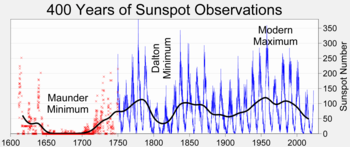
It may get really cold soon... "Maunder Minimum".....

Officials of both the Canadian and Russian governments in the past six weeks have warned of a coming ice age, where the number of solar flares diminishes to zero and the sun lays quiet. Clearly the sun is the source of all energy on Earth. And so, how brightly the sun shines is the key element. It burns irregularly, throwing off huge amounts of radioactive materials at times, and other times it lays quiet. And which side of the sun that is facing Earth at the time of these events has a lot to do with the energy received on Earth. All of these factors control the climate on Earth.
Learn more of the Maunder_minimum

Via NASA

Bill Richardson quote... take Wisconsins water for FREE

"I believe that Western states and Eastern states have not been talking to each other when it comes to proper use of our water resources...States like Wisconsin are awash in water." And how did Wisconsin respond? Essentially by saying "Take it, Bill" by screwing up on the Great Lakes Compact.

FDA relied on only 2 studies to judge safety

Ignoring hundreds of government and academic studies showing a chemical commonly found in plastic can be harmful to lab animals at low doses, the Food and Drug Administration determined the chemical was safe based on just two industry-funded studies that didn't find harm. Read more from Milwaukee JS

Mar 21, 2008

The Great Lakes Are Under Threat and Wisconsin Fiddles

One of the very first acts performed by David Paterson as Governor of New York was to sign a law enacting the Great Lakes Compact, an agreement among all of the States and Canadian Provinces around the Great Lakes to protect the lakes from pollution, invasive species and covetous neighbors. To make a bad pun, it is a watershed agreement, an international coalition to protect one of the world's great resources.

Except it has to be approved unanimously and Republican politicians in Wisconsin are playing games, sacrificing one of their greatest assets on the altar of cheesy politics. They don't like co-operating with neighbors- one state senator wrote "To relinquish our sovereignty to a regional body of governors that can make changes after the compact is adopted is unacceptable. Where else do we have a dictatorial or totalitarian form of government where we give up our decision-making authority? I do not support a document that relinquishes our sovereignty to another state"

As one writer to the Sheboygan Press wrote about the Republican controlled assembly: [they] "push simple-minded hot buttons, spout hollow slogans, and protect the wealthy."

The other 32 million Americans and Canadians downstream from Wisconsin and sharing Great Lakes water should be worried about what is happening up there and considering their options in dealing with a state that considers sharing authority with them "totalitarian and dictatorial".  Read more from treehugger.com

53 million gallons in danger of leaking nuclear waste

... wastes stored in underground tanks at the Hanford Nuclear Reservation are so dangerous that their fumes give people headaches, nosebleeds and sore throats and make them nauseated.

An unfortunate few have been doused with the deadly stuff in accidents; one now is dying of cancer.
Called by state regulators "the most toxic waste known to this environment," the 53 million gallons of waste sit in 177 massive, buried tanks near the Columbia River. Intended for short-term use, some of the tanks are more than a half-century old. They were built of carbon steel -- an alloy prone to corrosion. They are cocooned in concrete that in places has cracked and crumbled. The contents historically boiled and exploded, and the tank bottoms buckled. More than one-third leaked.
Read more from seattle post here

Mar 19, 2008

Free E-Recycling Through the Mail

WASHINGTON, DC —Free and green. Those are the goals of a pilot program launched today by the U.S. Postal Service that allows customers to recycle small electronics and inkjet cartridges by mailing them free of charge.

The "Mail Back" program helps consumers make more environmentally friendly choices, making it easier for customers to discard used or obsolete small electronics in an environmentally responsible way. Customers use free envelopes found in 1,500 Post Offices to mail back inkjet cartridges, PDAs, Blackberries, digital cameras, iPods and MP3 players – without having to pay for postage.

"As one of the nation's leading corporate citizens, the Postal Service is committed to environmental stewardship," Bizzotto said. "This program is one more way the Postal Service is empowering consumers to go green."

The free, postage-paid Mail Back envelopes can be found on displays in Post Office lobbies. There is no limit to the number of envelopes customers may take.

"We know our customers are interested in real solutions for proper disposal of personal electronics," Bizzotto said. "Everyone from consumers to businesses to non-profit organizations use the mail, and the Postal Service works to manage resources wisely to minimize environmental impact."

Principles of Green Chemistry

Green Chemistry is a revolutionary philosophy that seeks to unite government, academic and industrial communities by placing more focus on environmental impacts at the earliest stage of innovation and invention.

[ISBN-0198506988]

 This approach requires an open and interdisciplinary view of material and product design, applying the principle that it is better to consider waste prevention options during the design and development phase, rather than disposing or treating waste after a process or material has been developed. Environmentally benign alternatives to current materials and technologies must be systematically introduced across all types of manufacturing to promote a more environmental and economically sustainable future.


Environmentally benign alternative technologies have been proven to be economically superior and function as well or better than more toxic traditional options. When hazardous materials are removed from processes, all hazard-related costs are removed as well, significantly reducing hazardous materials handling, transportation, disposal and compliance concerns.

Given a choice between traditional options and green solutions, business leaders choose responsibly. Unfortunately, there is a significant shortage of more responsible green alternatives. Scientists and non-scientists alike can begin to address this technological gap by recognizing the interconnectivity between the construction of materials and environmental protection. There is tremendous untapped opportunity for ingenuity and reward at the chemical design stage; this is the central concern of Green Chemistry.


China's pollution nightmare is now everyone's pollution nightmare

Christian Science Monitor: The emergence of China as a dominant economic power is an epochal event, occasioning the most massive and rapid redistribution of the earth's resources in human history. The country has also become a ravenous consumer. Its appetite for raw materials drives up international commodity prices and shipping rates while its middle class, projected to jump to 700 million by 2020, is learning the gratifications of consumerism. The catch is that China has become not just the world's ... Link

Italian Village Torraca - The World’s First “LED city”

Last weekend the Italian village of Torraca proclaimed itself the world’s first “LED city”, unveiling new streetlights that emit a bright, white and ecologically green glow. 700 hundred street lamps were installed, each lamp contains 54 LEDs. LED lights are combined with photovoltaic cells (solar batteries), which makes the city energy self sustained.

LED lights are 80% more efficient, than incandescent bulbs. This allowed dramatically reduce total area of expensive solar panels.

Torraca’s street lights utilize Cree XR-E LEDs with brightness of up to 104 lm/W (Q4 bin). Some resources refer to it as the “brightest LED on the market”. This is not quite true. Luxeon Rebel LXML-PWC1-0100 also provide 100 lm/W, while priced about 20% cheaper.

Installation was performed by Gebison Electronics ( Filadelfio Cammarano). The Photovoltaic Plant project has been developed by Luigi Pascuzzi.

Torraca’s new lights should earn the town a place in history, alongside Holborn Viaduct in London, where the first electric streetlights were deployed in 1878.


Source: ledsreview.com

Diebold Accidentally Leaks Results Of 2008 Election

Diebold Accidentally Leaks Results Of 2008 Election Early ;-)

Mar 17, 2008

$500 billion needed to build the country's next generation of nuclear power plants.

NRC Commissioner says feds fall short

Gregory Jaczko, a member of the Nuclear Regulatory Commission (NRC), went to London last week to say the obvious about federal loan guarantees, something he should be saying here in the states. What he said was that the U.S. government's $18.5 billion in loan guarantees falls short of the $500 billion needed to build the country's next generation of nuclear power plants.

Referring to the $18.5 billion in loan guarantees authorized last year Jaczko said, "It's a far cry from what's needed. Congress is supportive, but have decided not to provide more federal loan guarantees - there's a disconnect there, so financing would have to happen without federal loan guarantees. "


More reactors are coming
To date, the NRC has
received five complete applications and one partial application for licenses to operate and construct a nuclear power plant. The agency expects to receive 17 applications for 30 nuclear power reactors with around 45 GW of capacity over the next two to three years. It's not yet clear how many licenses will be approved. Some will fail the "baloney test" and never make it to an NRC licensing hearing.

Jaczko said around 50 new nuclear reactors would be needed to replace the country's aging plants and keep the amount of electricity produced from nuclear steady at 20%. What he didn't say, but should have, is that we'll need another 50 to make any impact at all on swapping out fossil fuel generated greenhouse gases for zero emission nuclear energy.

"That first wave of new nuclear would need assistance as there's no commercially available financing now because of the uncertainties and because it's been 30 years since one was built."

"But once we demonstrate that, we should be able to finance the next wave with commercial loans," Wallace told Dow Jones Newswires.

Great Lakes health study dispute hits the NY Times

The NYT article is notable for several quotes.

"How much review is enough?" Dr. De Rosa asked in an interview. "If you get caught up in analysis paralysis, you never get anything out."

But Dr. Falk, of the disease centers, said the report's implication that pollutants had led to a significant increase in health problems was not warranted. "It leaves a lot of room for conjecture and speculation about potential associations that could be misinterpreted," he said.

What is damning is the chronic attitude of the government that the public is too childish and ignorant to 'interpret' or 'understand' important environmental and health information. Science is not 'spinnable,' it just is.  Give us your best judgment, but let us decide for ourselves. Read more from David Dempsey

Hope for Water Protection Compact in Wisconsin"

If state legislators can find a way to agree on a version of the proposed Great Lakes Compact, Gov. Jim Doyle has indicated he will call a special session to allow for action on the plan.

"The governor plans to keep pushing legislators to take it up, " said Carla Vigue, a spokeswoman for Doyle. "He would call a special session if there is some indication that legislators would actually bring it to a vote on the floor. "

There is no way to change the one-state veto without killing the compact -- and the one-state veto exists under current federal law. So any compromise is either window dressing or will fatally undermine Wisconsin hopes to divert water.

Read more at "hope for compact in Wisconsin" From David Dempsey.

Happy St. Patrick's Day - Kiss my recyclables

Kiss Me, I Recycle

GreenGuardian.com is taking the opportunity to tie St. Patrick's Day to raising environmental awareness. The lead story in the latest newsletter was entitled "Kiss Me, I Recycle" and is an obvious play on the "Kiss Me, I'm Irish" slogan you're likely to see emblazoned on t-shirts, buttons and hats starting this weekend. (Incidentally, the SWMCB web site provides a handy "Kiss Me, I Recycle" St. Patrick's Day button template for anyone interested in wearing green and simultaneously promoting green activities.)

 The "Kiss Me, I Recycle" story links to a helpful can and bottle recycling guide on GreenGuardian.com. The guide not only tells you what and how to recycle (which is strictly speaking, not pollution prevention since it's an "end of the pipe" sort of activity) but also highlights the energy savings associated with recycling, as well as the reduction in greenhouse gas emissions, air and water pollution, and water consumption that result from recycling containers as opposed to throwing them in the trash–all of which are important environmental benefits that are certainly complimentary to P2 activities.

Read more from - Joy Scrogum  P2 Go Bragh: Kiss Me, I Recycle 


Mar 14, 2008

Woohoo! New Standards Drastically Cut Locomotive and Marine Diesel Pollution

 
(Washington, D.C. - March 14, 2008) New tough emissions standards will slash pollution from locomotive and marine diesel engines by up to 90 percent, helping Americans to breathe cleaner air as soon as this year.
 
"Today EPA is fitting another important piece into the clean diesel puzzle by cleaning emissions from our trains and boats," said EPA Administrator Stephen L. Johnson. "As more and more goods flow through our ports and railways, EPA is cutting diesel emissions at their source – keeping our nation on track toward a clean, healthy, productive tomorrow."
 
When fully implemented, these new standards will reduce soot or particulate matter (PM) by 90 percent or 27,000 tons and reduce nitrogen oxides emissions (NOx) by 80 percent or nearly 800,000 tons. Nationwide this regulation will help prevent 1,400 premature deaths, and 120,000 lost workdays annually in 2030. The estimated annual health benefits are valued between $8.4 billion and $12 billion. When these older locomotive and marine engines reach the end of their useful life, and new engines enter into the nation's diesel fleet, the benefits of today's action will increase.
Today's action is another achievement in EPA's efforts to reduce pollution from diesel engines. This new rule complements the Clean Air Nonroad Diesel Rule and the Clean Air Diesel Truck and Bus Rule, currently underway nationwide.
 

Pharmaceuticals and Personal Care Products (PPCPs)

VIA - Laura B. wmrc.uiuc.edu

Background about "Pharmaceuticals and Personal Care Products as Pollutants (PPCPs) [which] refers, in general, to any product used by individuals for personal health or cosmetic reasons or used by agribusiness to enhance growth or health of livestock." Covers PPCP sources, where PPCPs are found ("any water body influenced by raw or treated sewage, including rivers, streams, ground water, coastal marine environments, and many drinking water sources"), and related topics. From the U.S. Environmental Protection Agency.
URL: http://www.epa.gov/ppcp/

Mar 13, 2008

Senate urges Quick Response From EPA Regarding The Safety Of Our Nation's Drinking Water Supply

Senate Calls On EPA To Create Group To Establish Workable And Reasonable
Measures To Reduce Public Health Risks From Pharmaceutical Disposal Into
Water Supplies
WASHINGTON, DC - Sen. James Inhofe (R-Okla.), Ranking Member of the
Environment and Public Works Committee, sent a letter today to the
Administrator of the Environmental Protection Agency (EPA), Stephen Johnson,
urging the Administrator to provide "assurances to the American public that
their drinking water is in fact safe to drink and that there is no immediate
health risk." Senator Inhofe sent the letter following press reports of
trace amounts of pharmaceuticals found in drinking water supplies in several
regions across the country. A link to the letter is available by clicking
here and the text of the letter provided below.

"Serious concerns have been raised by the press regarding the safety of our
nation's drinking water," Senator Inhofe said. "I believe it's important for
the EPA to provide assurance to the American public that their drinking
water is in fact safe to drink and that there is no immediate health risk.
As a result, I have written a letter to Administrator Johnson asking him to
provide these assurances to the public as soon as possible as well as to
create a group of appropriate state and federal experts to establish
workable and reasonable measures to reduce public health risks from
pharmaceutical disposal into water supplies. I am confident that EPA will
take the necessary steps to ensure the public trust."

Read full request from senate.gov

Hooray - People may be required to use our "Green Chemistry"...

Hooray for my day job!
People may be required to use our "Green Chemistry" at ESS
 

From: Chemical & Engineering News

House Supports Green Chemistry

Bill aims to eliminate hazardous effects of chemical manufacturing

The House approved legislation by voice vote on Sept. 4 that would establish a federal interagency program and boost government funding for research into environmentally friendly alternatives to many traditional chemical products and manufacturing processes.

"Preventing pollution and hazardous waste from the start of a design process is far preferable to cleaning up that pollution and waste at a later date," says Rep. Phil Gingrey (R-Ga.), chief sponsor of the Green Chemistry Research & Development Act of 2007 (H.R. 2850).

The legislation establishes a program that promotes and coordinates green chemistry R&D activities within four federal science agencies. It authorizes a total of $165 million in funding for R&D grants over the next three fiscal years, split among the NSF, the EPA, the National Institute of Standards & Technology, and the Department of Energy..

"From reducing and improving pharmaceutical processes, reinventing the home and construction business, to overcoming our climate and energy challenges, green chemistry is proving that economics and environment are not mutually exclusive," Hunt adds.

EPA Streamlining TRI Data Companies provide less information

MORE CHEMICAL makers are submitting less information to EPA about their releases of toxic substances, according to data the agency has provided to C&EN.
 EPA says a key regulatory change has meant that more companies are filing less information.

In late 2006, the agency made a change to requirements for Toxics Release Inventory (TRI) reports. The modification allowed more facilities to use a shortened form when filing annual TRI reports (C&EN, Jan. 1, 2007, page 10). The long form asks for the volume of the substance released and whether the chemical is released to air, water, or land; the short one does not require either piece of information.

For all industries, use of the TRI short form in 2006 was up 13% over 2005, according to the agency.

The rule change, championed by the Bush Administration, has drawn ire from Congress and environmental groups, who say it will reduce the amount of information available to the public about releases of chemicals. The Government Accountability Office determined that the rule change will cause the public to lose a substantial amount of information about chemical releases although facilities filing TRI reports will, on average, save only $900 a year (C&EN, Feb. 12, 2007, page 58).

"It is reasonable to assume that some of this change [in reporting] occurred as a result of the rule" allowing the use of the short form for releases or disposal of less than 2,000 lb of any chemical listed on TRI, the agency says in a statement. Previously, facilities could use the short form only if they released or disposed of less than 500 lb per year of a listed substance.." Facilities could have lowered their releases to have qualified to use the shorter form, the agency says.


Read more from pubs.acs.org