Oct 22, 2007

Never a truer statement - "need to divert the funds marked to battle global warming to more urgent projects."

Every year, 4 million people die of malnutrition, 3 million of AIDS, 2.5 million from air pollution, 2 million from water pollution, and 1 million from malaria. By attempting to reduce carbon dioxide emissions now in order to prevent a possible tsunami in Bangladesh 100 years later we will only spend enormous sums and achieve nothing. It would be much more effective to help Bangladesh develop economically and improve its ability to build dams 100 years from now. Global warming also spreads malaria. Diseases in Africa can be cured if only through better medical services. Lomborg also emphasizes that global warming can be prevented only if we invest 10 times as much money -- $25 billion per year -- as we do now in science and technology and on research for energy alternatives to fossil fuels.

"In Europe, about 200,000 people die every year from health problems caused by heat, but 1.5 million die as a result of cold weather."

Comments (by Haase)

There are extremely important environmental programs that can save millions of lives being ignored. While the causes and solutions for "global warming will ALWAYS be a "chicken or egg" debate... the end results of 30 years of neglect is inarguable, measurable, catastrophic and declining with every day "green washer" take the stage for there "cause of the week" on T.V. or in the press.

Just the basics 3 R's and protecting clean water and air just aren't "sexy or profitable enough" We need to distance ourselves from the "popular", politics, media, opinions and look at the "lifetime" impact of hazardous chemicals and gross neglect and enforcement "required" environmental regulations and how they are "root" causes of our current "Eco-Crisis"...

Our nation has1000's of VIABLE, sustainable solutions to defeat (not reduce) global warming in just two decades if ANYONE cares to listen. The vast majority of which are free or REDUCE costs.

Considering this, how is it a "wonder" billions of your dollars are taken for pseudo-environmental causes that continue to erode our climate, economy and lives... Historically media and politicians have whored out environmental programs & media blitz campaigns to "GreenWash" Americans into buying into unsustainable energy, transportation and regulatory programs to meet counter environmental agendas (.i.e ethanol & hydrogen highways).

Personal disclaimer: Hey if I'm wrong it cost's you nothing. If their wrong, it cost you billions in dollars, thousands of lives everyday and potentially our very existence.

Biofuels - Great Green Hope or Swindle

A raft of new studies reveal European and American multibillion dollar support for biofuels is unsustainable, environmentally destructive and much more about subsidising agri-business corporations than combating global warming.

Not only do most forms of biofuel production do little to reduce greenhouse gas emissions, growing biofuel crops uses up precious water resources, increasing the size and extent of dead zones in the oceans, boosting use of toxic pesticides and deforestation in tropical countries, such studies say.

And biofuel, powered by billions of dollars in government subsidies, will drive food prices 20-40 percent higher between now and 2020, predicts the Washington-based International Food Policy Research Institute.

"Fuel made from food is a dumb idea to put it succinctly," says Ronald Steenblik, research director at the International Institute for Sustainable Development's Global Subsidies Initiative (GSI) in Geneva, Switzerland.

Biofuel production in the U.S. and Europe is just another way of subsidising big agri-business corporations, Steenblik told IPS.

"It's (biofuel) also a distraction from dealing with the real problem of reducing greenhouse gas emissions," he asserts.

Making fuel out of corn, soy, oilseeds and sugar crops is also incredibly expensive, Steenblik and his co-authors document in two new reports on the U.S. and the European Union that are part of a series titled 'Biofuels at What Cost? Government Support for Ethanol and Biodiesel'.

Their analysis shows that by 2006 government support for biofuels had reached 11 billion dollars a year for Organisation of Economic Development and Co-operation (OECD) countries. More than 90 percent of those subsidies came from the European Union and the U.S.

These subsidies will likely climb to 13-15 billion dollars this year the report estimates. "More subsidies are coming as the biofuel industry expands," says Steenblik.

"Governments rarely phase out subsidies," laments Steenblik. "We're hoping that countries will come to their senses in the next few years."

Read more from http://www.commondreams.org/archive/2007/10/20/4700/

U.S. forest fires emit nearly as much atmospheric mercury as industrial sources.

Mercury from U.S. wildfires Forest fires release mercury that was long trapped and sequestered by plants and soil

With average emissions of 44 metric tons (t) of mercury per year (yr), fires in the lower 48 states and Alaska contribute almost as much mercury to the air as coal-fired power plants, the study finds.

Previous efforts to quantify mercury emissions from wildfires were either local or regional in scale. To look at the countrywide scenario, Christine Wiedinmyer and Hans Friedli, both researchers at the National Center for Atmospheric Research, gathered the number of individual fires—natural and prescribed forest fires and agricultural burns—from 2002 to 2006 from data initially collected by NASA satellites. Then, by analyzing information on land cover from global and regional data sets, the duo estimated the amount of biomass burned at each location and by each fire. They plugged these results, along with estimates of the amounts of mercury emitted per unit of biomass burned, into a fire emissions model.

For the lower 48 states, the average mercury emitted from wildfires was estimated to be 31 t/yr, whereas for Alaska alone that number was 12 t/yr. "I think both of us are fairly surprised as to how high it was," says Wiedinmyer. "It compares on the same order of magnitude as other major industrial sources." The researchers also found that forest fires and not agricultural burns spew out most of this mercury. Put together, the average yearly emissions from the lower 48 states and Alaska are equal to nearly 30% of the 108 t/yr of human-caused mercury emissions estimated by the U.S EPA for 2002. EPA did not include emissions from fires in its calculations.

Global warming is depriving us of an important ecosystem service—"trapping and storing industrial mercury," says Turetsky. "We know that mercury can be very concentrated within soils," she says. The carbon-rich soils of the boreal forests, especially peat, have been accumulating mercury for thousands of years. "In the past, those ecosystems have been probably too wet to burn very often, but that's not the case anymore," she says. —RHITU CHATTERJEE

Read full from American Chemical Society

PBDEs in U.S. infants mirror adult population

American Chemical SocietyCurrent cover The largest study yet of PBDEs in infants confirms trends seen in adult populations.

The largest study yet of PBDEs in U.S. infants confirms that American babies' concentrations of the persistent, bioaccumulative, and toxic compounds are at least twice as high as those of European infants. The data also reaffirm other trends observed in studies of adults.

The study (PDF: 711KB), posted online in Environmental Health Perspectives on September 27, is also significant because of its demographics. The research team led by Lynn Goldman of Johns Hopkins University examined 297 infants, of whom 70% were African-American, 21% Caucasian, and 8% Asian. Two-thirds of the mothers were unmarried, nearly 30% did not complete high school, and almost half were overweight or obese before their pregnancies. "To date, there is little data with regards to exposures [to PBDEs of infants] in inner-city, largely African-American populations," the researchers write.

Survey: Overwhelming Support for Renewable Fuel Options

ethanol_production.jpgNine in 10 U.S. adults agree that the U.S. should pursue renewable energy sources, according to a Harris Interactive Poll.

The poll, commissioned by the Clean Fuels Development Coalition, concludes that 72 percent of adults believe that higher oil prices have had a substantial impact on the rising cost of food in recent...

Cheaper Methane Loses Out To Prettier Wind And Solar

methane_production.jpgThe Tennessee Valley Authority says it could generate more alternative energy for less cost, if only the public wasn't so enamored with wind and solar power, The Tennessean reports.

Methane gas is half as expensive as wind power and a tenth the cost of solar power, according to TVA figures.

But it lacks appeal...

NYT - Losing Great Lakes "Inch by Inch"

Water levels in the Great Lakes are falling; Lake Ontario, for example, is about seven inches below where it was a year ago. And for every inch of water that the lakes lose, the ships that ferry bulk materials across them must lighten their loads by 270 tons — or 540,000 pounds — or risk running aground, according to the Lake Carriers' Association, a trade group for United States-flag cargo companies.

As a result, more ships are needed, adding millions of dollars to shipping companies' operating costs, experts in maritime commerce estimate.

"When a ship leaves a dock, and it's not filled to capacity, it's the same as a plane leaving an airport with empty seats: It cuts into their earning capacity," said Richard D. Stewart, a co-director of the Transportation and Logistics Research Center at the University of Wisconsin-Superior.

"Because it's mostly raw materials we're talking about, the average consumer may see an increase in pennies in the price they pay for, say, a new car or washing machine," Dr. Stewart said. For major manufacturers or firms managing big projects, however, the increase in transportation costs "is much more significant," he said.

The water levels in all five Great Lakes — Superior, Michigan, Huron, Erie and Ontario — are below long-term averages and are likely to stay that way until at least March, according to the Army Corps of Engineers. (The same is true at Lake St. Clair, which straddles the border between the state of Michigan and the province of Ontario and is between Lake Huron and Lake Erie; it is not considered one of the Great Lakes, although it is part of the Great Lakes system.)

The International Joint Commission, which advises the United States and Canada on water resources, is conducting a $17 million, five-year study to determine whether the shrinking of the Great Lakes is related to the seasonal rise-and-fall cycles or is a result of climate change, said Greg McGillis, a spokesman for the commission. A final report is expected in March 2012.

Lake Ontario stood at 244.1 feet as of Wednesday — 3 inches below where it was at the beginning of the month, 5 inches below last month's average and about a foot below last year's average. The water, however, is still about 2 feet above the lake's low of 242.19 feet, registered in 1934, according to the Corps of Engineers.

Read full at NYT

Only one in every 100 of the 50,000 industrial, agricultural and veterinary chemicals available for use in today has ever been tested for its potential danger to people's health and the environment.

Name your poison - you'll find it's legal.

ONLY one in every 100 of the 50,000 industrial, agricultural and veterinary chemicals available for use in today has ever been tested for its potential danger to people's health and the environment.

The other 99 per cent, introduced before 1990, have never had to pass the modern tests of any regulatory authority to assess what risks people are taking by continuing to use them, according to a network of high-powered state bureaucrats reporting to a council of all the nation's environment ministers.

But a Herald investigation has found that, after the pesticides regulator stopped arsenic-laced timber being used for new play equipment, older wooden school play structures in NSW have not been dismantled. Flea powders and tomato dusts, cancelled because they could be unsafe, remain on sale without warnings.

"New" chemicals which came on the market after 1990 have been more rigorously evaluated. But since identifying 600 possible chemicals of concern 12 years ago,

The other watchdog, NicNas - the National Industrial Chemicals Notification and Assessment Scheme - has managed to assess 183 of 38,000 industrial chemicals estimated to have existed when it was set up 17 years ago. Of those made a priority, it finished just 32 reviews of 72 older chemicals.

"Some of these chemicals are now regarded as high risk around the world," said a frank discussion paper by the National Chemicals Working Group last year. "

Cancelled products containing the insecticide carbaryl, used to destroy pests in gardens and on pets, can still be bought, with no warnings about new findings by the pesticides authority about their human health risks.

Environmentalists are the people you want to avoid at a party.

Congratulations to Grist Chip Giller in Time

The cover story in TIME magazine's international edition this week is "Heroes of the Environment." Lots of good stuff to browse through, but around here we're particularly fond of #28:

Photo: John Clark, TIME.
Chip GillerEnvironmentalists are the people you want to avoid at a party. Trust me -- I'm one of them. Get cornered and you'll hear about how the polar bears on the Arctic ice cap are doomed, and it's all your fault. We'll tell you how the world will soon run on a clean mix of wind energy, solar energy and the power of positive thinking. And God help you if you drink bottled water. I have a searing lecture on the benefits of New York City tap water -- with PowerPoint slides -- that will have you begging for mercy.

But the quirky green website Grist.org -- and its 36-year-old president Chip Giller -- is livening up dour Earth Firsters. Founded in 1999 by Giller, a journalist who saw an opening for a digital newsletter on the environment, the Seattle-based Grist is a one-stop shop for news, reports and opinion -- all delivered with a welcome satiric twist. The punny headlines can be clever (URSINE OF THE TIMES, for a piece on, yes, the polar bear) or groan-worthy (TO BEE OR NOT TO BEE, for a story on honeybee deaths), but the lightheartedness chips away at the sanctimony that too often coats environmentalism. "The strategy is to use irreverence and humor as a way to get through the jadedness that people have around these issues," says Giller, who has grown Grist from a tiny e-mail newsletter to an influential and comprehensive site with 750,000 daily readers. "We're a beacon in the smog."

If that's all there were to Grist, it'd be a useful bookmark and not much more. But Giller is out to rebrand the environment movement, turning the focus toward sustainable lifestyles, not just save-the-whale campaigns. Today's young greens spend as much time thinking about what they eat (organic) and what they drive (Prius) as they do about whom they vote for (Al Gore, of course -- given the chance). So Grist covers green celebrities and consumerism with the same depth and panache it brings to analyses of the latest U.N. climate-change projections. "Our goal is for green to be second nature, not the exception," says the unshakably upbeat Giller. And if you see him at a party, don't turn the other way. Chances are he's spiking the punch.

"It's not a tax on water, it's a tax on plastic,"

Chicago To Tax Bottled Water (TH)

Other cities striving to be green and under financial stress should take a look at this: why not tax pollutants and waste for the cost of their recovery? Why not put deposits on everything?

Note also "Every time you look, there's plastic all over."

USA today summarizes other measures that cities are taking to control the spread of bottled water:

The mayors of Los Angeles, San Francisco and Salt Lake City have asked city employees not to use bottled water or have banned city spending on it.

• The Ann Arbor, Mich., City Council this summer urged residents to tote refillable bottles and stopped buying bottled water for city functions. "We're not trying to make bottled water the bad guys," city spokeswoman Nancy Stone says. "We want to make the statement that tap water is great."

•New York Assemblyman Bob Sweeney has proposed a ban on individual bottles of water in state facilities. "This is something people can understand," he says.

• The Farmers Diner in Quechee, Vt., stopped selling bottled water a few months ago. Customers "are quite happy to get water from a well," the restaurant's Denise Yandow says.

•Santa Barbara, Calif., in April stopped buying bottled water and began serving tap water at city functions. "There's a significant amount of energy consumed to produce, store, bottle and ship the water," city spokeswoman Nina Johnson says. "This is one of the simplest ways to counter that."

USA Today

Wal-Mart's Environmental Chief "Reassigned" - NYT

Andrew Ruben,  will be as the head of private label strategy, including in-house brands like Sam's Choice and Great Value -- the Times obtained an internal company memo announcing the move, but they do note that, "Mr. Ruben is not leaving the environmental world entirely. In his new position, he will work on developing sustainable products to be sold in Wal-Mart's 4,000 stores, according to the memo."

This anncounced just after Wal-Mart's Live Better Sustainability Summit . By all accounts a successful, greenwash-free venture -- see TH's coverage of it here and here.

via New York Times

Biggest Single Water User In Atlanta Is Gatorade Plant - TH

Every large city has a few water intensive industries. Paper making, bottling, and canning are common examples of water intensive manufacturing. Obviously, there are jobs at stake for Atlanta if the plant has to cut back because of a drought-caused water shortage. But, look at the Gatorade plant in the larger regional context, and the overall situation looks...well, "man made crisis" comes to mind as the most apt characterization.

Atlanta Journal Constitution reports that in an Atlanta collar county:- "...15 people have been caught in the middle of the night breaking a watering ban and had their water turned off on the spot and only turned back on after they paid a $25 fine." AJC also reports homeowners in the suburbs can be exempt from outdoor water use restrictions if they have fish in a plastic pond.

But apparently no fines for drinking Gatorade.

To cap it all off, downstream Alabama is claiming Georgia is taking more than it's fair share of water from another river, the Coosa. Regionally, this the situation looks as if it's going to get more difficult before it gets better.

See also this earlier TH post on radical water conservation measures.

Via:: USA Today, and AccessNorthGA

"Are Boys an Endangered Species?"

biodiesel -"As long as they're profitable, all the countries on our list - even if they aren't on our top ten list - they could do this," he says.

 
Of all the vegetable oils and animal fats examined in the study, soybean and palm oil were by far the most common. In fact, the world's top five soybean and palm oil producers - Malaysia, Indonesia, Argentina, the United States and Brazil - accounted for 80 percent of the potential global biodiesel production, the researchers found.  Read full here

"For Pollution, the Future Is Big"

"When it comes to the environment, many people like to think small is beautiful. But that might not be true, at least as far as polluters are concerned. A new study being released today has come to the unexpected conclusion that the large companies in North America most environmentalists instinctively consider pollution villains have made huge strides in curbing the amount of harmful chemicals they dump into the air, water and land. Meanwhile, companies with the largest emission increases are often little-noticed small and medium sized businesses. The study, by the Commission for Environmental Co-operation, the Montreal-based pollution watchdog set up under NAFTA, made the discovery by comparing industrial releases of dangerous chemicals by companies in Canada and the U.S. from 1998 and 2004. It found Canadian industrial facilities that reported emissions in 1998 of less than 10 tonnes -- considered a relatively small amount of pollution -- on average had emissions rise a staggering five fold over the period ending 2004." Martin Mittelstaedt reports in the Toronto Globe and Mail Oct. 18, 2007.

Oct 19, 2007

Uranium Paradox: Reason To Favor Coal-Fired Electricity? Or Not?

Hard to beileve treehugger is talking about something more impartnat that "green fashion" but they posted this REAL issue this week.

Cudos!

uranium%20308%20price%20trends.jpg

...evidence that coal burning can emit more radiation than well run nuclear plants*. One way to reduce this radiation exposure, apparently, is to extract the uranium found naturally in coal-generated fly ash - and process it into some nuclear fuel rods, where a proper job of risk management can then occur (unlike with coal plants).

A glance at the graphic tells you why this is happening.

The benefaction technology presents a weird synergy with coal burning. Sulfuric acid, which could be made with the sulfur or sulfur oxides extracted from the coal emissions, is used to leach out the uranium from fly-ash.


One other thing learned from doing this post is that Canada has a very high stake in the use of nuclear power to combat climate change: it is the worlds leading uranium producer!

top%2010%20uranium%20producnig%20countries.jpg


This test has made clear that production of yellowcake can be done easily with fly ash. Does this mean that fly-ash access presents a security issue? Just remembering the infamous Niger Yellowcake Letter.

* Yes, we realize that U308 (the natural ore form) may not, by itself, be viewed as posing a significant radiation hazard. But the decay sequence of uranium involves other nasties such as radium which certainly are a hazard.


Via::Market Wire, "First Yellow Cake Produced From Xiaolongtang Coal Ash, China-Test Work Continues" Image credit::Anglo Canadian Uranium, "Ux U3O8 vs. 30-Week Moving Average Prices" and "Top 10 Uranium Producing Countries"


Thinking outside the bottled water

The United Nations warns us that by 2025, two-thirds of the world's population – more than five billion of us – will lack access to water. How is it possible that the water crisis could explode within a single generation? There are many causes – such as pollution and overuse – and corporations have contributed to them all. Now, in the face of this crisis corporations are seeking to gain control by turning water into a profit-driven commodity.


Challenging Corporate Control of Water One of the most visible examples of corporate control of water is bottled water. It is the fastest growing sector of the US beverage market and just three corporations – Coke, Pepsi and Nestlé – make up over half of the US bottled water market. These corporations are privatizing our water, bottling it and selling it back to us at prices hundreds, even thousands of times what tap water costs. They have turned a shared common resource into a $100 billion global market – and one of the world's fastestChallenge Corporate Control of Water growing branded beverages.
Read more about the bottled water industry.
Read more about the water crisis.

University of WI - Madison Global Comparison of National Biodiesel Production Potentials


Top 10 Countries
by Absolute Biodiesel Potential
Rank Country Vol. potential
(Liters)
Prod. Cost
($/Liter)
1 Malaysia 14,540,000,000 $ 0.53
2 Indonesia 7,595,000,000 $ 0.49
3 Argentina 5,255,000,000 $ 0.62
4 USA 3,212,000,000 $ 0.70
5 Brazil 2,567,000,000 $ 0.62
6 Netherlands 2,496,000,000 $ 0.75
7 Germany 2,024,000,000 $ 0.79
8 Philippines 1,234,000,000 $ 0.53
9 Belgium 1,213,000,000 $ 0.78
10 Spain 1,073,000,000 $ 1.71
Matt Johnston* and Tracey Holloway - Center for Sustainability and the Global Environment

Submitted to Environmental Science & Technology, October 13, 2006

Of all the vegetable oils and animal fats examined in the study, soybean and palm oil were by far the most common. The world's top five soybean and palm oil producers—Malaysia, Indonesia, Argentina, the United States and Brazil—accounted for 80% of the potential global biodiesel production, the researchers found.

We caution that biodiesel must be developed in a responsible and sustainable manner. Advanced production technologies are being pursued; including the use of crop selection optimization, the growing of dedicated energy crops such as jatropha on marginal lands, and eventually the use of algae-based oils which do not compete for fresh water or farm land. However, until these more efficient modes of production become commercialized, the ad hoc nature of current biodiesel growth will eventually impact global food supplies and long-term sustainability of agriculture production. Nevertheless, with the possibility of large gains in crop yields alone, it may be possible to significantly increase biodiesel production in the near term without requiring additional land or sacrificing food supply.

Resources: A Global Comparison of National Biodiesel Production Potentials

One small step... or a giant leap?

ad1.gif


Amazing we have made it this far...

Super Toilets - help crap provide cooking fuel and electricity in third world

Ohhh crap, we fixed our energy needs 
And 2.6 billion people worldwide lack toilets...According to the Australian Organisation: the World Toilet Organisation - and their plans to start making use of the resources that flow through their systems. A CHEAP system to recycle human waste into bio-gas and fertiliser may allow 2.6 billion people in the world access to toilets and reduce global warming, an Indian environmental expert says.  He said India's contribution "nearly 730 million people in India lack toilets." would be a toilet system that organically breaks down faeces into trapped bio-gas that could be burned to provide cooking fuel and electricity, and convert urine into fertiliser. "Now we want others to know about this technology which was recently installed at Kabul, Afghanistan, because it can help meet the Millennium Development Goals and reduce global warming.''

Oct 18, 2007

Buy a Hybird or they kill this dog...

From Seth Godin:

Natlamp73 Politicians, social-cause marketers, health product marketers and others have a particular problem that makes marketing difficult: The closer an issue is to the purchaser, the easier it is to use it with impact. People care about a fire in their movie theatre, a lot less about one across the country. People care about an illness that they have right now, a lot less about preventing something twenty years from now. When you create gaps in time or space, people lose interest.

There's another factor to consider as well: the consumer will be more motivated by something that she can have a direct influence on. Sure, every little bit helps, but every little bit is really difficult to market.

I was driving on the Taconic Parkway last week and noticed a Porsche Cayenne and a Ford Edge were keeping pace with me. I was driving my Prius and getting about 51 miles per gallon. The other two cars were averaging about 20 each. Here's an analysis I just grabbed from a random website:

Even though I drive over 35,000 miles per year, a CX-7 would only save me about $300 per year over an Explorer Limited V8 (with regular at $2.40 and premium at $2,60). Even though the Edge will run on regular, and probably achieve a bit better mileage than the CX-7, it would probably only save me about $900 per year on fuel vs the Explorer Limited V8. For someone who drives more typical distances, the annual savings would be less than half those amounts.

Notice the lack of "times a million" math.

If we figure that the average driver in the US does 20,000 miles a year, I'm going to use about 400 gallons of gas. A car getting 20 mpg is going to use closer to a thousand gallons. Figure that there are about 100 million actively driven cars in the US, which means that the net difference if "everybody did it" has the potential to save 60 billion gallons (600 times 100 million) of gas. A year.

No, this isn't a pitch to switch. It's a pitch to describe how amazingly difficult it is to market the real story.

The same as the person who buys one of the million bottles of Fiji water sold every year. The same as the person who doesn't want to know about a kid about to die... if the kid is thousands of miles away and it's not clear how one person can make a difference right now. Here's the thing: all marketers who whine about the distant do is annoy people. At least the people who don't care about the distant. They don't get "times a million" math, and repeating it with frequency isn't going to help much.

Policymakers Recognize Value of "Green" Job Creation

Is my resume as hot as global warming????

In the United States, for example, there is strong evidence that investments in energy efficiency can boost the economy and create new, permanent jobs. At a recent Senate hearing on "Green Jobs Created by Global Warming Initiatives," Donald Gilligan, president of the National Association of Energy Service Companies (NAESCO), cited estimates that improvements in energy efficiency alone have met over 50 percent of the increase in U.S. energy demand since 1980. Much of this improvement has resulted from mandates and guidance provided by Congress and by state and federal agencies, including funding for technological innovation programs and the adoption of new rules promoting performance-based energy service contracting, appliance and equipment standards, and revised building codes.

To realize this level of employment, workers would need to be trained to design, manufacture, install, operate, and maintain a host of innovative renewable energy and energy efficiency technologies. This past summer, the U.S. House of Representatives passed an energy bill that included the so-called "Green Jobs Act of 2007." If enacted, the bill would award grants for national- and state-administered worker-training programs in energy efficiency and renewable energy. It also calls for the establishment of research programs to collect and analyze data to determine workforce trends resulting from energy-related initiatives.

At the September UN meeting on climate change in September, Secretary-General Ban observed that, "by being creative, we can reduce emissions while promoting economic growth." Green jobs would be key to this effort, he suggested, noting that, "This is our opportunity to advance sustainable development; encourage new kinds of cleaner technologies, industries and jobs; and integrate climate change risks into national policies and practices." Una Song is the Director of Membership and Communications at the National Association of Energy Service Companies and a former intern at the Worldwatch Institute.

National Chemistry Week

NCW Resources

National Chemistry Week (NCW) is a community-based annual event that unites ACS local sections, businesses, schools, and individuals in communicating the importance of chemistry to our quality of life. Overview

  • Students and Educators
    Activities, articles and other resources for students and teachers
  • NCW Coordinators
    Templates, forms and guidelines for NCW Coordinators
  • Local Section Officers
    Promotional toolkit, customizable ads, web banners, camera-ready ads, and tips for contacting your local media
  • Industry
    Ideas for chemical companies and their employees


The Unofficial Guide: Green Prefab

JETSON GREEN - I know, why make a list and include your own blog?  Well, I work hard to keep up-to-date on news and trends in the green prefab industry.  I plan to build and live in a green prefab someday.  I'd like to build hundreds of them, so every time I write about prefab, I'm sharing my research in hopes that readers will add their perspective.  Currently, we have a robust archive of 77 articles relating to green prefab.
 
Prefab is not a new thing, but the industry is changing and growing everyday.  In the beginning, or roughly from 1908 - 1940, Sears, Roebuck and Company sold more than 100,000 homes through their mail-order Modern Homes program.  Now, several companies offer various types of prefabs in a spectrum of prices.  And to be completely honest, the word 'prefab' is completely loaded.  'Prefab' is commonly used to refer to modern homes built in some prefabricated/factory method.  Terms of art and industry jargon abound with words such as modular, manufactured, panelized, stick-built, etc.  And to add to that, some prefabs are green.  Factory construction presents the opportunity for waste reduction and efficiencies, parts interchangeability, and renewable/recycled materials selection.  With prefab, we're catching a glimpse of the future of building and construction.  This post is meant to steer you towards the best information, so you can be an expert on the future...


NBC-Full out Greenwashing coming soon :-(

NBC Poised To Announce Sweeping Environmental Initiative... Just in time to sway the national vote for our next presidential candidate based on global warming pandemic and fear.....

today_show.jpg
NBC is poised to announce a wider sweeping environmental initiative next week that Bravo president Lauren Zalaznick, who chairs the NBCU Green Council, says will include every part of the company, Hollywood Reporter writes.

HAASE - This is either a VERY poor and late response to a problem mounting for decades or a quick "jump in" to sway voters in 2008 ....
i.e. last word wins votes.

"popular media" has no problem skewing "global warming" information one way or another to meet alternative directives

The facts are that the vast majority of contributing sources and solutions of pollution are not covered in the popular media.

A more alarming fact is that people are talking about global warming in every forum and basing their purchases and votes on "whatever" solutions the popular media is presenting. Further pushing the "fear & greed" marketing model.


Well see if NBC's is any different this time out.

"superbug," that kills more people than AID's running rampid

The number of severe infections by a "superbug," known as methicillin-resistant Staphylococcus aureus, is at least twice as high as researchers previously believed, and the bacterium now kills more Americans than AIDS, researchers reported today. Read more frm L.A. Times

Do food miles make a difference to global warming

The U.S. local food movement -- which used to be elite, expensive and mostly coastal -- has gone mainstream, with a boost from environmentalists who reckon that eating what grows nearby cuts down on global warming (Click to read thread).

MI - "On right track" Ann Arbor to Replace Lights With LEDs

Associated Press: How many Ann Arbor city workers does it take to screw in a light bulb? Soon, none. Instead, they will be installing light-emitting diodes, or LEDs, to replace about 1,400 street lights. The eco-friendly city about 30 miles west of Detroit says it will be the nation's first to convert all downtown street lights to LED technology, which uses less than half the energy of traditional bulbs and could save the community $100,000 a year. "LEDs pay for themselves in four ..

House Approves 25 Percent Renewable Energy by 2025

Environment News Service: The House of Representatives Tuesday passed a resolution setting a goal to expand renewable energy production in the United States. The 25 by '25 resolution expresses the sense of the Congress that by the year 2025, at least 25 percent of total U.S. energy will come from renewable, domestically produced sources. Currently, renewable energy sources provide about six percent of the United States' total energy needs. The resolution was first introduced in January by ...

Scientists dramatically improve poplar's capacity to clean up polluted sites - potential to couple phytoremediation to bioenergy

Scientists led by the University of Washington's Sharon Doty report that they have succeeded in genetically engineering poplar plants with a dramatically improved capacity to clean up contaminated sites. Doty, an assistant professor of forest resources, told Biopact that the ideal end of phytoremediation projects based on the trees would be to use the plants as a bioenergy feedstock. After all, poplar has been identified as a promising, fast-growing energy crop (previous post).

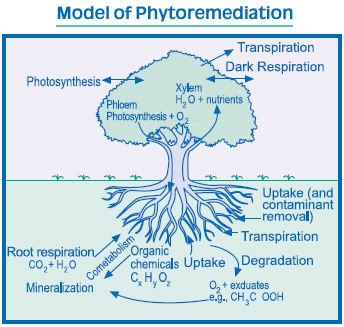
Researchers since the early '90s have seen the potential for cleaning up contaminated sites by growing plants able to take up nasty groundwater pollutants through their roots. Plants break certain kinds of pollutants into harmless byproducts that the plants either incorporate into their roots, stems and leaves or release into the air.

The problem with plants that are capable of doing this is that the process is slow and halts completely when growth stops in winter. Using plants in this way - the process known as phytoremediation (schematic, click to enlarge) - often hasn't made sense given the timetables required by regulatory agencies at remediation sites.

Together with scientists from Oregon State University and Purdue University, Doty engineered trees that were able to do the cleaning much faster. The transgenic poplars take as much as 91 percent of trichloroethylene, the most common groundwater contaminant at U.S. Superfund sites, out of a liquid solution. Unaltered plants in the same laboratory setting removed only 3 percent. The poplar plants - all cuttings just several inches tall growing in vials - also were able to break down, or metabolize, the pollutant into harmless byproducts at rates 100 times that of the control plants. The scientists publish their findings in this week's Proceedings of the National Academy of Sciences.  Read more By Biopact team

Illinois scientists found that the ear-less stalks store 25 percent or more sugars


Why Are Americans So Fearful?. Start with the media if you ask me (as per the "Bowling For Columbine" theory).

Ron Paul on the Record

question
So you don't consider climate change a major problem threatening civilization?

answer
No. [Laughs.] I think war and financial crises and big governments marching into our homes and elimination of habeas corpus -- those are immediate threats. We're about to lose our whole country and whole republic! If we can be declared an enemy combatant and put away without a trial, then that's going to affect a lot of us a lot sooner than the temperature going up.
 
 
GRISTY-
http://www.grist.org/feature/2007/10/16/paul/

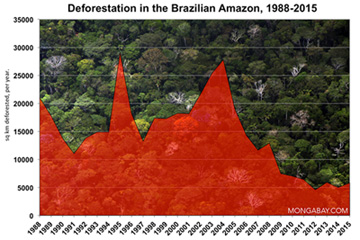
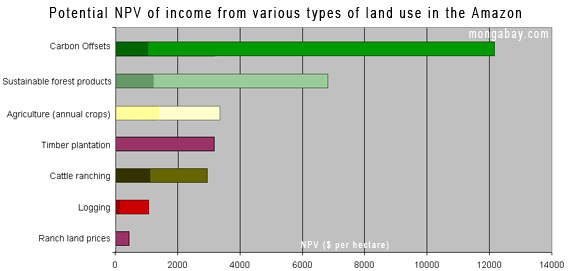
"avoiding deforestation" more valuable for carbon offsets than cattle or biofuels....


Read More From mongabay.com

WI: UW building's mold sickens workers, students

Summer Boyd says that mold problems in Ingraham Hall on the University of Wisconsin-Madison campus are so bad that she has to work at home. Numerous other workers in the 1960s-era building say they have been plagued with breathing difficulties, burning throats, itchy eyes and coughs, and that UW officials have been slow to solve the problem. UW officials and workers in the building agree that mold developed in basement rooms in February after water leaked from the deli above. Further problems surfaced in offices on the third floor of the building in August during a hot, rainy period when a foul smell developed after air conditioners leaked, said Boyd, an administrator in the American Indian and Asian American Studies programs. University officials met with the workers Wednesday and say they have been trying to solve the problems. But they concede that fixes have not worked. 
 
Source: The Capital Times, 10/11/07. VIA-www.glrpprorg