Showing posts sorted by relevance for query Yucca. Sort by date Show all posts

Mar 7, 2009

We have 100's of better ideas than - yucca

WallStreetJournal At a Senate hearing, Mr. McCain complained that the administration's decision would set back the development of nuclear power in the U.S. "What's wrong with Yucca Mountain, Mr. Chu?" Mr. McCain asked at the hearing. "I think we can do a better job," Mr. Chu replied. "We're going to have spent fuel sitting around in pools all over America," Mr. McCain said. "To say after 20 years and $9 billion dollars spent on Yucca Mountain that it's not an option is a remarkable statement . . . It's clear industry isn't interested in the construction of nuclear power plants because we have no place to store" nuclear waste.
 
Haase - Mr. McCain makes a big and valid point that this is a major security and safety risk about 'doing nothing for now'... what is the 'monthly cost' of this project? 100's of Millions? 
 
And I believe Mr. McCain and Mr. Chu could agree in a regulated plan with the utilization by reuse and recycling of the spent fuel that would not only prevent further Billions thrown in a "hole in the mountain" but would generate revenue in the near future.
 
Gentlemen, decades, billions "Let's make a deal".  Spent nuclear fuel should be re-recycled down to nothingness.
  • Reprocessing does not work.
  • The $9 billion is just the 'chump change' compared to the "Trillion a Decade" is will cost in storage.... 
  • Solving the waste problem unleashes nuclear's potential, and this waste can be recycled a second time. In a hundred years, when the heat producing and most radioactive fission products have decayed.
  • Spent nuclear fuel produces enough free, carbon-free energy to produce the annual U.S oil requirements.
    A recently published study by Australian, French, Canadian and U.S. scientists notes the unprecedented capacity of bitumen to sequester radioactive materials from bitumen found beneath shale formations that would further preclude either hydrocarbons or radionuclides from migrating to the surface.  Such a use is technically indistinguishable from geothermal energy, which is widely acknowledged to be an environmentally sound approach to generating energy that  burn pressurized water reactor fuel, the majority, as is.(no reprocessing required).
  • Another alternative to Yucca, and to reprocessing, is to burn up the spent fuel to start up a fleet of thorium powered nuclear reactors. These have the advantage of producing < 1% of the long lived waste of today's nuclear reactors. The liquid fluoride thorium reactor uses plentiful thorium, converting it to U-233 that reacts to make power. It only needs fissile material, such as the spent uranium fuel, to start up. An introduction to this is available at
    http://rethinkingnuclearpower.googlepages.com/aimhigh
(Just a few, call or email me for dozens more ;-)
 
NUCLEAR WASTE YUCCA FACTS: 
YUCCA- Will be  $96.2 billion (right now) to develop a repository large enough to handle 77,000 metric tons. Here's the problem - more than 56,000 tons are already stored at more than 77 reactor sites across the country. And this number increases by about 2,000 tons each year. So by 2036 (when Yucca would be filled to capacity), we'll be looking at about 110,000 tons - or 33,000 tons above what Yucca can store. Read more from nuclears-nemesis
 

Feb 7, 2009

Nuclear's Nemesis

By Jeff Siegel of triplepundit

A Senate committee in Kentucky just passed a bill that could potentially allow for the new construction of nuclear power plants in the Bluegrass State. Essentially, the bill would repeal a 1984 law that placed a moratorium on nuclear power plant construction until the federal government can figure out how to dispose of the waste.
 
Still, nuclear power plants have been sending massive amounts of juice to the grid for years. And as a result, we now have tons of nuclear waste - and no safe, centralized place to put it.
 
Of course, more than two decades ago, as mandated by the Nuclear Waste Policy Act, the DOE became responsible for finding a suitable site to store about 77,000 tons of spent nuclear fuel and high-level radioactive waste. That location ended up being Yucca Mountain, NV.
 
It is likely that you've heard about Yucca Mountain before. Especially after last year, when it turned out that the repository will cost $96.2 billion (in 2007 dollars). That's $38.7 billion higher than the 2001 estimates of $57.5 billion. And guess who's footing the bill for that? Turns out ratepayers will be responsible for about 80 percent - or just over $77 billion!
 
But wait...it gets better!
 
That $96.2 billion (right now) will be enough to develop a repository large enough to handle 77,000 metric tons. Here's the problem - more than 56,000 tons are already stored at more than 77 reactor sites across the country. And this number increases by about 2,000 tons each year. So by 2036 (when Yucca would be filled to capacity), we'll be looking at about 110,000 tons - or 33,000 tons above what Yucca can store. Translation - problem NOT solved!
 
Of course, some have suggested that Yucca could hold as much as 120,000 tons, if Washington allowed it. That would give us a 10,000 ton buffer - for five more years. Either way, I wouldn't count on that happening. After all, Obama was very vocal about his opposition to Yucca Mountain, and many Democrats in the House and Senate are likely to continue to chip away at the project's budget.
 
Still, something does need to be done with all that waste we have sitting in our backyards today. Will it be a centralized storage location? Could we possibly see reprocessing gain momentum as a result of the Yucca Mountain controversy? (Jeff Siegel )I have no idea. But one thing we can do, and one thing we must do, is stop continuously creating this problem to begin with.
 

Jul 12, 2011

Congressmen Pushing To Reopen Yucca Mountain

http://charlesgoyette.com/uploaded_images/toxic-waste-759820.gif"CNN is reporting that a group of congressmen backed by the nuclear industry are pushing to reopen the Yucca Mountain nuclear waste site. The site has sat closed and uncompleted since the Obama administration scrapped the project. The article goes into the pros and cons of the Yucca Mountain site for storage and also brings up some interesting political issues involved in continuing development. It's also worth noting that there's been a fee on electric bills since 1983 for the building of the site."
Read more at Slashdot

Also see more on this subject at Yucca

Dec 7, 2012

How Yucca Mountain Was Killed, U.S. nuclear waste at all time high as $15 billion tax dollars vanish. via @Slashdot

"The Yucca Mountain nuclear waste repository, which was selected by the U.S. government in the 1980s to be the nation's permanent facility for storing nuclear waste, is essentially dead. A new article in The New Atlantis explains how the project was killed: 'In the end, the Obama administration succeeded, by a combination of legal authority and bureaucratic will, in blocking Congress's plan for the Yucca Mountain repository — certainly for the foreseeable future, and perhaps permanently.... The saga of Yucca Mountain's creation and apparent demise, and of the seeming inability of the courts to prevent the Obama administration from unilaterally nullifying the decades-old statutory framework for Yucca, illustrates how energy infrastructure is uniquely subject to the control of the executive branch, and so to the influence of presidential politics.' A report from the Government Accountability Office notes that the termination 'essentially restarts a time-consuming and costly process [that] has already cost nearly $15 billion through 2009.'"

Please read full and follow at:
http://politics.slashdot.org/story/12/12/06/2152219/how-yucca-mountain-was-killed

May 18, 2009

Wall Street Journal blows top off Yucca Mountain

From WSJ - Blog
Yucca Mountain nuclear-waste battle over the approximately $30 billion that utilities and their customers have so far poured into the abortive Nevada storage site.

In 2008, Edward Sproat, then the head of the DOE's office of civilian radioactive waste management, said every year of delay in opening Yucca Mountain could expand the government's potential liability by $500 million.


In a nutshell: Since 1982, utility customers have been paying for a nuclear-waste repository that has never come to pass, and which now looks increasingly unlikely. Utilities have been storing their spent fuel in pools near their reactors-a temporary solution that is turning permanent.


They want their money back.

Now pro-nuclear politicians are getting on board. Last month, South Carolina Sen. Lindsey Graham introduced "Rebating America's Deposits Act," designed to force the administration to fix the waste issue once and for all or return the money. A similar bill was introduced in the House this week. Most of the money would go back to utility customers; 25% would compensate utilities for building temporary storage facilities.

The Department of Energy has the duty to pick up spent nuclear fuel, but utilities have been doing the job-at a cost of tens of millions of dollars each. The Nuclear Waste Fund now totals $29.6 billion dollars, but years of under-funding have left Yucca Mountain no closer to opening than when then the program began.

But one thing seems clear: The Obama administration's decision to gut Yucca Mountain doesn't kick the waste issue out of sight. It might even make fixing the waste problem more expensive.

Oct 18, 2011

Yucca Mountain: Information on Alternative Uses of the Site and Related Challenges

From the summary:

The future of the Yucca Mountain project in Nevada--originally designated for permanent storage of nuclear waste--is uncertain. Since 1983, the Department of Energy (DOE) has spent billions of dollars to evaluate the Yucca Mountain site for potential use as a nuclear waste repository. In February 2010, the President proposed eliminating funding for the project, and in March 2010, DOE filed a motion to withdraw its license application. Stakeholders--federal officials, state and local government officials, private companies, and others--have expressed interest in whether the site's characteristics are suitable for alternative uses. GAO was asked to examine alternative uses for the Yucca Mountain site.

This report examines: (1) the characteristics of the Yucca Mountain site; (2) stakeholders' proposed alternative uses, and experts' evaluations of them; and (3) challenges, if any, in pursuing alternative uses. We selected a nonprobability sample of experts that included experts affiliated with nationally recognized research organizations, universities, and national laboratories, and that did not represent or benefit from any of the stakeholders' proposed alternative uses of the site. Using a data collection instrument, we elicited comments from these experts on stakeholders' proposed uses. The alternative uses discussed in this report reflect the alternative uses these stakeholders proposed; they may not reflect all potential uses of the site. This report contains no recommendations. Interior generally agreed with our findings, while DOE, the U.S. Air Force, and NRC neither agreed nor disagreed.

+ Direct link to full report (PDF; 1.2 MB)

Jul 17, 2013

S. 1240 Nuclear Waste Administration Act of 2013 — Introduced

 Below is a simple summary of Congress' official bill text.
SEC. 101. FINDINGS.

Congress finds that—

(1) the Nuclear Waste Policy Act of 1982 (42 U.S.C. 10101 et seq.)—

(A) made the Federal Government responsible for providing for the permanent disposal of nuclear waste;

(B) vested the responsibility for siting, constructing, and operating a permanent geologic repository for the disposal of nuclear waste in the Secretary of Energy; and

(C) required the Secretary to enter into binding contracts with the generators and owners of nuclear waste pursuant to which the Secretary is obligated to have begun disposing of the nuclear waste in a repository not later than January 31, 1998;

(2) in 1987, Congress designated the Yucca Mountain site as the site for the repository and precluded consideration of other sites;

(3) in 2002, the Secretary found the Yucca Mountain site to be suitable for the development of the repository, the President recommended the site to Congress, and Congress enacted a joint resolution approving the Yucca Mountain site for the repository;

(4) in 2008, the Secretary applied to the Nuclear Regulatory Commission for a license to construct a repository at the Yucca Mountain site;

(5) in 2009, the Secretary found the Yucca Mountain site to be unworkable and abandoned efforts to construct a repository;

(6) in 2010, the Secretary, at the request of the President, established the Blue Ribbon Commission on America's Nuclear Future to conduct a comprehensive review of the nuclear waste management policies of the United States and recommend a new strategy for managing the nuclear waste of the United States; and

(7) the Blue Ribbon Commission has recommended that Congress establish a new nuclear waste management organization and adopt a new consensual approach to siting nuclear waste management facilities.

SEC. 102. PURPOSES.

The purposes of this Act are—

(1) to establish a new nuclear waste management organization;

(2) to transfer to the new organization the functions of the Secretary relating to the siting, licensing, construction, and operation of nuclear waste management facilities;

(3) to establish a new consensual process for the siting of nuclear waste management facilities;

(4) to provide for centralized storage of nuclear waste pending completion of a repository; and

(5) to ensure that—

(A) the generators and owners of nuclear waste pay the full cost of the program; and

(B) funds collected for the program are used for that purpose.


Please read full at: http://www.gpo.gov/fdsys/pkg/BILLS-113s1240is/xml/BILLS-113s1240is.xml

Mar 15, 2009

20 years and $10 billion on studies...

Nuclear industry to fight Yucca Mountain bill

The government's policy has been to place the material in an underground repository under development at Yucca Mountain, 100 miles northwest of Las Vegas. But President Barack Obama opposes the Yucca site and has indicated he plans to dramatically scale back the project. .

But some in the nuclear industry are troubled that Reid's intent is for the study panel to take Nevada off the table entirely as it evaluates nuclear waste policies. The government has focused solely on the Yucca site for more than 20 years, spending more than $10 billion on studies.

Read more From the Drum:

Nov 18, 2010

US Radioactive nuclear waste piling up.. 138 million pounds and counting

What happens to all that radioactive waste created by nuclear power plants? Not much.
In 1982, Congress mandated the construction of a national nuclear waste repository. It's been nearly 30 years since then, of course, and there's no such repository. Planned for Yucca Mountain, Nevada, it was scuttled by the Obama administration due to NIMBY issues -- and there's no rush to find an alternative to Yucca. As a result, nuke plants are still required to keep their waste on site. So, they do. In Virginia, for instance, nuclear waste continues to pile up -- at one site, the radioactive waste containers cover a plot of land the size of a football field.

Between Virginia's two nuclear power plants -- the Surry and North Anna Power Stations -- there's 5.2 million pounds of waste in storage. And, of course, more is always on the way. The Daily Press sets the scene at Surry:

The bus stops before a barbed wire gate at Surry Power Station, less than a mile from the James River ... Inside the fence, on a concrete pad the size of a football field, is nearly 1.9 million pounds of radioactive nuclear waste. Encased in concrete casks and no immediate public health threat, the waste is a by-product of nearly four decades of atomic energy-making at Virginia's oldest nuclear power plant ... Most of the fuel is stored in 16-foot tall concrete casks that stand upright and weigh more than 262,000 pounds when full.
Scenes like this are common across the country -- with no permanent place to store the waste, it simply piles up. There are plenty of reasons that this is unacceptable: potential ecological, human health, and security-related woes abound.

Many of these containment sites weren't designed for long-term storage, which has environmental advocates and scientists concerned. Edwin Lyman, a physicist and nuclear proliferation expert with the Union of Concerned Scientists in Washington, D.C, told the Daily Press, "There are a handful of scenarios, such as an earthquake or terrorist attack, that could cause the casks or pools to leak, he said. Also, spent nuclear fuel remains radioactive for thousands of years -- it could cause the concrete and other materials to erode."

There are also fears that nuclear waste is leeching into groundwater after years of storage -- tritium, the radioactive isotope of hydrogen, was discovered in groundwater near North Anna. Read more from a Hugger


Also see more on this subject at Yucca

Mar 5, 2009

Controversy Over Yucca Mountain Just Starting... again.

No... is not an answer to a problem.
 
More than two decades after Yucca Mountain in Nevada was selected to be the national nuclear waste repository,
 
And instead of offering a viable longterm alternative... the Administration asserted  "Yucca Mountain is not an option, and the budget clearly reflects that," Stephanie Mueller, a spokeswoman for the Department of Energy, said yesterday.
 
NOW - Less clear is what will happen next with the nation's growing stockpile of nuclear waste.
 
"That's a great question," said Geoffrey H. Fettus, an attorney with the Natural Resources Defense Council.
 
The budget provides no answers as to what the administration proposes to do with the approximately 57,700 tons of nuclear waste at more than 100 temporary sites around the country, or with the approximately 2,000 tons generated each year by nuclear power plants. The Yucca site was designed specifically to handle spent fuel rods from the nation's 103 nuclear generators.
 
"The new administration is starting the process of finding a new strategy for nuclear waste," Mueller said.
HAASE - Maybe they should give me a call ;-)
 
Read full from washingtonpost.com

Dec 1, 2013

The $65 billion nuclear waste fiasco...storing nuclear waste at reactors sites “politically unsustainable.”

POLITICO....Industry argues that the damages are closer to $50 billion — which raises the bottom line to $65 billion including the money spent on Yucca.


The cost of the refunds is little known to the public, but it's such a huge liability that DOE tracks the figure closely. The government is still fighting the utilities' claims in court, but utilities have been racking up a string of wins.


The costs of inaction don't just include dollars. The lack of a final resting place for the waste means that each nuclear plant has to stockpile its own. Thousands of tons of waste are stranded at sites around the country, including at plants that have shut down.


"I'm trying to think of some fancy words but at the end of the day it's just a massive consumer rip-off," said Greg White, a regulator on the Michigan Public Service Commission who also heads the nuclear waste panel for the National Association of Regulatory Utility Commissioners. NARUC, which represents state-level regulators, won a legal victory this month when the D.C. Circuit Court of Appeals ordered DOE to stop collecting the fee.


Salo Zelermyer, a former George W. Bush-era DOE attorney who works at the law firm Bracewell & Giuliani, says the waste program has "plainly broken down" and that the government had made "no discernable progress towards its commitments."


Energy Secretary Ernest Moniz also expressed frustration this month, calling the system of storing nuclear waste at reactors sites "politically unsustainable."

"For nuclear energy to be competitive here in the U.S. and ensure its safety and security abroad, we have to address the problem of disposition of used nuclear fuel and high-level waste," Moniz said during a panel discussion at an American Nuclear Society meeting. He previously served on a blue-ribbon commission that advised Obama on changes to the nation's nuclear waste policy.

But like others in the Obama administration, Moniz maintains that Yucca Mountain is not "a workable option."


Congress chose the Nevada site in 1987 as the country's sole permanent nuclear repository, but it continues to draw fierce opposition from many of the state's residents and elected officials. One of its most powerful opponents is Senate Majority Leader Harry Reid (D-Nev.), who blocked funding for the project and pushed the Obama administration to kill it — something DOE did in 2010.

Reid and Sen. Ed Markey (D-Mass.) have long argued that the studies supporting the project were discredited because Congress short-circuited the site-selection process to focus solely on Yucca. The administration says the government needs to start over with a new waste site — and this time, the selection process must be "consent based" to win public acceptance.

"When this Administration took office, the timeline for opening Yucca Mountain had already been pushed back by two decades, stalled by public protest and legal opposition, with no end in sight," DOE spokeswoman Niketa Kumar said in an email.


Please continue reading by Darius Dixon at:

Sep 18, 2009

Status of our $30 Billion Nuclear Waste Fund

Yucca Mountain
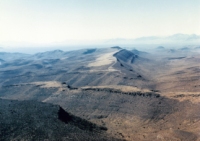
The world's most controversial mountain

wnnhome.gif... within 30 days of passage the President would have to either confirm that Yucca Mountain remains the "preferred choice" for high-level radioactive material disposal or begin to rebate "all funds currently in the Nuclear Waste Trust Fund" built up to pay for Yucca.

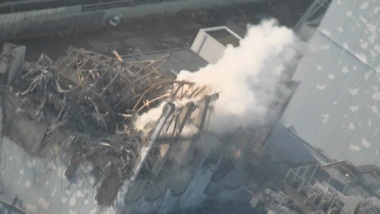
Nevada's Yucca Mountain was set to be the USA's ultimate disposal site for highly radioactive substances such as used nuclear fuel and military wastes. Companies producing nuclear power paid 0.1 cents per kWh of power generated in the the fund from 1982, with the total reaching a whopping $30 billion. However, the project faced stiff opposition and Obama's February budget ordered the Department of Energy (DoE)to "scale back" work to almost nothing "while the administration devises a new strategy toward nuclear waste disposal."

No such new strategy has been forthcoming, leading to anger among some politicians and commentators over the apparent waste of the $13.5 billion already been spent on the project. "No-one should be required to pay for an empty hole in the Nevada desert," said Graham, adding that Obama's "ill-advised" decision was political and not scientific. He concluded: "It is incumbent on the administration to come up with a disposal plan for this real problem facing our nation."  Read full from WNN


Where is it at now?

Aug 13, 2013

Appeals court: Nuclear Regulatory Commission has been violating federal law by delaying a decision on a proposed nuclear waste dump in Nevada - Yahoo! News

WASHINGTON (AP) — In a rebuke to the Obama administration, a federal appeals court ruled Tuesday that the Nuclear Regulatory Commission has been violating federal law by delaying a decision on a proposed nuclear waste dump in Nevada.

By a 2-1 vote, the U.S. Court of Appeals for the District of Columbia ordered the commission to complete the licensing process and approve or reject the Energy Department's application for a never-completed waste storage site at Nevada's Yucca Mountain.

In a sharply worded opinion, the court said the nuclear agency was "simply flouting the law" when it allowed the Obama administration to continue plans to close the proposed waste site 90 miles northwest of Las Vegas. The action goes against a federal law designating Yucca Mountain as the nation's nuclear waste repository.

"The president may not decline to follow a statutory mandate or prohibition simply because of policy objections," Judge Brett M. Kavanaugh wrote in a majority opinion, which was joined Judge A. Raymond Randolph. Chief Judge Merrick B. Garland dissented.

The appeals court said the case has important implications for the separation of powers between the executive and legislative branches of government.

"It is no overstatement to say that our constitutional system of separation of powers would be significantly altered if we were to allow executive and independent agencies to disregard federal law in the manner asserted in this case by the Nuclear Regulatory Commission," Kavanaugh wrote. "The commission is simply defying a law enacted by Congress ... without any legal basis."

A spokesman for the NRC said Tuesday the agency was reviewing the decision. He declined further comment.

Energy Secretary Ernest Moniz said the Energy Department was not a party to the lawsuit, but he characterized the Yucca Mountain project as "a complete stalemate." He said he saw no evidence of that changing.

"Currently we do not have funding," he told reporters at a clean energy conference Tuesday in Las Vegas.

The court's decision was hailed by supporters of the Yucca site, which has been the focus of a dispute that stretches back more than three decades. The government has spent an estimated $15 billion on the site but has never completed it. No waste is stored there.

"This decision reaffirms a fundamental truth: The president is not above the law," said South Carolina Attorney General Alan Wilson. The Obama administration "cannot pick and choose which laws to follow and which to ignore," Wilson said.

Please read full and follow at:

Aug 1, 2011

Volunteer Towns Sought to put Nuclear Waste in their backyards

Will financially crippled states be forced to take our nations waste to pay the bills?

"Brian Wingfield writes in Bloomberg that the Blue Ribbon Commission on America's Nuclear Future has sent a draft report to Energy Secretary Steven Chu recommending that US communities should be encouraged to vie for becoming a federal nuclear-waste site as a way to end a decades-long dilemma over disposing of spent radioactive fuel and says this 'consent-based' approach will help cut costs and end delays caused when the federal government picks a site over the objections of local residents, 'This means encouraging communities to volunteer (PDF) to be considered to host a new nuclear-waste management facility,' says the commission. Chu named the panelists after Obama canceled plans to build a permanent repository at Nevada's Yucca Mountain after the Yucca site was opposed by politicians from the state. 'The United States has traveled nearly 25 years down the current path only to come to a point where continuing to rely on the same approach seems destined to bring further controversy, litigation, and protracted delay,' says the report. The Blue Ribbon Commission cited as a 'success' the US Waste Isolation Pilot Plant near Carlsbad, New Mexico, which has accepted and disposed of some defense-related nuclear waste for more than a decade demonstrating that that 'nuclear wastes can be transported safely over long distances and placed securely in a deep, mined repository.' With the right incentives, 'there will be a great deal of support' for a waste site near the New Mexico facility, says former Senator Pete Domenici." - SlashDot

http://charlesgoyette.com/uploaded_images/toxic-waste-759820.gif

Also see more on this subject

Jun 25, 2011

Ouch, as if Nuclear Energy could take another punch...

It is a hard year for the Nuclear Energy Industry.
Here is this weeks run down:
  • http://charlesgoyette.com/uploaded_images/toxic-waste-759820.gifYucca Nuclear waste dump is mired in inertia $15 billion Hole to Nowhere. The license for the Yucca Mountain, which has been in development for nearly 30 years and cost more than $15 billion so far, has been in limbo since last June, when a licensing board independent of Jaczko and the rest of the commission rejected the Obama administration's request to withdraw the project application. Jaczko has yet to schedule a final vote from the five-member commission on the matter. (...) Jaczko knew his decision to shut down the technical review of Yucca Mountain, which would be used by the board to evaluate the license, "would be controversial and viewed as a policy decision for full commission consideration," the report says. "Therefore ... he strategically provided three of the four commissioners with varying amounts of information about his intention."
  • Radioactive Tritium Has Leaked from Three-Quarters of U.S. Commercial Nuclear Power Sites,often into groundwater from corroded, buried piping, an Associated Press investigation shows. The number and severity of the leaks has been escalating, even as federal regulators extend the licenses of more and more reactors across the nation. Tritium, which is a radioactive form of hydrogen, has leaked from at least 48 of 65 sites, according to U.S. Nuclear Regulatory Commission records reviewed as part of the AP’s yearlong examination of safety issues at aging nuclear power plants. Leaks from at least 37 of those facilities contained concentrations exceeding the federal drinking water standard — sometimes at hundreds of times the limit. While most leaks have been found within plant boundaries, some have migrated offsite. http://www.charmaineyoest.com/archives/homer_simpson_nnuclear_power_plant.jpg


“Fukushima has now been classified as the biggest industrial catastrophe in the history of mankind,”
with  amount of radioactive fuel at Fukushima dwarfs Chernyobyl.

Arnie Gundersen has said that Fukushima is the worst industrial accident in history, and has 20 times more radiation than Chernobyl.

Well-known physicist Michio Kaku just confirmed all of the above in a CNN interview:
In the last two weeks, everything we knew about that accident has been turned upside down. We were told three partial melt downs, don’t worry about it. Now we know it was 100 percent core melt in all three reactors. Radiation minimal that was released. Now we know it was comparable to radiation at Chernobyl.

Radioactive materials spewed out from the crippled Fukushima No. 1 Nuclear Power Plant reached North America soon after the meltdownhttp://www.eurasiareview.com/wp-content/uploads/2011/03/Fukushima_Daiichi_3_March_17_2011.jpg

The computer simulation by researchers at Kyushu University and the University of Tokyo, among other institutions, calculated dispersal of radioactive dust from the Fukushima plant beginning at 9 p.m. on March 14, when radiation levels around the plant spiked.

The team found that radioactive dust was likely caught by the jet stream and carried across the Pacific Ocean, its concentration dropping as it spread. According to the computer model, radioactive materials at a concentration just one-one hundred millionth of that found around the Fukushima plant hit the west coast of North America three days later, and reached the skies over much of Europe about a week later.

The scientific journal Nature notes:

Shortly after a massive tsunami struck the Fukushima Daiichi nuclear power plant on 11 March, an unmanned monitoring station on the outskirts of Takasaki, Japan, logged a rise in radiation levels. Within 72 hours, scientists had analysed samples taken from the air and transmitted their analysis to Vienna, Austria — the headquarters of the Preparatory Commission for the Comprehensive Nuclear-Test-Ban Treaty Organization (CTBTO), an international body set up to monitor nuclear weapons tests.

It was just the start of a flood of data collected about the accident by the CTBTO's global network of 63 radiation monitoring stations. In the following weeks, the data were shared with governments around the world, but not with academics or the public.

Jun 14, 2009

U.S. Nuclear Waste Law and Policy: Fixing a Bankrupt System

The current U.S. system of nuclear waste law and policy is bankrupt.
 
Twenty years after the designation by Congress of Yucca Mountain as the only potential site for a deep geologic repository to receive spent nuclear fuel and high level waste from reprocessing, the proposed Yucca repository remains mired in controversy and unremitting opposition by Nevada. There is no prospect for an alternative repository or for the development of a federal consolidated storage facility. The volume of these wastes already exceeds the current maximum storage capacity set by Congress for Yucca and continues to grow. This article first provides a brief overview of nuclear wastes and a summary history of federal nuclear waste law and policy to date. It then diagnoses the major failures in the current design and proposes a suite of new measures to launch a comprehensive new approach, including a reconsideration of the ethical principles underlying the drive for immediate waste burial; the creation of a high-level National Waste Management Commission; the creation of two new federal entities to manage nuclear wastes and to site waste storage facilities and repositories; the elimination of Environmental Protection Agency regulatory authority over these activities; the adoption of a thoroughgoing risk-based approach to waste regulation and management; and the adoption of new, more flexible and adaptable strategies for sitting storage and disposal facilities. (Full report link here)


the need for waste storage solutions grows every day... In the United States, an estimated 55,000 tons of civilian spent fuel await entombment, and 103 operating reactors are producing another 2,000 tons of spent fuel each year.

Sep 16, 2010

Nuclear waste piles up with no disposal plan

Tens of thousands of tons of potentially lethal radioactive waste have been piling up across the nation for more than a generation, but the federal government has yet to decide how to get rid of it permanently. "It's going to continue to pile up," he said. "Ultimately, there has to be someplace (where) all that waste has to go. In my opinion, a permanent repository is the way to go."

The White House says even if the expert panel recommends a permanent "geologic" resting place for the waste, such a repository won't be built at Yucca Mountain, located about 100 miles northwest of Las Vegas in the home state of Democratic Senate Majority Leader Harry Reid.

A 1982 law set a 1998 deadline for building a permanent disposal site, but it didn't happen.

It wasn't until 2002 that Congress, acting on President George W. Bush's recommendation, fixed up Yucca Mountain as the permanent site.
Since then, taxpayers have spent more than $10 billion for exploratory work at the site, including building a deep tunnel.

Soon after becoming president, Obama announced he would cancel the Yucca Mountain project — a decision that South Carolina, Washington and some other local governments are fighting in federal court. Those state and local governments have teamed up with the nuclear industry to argue before the NRC that the administration can't terminate work on the project, only Congress can.

The nuclear energy industry is pushing for an interim storage facility where spent fuel rods could be stored while a geologic repository is built.

The government also should allow the industry to recycle the used fuel rods to extract all possible use from them, said McCullum at the Nuclear Energy Institute.
Though legal in France, such "reprocessing" has been banned in the U.S. since 1977. President Jimmy Carter outlawed the practice that year, citing the potential for countries to use the plutonium byproduct to make atomic weapons.  Read more at GreenChange

Mar 17, 2011

Nuclear math Wikipedia

These numbers, from Wikipedia, may help:
  • There are 442 nuclear plant units around the world.
  • There are 139 in the U.S.
  • There have been 99 nuclear plant accidents
  • 56 of these have occurred in the U.S.
  • There have been 57 since Chernobyl (1986) 
So, roughly speaking, based on these numbers, there is about a 20% chance of an accident (not necessarily a serious one) at a nuclear plant.
  • There is a 40% in five chance of an accident (not necessairly serious) at an American nuclear plant.
  • These numbers are extremely rough. For example, they don't take into account when the plants were built or distinguish between severity of accidents.
  • But it does suggest that nuclear power lacks the level of safety many politicians and advocates have claimed on its behalf.
Further, current discussions seem to overlook this information about nuclear waste, as noted by Wikipedia:
...Nevada ranks fourth in the nation for current seismic activity. Analysis of the available data in 1996 indicates that, since 1976, there have been 621 seismic events of magnitude greater than 2.5 within a 50-mile radius of Yucca Mountain...

    In June 2008, a major nuclear equipment supplier, Holtec International, criticized the Department of Energy's safety plan for handling containers of radioactive waste before they are buried at the proposed Yucca Mountain dump. The concern is that, in an earthquake, the unanchored casks of nuclear waste material awaiting burial at Yucca Mountain could be sent into a "chaotic melee of bouncing and rolling juggernauts"... TPR

Jun 3, 2010

Billions spent on 'Temporary' home that only lasts decades for nuclear waste

GreenChange  Wiscasset doesn't even have a nuclear-energy plant anymore. The Maine Yankee facility was shuttered back in 1996 after developing problems too costly to fix, and the reactor was dismantled early this decade. What's left is a bare field of 167 acres cleared and ready for development—except for one thing.

Left behind are 64 enormous steel-and-concrete casks that hold 542 metric tons of radioactive waste. Seventeen feet tall and 150 tons apiece, the casks are protected by razor wire, cameras and a security force.

Casks like these are the power industry's biggest hot potatoes. Their presence at a defunct reactor site like Wiscasset's underscores the intractability of the nuclear-waste problem confronting the power sector and the failure of U.S. policymakers to find a permanent solution. Meant for temporary storage next to energy plants, these containers are now serving as de facto indefinite repositories around America.

The Energy Department has been legally obligated to relieve nuclear plants of radioactive spent fuel since February 1998, but hasn't lived up to that requirement, because, quite simply, the government hasn't found a permanent place to put it.

Any hope of an end to this impasse evaporated in March when the Energy Department notified the federal Atomic Safety and Licensing Board that it wanted to drop plans for a federal repository at Yucca Mountain, Nev.

That meant that after three decades and more than $10 billion in expenditures, the Energy Department was giving up on its only candidate for permanent storage.

The department said it was time for a complete reassessment of the waste problem, and Energy Secretary Steven Chu pointed out that Yucca Mountain wasn't big enough to meet current and future needs.

Stephanie Mueller, Department of Energy spokeswoman, said in April that nuclear energy has "an important role to play…to cut carbon pollution and create new clean-energy jobs." She says the president and the energy secretary are looking to a new blue ribbon commission to recommend "a safe, long-term solution" to the waste problem within 18 months.

Instead of moving waste to a geologic vault, such as a mountain enclosure like Yucca capable of locking it away for thousands of years, the foreseeable future now belongs to temporary holding vessels such as the steel-and-concrete casks at Maine Yankee. Each is licensed to contain waste for 20 years.

Power companies are likely to rely on casks even more in coming years. About 80% of reactor sites in the U.S. intend to move used fuel to casks because their storage pools are filling up.

...Utilities have filed more than 70 lawsuits against the government accusing it of breach of contract because it hasn't taken the waste.

So far, $1.3 billion has been paid out. The Department of Justice estimates the liability will top $12 billion if a waste facility is not opened by 2020.

The current state of affairs "does not bolster the credibility of our government to handle this matter competently," says Dale Klein, a former Republican chairman of the federal Nuclear Regulatory Commission.

Meanwhile, utilities continue to contribute $770 million a year to a Nuclear Waste Fund to pay for a permanent repository that now isn't even on the drawing board.


Read full at Wall Street Journal

Aug 3, 2012

Yucca Mountain: The Safe Future for Nuclear Energy Nuclear

Despite controversy surrounding the disposal of spent nuclear fuel, nuclear power will continue to occupy an essential role in the United States’ electricity production for the foreseeable future. The 19 percent of the electricity generated in the United States by nuclear power plants is comparable to the electricity used in California, Texas, and New York combined. Besides that, nuclear power accounts for 8.5 percent of our total domestic energy consumption. [1] Nuclear plants—of which there are 104 total in the United States—produce far less waste than traditional power plants:   http://www.instituteforenergyresearch.org/2012/06/19/yucca-mountain-the-safe-future-for-nuclear-energy/

NOTE: The comments are better than the article in this link