Jul 5, 2008

GETTING ALL OUR LEMMINGS IN A ROW


The G8 nations -- the world's eight richest countries -- will meet in Hokkaido, Japan next week to put the finishing touches on their plan to pass their carbon dioxide (CO2) problem along to all the world's children.
 
The G8 plan -- now fully spelled out in official documents -- is to bury carbon dioxide in the ground, hoping it will stay there forever, but in any case making it our children's problem, not ours.
 
The G8 is an exclusive club that includes Canada, England, France, Germany, Italy, Japan, Russia, and the U.S. Since 2005, the G8 has been systematically putting together the pieces of its CO2-burial plan, which will be endorsed again at next week's meeting in Japan.
 
Burying carbon dioxide in the ground is called "carbon capture and storage", or CCS for short. CCS is being promoted as a "silver bullet" to the global warming problem, as a kind of speculative bubble of expectations has developed around it. CCS has been used for 35 years on a very small scale in oil fields, to loosen up sticky oil and help force it to the surface (the CO2 comes back out with the oil). But on a large scale CCS is untested and untried. Despite this fact, CCS is the basis for claiming that "clean coal" is a viable energy option for the world's future.
 
The U.S. had been building a coal-fired power plant to demonstrate large-scale CCS (and thus "clean coal") at Mattoon, Illinois -- a project called Futuregen -- but runaway costs forced the federal government to abandon the project in January.
 
"We strongly support the recommendation that 20 large-scale CCS demonstration projects need to be launched globally by 2010..., 80 chief executive officers (CEOs) of transnational corporations issued their own endorsement of CCS as the "solution" to global warming. Their report, "CEO Climate Policy Recommendations to G8 Leaders, July, 2008" acknowledged that CCS is essential, but also that free markets would not provide CCS, so taxpayers would have to do it:
 
"For non-mature technologies, however, markets will not be sufficient and enhanced RDD&D [research development, demonstration and deployment] policies will have to be encouraged. Photovoltaics, fourth generation nuclear and the area of carbon capture and storage (CCS) technologies for coal are good examples. Acceleration of the demonstration and deployment of a range of CCS technologies is particularly important because if all new coal fired electricity generation plants are not operating with CCS by 2015 to 2020 onward, it will be difficult to realize the target of 50% reduction in global emissions by 2050." (pg. 16, emphasis added)
 
Still, no one has ever addressed the most fundamental question about CCS: what would constitute a demonstration of "success?"
 
The plain fact is, if the goal is to bury CO2 forever, success will be impossible to demonstrate. On whatever day such a demonstration is declared a "success," leakage could begin the following day. So any such demonstrations will be meaningless. Everyone involved knows this is true.
 
To make a dent in the global warming problem would require burying trillions of tons of CO2 a mile our more below ground thus creating a reservoir of hazardous gas that could leak back into the atmosphere at any time and begin to cook the planet and acidify the oceans. Even if only 0.01% of it leaked out each year -- a suggested industry standard -- two-thirds would escape in 10,000 years. Even CCS advocates acknowledge that this would be a catastrophe. How could a leak of only 0.01% per year be measured? How could humans remain alert to this enormous underground threat for centuries to come? Even if 0.01% leakage were detected, could anything be done about it? Who would be responsible for taking action? Who would pay?
 
This raises the possibility that the G8's goal isn't actual scientific verification of the technology -- but 20 "demonstrations" intended merely to lull the public into thinking that it's OK to build more coal plants because somehow someday CO2 will be safely captured and stored forever. By the time this bit of fakery is widely understood, the present generation of CEOs and politicians will be long dead and all the world's children will be left holding the bag.
 
By definition, the G8's CCS plan is intended to force future generations to deal with the consequences of our present-day cupidity
-- a position that is morally indefensible.

Jul 2, 2008

Will U.S. Carbon tax $0.09 or $0.40 a gallon?

New Math: 2.3¢ carbon tax now means 10 ¢ a litre at Gas Stations.
 
Following British Columbians accepting that  $100.00  carbon tax cheque from our Provincial government, today we will have cheque cashers remorse now that BC's New Math equates to not a 2.3 cent a litre Carbon Tax, but it seems area gas stations whose new math are now charging us 10 cents a litre more for gas which was supposed to only be a 2.3 cent increase.  That is a full 40 cents a gallon more for gas. So the cheapest grade of gas is now a little over $6.00 a gallon, with premium approaching $7.00 a gallon.  Aren't you glad your new Eco Friendly fuel efficient vehicle states use Premium Gas Only?

BC’s carbon tax is meant to encourage people to switch to a more energy-efficient and environmentally sensitive way of life; it is set to increase to 7.24 cents per litre [US$0.27/gallon US] by 2012.

Read more from by Barry Artiste at nowpublic

Could George Bush be right on Climate Approach?

Keith Johnson  WSJ- So far, the U.S. has been vilified for dragging its feet and insisting that the world's biggest emitters of greenhouse gases, like China, take part in any scheme. The pressure is on for the G-8 to commit to big (and expensive) cuts in greenhouse-gas emissions by 2050, even as political leaders everywhere are battling high energy prices that are already choking economic growth.
 
Would ambitious cuts be a good idea?  It seems the world can cut greenhouse-gas emissions in coming decades, and at a more or less reasonable cost. McKinsey global consultants just concluded as much and all it will require is a repeat of the productivity gains made during the Industrial Revolution in one-third the time. But McKinsey crunched its numbers with one big premise: It only included technologies which are available today or will be soon, like efficient lighting, wind power, and clean coal. There are no provisions for game-changing technologies over the next half-century. What there is, fundamentally, is an implicit call for politicians to impose mandates that force the economy to tackle the least-expensive cuts first particularly efficiency gains, which the market often fails to invest in because the payoff is too far down the road.
 
The counsel is to be thoughtful and patient when dealing with a problem that will last for centuries. Which is the same point Yale's William Nordhaus makes in his latest take on the economics of fighting climate change. He says that people like Al Gore and Britain's Lord Nicholas Stern who want drastic cuts right away would be throwing money away and doing no extra good for the environment.
 
Slow and steady with an eye to eventual technology breakthroughs, he says, cuts emissions all the same and saves money:
For example, the Gore and Stern proposals have net costs of $17 trillion to $22 trillion relative to no controls; they are more costly than doing nothing today. This conclusion does not mean that doing nothing forever is preferable to these proposals. Rather, it implies that it is not economically advantageous to undertake sharp emissions reductions (such as reducing emissions 80 or 90 percent) within the next two or three decades.
 
President Bush's latest climate-change plan is to throttle back growth in U.S. emissions by 2025, and then roll up the economy's sleeves when it will be presumably be easier and cheaper to make the transition to cleaner energy.
 
So here's the question: Is the U.S. stance on climate change simple foot-dragging, or smart economics?


Lubar & Co. Investing in a "Green" Wisconsin?

However, no follow up email, call or correspondence? Strange.
Regardless of their interest in me, Lubar & Co. and every nearly every investment firm have been gifted with the opportunity to save our global energy, economic and environmental problems in one decade. I have not observed this much "free cash" or high profile investor interest in energy options in my lifetime.

I wish Lubar & Co. all the success in the world in the finding the best energy and environmental investments. Concise and conservative investments in our environment and resources can be the salvation of current energy, economic and environmental problems.
And if they have any problems figuring it out, apparently they know who to call ;-)

Wisconsin Turtle Troubles...

Turtle  regulations aim to minimize the decline of turtle populations

MADISON – Wisconsin implemented updated turtle regulations in 1998 in response to declining turtle populations, and a decade later, state biologists says these laws are even more important for the state’s turtle populations today.

Wood Turtle
Wisconsin has
11 different species of turtles, two of which – the wood turtle and Blanding’s turtles -- are threatened species and one – the ornate box turtle -- that is endangered.

Turtle harvest regulations can be found in the current Wisconsin Spearing and Netting Regulations. A write-up on all amphibian and reptile regulations including turtles (pdf) is available on the DNR Web site.

The turtle harvest season opens July 15 in Wisconsin, and state officials are emphasizing that populations of turtles in Wisconsin are continuing to decline, so people need to follow harvest rules strictly. The regulations are designed to allow for limited harvest during the open season.

“Turtle populations recover very slowly when adult mortality rates exceed 1 to 2 percent,” says Bob Hay, a herpetologist, or cold-blooded species specialist, with the Wisconsin Department of Natural Resources. “Turtles are long-lived creatures under good conditions, but in today’s world, individuals turtles do not have the same opportunities to reach maturity and live a long life. The turtle regulations are designed to help minimize the loss of breeding adults and to provide the opportunity for more of the younger turtles to reach breeding age.”

The regulations were put in effect because of concerns with overharvest, but Hay notes there are other factors influencing turtle populations that are collectively causing significant concern for turtles.

“It takes 17 to 20 years or more for Blanding’s turtles to reach maturity, so a lot can change to render their upland habitat unsuitable or there can be more obstacles constructed that make getting safely to their nesting sites more difficult,” he says.

5 Passenger 62mpg Ford Fiesta - Not yours!

Ford Fiesta Econetic, 62mpg....
Ford is expected to debut an Fiesta ECOnetic, 1.6L TDCi turbodiesel cranking out 89hp. Helping the Fiesta minimize its fuel consumption will be a modified low-drag nose, side skirts, rear spoiler and wheels. Most of the grille will be closed off to push air around the car rather than through the engine compartment. The final drive ratio has been changed to lower the engine revs when cruising as well. The 2009 Fiestas, like their Mazda2 siblings, are lighter than the models that they replace. All of this adds up to 62.5mpg. That CO2 number is low enough to exempt the Fiesta ECOnetic from British road taxes and London Congestion Charges.
HAASE Comment - Is congress "really" working on reducing U.S. oil consumption... then send them a link to the "dozens of U.S. made five passenger cars that get over 45 mpg" that are NOT hybrids and cost much less than average.

Link:
Just to be clear: The U.S. makes these cars right now... and can save our economy and U.S. automakers and their supply chains 10,000's of American jobs by simply allowing these cars for sale.
I believe the only "conspiracy theory" is ignorance of the obvious that may not be as glamorous or profitable...

EPA informal e-mail not considered legal submission???? Dahh.

In a the news we see that the "White House officials refused to open e-mail from the Environmental Protection Agency, congressional staff said Monday."
 
What we do not hear is that they want "control without giving public notice and seeking public comment".
 
And that the EPA e-mail was not open because that is NOT the procedure for submitting regulations.
 
The e-mailed documents were sent to the White House Office of Management and Budget in December, staff on the House Committee on Energy Independence and Global Warming said.
 
This was part of the environment agency's response to a landmark 2007 Supreme Court ruling that for the first time found that greenhouse gases can be regulated as a pollutant under the US Clean Air Act.
 
An administration official said EPA cannot conclude that greenhouse gases are pollutants that must be controlled without giving public notice and seeking public comment. Beyond that, the official said, EPA's "informal e-mail" did not follow long-standing procedures for submitting regulations.
 
Three months after the EPA's e-mailed documents were rebuffed by the White House, the agency's chief, Stephen Johnson, offered an Advanced Notice of Proposed Rulemaking on the subject of greenhouse pollution. This is an early and tentative step in the policy process that will likely push any action into the next US presidential administration.


Hard math on milk growth hormones

Growth hormones boost milk production and significantly reduce impact on the environment, US researchers said on Monday.

They said supplementing 1 million cows with the growth hormone recombinant bovine somatotropin or rbST would have the same effect as removing about 400,000 cars from the road or planting 300 million trees.
 
"That's a pretty substantial impact," said Dale Bauman of Cornell University, whose research appears in the journal Proceedings of the National Academy of Sciences.
 
Michael Hansen, a senior scientist with Consumers Union, said the study is based on a "false notion" that you can produce the same quantity of milk with less feed.
 
While it has been approved for sale by the US Food and Drug Administration since 1993, the hormone has been banned in Japan, Australia, Canada and parts of Europe. Opponents say it can have harmful effects on both the cows and humans who drink their milk.
 
Many US grocery chains in the United States have switched to milk suppliers that do not use the synthetic hormone, and Wal-Mart Stores Inc said in March its private label brand of milk would be sourced from suppliers that do not use growth hormones.
 
Cornell University paid for the study, done with the help of Roger Cady of Monsanto Co, maker of the bovine growth hormone Posilac.
 
The study focused on environmental, not safety, issues.
 
Haase Comment: Knowing this, I would require the dairy industry to "offset environmental impact" of the industry by planting the 300 million tree and still be hormone free. These paid studies are all a "numbers" game skewed for the benefit of the hormone investors... if the results were "negative", we would not see the report.
 
Research on NON FLATULENT producing animal feed would reduce "emissions" from 30-60%, or a "ten fold" benefit over this study... maybe they should invest in that. 

Jul 1, 2008

Fewer Willing To Pay Premium For Green

fewer-willing-to-6716.jpg


According to a green survey from Rackspace Hosting (PDF), 44 percent of respondents are willing to pay more for green products and services this year; down significantly from the 59 percent of respondents that were willing to pay more last year.Also this year, only 28 percent are willing to trade server performance for lower carbon emissions. One significant increase in responses this year showed that 69 percent of respondents are still concerned and either looking for ways to reduce the impact their company has on the environment or actively addressing the issue; this up seven percent from last year.

“It’s interesting to see that customers still think green is very important, but today they may be less willing to pay more or trade performance for lower carbon emissions. Rackspace understands these concerns, and the economic pressure points, and is working diligently to leverage the available technology in ways that don’t impose additional costs on the customer,” said John Engates, CTO, Rackspace Hosting. “Since launching Greenspace last year, we have rolled out a number of energy efficient and environmentally sound products and initiatives and continue to look for new ways to be environmentally conscious.”

Read full from Environmental Leader

Jun 30, 2008

More greenwashers needed to stop "Green Noise"???

Amazing - GreenWashing market faulting that the "green noise" they have created... is the cause of consumers to be confused and need "green influencers to drive their marketing message"
New Study Finds Consumers Overwhelmed by Green Marketing, GreenWashing,
OAKLAND, Calif. -- Marketers aiming to shift their audiences toward making greener purchasing decisions are coming up short for the vast majority of the population... a nationwide study found that "nearly half of all respondents were essentially unable to name one feature of a green home, and small portions of the remaining sample cited examples like solar power, CFL light bulbs, home recycling or Energy Star products."
"Consumers seem to think green homes are an all-or-nothing proposition -- and because of the real and perceived costs, many are throwing their hands up and saying 'I just can’t do all of this'," said Shelton Group CEO Suzanne Shelton.
One example Shelton offered was that 71 percent of responses to that aided question said solar power -- "one of the most expensive home upgrades for energy efficiency that can be made," Shelton said -- was a requirement of green living. ... most individuals are unclear as to how they can go green in realistic and achievable ways, "Newly eco-conscious consumers face a daunting and confusing set of choices, as well as complex issues that must be factored into any assessment of a product's sustainability," said David Zucker, the director of CauseWorks, Porter Novelli's sustainability division. "If marketers do not reach Greenfluencers , Greenwashers who have the interest and ability to influence the rest of us, their marketing messages may be lost in a sea of green noise."

110 mpg safe family car in 1984

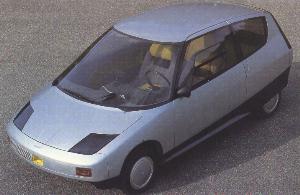
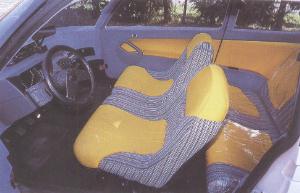
The Citroën ECO 2000 was much more than just an exercise in styling. Developed during the period 1981 to 1984, it was used to research economical, low weight, low drag cars intended for the next millenium. Many of the lessons learned were applied to the forthcoming AX ECO 2000 was part of a 50% French State funded programme to build a car capable of achieving 2 litres per 100 km fuel consumption.

SL 10 weighed 450kg and was powered by a three cylinder 750 cc engine developed from Fiat's Fire 1000 developing 35 bhp at 4 750 rpm. The first prototype (SA 103) empoyed a rear mounted twin cylinder engine but subsequent versions had the engine mounted at the front and front wheel drive. Read full here

Low Tech Magazine Nails problems with CO2 trading and storage...

All high-tech carbon storage strategies described in this article are no solutions, they are just attempts to limit the problem. Let’s hope that the next appeal of the International Energy Association and of the Science Academies of the world (an awful lot of brains there) will contain a trace of innovative thinking.  (Article Link)
 
Short answer to:

Why introduce yet another expensive, energy-intensive and risky technology if there are so many other and better ways to solve the energy crisis? If we chose to build a completely new infrastructure of pipelines comparable to that of the existing oil and gas industry, why not build something like an extensive underground tubular freight network instead? This would be a real solution, which would considerably lower transport energy use and CO2-emissions.

Why not channel the huge amount of money needed for the development of CCS to countries with tropical rainforests, so that they have a very good reason to protect them fiercely? Stopping deforestation, especially in tropical forests, would contribute more to the fight against global warming than carbon capture technology could ever do. Tropical forests store enormous amounts of carbon and they are not prone to natural forest fires.

"Halting deforestation in tropical forests would contribute more to the fight against global warming than capture technology could ever do."

 
Long answer to the problem the Carbon Capture and Trading Scams below:
Capturing CO2 from the smokestacks of power stations with the intention of storing it in underground reservoirs, oceans, rocks, consumer products, chemicals or fuels has gained a lot of credibility recently.  Yet capturing, transporting and storing carbon dioxide raises energy consumption considerably and brings with it serious health and environmental problems. The benefits, on the other hand, are shadowed in doubt.

--------------------------------------------------------------------------------------------------------

"A 50 percent increase in energy consumption is the last thing that the world needs."

--------------------------------------------------------------------------------------------------------

Attractive idea 

The idea of carbon capture and storage (CCS) – first introduced in the 1970s - is attractive at first sight. Capturing CO2 from smokestacks has been a common practice for many years, for the purification of natural gas or at ammonia production facilities for instance. Injection and storage of carbon dioxide is happening already in the North Sea, in Algeria and in Texas. In these cases, CO2 is injected into oil and gas reservoirs in order to extract more fossil fuels than would otherwise be possible, a process called Enhanced Oil Recovery (EOR). For some of these applications, carbon dioxide is transported by pipeline or by ship.

A complete CCS infrastructure has not been demonstrated yet (all CO2 used for enhanced oil recovery is commercially produced or originates from other sources than power plants, and present capture techniques do not capture CO2 for storage but emit the gas in the atmosphere). Yet, since all the individual parts exist, this does not seem to be an obstacle either.


Energy penalty 

The problem at hand is that the process of capturing, transporting and storing carbon dioxide requires a vast amount of energy. If this energy were to be derived directly from fossil fuels the benefits of the CO2-savings by capture and storage will be offset by the very same energy intensive process. If the energy were to come from renewable sources the technology is rendered unnecessary as it would be much more efficient to generate electricity directly from the renewable source.

--------------------------------------------------------------------------------------------------------

"If fuel use of electricity generation rises by 50 percent, the same goes for air pollution from coal plants and for the ecological consequences of coal mining. Storing the CO2 does not solve that."

--------------------------------------------------------------------------------------------------------

Capturing CO2 from smokestacks is the most energy-intensive part of the process. According to the International Panel of Climate Change (IPCC), which devoted a comprehensive study on the technology 3 years ago, capturing technology (including compression for further transport and storage) raises the energy consumption of a coal plant by an average of 32 percent.

A coal plant equipped with CO2-capture technology would thus need 32 percent more coal and other resources like water, chemicals and reagents to produce the same amount of electricity than the same power plant without this technology. Carbon capture technology forms a symbiosis with coal as a fuel (“clean coal”), since burning coal emits twice as much greenhouse gasses than burning gas. Capturing CO2 from a gas power plant requires less energy but is of not much use.


Pipeline infrastructure

This 32 percent does not include the energy needed to mine, process and transport the many thousands of tonnes of extra coal, and it does not include the energy needed for the construction of the capture, transportation, storing and monitoring infrastructure either.

It is insufficient to simply place the smokestacks of a coal plant upside down as suitable underground reservoirs do not necessarily lie beneath the world's power stations. A carbon capture and storage infrastructure requires a transport infrastructure consisting of pipelines (and tankers) that rivals the existing oil and gas network.

--------------------------------------------------------------------------------------------------------

Manufacturing and installing these thousands of kilometres of stainless steel pipes will require a substantial amount of energy. Also, the transport by ship or pipeline itself requires energy, and so does the injection of the CO2 in underground reservoirs and the monitoring of the whole transport network (today’s pipelines are patrolled by plane every two weeks).

Everything taken together, CCS will probably raise energy consumption by as much as 50 percent.

There are losses during transport, too. According to the IPCC these are 1 to 2 percent per 1,000 kilometres of pipeline transport and 3 to 4 percent per 1,000 kilometres of ship transport (the ship's fuel use included). Carbon dioxide is also not the only harmful effect of power generation. Burning coal brings serious air pollution and produces waste, both of which will also rise by at least 30 percent. The same goes for the ecological damage of coal mining, which is devastating. Storing the CO2 can never prevent this.  

--------------------------------------------------------------------------------------------------------

Turning CO2 in plastics

 However, even though the amount of chemicals and plastics we produce is enormous, as a carbon sink they are all but meaningless.

--------------------------------------------------------------------------------------------------------

The Myth - "If all polycarbonates and polyurethane would be produced by means of CO2 this would only store the emissions of 3 coal power plants."

--------------------------------------------------------------------------------------------------------

According to the IPCC, producing all polycarbonates and polyurethane by means of carbon dioxide would store 3.3 million tons of CO2 – comparable to the annual emissions of just 3 coal power plants. China is building one coal plant per week (in large part to produce cheap goods for us to buy) and there are more than 100 coal plants on the drawing board in the US.

What makes this approach even more useless is that these consumer products and chemicals have a relatively short lifespan, from a few months for fertilizers to some decennia for plastic products. When the fertilizers are used, or when the DVD’s end up in the incinerator, the CO2 goes back into the atmosphere.


Burning algae 

Using CO2 as a feedstock for algae and then turning it into biofuel - another idea that is hyped these days - faces the same problem. It only delays CO2-emissions for a very short time. The carbon dioxide is converted into fuel which is further burnt in a car engine.

It is impossible to capture CO2 from car engines since the gas is too heavy (your car would gain serious weight while driving, and it would have to pull a trailer to store the large volume of carbon dioxide).

--------------------------------------------------------------------------------------------------------

 "Turning CO2 into algae could be an interesting strategy if we bury the algae instead of burning them in our car engines. However, that’s not on anyone’s mind."

--------------------------------------------------------------------------------------------------------

One could argue that at least the CO2 is recycled and that we are using the by-product of electricity generation to make fuel – which means that we don’t have to dig up more fossil fuels to make gasoline. However, this argument does not take into account the fact that much energy (and water) is lost in the conversion process.

Firstly, there is again the energy penalty of CO2 capture from the smokestacks, on average 30 percent. Next, you have to build a huge infrastructure to produce algae (since their energy efficiency is 100 times smaller than that of solar panels) and furthermore there is the energy that gets lost during the process of turning algae to fuel. If there is net energy gain in the end, it will be small.

Turning CO2 into algae could be an interesting strategy to reduce CO2-emissions if we store the algae underground instead of burning them in our car engines (thus avoiding the energy-intensive process of converting them into fuel). However, that’s not on anyone’s mind. 


Atomic waste, meet your rival

Carbon capture technology is expected to become more energy-efficient in the future. But that would make the whole scheme hardly more attractive. Storing carbon dioxide in underground reservoirs (the only realistic option) is risky, not unlike the storing of atomic waste.

CO2 can escape. High concentrations of the gas are lethal to plants, animals and humans. Eventually the gas thins in the atmosphere but during escape concentrations can build up fast, especially since CO2 is denser than air. At concentrations above 2 percent in ambient air, carbon dioxide has a strong effect on respiration (the normal concentration in fresh air is 0.033 percent). At concentrations from 7 to 10 percent, it kills.

--------------------------------------------------------------------------------------------------------

"If CO2 escapes from storage reservoirs, the whole energy-intensive operation of capturing, transporting and storing it was all for nothing."

--------------------------------------------------------------------------------------------------------

Small impurities in the gas make it lethal at even lower concentrations. Similar amounts in the soil kill vegetation and make groundwater unsuitable for drinking or irrigation. And of course, if CO2 escapes from storage reservoirs, the whole operation of capturing, transporting and storing it was all for nothing. The result is a considerable rise in emissions, because of the energy penalty involved (the energy use of the whole process can go down, but it will never come close to zero).


Real solutions, please

Why not put into force a regulation that prohibits the construction of any more power plants that burn non-renewable energy sources? There is already an enormous energy capacity in the world, why don’t we chose to do it with the energy plants that we have? This would at last make energy efficiency useful (because progress in energy efficiency is now always again nullified by new and more energy hungry products and services). Still want more energy? Build a solar plant or plant a windmill.

These are just 3 ideas that would be effective without the need to adapt our lifestyle (which is, of course, also the attraction of "clean coal"). They would not solve everything, but at least they would be very welcome steps into the right direction, the direction of a solution.

Read full here by Kris De Decker

Jun 27, 2008

Hybrid Not Providing Expected ROI

ABI Research asserts that operators need to carefully evaluate the costs and benefits of hybrids...
 
With daily media coverage and marketing messages from vehicle manufacturers, it is easy to assume hybrids are the solution.
The facts, however, suggest something else: that the return on investment can vary dramatically depending on factors such as the type of hybrid, cost of fuel, and the typical usage cycle.
 
"...operators should beware of the hype to ensure that fuel economy improvements occur for their typical drive cycles," continues Alexander. "Drivers with the most to gain will be operating on a frequent stop-start cycle, and, depending on the existing powertrain, may benefit from a mild hybrid retrofit.
 
"The main fuel economy benefit from hybrid technology comes from the capture and reuse of kinetic energy," says David Alexander, ABI Research principal analyst. "Two central forms of storage under development and available at present are hydraulic and electrical. Both require significant investment in additional systems, so realistic evaluations and estimations must be made as regards fuel savings in order to calculate the benefits." read more here

$90 Million for Enhanced Geothermal Systems

According to a recent study by the Massachusetts Institute of Technology, a reasonable R&D investment in these technologies could create the opportunity to develop 100,000 megawatts of geothermal power in the United States by 2050, an amount equal to 20% of the current U.S. generating capacity.

DOE issued a Funding Opportunity Announcement (FOA) last week for the research, development, and demonstration of enhanced geothermal systems (EGS), an advanced geothermal technology that drills deep wells into hot rocks, fractures them, and circulates a fluid through the fractures to extract heat. EGS technologies can be used to create new geothermal reservoirs or to stimulate existing geothermal reservoirs that are underperforming. The FOA offers up to $90 million over four years, of which $40 million will go toward research and development (R&D) projects for the technologies needed to commercialize EGS and $50 million will go toward demonstration projects that stimulate existing unproductive geothermal reservoirs.  Applications are due by August 12. See the DOE press release and the FOA on Grants.gov.

See the reports from DOE and MIT in the EGS technology section of DOE's Geothermal Technologies Program Web site.


Alaska banking future on "real" free & clean energy

ANCHORAGE, Alaska - In Alaska, a state rich in oil and gas, officials are seeking to stir interest in a different source of underground energy -- the geothermal heat simmering beneath the volcanoes and hot springs that dot the landscape that could power thousands of homes.
 
The state Division of Oil and Gas is preparing a lease sale that would allow companies to explore the geothermal resources beneath Mount Spurr, a snowcapped 11,070-foot volcano along Cook Inlet that could potentially send power to thousands of homes 75 miles to the east in Anchorage.
 
"The reasons Mount Spurr and Augustine are attractive is that they're sitting right here in the middle of the market, the biggest market in the state," he said.
 
Past attempts at harnessing geothermal heat at Mount Spurr were cut short by poor economics of alternative energy projects, and no real development occurred at the volcano, Banks said. But it appears that the economic picture has changed, he said.
"There seems to be enough interest this time that we'll see activity on site," he said.
 

WooHoo - California adopts consumer-product regulations curbing emissions

New regulations curb climate changing, smog forming and toxic emissions

SACRAMENTO: Today the Air Resources Board approved regulations limiting emissions of climate-changing chemicals from air canisters used to blow dust off equipment such as computer keyboards to cameras, the nation's first for consumer products.

In addition to greenhouse gases, the board's decision will reduce smog forming emissions and toxic air contaminants. The regulation establishes specifications for consumer products that will annually reduce:

* greenhouse gases by 200,000 metric tons;

* smog-forming volatile organic compounds by 2,000 tons; and,

* toxic air contaminants by over 70 tons.

The greenhouse gas cuts will come from replacing the use of HFC-134a with HFC-152a in gas-duster canisters. HFC-134a is known to have a massive heat-trapping potentialand is rated 1,300 times more damaging to the climate than carbon dioxide.

"We are getting a lot of bang for our buck on this regulation because these seemingly benign air canisters emit an especially potent greenhouse gas," said ARB Chairman Mary Nichols. "This measure also reduces ozone and other toxic air contaminants with a viable propellant alternative readily available so consumers shouldn't see much change in the effectiveness of these products."


For more information on the consumer products regulation go to: www.arb.ca.gov

Jun 26, 2008

Carbon scams to be monitored by scammer

I now feel much better that a company that has driven and is fuelled by the "carbon scams and greenwashing" marketers now:
"aims to end 'greenwash' by launching company standard"....
 
Very comforting, I am sure this will end global warming as did "live earth" ;-(
 
 
from: guardian
 
...the Carbon Trust. Backed by business groups and environmental campaigners, the new standard is intended to end "'greenwash'" and highlight firms that are genuine about their commitment to the environment.
 
Tom Delay, chief executive of the Carbon Trust, said the move was designed to end public mistrust of corporate climate change claims. Only businesses that can demonstrate a real reduction in carbon pollution from their operations are eligible. No offsetting of emissions by funding carbon reduction projects elsewhere is allowed.

The standard covers only direct emissions from a company's fuel and electricity use, as well as from business travel such as flights. It does not cover the emissions caused by a firm's products, or supply chain. And companies with polluting manufacturing sites abroad would not have to count them if they sought accreditation, say, for a head office in London.


WOW - that does sound "genuine", a genuine greenwash - Haase 

Dell hits server efficiency targets a year early

Dell on Wednesday said its server power supplies have met an industry target of 92 percent efficiency.

Its servers comply with the 80 Plus benchmark of making power supplies 92 percent efficient when a server is at 50 percent load, explained Albert Esser, Dell's vice president of power and infrastructure solutions. 

Esser said the server power supply Dell has developed is the first to comply with the 80 Plus Gold certification, making it 14 percent more efficient than existing equipment.

That standard also meets the 2009 target set by IT industry consortium Climate Savers.

What's perhaps most notable from Dell's announcement--part of a marketing barrage from IT vendors touting energy efficiency--is that it underscores the growing importance of industry standards.

Industry experts have called for the equivalent of a miles-per-gallon rating for servers and other IT equipment so that buyers can compare products on efficiency. 

Read full VIA-  cnet.com

Logic of loss...

"Pollution is nothing but the resources we are not harvesting. We allow them to disperse because we've been ignorant of their value."

Big Gav on Emissions Trading

By Big Gav


Standards Set for Energy-Conserving LED Lighting

photo of light bulbsSource: NIST Tech Beat, 6/24/08.

These solid-state lights are powered by energy-efficient light emitting diodes and are among the first ones of a new generation expected to cut energy needed for lighting by 50 percent by 2027.
 
Solid-state lighting is expected to be twice as energy efficient as fluorescent lamps and 10 times more efficient than incandescent lamps, although the current products are still at their early stages. Ohno chaired the task groups that developed these new standards.
 
Scientists at the National Institute of Standards and Technology (NIST), in cooperation with national standards organizations, have taken the lead in developing the first two standards for solid-state lighting in the United States. This new generation lighting technology uses light-emitting diodes (LEDs) instead of incandescent filaments or fluorescent tubes to produce illumination that cuts energy consumption significantly.

Credit: NIST

Mayors urge stop to bottled water use...

The U.S. Conference of Mayors adopted a resolution Monday urging mayors to promote tap water and phase out bottled water purchases by their city governments.
Read more via -elpasotimes

Jun 25, 2008

Congress can drop gasoline to $2 a gallon by controlling market...

When it starts to sound like a good idea to let "congress control financial markets" we have really had cheap gas too long...

Via: Market Watch: &  cryptogon.com

The price of retail gasoline could fall by half, to around $2 a gallon, within 30 days of passage of a law to limit speculation in energy-futures markets, four energy analysts told Congress on Monday.

Testifying to the House Energy and Commerce Committee, Michael Masters of Masters Capital Management said that the price of oil would quickly drop closer to its marginal cost of around $65 to $75 a barrel, about half the current $135.

Fadel Gheit of Oppenheimer & Co., Edward Krapels of Energy Security Analysis and Roger Diwan of PFC Energy Consultants agreed with Masters’ assessment at a hearing on proposed legislation to limit speculation in futures markets.

“Speculation is the root of capitalism,” he said. “If the speculation is forced out of the U.S. exchanges, it’ll simply show up on other exchanges that are OTC like the ICE, or new exchanges will pop up to allow for the spec trades to continue functioning.”

Ryan said he does see a reason for Congress to look at eliminating aspects such as allowing West Texas intermediate crude oil futures to trade on foreign markets and the “Enron loophole,” but “these exchanges are currently functioning as they are supposed to in a free marketplace.”

The creation of a comprehensive U.S. energy policy that tackles issues of increasing domestic supply and reining in consumer demand via conservation should be Congress’ focus, Ryan said. “Instead we’re on bended knee begging the Saudis to put more oil on the market and talking about shutting down spec trades.”

EPA verified 25 mpg SUV & 48 mpg non-hybrids

gl320.jpgMercedes To Introduce Cleanest Diesel SUV In The U.S.

Mercedes-Benz has announced it is ready to introduce the R, ML and GL 320 SUVs equipped with Mercedes’ BlueTEC technology in the U.S. The company says that the vehicles are the most economical full-size SUV in the U.S. - the GL 320, gets 25 mpg, the company says.

Daimler is also introducing its “Blue Efficiency” initiative that aims to cut fuel use in passenger cars by up to 12 percent, starting with 20 models this year, Reuters reports. The company says the measures will include lowering roll resistance of tires, improving aerodynamics and increasing engine efficiency.
 
Also EPA has verifies and tested an advanced "Venturi Fuel Delivery System" that increases vehicle mileage 20% overall. The Honda test vehicle got over 48 mpg:

Jun 21, 2008

THE HYDROGEN HOAX... part 7

SHELL GAME: PRESIDENTIAL POWER AND THE HYDROGEN HOAX.
Those who believe we will clean up our environment by using hydrogen as a fuel are
not required to be familiar with the first law of thermodynamics, but the willingness of industry to play along is frightening. GM had a hydrogen car driving around Capitol Hill, and Shell had added a hydrogen pump at a nearby station. This week
Honda announced the Clarity, a highly-subsidized hydrogen fuel-cell car and said Jamie Lee Curtis is buying one. She lives near one of the four hydrogen stations in California. Today a NY Times editorial was mildly skeptical. You can make cars that run on hydrogen, although they have big problems, but it won't fix the energy problem or clean up the environment.

RUNNING ON WATER: JAPANESE COMPANY UNVEILS CAR.
Sigh! Genepax uses a membrane to breaks the water down into hydrogen and oxygen, and then uses the hydrogen as fuel. A year ago there was a similar scam
http://bobpark.physics.umd.edu/WN07/wn081007.html . Sam Leach did it in 1971, when gas was only $1.31 corrected for inflation. He demonstrated his car, collected money from "investors," and then retired to an ocean-side villa in California. Occasionally seen in a chauffer-driven Rolls Royce that ran on gasoline, it was rumored that Leach had sold out to the oil barons.

Jun 20, 2008

McCain & a short history on nuclear energy....

While nuclear energy has great potential to be clean, low cost, abundant power, it has not been in...

How will McCain battle the safety, cost and waste issues that have put the U.S. nuclear energy program in the 30 billion hole? Or is this just added fluff to fend off short term energy and environmental answers our country desperately needs?

Haase - While I would love to post this entire Wikipedia thread, it is lengthy and should be read in full at Wikipedia for those interested in tackling our three decade old economic energy debate. (i.e. senate, congress, pres. candidates etc..) as I am not sure they are qualified to discuss nuclear power... here is a brief history of nuclear energy for McCain's energy program: From Wikipedia


History of waste cost over runs and safety issues... we need to resolve

The Susquehanna Steam Electric Station, a boiling water reactor. The nuclear reactors are located inside the rectangular containment buildings towards the front of the cooling towers. The towers in the background vent water vapor.The United States produces the most nuclear energy, with nuclear power providing 19%[4] of the electricity it consumes, while France produces the highest percentage of its electrical energy from nuclear reactors—78% as of 2006.[5] In the European Union as a whole, nuclear energy provides 30% of the electricity.[6]

In 1952, President Harry Truman made a "relatively pessimistic" assessment of nuclear power, and called for "aggressive research in the whole field of solar energy."[13]

In 1954, the consensus of government and business at the time was that nuclear (fission) power might eventually become merely economically competitive with conventional power sources.

Installed nuclear capacity initially rose relatively quickly, rising from less than 1 gigawatt (GW) in 1960 to 100 GW in the late 1970s, and 300 GW in the late 1980s. Since the late 1980s worldwide capacity has risen much more slowly, reaching 366 GW in 2005. Between around 1970 and 1990, more than 50 GW of capacity was under construction (peaking at over 150 GW in the late 70s and early 80s) — in 2005, around 25 GW of new capacity was planned. More than two-thirds of all nuclear plants ordered after January 1970 were eventually cancelled.[19]

During the 1970s and 1980s rising economic costs[20] and falling fossil fuel prices made nuclear power plants then under construction less attractive. In the 1980s (U.S.) and 1990s (Europe), flat load growth and electricity liberalization also made the addition of large new baseload capacity unattractive.

Brookings Institution suggests that new nuclear units have not been ordered in the U.S. because the Institution's research concludes they cost 15–30% more over their lifetime than conventional coal and natural gas fired plants.[24]


For those with short term memory loss, I'll include a few previous posts in the last year on nuclear energy:

Question: Lets put the aside the simple arguments of: "billions in debt, rising cost of maintenance & safety components, subsides & trillions of pounds of radioactive waste"... What obstacles bother me?

Water? I mean the Achilles heel of nuclear power in the context of climate change: water.simpsons.jpg Climate change means water shortages in many places and hotter water everywhere.

nuclear power is the most water-hungry of all energy sources, with a single reactor consuming 35-65 million litres of water each day. Our nation is fighting a war on Water use and 150 nuclear energy plants use 600,000,000,000 gallons of fresh water PER DAY. As with most power plants, two-thirds of the energy produced by a nuclear power plant goes into waste heat (see Carnot cycle), and that heat is discharged into large bodies of water — cooling ponds, lakes, rivers, or oceans.[40] Droughts can pose a severe problem by causing the source of cooling water to run out.[41][42]

Throwing away a finite source - Current light water reactors make relatively inefficient use (using only 3%) of nuclear fuel, fissioning only the very rare uranium-235 isotope. Main article: Depleted uranium

Reliability - Of all 132 U.S. nuclear plants built (52 percent of the 253 originally ordered), 21 percent were prematurely and permanently closed due to reliability or cost problems, while another 27 percent have completely failed for a year or more at least once. Normally operating nuclear plants must shut down, on average, for 39 days every 17 months for refueling and maintenance.[56]

Jun 19, 2008

As predicted in 2003 - CNG will be the winner

Its Made From Corn, And You Run Your Car On It, But Its Not Ethanol

“We are very excited about this breakthrough because it may lead to a flat and compact tank that would fit under the floor of a passenger car, similar to current gasoline tanks,” said Pfeifer. “Such a technology would make natural gas a widely attractive alternative fuel for everyone.”

The National Science Foundation reports of a very interesting breakthrough. Using corncob waste as a starting material, researchers have created carbon briquettes with complex nanopores capable of storing natural gas at an unprecedented density of 180 times their own volume and at one seventh the pressure of conventional natural gas tanks.

This corncob “sponge” will allow for the storage of methane, a natural gas derived from rotting bio-waste. With this new technology comes the possibility of using waste methane from cow manure, food waste, heck even human waste to power your car. Read full writeup link here

Jun 18, 2008

DOE Says Biofuels Have a Minor Impact on Food Costs?

DOE -  Cited a new report from New Energy Finance that concludes producing 7.2 billion gallons of biofuels are "only" responsible for a 17% increase in global food prices. Noting - "The increasing price of fossil fuels caused 35.2% of the increase in grain prices."

The report concludes that population growth and fossil fuels prices placed the greatest pressure on grain prices, and that growth was not matched by increases in yields.

Sources: Energy Finance press release (PDF 16 KB)

See a summary of DOE testimony on the EERE Web site.

Forest Service Consider Large-Scale Geothermal Leasing

In an effort to encourage appropriate geothermal energy development on public lands, the Bureau of Land Management (BLM) and the U.S. Forest Service have prepared a Draft Programmatic Environmental Impact Statement (PEIS) for geothermal leasing in the West, including Alaska. The draft PEIS considers all public lands and national forests with geothermal resources to be available for leasing, with the exception of those lands that are withdrawn or administratively closed to geothermal leasing. That option includes 117 million acres of public lands and 75 million acres of national forests, while an alternative option would limit geothermal leasing for power plants to areas near transmission lines. By 2015, the lands could potentially host 110 new geothermal plants producing 5,500 megawatts of power, and by 2025, an additional 132 geothermal plants could produce another 6,600 megawatts of power. In addition, 270 communities could potentially draw on geothermal resources as a heating source.

The draft PEIS was opened for public comment on June 13, and it will remain open until 90 days after the U.S. Environmental Protection Agency publishes its notice in the Federal Register, an event expected to occur on June 20. The BLM will also hold public meetings in 13 cities throughout the region in July. Approval of the PEIS will allow the BLM to modify its land use plans and to issue decisions on geothermal lease applications that are now pending. It will also help the Forest Service decide when to approve leases in national forests, although the Forest Service will require a separate environmental review process to amend its land use plans. See the BLM press release and the BLM's Geothermal PEIS Web site.

Stung by Soaring Transport Costs, Factories Bring Jobs Home Again

The rising cost of shipping everything from industrial-pump parts to lawn-mower batteries to living-room sofas is forcing some manufacturers to bring production back to North America and freeze plans to send even more work overseas.

The movement of factories to low-cost countries further and further away has been a bittersweet three-decade-long story for the U.S. economy, knocking workers out of good-paying manufacturing jobs even as it drove down the price of goods for consumers. But, after exploding over the past 10 years, that march has been slowing.

The cost of shipping a standard, 40-foot container from Asia to the East Coast has already tripled since 2000 and will double again as oil prices head toward $200 a barrel, says Jeff Rubin, chief economist at CIBC. He estimates transportation costs are now the equivalent of a 9 percent tariff on goods coming into U.S. ports, compared with the equivalent of only 3 percent in 2000.

"In a world of triple-digit oil prices, distance costs money," Mr. Rubin wrote in a recent report. He figures that for every 10 percent increase in the distance of a trip, energy costs rise 4.5 percent.

Transportation costs are just part of a larger wave of inflation sweeping global manufacturing, which has also been pounded by higher costs for basic materials, such as steel and resins.

The cost of doing business in China in particular has grown steadily as workers there demand higher wages and the government enforces tougher environmental and other controls. China's currency has also appreciated against the dollar - though not as much as some critics contend it should - increasing the cost of its products in the U.S.

"I believe a decent amount of production could come back into the States within five years, not everything," he says. "But it won't be because of transport costs - it'll be because other production costs have gone up and companies have realized they can have better control over their production when it's closer to home."

For many manufacturers, though, oil prices that have hurtled past $130 a barrel have been the tipping point.

"That's when it became a dominant part of the discussion," he says, adding that oil then was less than $100 a barrel. "So with oil now at $130, it's even more serious." Mr. Monser says Emerson's larger strategy is to regionalize manufacturing, producing as much as possible within the part of the world where its sold.

While many manufacturers are re-evaluating production strategies, there are limits to how many jobs will flow back to the U.S. One problem is that much of the basic infrastructure needed to support many industries - such as suppliers who specialize in producing parts or repairing machines - has dwindled or disappeared.

U.S. job losses in manufacturing have averaged 41,000 a month so far this year - nearly double the pace last year, with sectors such as autos and construction materials tied to the housing slump especially hard hit. In essence, every job added as a result of companies pulling work back home is being more than offset by others reeling from the domestic slump.

And the heavier and bulkier goods are, the more sensitive they are to fuel costs. CIBC's Mr. Rubin predicts Mexico will be "the biggest winner of all" as increased transportation costs make China uncompetitive in an ever-growing list of businesses in North America. Even Mexico may be too far for some companies.

Source: Wall Street Journal via libertypost

URL Source: http://libertypost.org/

More gore hot air - Backs Obama

"Hello, I am a democrat and I endorse this party"... We hear as Al Gore gives the nod to Obama.
 
Let's be honest this is politics and big business for Mr. Gore and Obama.
 
Al Gore Stated he would "do all he could to help Barack Obama win the White House" Obama's campaign.
 
Really? Gore has over $300 million and until I see 1% of that go towards the very candidate Gore urges his supporters to contribute to.... his hot air is only adding to Gullible Warming ;-)
 
Al Gore knows that we can power our nation without coal yet Obama's future is politically and finically powered by coal.
 
Then why would Gore endorse and refer to Obama as JFK?
  • Offsetting Coal power is the largest finical support Gore's "carbon trade" market is driven by.
  • Nearly every contributor to Al Gores financial interests are democrats'
  • And seriously, Did someone think Gore would endorse a republican?
 
"Gore endorses Nader to save our planet." Now THAT would be a refreshing "change" with "vision".
Really, tell me where Nader's clean and green future conflicts with the "ideals" that Gore personifies in films and speeches?  How can our shameful bipartisanship make Ralph Nader look so good.
 
While I have neither a like, dislike for Obama, Nader, McCain or Gore... I simply want them to make the "right choice" to save our future when the opportunities to do so surround them.
 
And regardless of who the voters of our great nation elect, I will fully support this candidate by providing them with every constructive, concise and creative resource I have to help them save our future and the future of our planet.
 
For three decades our candidates have told voters "we will have clean, reliable, U.S. based energy"... Well, let's start this October.