Jun 27, 2010
Jun 26, 2010
China: Cracks in the Three Gorges Dam
Telegraph In China, cracks are appearing – in the neighborhood of the massive Three Gorges Dam...a series of landslips, minor earthquakes and cracks appearing in roads and buildings along the central section of the Yangtse, between the dam and the city of Chongqing. Almost 10,000 "dangerous sites" have been identified, but many of the people living near them cannot be relocated for lack of money.

Two years ago thousands of children died in Sichuan Province because their schools were not resistant to the earthquake which hit the area; in the town of Badong near Chongqing children are attending school in buildings which have been recognised as far more vulnerable.
What else can they do? The local authorities can't afford a new one. Read on at Telegraph
Two years ago thousands of children died in Sichuan Province because their schools were not resistant to the earthquake which hit the area; in the town of Badong near Chongqing children are attending school in buildings which have been recognised as far more vulnerable.
What else can they do? The local authorities can't afford a new one. Read on at Telegraph

Jun 25, 2010
A scientist's job looks like a lot of fun... because it is.
Who's the Scientist? Seventh graders describe scientists before and after a visit to Fermilab.
 |  |  |
"A scientist is hardworking, studious, detail-oriented, observant, intelligent, exacting, and patient. When I think of a scientist, I think of someone who sets out to find the facts without predetermining what the outcome is. During this process a scientist must be fair, honest and unbiased. A scientist must be exact by following all directions and recording every step and observation, so that the experiment can be reduplicated. He/she must check and double-check all of his/her work. A scientist is very important in our lives because all of the experiments he/she does in the lab can affect our health, environment, nutrition, and other aspects of our daily and future life." . . . Marisa
The scientists really liked this description. Was it written before or after the visit to Fermilab? See what the kids have to say.
Building a Homemade Nuclear or Fusion Reactor
/.- "Mark Suppes, a web developer for Gucci, is working on his own personal fusion reactor. His work in a NYC warehouse using $35,000 of his own money and $4,000 raised on a website has made him the 38th independent researcher recognized as creating a working fusion reactor. How's that for a hobby?"
Hey why not give Fusion a shot?
Boing2 - Quinn Norton visits with Mark Suppes, Ruby-on-Rails developer by day and DIY polywell reactor researcher by night:
Suppes has built his first test magrid out of Teflon and copper, though he hasn't run it yet. He's started designing a 3D printable magrid with space for superconducting magnets, which potentially could take less energy to run and get the reaction closer to self-sustaining. He's using a high temperature superconducting magnetic tape, but even high temperature means liquid nitrogen cooled, instead of liquid helium. It has to sit next to plasma. "It's the McDonalds problem. How do you keep the hot side hot and the cool side cool?" says Suppes "It's going to have to be a multilevel cooling system... Multiple layers of vacuum mirrored insulation."
"It would be hard to believe you could advance on what Dr. Nebel and Dr. Park (of EMC2) are putting into it," says Ligon. But their funding only goes to next year. Suppes doesn't have institutional support, but he also doesn't have institutional constraint. "I expect to be working on this project for the next ten years, and that's what it will take at least. I have a long term commitment to this," says Suppes, "I would rather really go for something amazing. Even if it doesn't work, I'm learning everything I've always wanted to know about physics, and electrical engineering." No Sleep 'Til Fusion
Polywell is a little more complicated. You can learn more about Polywell and its potential at: Bussard's IEC Fusion Technology (Polywell Fusion) Explained
Jun 24, 2010
DTSC Releases Draft Green Chemistry Regulation - WooHooo!
Via p2tech California consumers worried about toxic chemicals in the products they purchase got a glimpse of a brighter future today with the release of a draft regulation that sets forth a process for the design of safer products.
Released by the Department of Toxic Substances Control (DTSC), the Draft Regulation for Safer Consumer Products will implement a key component of Governor Arnold Schwarzenegger's Green Chemistry Initiative, which he signed into law in 2008. The draft regulation creates a systematic, science-based process to evaluate chemicals of concern in products. They will also stimulate innovation in California's product development sector.
Movassaghi cited the recently released report from the President's Cancer Panel, which made "green chemistry" approaches a priority recommendation. The report concluded that "safer alternatives" for many currently used chemicals [are] urgently needed." He also cited the recently released report from Environment California "Green Chemistry at Work" which recognizes 11 California companies that are already leading the green chemistry revolution as a part of their existing business model.

Released following 16 months of intense dialogue with stakeholders, the draft regulation would prioritize toxic chemicals and products, require manufacturers to seek safer alternatives to toxic chemicals in their products, and create tough governmental responses for lack of compliance.
Specifically, under the draft regulation, DTSC would create a list of chemicals that are toxic and can harm people or the environment. Products containing those chemicals would be prioritized based upon such factors as the volume in commerce, the extent of public exposure and how the product is eventually disposed. Manufacturers of those products would perform an "alternatives assessment" to determine if a viable safer alternative is available.
"I'm confident companies will step up to the plate and create new markets for green products," Movassaghi said. "We're already seeing the demand, and innovative industry leaders are responding to that demand more and more. California is a cradle for innovation, and these companies are clearly leading the way. We are on the threshold of achieving what no other state or country has achieved."
For more information and to access a copy of the draft regulation, go to: http://www.dtsc.ca.gov/PollutionPrevention/GreenChemistryInitiative/gc_draft_regs.cfm
Released by the Department of Toxic Substances Control (DTSC), the Draft Regulation for Safer Consumer Products will implement a key component of Governor Arnold Schwarzenegger's Green Chemistry Initiative, which he signed into law in 2008. The draft regulation creates a systematic, science-based process to evaluate chemicals of concern in products. They will also stimulate innovation in California's product development sector.
"Study after study have shown that many consumer products are not safe, resulting with more and more being recalled," said DTSC Acting Director Maziar Movassaghi. "This draft regulation is the first of its kind in the nation, and it essentially shifts the way government, industry and the public think about the products that end up in our homes."
Movassaghi cited the recently released report from the President's Cancer Panel, which made "green chemistry" approaches a priority recommendation. The report concluded that "safer alternatives" for many currently used chemicals [are] urgently needed." He also cited the recently released report from Environment California "Green Chemistry at Work" which recognizes 11 California companies that are already leading the green chemistry revolution as a part of their existing business model.
Released following 16 months of intense dialogue with stakeholders, the draft regulation would prioritize toxic chemicals and products, require manufacturers to seek safer alternatives to toxic chemicals in their products, and create tough governmental responses for lack of compliance.
Specifically, under the draft regulation, DTSC would create a list of chemicals that are toxic and can harm people or the environment. Products containing those chemicals would be prioritized based upon such factors as the volume in commerce, the extent of public exposure and how the product is eventually disposed. Manufacturers of those products would perform an "alternatives assessment" to determine if a viable safer alternative is available.
"I'm confident companies will step up to the plate and create new markets for green products," Movassaghi said. "We're already seeing the demand, and innovative industry leaders are responding to that demand more and more. California is a cradle for innovation, and these companies are clearly leading the way. We are on the threshold of achieving what no other state or country has achieved."
For more information and to access a copy of the draft regulation, go to: http://www.dtsc.ca.gov/PollutionPrevention/GreenChemistryInitiative/gc_draft_regs.cfm
kWhOURS Speeds Commercial Energy Audits With Digital Work Tools
kWhOURS is an operating platform for commercial energy auditors that provides mobile data collection, calculation, and report generation, helping to reduce the time and cost of conducting an energy audit.

The platform combines unique software and a touch-screen tablet PC for mobile data collection. Once data are entered, the auditor logs on to the company's website and retrieves the project data. The results come formatted along with a project report. The software contains a returns analysis function including but not limited to ROI, NPV, IRR, and carbon footprint reduction. Benefits include elimination of an inefficient manual auditing process and its inherent error and reliability issues when auditors are performing multiple jobs simultaneously. See www.kwhours.com
Via David Schaller Sustainable Practices
The platform combines unique software and a touch-screen tablet PC for mobile data collection. Once data are entered, the auditor logs on to the company's website and retrieves the project data. The results come formatted along with a project report. The software contains a returns analysis function including but not limited to ROI, NPV, IRR, and carbon footprint reduction. Benefits include elimination of an inefficient manual auditing process and its inherent error and reliability issues when auditors are performing multiple jobs simultaneously. See www.kwhours.com
Via David Schaller Sustainable Practices
Tobacco sales to minors on rise for first time in recorded history
For the first time in the history of the Synar program rate of tobacco sales to minors has increased.
 The national weighted average rate of tobacco sales to minors (RVR) as reported by States and the District of Columbia in their Federal fiscal year (FFY) 2009 Annual Synar Reports is 10.9 percent. This represents an increase in the weighted RVR from FFY 2008—the first time in the history of the Synar program that the average RVR has increased.
The increase in the average RVR may be due to States reducing the number of enforcement inspections they conduct in the face of State budget cuts.
[FFY 2009 is the fourth year in Synar history for which the Secretary found no State out of compliance with the Synar requirements.]
…As the data show, if we can stop youth from beginning to smoke while they are underage, the chance that they will become smokers as adults is greatly reduced.
FACTS
- Tobacco use is the leading cause of death and disease in the United States.
- Each year, tobacco use results in more deaths than AIDS, unintentional injuries, suicide, homicide, and alcohol and drug abuse combined
- 80 percent of adult smokers who are nicotine dependent report that they started smoking before the age of 18
Hypoxia Dead Zone "most likely dwarfs" the impact from the spill.
When asked USGS water resources expert he reacted to that question without hesitation (and without any data, which he noted) that the hypoxia insult to the Gulf "most likely dwarfs" the impact from the spill.
As we already know the Oil spill will worsen dead zone... and blue fin tune nightmare.
As we already know the Oil spill will worsen dead zone... and blue fin tune nightmare.
New Legislation Could Tighten Penalties for Environmental Crimes
Earth911 as the oil spill in the Gulf continues to dominate headlines, environmental legislation has become an even more hot-button issue in Washington as well.
One of the newest pieces of legislation introduced to the Senate is the Environmental Crimes Enforcement Act (ECEA). Introduced by Senator Patrick Leahy (D-Vt.), the bill aims to hold companies accountable for environmental crimes and to protect victims of environmental crimes by mandating restitution for criminal violations of the Clean Water Act.
 |
| Photo Credit: Indy Star - Gary Varvel |
"Under this bill, those who commit Clean Water Act offenses would have to compensate the victims of these offense for their losses...
Read full at Earth911
Russian owners take over large U.S. Uranium supply - Nuclear Safe & Secure???
Businessweek / Bloomberg shareholders have nothing to fear from Russian state control.
"If you look at the amount of uranium that Rosatom has been shipping off to the United States and Canada, you can effectively say that a portion of America's lights have been kept on by Russia,"
"There were some concerns with having a controlling Russian shareholder," Jean Nortier, chief executive officer of Canada's Uranium One, said in a Bloomberg Television
PEAK URANIUM - Stockholders will benefit as uranium prices recover because demand will outstrip supply as the industry expands, Nortier said.
"The new supply that's coming in on the uranium side is not filling all these new reactors that are being built, so we're still operating in a supply shortage environment," Nortier said. "We need a significantly higher uranium price to actually fill that gap. We're certainly bullish on uranium prices going forward."
Read full at Businessweek / Bloomberg
"If you look at the amount of uranium that Rosatom has been shipping off to the United States and Canada, you can effectively say that a portion of America's lights have been kept on by Russia,"
"There were some concerns with having a controlling Russian shareholder," Jean Nortier, chief executive officer of Canada's Uranium One, said in a Bloomberg Television
PEAK URANIUM - Stockholders will benefit as uranium prices recover because demand will outstrip supply as the industry expands, Nortier said.
"The new supply that's coming in on the uranium side is not filling all these new reactors that are being built, so we're still operating in a supply shortage environment," Nortier said. "We need a significantly higher uranium price to actually fill that gap. We're certainly bullish on uranium prices going forward."
Read full at Businessweek / Bloomberg
What Deep Water Drilling and Nuclear Power Have in Common
Put simply, the capacity for something to go very, very wrong as a result of technical mismanagement (or otherwise).

Now, there are surely a great number of things that could also fit the bill, but I highlight these for a reason: In the wake of the BP spill, there are numerous calls for ramping up clean energy -- and for many, that means nuclear. You're likely going to hear a lot of appeals for expanding nuclear power as a reaction to the BP spill, as a cleaner power source that doesn't have to be perilously extracted from miles under the sea.
Mark Gimein of the Big Money highlights the dilemma posed in a piece called Accidents Will Happen. And he's right -- they will. They do all the time. Here's an excerpt:
you would think that a giant oil-related accident would be another point against fossil fuels and for nuclear, and in some ways it is. In one very important way, however, it is not. The most visceral concern about nuclear power comes down to, "What if something goes wrong?" Deepwater Horizon is a compelling reminder that things go wrong, in unexpected ways, at unexpected times, to catastrophic effect.
As we have seen with the BP spill, governmental regulations aren't always capable of preventing worst-case scenarios from unfolding. Private industry, given the opportunity, will sometimes cut corners to save income. And as we've seen in the past, when improperly managed (Chernobyl) accidents can of course be devastating.
With these facts in mind, it's worth noting that other lesson to be learned from the BP spill: That accidents will happen.
I'm not arguing that we should discount nuclear power altogether on such grounds (neither is Gimein) -- just that we should be looking at the whole picture, not picking and choosing morals from the BP spill debacle. Read more from a hugger
Household Insecticides Appear In Umbilical Cord Blood
C&E News - Common household insecticides reached detectable levels in the blood of the majority of babies born at an urban hospital, new research in Environmental Science & Technology (DOI: 10.1021/es1009778) reports.
The researchers studied the "non-persistent" pesticides bendiocarb, propoxur, and permethrin, which are common consumer products for lawns, backyards, and indoor pest control. Because scientists think that they disappear from the human body within a few days, the new finding suggests that the pregnant women received regular, chronic exposure, which may perturb fetal development, or that they were exposed shortly before childbirth -- perhaps even in the hospital, the authors speculate.
The study is one of the first in the U.S. to analyze cord blood, and thus to assess in utero exposure. Previous studies of permethrin, for example, monitored pregnant women who used it to treat scabies or head lice, and assumed fetal exposure without measuring it.
"We can see that they've been exposed, but we don't know if there are health consequences," says first author Gila Neta, an epidemiologist who is now at the National Cancer Institute.
Please read full at C&E News
Jun 23, 2010
U.S. gasoline demand slumps to lowest May level since 2003
U.S. gasoline deliveries for May dipped to the lowest May level since 2003, according to the American Petroleum Institute's Monthly Statistical Report. "This downward movement compared with year-on-year increases for both March 2010 and April 2010 indicates that gasoline demand is more sensitive to higher prices and to the effects of the sluggish economic recovery than distillate and jet fuels, which both saw increased demand in May, compared with previous months," said API Chief Economist John Felmy.
Petroleum Facts at a Glance (PDF) VIa DocUticker
Petroleum Facts at a Glance (PDF) VIa DocUticker
Cap and Trade and $7-a-gallon gas?
NY Post - a Harvard University study's estimate of the per-gallon price of the president's global-warming agenda. And Obama made clear this week that this agenda is a part of his plan for addressing the Gulf mess.
So what does global-warming legislation have to do with the oil spill?

Good question, because such measures wouldn't do a thing to clean up the oil or fix the problems that led to the leak.
The answer can be found in Obama Chief of Staff Rahm Emanuel's now-famous words, "You never want a serious crisis to go to waste -- and what I mean by that is it's an opportunity to do things that you think you could not do before."
That sure was true of global-warming policy, and especially the cap-and-trade bill. Many observers thought the measure, introduced last year in the House by Reps. Henry Waxman (D-Calif.) and Edward Markey (D-Mass.), was dead: The American people didn't seem to think that the so-called global-warming crisis justified a price-hiking, job-killing, economy-crushing redesign of our energy supply amid a fragile recovery. Passing another major piece of legislation, one every bit as unpopular as ObamaCare, appeared unlikely in an election year.
So Obama and congressional proponents of cap-and-trade spent several months rebranding it
 downplaying the global-warming rationale and claiming that it was really a jobs bill (the so-called green jobs were supposed to spring from the new clean-energy economy) and an energy-independence bill (that will somehow stick it to OPEC).
...Now the president is repackaging cap-and-trade -- again -- as a long-term solution to the oil spill. But it's the same old agenda, a huge energy tax that will raise the cost of gasoline and electricity high enough so that we're forced to use less.
The logic linking cap-and-trade to the spill in the Gulf should frighten anyone who owns a car or truck. Such measures force up the price at the pump -- Harvard Kennedy School's Belfer Center for Science and International Affairs thinks it "may require gas prices greater than $7 a gallon by 2020" to meet Obama's stated goal of reducing emissions 14 percent from the transportation sector.
Read full at source - NY Post
So what does global-warming legislation have to do with the oil spill?
Good question, because such measures wouldn't do a thing to clean up the oil or fix the problems that led to the leak.
The answer can be found in Obama Chief of Staff Rahm Emanuel's now-famous words, "You never want a serious crisis to go to waste -- and what I mean by that is it's an opportunity to do things that you think you could not do before."
That sure was true of global-warming policy, and especially the cap-and-trade bill. Many observers thought the measure, introduced last year in the House by Reps. Henry Waxman (D-Calif.) and Edward Markey (D-Mass.), was dead: The American people didn't seem to think that the so-called global-warming crisis justified a price-hiking, job-killing, economy-crushing redesign of our energy supply amid a fragile recovery. Passing another major piece of legislation, one every bit as unpopular as ObamaCare, appeared unlikely in an election year.
So Obama and congressional proponents of cap-and-trade spent several months rebranding it
...Now the president is repackaging cap-and-trade -- again -- as a long-term solution to the oil spill. But it's the same old agenda, a huge energy tax that will raise the cost of gasoline and electricity high enough so that we're forced to use less.
The logic linking cap-and-trade to the spill in the Gulf should frighten anyone who owns a car or truck. Such measures force up the price at the pump -- Harvard Kennedy School's Belfer Center for Science and International Affairs thinks it "may require gas prices greater than $7 a gallon by 2020" to meet Obama's stated goal of reducing emissions 14 percent from the transportation sector.
Read full at source - NY Post
14 Reasons Why The U.S. Budget is unsustainable
Why is The U.S. Budget is unsustainable?
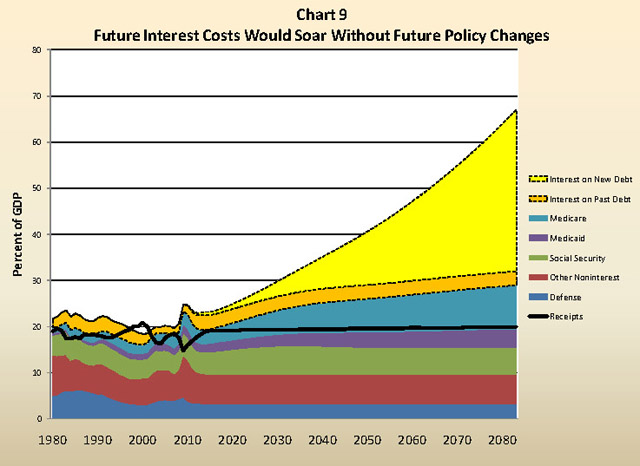
Spending on entitlement programs and interest on the national debt are now accelerating at exponential rates.
Some time around 2020 they will eat up every single dollar of federal revenue that is brought in before a penny is spent on anything else.
Of course the solution to all of this would be to radically cut entitlement programs, but no U.S. politician in his or her right mind would do that... By 2080, they are projected to eat up approximately 50 percent of GDP. And according to the Congressional Budget Office, in 2010 the Social Security system will pay out more in benefits than it receives in payroll taxes. That was not supposed to happen until at least 2016.
Spending on entitlement programs and interest on the national debt are now accelerating at exponential rates.
Some time around 2020 they will eat up every single dollar of federal revenue that is brought in before a penny is spent on anything else.
Of course the solution to all of this would be to radically cut entitlement programs, but no U.S. politician in his or her right mind would do that... By 2080, they are projected to eat up approximately 50 percent of GDP. And according to the Congressional Budget Office, in 2010 the Social Security system will pay out more in benefits than it receives in payroll taxes. That was not supposed to happen until at least 2016.
Now, the truth is that helping the poor and those who cannot help themselves is always a good thing.
Nobody is denying that.
But are there really 100 million Americans that cannot take care of themselves? Of course not.
Read 14 reasons why the U.S. government will never have a balanced budget ever again....
Raising Water Productivity to Increase Food Security
Hugger - With water shortages constraining food production growth, the world needs an effort to raise water productivity similar to the one that nearly tripled land productivity over the last half-century.

Since it takes 1,000 tons of water to produce 1 ton of grain, it is not surprising that 70 percent of world water use is devoted to irrigation. Thus, raising irrigation efficiency is central to raising water productivity overall.
...Any measures that raise crop yields on irrigated land also raise the productivity of irrigation water. For people consuming unhealthy amounts of livestock products, moving down the food chain reduces water use. In the United States, where the annual consumption of grain as food and feed averages some 800 kilograms (four fifths of a ton) per person, a modest reduction in the consumption of meat, milk, and eggs could easily cut grain use per person by 100 kilograms. For 300 million Americans, such a reduction would cut grain use by 30 million tons and the need for irrigation water by 30 billion tons.
Bringing water use down to the sustainable yield of aquifers and rivers worldwide involves a wide range of measures not only in agriculture but throughout the economy. The more obvious steps, in addition to more water-efficient irrigation practices and water-efficient crops, include adopting more water-efficient industrial processes and using both more water-efficient household appliances and those that use no water at all, such as the new odorless dry-compost toilets. Recycling urban water supplies is another obvious step in countries facing acute water shortages.
Read full from the Hugger

Since it takes 1,000 tons of water to produce 1 ton of grain, it is not surprising that 70 percent of world water use is devoted to irrigation. Thus, raising irrigation efficiency is central to raising water productivity overall.
...Any measures that raise crop yields on irrigated land also raise the productivity of irrigation water. For people consuming unhealthy amounts of livestock products, moving down the food chain reduces water use. In the United States, where the annual consumption of grain as food and feed averages some 800 kilograms (four fifths of a ton) per person, a modest reduction in the consumption of meat, milk, and eggs could easily cut grain use per person by 100 kilograms. For 300 million Americans, such a reduction would cut grain use by 30 million tons and the need for irrigation water by 30 billion tons.
Bringing water use down to the sustainable yield of aquifers and rivers worldwide involves a wide range of measures not only in agriculture but throughout the economy. The more obvious steps, in addition to more water-efficient irrigation practices and water-efficient crops, include adopting more water-efficient industrial processes and using both more water-efficient household appliances and those that use no water at all, such as the new odorless dry-compost toilets. Recycling urban water supplies is another obvious step in countries facing acute water shortages.
Read full from the Hugger
Device Provides Clean Water for Pennies a Day
Hugger- Michael Graham Richard
Passive Solar One Step Water Condensation has the potential to help provide clean drinking water for millions of people who are lacking access to clean water (or if they do, maybe the access is intermittent and they could use a plan B). This could save many lives for sure....durable, easy to transport (they stack easily), inexpensive to produce, and low-tech enough that it can be used even if no other infrastructure is present.
Passive Solar One Step Water Condensation has the potential to help provide clean drinking water for millions of people who are lacking access to clean water (or if they do, maybe the access is intermittent and they could use a plan B). This could save many lives for sure....durable, easy to transport (they stack easily), inexpensive to produce, and low-tech enough that it can be used even if no other infrastructure is present.

Photo: Watercone
Via Watercone
Jun 22, 2010
Puppy Power to rescue dog parks
We did it nearly 100 years ago and now "In the future, we might be heating our houses with dog poop."
Several countries do this and some even survive by it.
San Francisco Animal feces make up nearly 4 percent of San Francisco's residential waste -- nearly as much as disposable diapers -- so it is a significant stumbling block to cities reaching their landfill goal.
"American dogs and cats produce 10 million tons of waste a year, and no one knows where it's going," said Will Brinton, a scientist in Mount Vernon, Maine, and one of the world's leading authorities on waste reduction and composting. "That's really beginning to be looked at as a nightmare."
Dog and cat waste usually ends up in a landfill, where it's mummified for generations in plastic bags. If it's not tossed out, it's left where it falls and dissolves into the ground, where it flows untreated into the water table or the bay. Or it's scooped up with yard waste and tossed into the compost bin -- which is a no-no, because animal waste is full of pathogens.
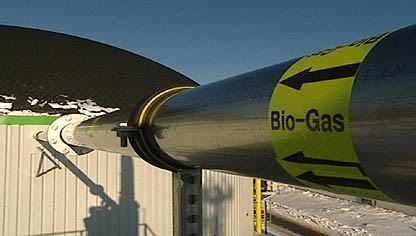
The waste will be collected and tossed into a contraption called a methane digester, which is little more than a tank in which bacteria chew on poo for about two weeks to create methane.
The methane can be piped directly to a gas stove, heater, turbine or anything else powered by natural gas.
The idea isn't so far-fetched. Several European countries, developing nations elsewhere in the world and a smattering of American dairy farms already convert animal waste into energy.
See San Francisco Chronicle for full - this article is old (2006) but the idea is over 100 years old.
While the article sounds like a eighth grader wrote it... it makes a good point.
California has 242 sewage wastewater treatment plants, 74 of which have installed anaerobic digesters.
The total biopower generation from the 74 plants is about 66 MW. [1]
The Chinese have used "covered lagoons" to supply methane fuel to communes and factories for decades. [2]
History of 'BioGas energy Use'
In the 17th century Robert Boyle, discovered that decaying organic matter produced flammable gases. And by 1859 in India was using it to power a leper colony. In 1895 a group of English scientists further developed the technology and used anaerobic digestion to generate gas for street lighting.[3]
In the early 1900's, after fossil fuels became readily and easily accessible, the technology was abandoned. Just like bio diesel and battery powered cars...
But, India is King of Poop Power
Since the first attempt to build a digester in the 1800's, India has focused on organic digester/bio-gas research. India's impetus has been the overwhelming need of a developing country to raise the standard of living of the rural poor. Cows in India produce over 800 million tons of manure per year; over half of this is burned for fuel...
Several countries do this and some even survive by it.
San Francisco Animal feces make up nearly 4 percent of San Francisco's residential waste -- nearly as much as disposable diapers -- so it is a significant stumbling block to cities reaching their landfill goal.
"American dogs and cats produce 10 million tons of waste a year, and no one knows where it's going," said Will Brinton, a scientist in Mount Vernon, Maine, and one of the world's leading authorities on waste reduction and composting. "That's really beginning to be looked at as a nightmare."
Dog and cat waste usually ends up in a landfill, where it's mummified for generations in plastic bags. If it's not tossed out, it's left where it falls and dissolves into the ground, where it flows untreated into the water table or the bay. Or it's scooped up with yard waste and tossed into the compost bin -- which is a no-no, because animal waste is full of pathogens.
The waste will be collected and tossed into a contraption called a methane digester, which is little more than a tank in which bacteria chew on poo for about two weeks to create methane.
The methane can be piped directly to a gas stove, heater, turbine or anything else powered by natural gas.
The idea isn't so far-fetched. Several European countries, developing nations elsewhere in the world and a smattering of American dairy farms already convert animal waste into energy.
See San Francisco Chronicle for full - this article is old (2006) but the idea is over 100 years old.
While the article sounds like a eighth grader wrote it... it makes a good point.
California has 242 sewage wastewater treatment plants, 74 of which have installed anaerobic digesters.
The total biopower generation from the 74 plants is about 66 MW. [1]
The Chinese have used "covered lagoons" to supply methane fuel to communes and factories for decades. [2]
History of 'BioGas energy Use'
In the 17th century Robert Boyle, discovered that decaying organic matter produced flammable gases. And by 1859 in India was using it to power a leper colony. In 1895 a group of English scientists further developed the technology and used anaerobic digestion to generate gas for street lighting.[3]
In the early 1900's, after fossil fuels became readily and easily accessible, the technology was abandoned. Just like bio diesel and battery powered cars...
But, India is King of Poop Power
Since the first attempt to build a digester in the 1800's, India has focused on organic digester/bio-gas research. India's impetus has been the overwhelming need of a developing country to raise the standard of living of the rural poor. Cows in India produce over 800 million tons of manure per year; over half of this is burned for fuel...

Jun 21, 2010
Manhattan's Elite Welfare Farmers
What could be more stupid than 63.7 million people farming on computers?
How about your food farming subsidizes going to the rich...
NY Press - Want fiscal reform? Let's start by targeting the fattest farm subsidy checks—which are mailed to the richest New York ZIP codes. HTML clipboard 
How about your food farming subsidizes going to the rich...
NY Press - Want fiscal reform? Let's start by targeting the fattest farm subsidy checks—which are mailed to the richest New York ZIP codes.
Most people know next to nothing about this $20 billion-a-year welfare for the rich program, probably because the billionaires want it that way. Why get the masses worked up? Best to let them think the $200 billion they spent from 1995 through 2006 went to friendly farmers with cute farmhouses, rather than to Chevron or Kenneth Lay. Better to let urban entrepreneurs call themselves backyard farmers and toil away for the locavore movement, than to realize that their rich neighbors are reaping actual "farm" subsidies.
Now, farm subsidies weren't always this criminal and, until fairly recently, had been doing what New Deal programs were designed to do: help the little guy. But the freemarket "reforms" of the Reagan-Clinton Era warped the welfare, redirecting farm subsidies from the have-nots to the have-mores, bankrupting all but the biggest farmers and depositing farm subsides into the bank accounts of the rich.
No wonder America is starting to feel like a third-world country. Fighting two wars and bailing out banks is enough without having the rich plundering our country right out from under us. It's not just property taxes, either. In the past decade, two-thirds of corporations doing business on U.S. soil paid no income taxes. The rich aren't just not paying their fair share, they're not paying anything at all. Read on at NY Press
Milwaukeeans Power Down Week Starts TODAY!
OnMilwaukee- As millions of gallons of oil continue to spill into the Gulf of Mexico, a group of Milwaukeeans prepare to live, by choice, without electricity and other conveniences in conjunction with a local, underground event called "Power Down Week."
As millions of gallons of oil continue to spill into the Gulf of Mexico, a group of Milwaukeeans prepare to live, by choice, without electricity and other conveniences in conjunction with a local, underground event called "Power Down Week."
Power Down Week runs June 21-27 and is based in Milwaukee's Riverwest neighborhood. A kick-off party takes place Monday, June 21 at 4:30 p.m. at the Falcon Bowl, 801 E. Clarke St.
Main organizer Sarah Moore says there is no way to know how many people will participate in the event because registration is not required, but she estimates somewhere between 50 and 300 people will live without electricity, running water or technology for a week.
As part of Power Down Week, dozens of workshops and community events will take place, including potlucks, an edible food walk, instruction on how to build a cob over, a movie generated by a projector with solar-powered batteries, rooftop garden tours, beer making, soap making, urban camping, gardening classes, yarn spinning, group bike rides, a "kale-gate" potluck party and more.
Many of the workshops and events are presented by Transition Milwaukee, a local organization committed to "rebuilding community resilience and self reliance."
"I really don't believe renewable energies are going to rescue us," says Moore. "We need to power down, reskill and live on less. I will do anything to make sure the cycle of life continues." Read full at OnMilwaukee or visit Power Down Week page.
As millions of gallons of oil continue to spill into the Gulf of Mexico, a group of Milwaukeeans prepare to live, by choice, without electricity and other conveniences in conjunction with a local, underground event called "Power Down Week."
Power Down Week runs June 21-27 and is based in Milwaukee's Riverwest neighborhood. A kick-off party takes place Monday, June 21 at 4:30 p.m. at the Falcon Bowl, 801 E. Clarke St.
Main organizer Sarah Moore says there is no way to know how many people will participate in the event because registration is not required, but she estimates somewhere between 50 and 300 people will live without electricity, running water or technology for a week.
As part of Power Down Week, dozens of workshops and community events will take place, including potlucks, an edible food walk, instruction on how to build a cob over, a movie generated by a projector with solar-powered batteries, rooftop garden tours, beer making, soap making, urban camping, gardening classes, yarn spinning, group bike rides, a "kale-gate" potluck party and more.
Many of the workshops and events are presented by Transition Milwaukee, a local organization committed to "rebuilding community resilience and self reliance."
"I really don't believe renewable energies are going to rescue us," says Moore. "We need to power down, reskill and live on less. I will do anything to make sure the cycle of life continues." Read full at OnMilwaukee or visit Power Down Week page.
The Science of Oil and Peak Oil Revisited
Peak Oil science curriculum suitable for introductory college science classes, advanced high school classes, and adult... A repeat of a post from February 2008.



As always 'thanks Gail' for putting it in one solid post of data!
Green Energy 'breaking Germany"
German Clean-Power Boom for renewable energy is "breaking" the nation's ability to pay for power and threatens the competitiveness of electricity producers, Handelsblatt cited a former industry group leader as saying.
Guaranteed prices for solar and wind power, paid for by consumers, are threatening the renewable-energy industry's ability to compete, the report said... Read full at BloomBerg
Guaranteed prices for solar and wind power, paid for by consumers, are threatening the renewable-energy industry's ability to compete, the report said... Read full at BloomBerg
Is this a JOKE? FDA Fines American Red Cross $16 Million?
WTF - No one can figure out a better way to hold the red cross accountable other than stripping ten of millions of dollars in donations from the worlds number one provider of emergency care?

Where do they think the money is coming from?
The FDA announced today that they have fined the worlds number one provider of emergency care(American Red Cross) for prior failures to comply with Federal laws and regulations related to the collection and manufacture of blood products.
Despite the compliance failures, FDA found no evidence that the Red Cross violations endangered any patients and the blood supply is believed to be safe. Multiple layers of safeguards are in place to protect and enhance the safety of blood products. However, these types of violations decrease the assurance that blood products manufactured by American Red Cross will continue to be safe and have the potential to compromise the safety of the blood supply.
The FDA assessed fines totaling $16.18 million – $9.79 million for violations related to mismanagement of certain blood products and $6.39 million for Good Manufacturing Practice violations. Blood products include red cells, plasma and platelets.
First Climategate, Then Glaciergate, Now Amazongate...
HTML clipboard First Climategate, Then Glaciergate, Now Amazongate and ... Hurricanegate? Proponents of catastrophic man-made global warming gave critics a lot of ammunition when emails leaked from the East Anglia University Climatic Research Unit indicated that some prominent climate scientists may have been manipulating data... everything has gone south.HTML clipboard 
Mongabay- The Sunday Times over the weekend retracted a column that accused the Intergovernmental Panel on Climate Change (IPCC) of making a "bogus rainforest claim" when it cited a report warning that up to 40 percent of the Amazon could be "drastically" affected by climate change. The "Amazongate" column, authored by Jonathan Leake, Science & Environment Editor of the Sunday Times, was immediately seized upon by climate skeptics as further evidence to discredit the IPCC just two weeks after it was found to be using shoddy glacier data in its 2007 climate assessment. But now the Sunday Times has removed Leake's column from its web site and issued on apology, admitting that the Amazon claim was indeed supported by scientific research. The Sunday Times also acknowledged misconduct in the way one of the story's sources—Simon Lewis of the University of Leeds in Britain—was quoted. Read on at Mongabay
Ouch: Bad reporting puts GOOD environmental efforts in jeopardy.
We have REAL viable threats, there is no need to skew numbers or headlines to get more people on board or additional funding.
People led by false prophets and fear start wars... people led by solutions and innovation start revolutions.
And after three decades of fails prophets and war, I think it is time for a peaceful revolution.
British Newspaper Apologizes to Climate Scientist
Wastewater resource recovery to be a $45 billion industry
As technologies designed to help extract energy and other valuable products from wastewater sludge mature, the market opportunity for resource recovery will grow from $25 billion today to $45 billion in 2020, according to a recently released Lux Research report titled "Technologies Turn Waste into Profit
LUX's Graphic (below) focuses on methods for recovering energy from sludge, mostly in the form of biogas or alternative fuels. The technologies in this category show the most promise, and are on track to capture 64% of the overall market in 2020.

Although recovering energy from sludge is relatively new as a business proposition, the basic technology has long been available in the form of anaerobic digesters. Notably, technologies that help improve production of biogas by enhancing anaerobic digestion offer the strongest value proposition... Deriving alternative fuels from sludge also shows promise, with caveats. Technologies, like gasification, pyrolysis, and supercritical water oxidation help to derive alternative fuels like syngas and biodiesel from sludge.
Read more at Source: Lux Research report "Technologies Turn Waste into Profit
LUX's Graphic (below) focuses on methods for recovering energy from sludge, mostly in the form of biogas or alternative fuels. The technologies in this category show the most promise, and are on track to capture 64% of the overall market in 2020.
Although recovering energy from sludge is relatively new as a business proposition, the basic technology has long been available in the form of anaerobic digesters. Notably, technologies that help improve production of biogas by enhancing anaerobic digestion offer the strongest value proposition... Deriving alternative fuels from sludge also shows promise, with caveats. Technologies, like gasification, pyrolysis, and supercritical water oxidation help to derive alternative fuels like syngas and biodiesel from sludge.
Read more at Source: Lux Research report "Technologies Turn Waste into Profit
$2.4 Million in First Chinese Drywall Trial Lawsuit
Associated Press — A Florida couple should receive more than just the costs of gutting and renovating their home: they were also awarded damages for loss of enjoyment of the $1.6 million house and for ...Defective, sulfur-emitting Chinese drywall has been linked to possible health problems along with a noxious odor, corrosion of wiring, plumbing, computers, plumbing and jewelry. Most of the problems have arisen in Florida, Virginia, Mississippi, Alabama and Louisiana in homes built during the housing boom and some damaged during the busy 2005 hurricane season.

The Miami case follows a Louisiana federal judge's decision in April to award $2.6 million in damages to seven families in Virginia for bad Chinese drywall. In that case, the Chinese entities who were sued never responded in U.S. court, leaving in limbo how the damages might be collected.
The Consumer Product Safety Commission has recommended removing any tainted drywall and affected wiring, fire alarm systems and gas pipes. Read full from Associated Press

The Consumer Product Safety Commission has recommended removing any tainted drywall and affected wiring, fire alarm systems and gas pipes. Read full from Associated Press
Eating Well in America On $1 A Day
My last post was sooo depressing I needed to ad a little 'hope and $change$'
"I think I could have a fairly healthy diet on $1 a day," I replied. "At least a lot healthier than you think."
"You couldn't last a month," she said sure of herself.
And in America - It’s Possible To Donate A Lot of Food While Only Eating On $1 A Day Read more here
Billion undernourished will grow 40% over next decade
Guardian - The forecasts are for wheat and coarse grain prices over the next 10 years to be between 15% and 40% higher in real terms, once adjusted for inflation, than their average levels during the 1997-2006 period, the decade before the price spike of 2007-08. Real prices for vegetable oils are expected to be more than 40% higher and dairy prices are projected to be between 16-45% higher. But rises in livestock prices are expected to be less marked, although world demand for meat is climbing faster than for other farm commodities on the back of rising wealth for some sections of the population in emerging economies.
the report warns that recent price spikes and the economic crisis have contributed to a rise in hunger and food insecurity. About 1 billion people are now estimated to be undernourished, it said.

Fairtrade campaigners said the predictions of sharply rising prices provided a "stark warning" to international policymakers.
"Investment to encourage the 1 billion people whose livelihoods rely on smallholder agriculture is vital. Not only will this increase yields but will go a long way to increase prosperity in poverty stricken regions,"
the report warns that recent price spikes and the economic crisis have contributed to a rise in hunger and food insecurity. About 1 billion people are now estimated to be undernourished, it said.
Fairtrade campaigners said the predictions of sharply rising prices provided a "stark warning" to international policymakers.
"Investment to encourage the 1 billion people whose livelihoods rely on smallholder agriculture is vital. Not only will this increase yields but will go a long way to increase prosperity in poverty stricken regions,"
The war over BioFuels and Food...
"At the same time, the promise of increased agriculture commodity prices could spark a new surge in land grabbing by sovereign wealth funds and other powerful investors which risks marginalising further rural communities who must be included in solutions to secure and maintain food supplies."
Related? "might just as well be a predator"
Graphic Photo Note: (WikiMedia) the "PULITZER PRIZE" winning photo taken in 1994 during the Sudan famine was removed as 'really bothered me' and replaced with info Graphic above.
Oiled Seafloor Killing Fish, Crabs ... and the American Dream

Alex Kearns, posted this image on her website today, along with the following description:
A researcher captured this image. A discarded flag (or one that has fallen from one of the many vessels in the area) rests on the ocean floor amid the oil and the bodies of dead crabs.
A two-inch layer of submerged oil is coating portions of the Gulf seafloor off the Bon Secour National Wildlife Refuge: a week after a smothering layer of floating crude washed ashore there. This scenario is being played out all along the Gulf shoreline.
Collecting in pockets and troughs in waist-deep water, the underwater oil is looser and stickier than the tarballs that cover the beach. The consistency is more like a thick liquid, albeit one made up of thousands of small globs. Unlike tarballs, which can often be picked up out of the water without staining the fingers, the submerged oil stains everything that it touches. If you passed your hand through the material it would emerge covered in oily smears.
There are a number of patches of submerged oil 40 to 100 feet off the beach, apparently collecting along rip currents and sandbars. The carcasses of sand fleas, speckled crabs, ghost crabs, and leopard crabs are spread throughout the oil, a thick layer of the material caking the bodies of the larger crabs - their claws looking as if they been turned into clubs made of oil.
Read more here
Jun 20, 2010
Oil was easy...Now we're reaching "peak water"
Now we're reaching "peak water" THE planet is far from running out of water, but many countries are beginning to exhaust the local supplies they need to maintain agricultural productivity and ecosystem health.
Welcome to the age of "peak water"
Jun 19, 2010
'huge solar storm' will make everyone forget about global warming....
Didn't I talk about this a couple years ago? - Yep... while the chicken little's were taking top spots in the media over 'global warming'. The real threat was a brewing.
Telegraph National power grids could overheat and air travel severely disrupted while electronic items, navigation devices and major satellites could stop working after the Sun reaches its maximum power in a few years.
Senior space agency scientists believe the Earth will be hit with unprecedented levels of magnetic energy from solar flares after the Sun wakes “from a deep slumber” sometime around 2013, The Daily Telegraph can disclose. In a new warning, Nasa said the super storm would hit like “a bolt of lightning” and could cause catastrophic consequences for the world’s health, emergency services and national security unless precautions are taken. Scientists believe it could damage everything from emergency services’ systems, hospital equipment, banking systems and air traffic control devices, through to “everyday” items such as home computers, iPods and Sat Navs. Read full at Telegraph
Maybe not related?

Afghanistan mineral discovery "The Beverly Hillbillies" scripted by Satan.
NewYorkPost Afghanistan never before offered so much to fight over.
Instead of making life easier for our troops, the finds will make it harder to disengage. Washington will succumb to arguments that we need to preserve access to these strategic resources, even though it's far cheaper to buy them than to prolong a military protectorate.

Up to now, Afghanistan's internal factions and neighbors have been fighting over worthless dirt, Allah and opium. Assigning the battlefield a trillion-dollar value is not a prescription for reconciliation. Expect "The Beverly Hillbillies" scripted by Satan.
Even were Afghanistan at peace, its endemic corruption would generate a grabocracy -- a Nigeria, not a Norway. Throw in inherited hatreds and the appetites of its neighbors, and Afghanistan may end up more like eastern Congo, a playground for state-sanctioned murderers and looters. Beyond reportedly vast deposits of rare minerals (lithium, etc.) essential to popular technologies, there's copper, cobalt, iron and gold in them thar hills.
Source: A Old Jar Head
Instead of making life easier for our troops, the finds will make it harder to disengage. Washington will succumb to arguments that we need to preserve access to these strategic resources, even though it's far cheaper to buy them than to prolong a military protectorate.
Up to now, Afghanistan's internal factions and neighbors have been fighting over worthless dirt, Allah and opium. Assigning the battlefield a trillion-dollar value is not a prescription for reconciliation. Expect "The Beverly Hillbillies" scripted by Satan.
Even were Afghanistan at peace, its endemic corruption would generate a grabocracy -- a Nigeria, not a Norway. Throw in inherited hatreds and the appetites of its neighbors, and Afghanistan may end up more like eastern Congo, a playground for state-sanctioned murderers and looters. Beyond reportedly vast deposits of rare minerals (lithium, etc.) essential to popular technologies, there's copper, cobalt, iron and gold in them thar hills.
Source: A Old Jar Head
Warmist religion meets fiscal reality - Climate change legislation appears dead...
The Hill Climate change legislation appears dead after two setbacks in quick succession — first from the Oval Office and then from Congress.
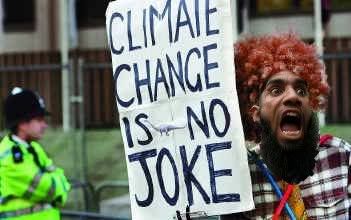
Sen. Scott Brown (Mass.), a crucial Republican swing vote, met with President Barack Obama on Wednesday and told him he would not support a cap-and-trade plan or carbon fee to limit greenhouse gas emissions.
But this blow came after Obama delivered the first setback Tuesday night. In his primetimes speech, he called for comprehensive energy reform but did not propose an emissions cap.
This stance may parallel his rhetorical backing for a public healthcare option that, however, was later excluded from reform legislation.
The White House has told Sen. John Kerry (D-Mass.) and environmental activists that it supports the carbon cap in his bill, but the presidential bully pulpit has not been used to demand it.
A senior Democratic senator said Obama knows the chances of passing climate change legislation are slim and wants to avoid a public failure.
"He knows that if he mentioned a carbon cap, his success or failure would be measured by his ability to get it," said the lawmaker, who requested anonymity to speak frankly.
But other lawmakers said a nationwide cap on emissions is now substantially less likely.
Brown reversed that momentum after Obama invited him to the White House.
"He did talk about climate and his concerns about the climate and I basically told him that I'm not in favor nor could I support a national energy tax or a cap-and-trade proposal," Brown told reporters after the meeting.
Brown said he would happily work with Obama to pick the "low-hanging fruit" of energy reform.
"But I am very excited about working with him in a bipartisan manner to come up with a comprehensive energy plan to address a whole host of issues: wind, solar, hydro, nuclear, geothermal, conservation, incentivizing businesses, providing grants and loans to our businesses," Brown said.
Read full at The Hill
Sen. Scott Brown (Mass.), a crucial Republican swing vote, met with President Barack Obama on Wednesday and told him he would not support a cap-and-trade plan or carbon fee to limit greenhouse gas emissions.
But this blow came after Obama delivered the first setback Tuesday night. In his primetimes speech, he called for comprehensive energy reform but did not propose an emissions cap.
This stance may parallel his rhetorical backing for a public healthcare option that, however, was later excluded from reform legislation.
The White House has told Sen. John Kerry (D-Mass.) and environmental activists that it supports the carbon cap in his bill, but the presidential bully pulpit has not been used to demand it.
A senior Democratic senator said Obama knows the chances of passing climate change legislation are slim and wants to avoid a public failure.
"He knows that if he mentioned a carbon cap, his success or failure would be measured by his ability to get it," said the lawmaker, who requested anonymity to speak frankly.
But other lawmakers said a nationwide cap on emissions is now substantially less likely.
Brown reversed that momentum after Obama invited him to the White House.
"He did talk about climate and his concerns about the climate and I basically told him that I'm not in favor nor could I support a national energy tax or a cap-and-trade proposal," Brown told reporters after the meeting.
Brown said he would happily work with Obama to pick the "low-hanging fruit" of energy reform.
"But I am very excited about working with him in a bipartisan manner to come up with a comprehensive energy plan to address a whole host of issues: wind, solar, hydro, nuclear, geothermal, conservation, incentivizing businesses, providing grants and loans to our businesses," Brown said.
Read full at The Hill
Nine Near Carbon Neutral Communities
At the moment, there's no silver bullet when it comes to achieving carbon neutrality, but there's also no shortage of ideas and effort. Which community is most inspiring to you? - JetsonGreen
Popular Science just published an interesting roundup of green communities in an article now titled, "Nine of the World's Most Promising Carbon-Neutral Communities." You'll recognize several of these communities as we've mentioned them previously. What's important is the notion that reducing an environmental impact can be ultra effective when done on a large scale.
Here's the list:
- Best U.S. Project: Greensburg
- Holiest: Vatican City
- Fastest Transformation: Samsø Island
- Most Urgent: Maldives
- Most Expensive: Masdar
- Most Ambitious: Costa Rica
- Smallest: BedZED
- Most Resourceful: Dockside Green
- Most Down-to-Earth: Moreland, Australia
On the other hand, some of these communities (and their plans) are extravagant and costly. On a smaller scale, somewhat akin to Dockside Green, green neighborhoods are gaining in popularity, while LEED for Neighborhood Development continues to pick up steam.
Media credit: Popular Science via JetsonGreen
Subscribe to:
Posts (Atom)