Wisconsin Public Service Corp. (WPS) said it will shut down two small units at its Pulliam coal-fired power plant in downtown Green Bay, after reaching an agreement to settle a lawsuit filed by the environmental groups Clean Wisconsin and Sierra Club. The Green Bay-based electric and natural gas utility also will make environmental control upgrades to four other units at Pulliam under a federal court settlement filed today. The agreement required the utility to take steps toward either retiring or upgrading the six units. The utility also agreed to spend $500,000 to launch environmental projects with the aid of Madison-based Wisconsin Energy Conservation Corp. The projects will likely target ways to help customers improve energy efficiency, WPS said. The shutdown of the two units will affect about 25 of the 127 union employees at the coal-fired power plant, located at the mouth of the Fox River next to the bay of Green Bay. WPS hopes to handle the job losses through attrition and by finding other jobs in the company for the affected workers. Source: www.journalsentinel.com ( Thomas Content )
Oct 26, 2006
WI - "Green" washing to get votes using renewable energy tax breaks
Madison, WI - Republican gubernatorial candidate Mark Green launched a plan today to give tax breaks for renewable energy. The plan includes a sales tax exemption for buying energy-efficient appliances and tax credits for generating renewable energy and researching farm-based energy. Green is a member of the U.S. House challenging Democratic Gov. Jim Doyle in the Nov. 7 election. The plan includes a 10% tax credit for farms and businesses that research renewable and agricultural-based energy sources. Homeowners that generate their own electricity would also get tax credits. The sales tax credit would be applied to home appliances with "Energy Star" labels and equipment used to generate energy from wind, the sun and agricultural waste. The measures would reduce state tax revenue by about $16 million a year. Green unveiled the plan in his hometown of Green Bay at Solar Mining Co., which manufactures solar hot water heaters.

Oct 25, 2006
Commission urges stronger Great Lakes pact
The Great Lakes face such a large variety of new threats from chemical pollutants, foreign invader species and global warming, among other problems, that they need to be protected by an entirely new environmental pact between Canada and the United States, the International Joint Commission says. The commission, a binational organization that overseas the boundary waters of the two countries, also wants any new environmental accord signed by Prime Minister Stephen Harper and U.S. .. Link (Dr. Glen Barry)
CEO blogs - I read them... ;-)
I think more about the quality not, quantity of readers.
If I wanted a few 1mil idiots reading my posts... I would have used myspace.com
Use email to post (if your not already) to your blog.... that way you waste no time posting.
I also fell in love with picasa webalbums http://picasaweb.google.com to share trips and fun with family.
Blogger & Picasa - "Things should be made as simple as possible, but no simpler." --Albert Einstein
Chris,
P.S.
After seeing your "dog chase" on YouTube, I thought I may have a few good family vids for the masses as well ;-)
Starve yourself long enough and even a tofu-coffee-macadamia-nut-and-flaxseed smoothie becomes ambrosia.
Calorie Restriction Diet - The Extreme Exprience = 160 year life span?
Is a life lived on the edge of starvation worth living?

Just take a good look around your neighborhood, your place of work, your therapist’s waiting room. Take a good look in the mirror maybe, too. That ought to be enough to tell you CR’s growth from cult to subculture to fact of mainstream cultural life is not so unimaginable. Yes, CR flies in the face of common sense, but it’s got the preponderance of scientific evidence on its side. Yes, it’s a little crazy, but the crazinesses it requires are only those already endemic to our age and area code. And yes, by any objective standard, the food is lousy, but believe me.... read full fun here
The Dangers of PVC
Where can these VOC's be found? Most commonly in paint, carpets, cleaning supplies, car exhaust fumes, upholstery, adhesives, and all sorts of plastics. That new car smell that is so adored is the off-gassing of the PVC (polyvinyl chloride). When you open the plastic packaging of your new shower curtain, that smell too, is the off-gassing of the PVC!
PVC plastic or vinyl is one of the worst environmental and health offenders, yet it’s the most widely used material. What makes this plastic so abhorred is the highly toxic chemical it releases and creates called dioxin. In a past article called There’s Nothing Green about Chlorine, I discuss the dangers of these chemicals. PVC is also difficult to recycle so therefore much of it ends up in our landfills; but perhaps the greatest danger of PVC is the phthalates that are added to it to make it softer and more pliable. Children’s toys use the soft version of this PVC! The phthalates are well known endocrine disruptors that can cause harm to the reproductive system of both males and females. Read more here
PVC plastic or vinyl is one of the worst environmental and health offenders, yet it’s the most widely used material. What makes this plastic so abhorred is the highly toxic chemical it releases and creates called dioxin. In a past article called There’s Nothing Green about Chlorine, I discuss the dangers of these chemicals. PVC is also difficult to recycle so therefore much of it ends up in our landfills; but perhaps the greatest danger of PVC is the phthalates that are added to it to make it softer and more pliable. Children’s toys use the soft version of this PVC! The phthalates are well known endocrine disruptors that can cause harm to the reproductive system of both males and females. Read more here
Yahoo Front Page: on Green Fear & Gread
At This Rate, Earth's Resources Gone by 2050
 Humans are stripping nature at an unprecedented rate and will need two planets' worth of natural resources every year by 2050 on current trends, the WWF conservation group said on Tuesday. "If everyone around the world lived as those in America, we would need five planets to support us," Leape, an American, said in Beijing. » original news
Why aren't US-based car makers already building great small cars?

The cars exist today. They should have been able to foresee that gas prices were eventually go to go up and they should have been ready to sell some small cars here. Clearly, European built small cars wouldn't be price competitive in North America. However, since 2001, they should have been able to find a lower cost manufacturing location. If Honda, Toyota, Nissan, Kia, and others can sell cars like the Fit, Yaris and others here there is no reason that Ford and GM can't.
Eco-Game Adventure Ecology

“Here’s the deal: Adults are not doing enough to protect our planet. In fact, some of our worst problems are being caused by people! It’s time for kids like us to step in!” And with a wave of his arm, Dash, the animated action hero of Adventure Ecology , invites gamers to join him as they battle the ultimate enemy: the mighty, sharp-clawed Global Warming. Play here
Panic in Organics?
"Hold onto your organic-cotton hat, though. AdAge recently implied that the future isn't as bright as it's cracked up to be, suggesting mainstream adoption is hitting a wall (at least partially caused by premium pricing). In an article from mid-October, "Organics Fail to Yield Cash Crop for Food Giants," the following ominous statement started the ball rolling: "But after a stupendous start, organic foods are looking suspiciously like a sensation sizzling out." Here's an even more chilling excerpt: "It's all mounting evidence that the trend, like the low-carb craze before it, is hurtling toward a crash."" » original news (VIA hugg.com)
13 ways to make getting around more green (and safer)

Been wanting to make your transportation a little easier on the earth but don't know where to start? Or, if you're already doing a little bit, do you want to do more? Whatever your situation, Treehugger's got some simple tips for you. Their post on the top ten effective ways to go greener includes ones you've heard before (ride a bus, walk more) as well as some less easy ways to greenify getting around (telecommute, become an activist for public transportation). On top of their ten tips, the list also includes three ways to do more: ditch your car, buy carbon offset vouchers for your trips, and raise your voice in support of even cleaner public transportation (don't just advocate for a bus line, demand a bus line with hybrid buses).
One fact jumped out at me, and it has nothing to do with being environmentally friendly: riding a bus is 79 times safer than riding in your own automobile. I don't know where Treehugger got this statistic, but it sure makes me feel better about stepping on a bus. [Source: Treehugger VIA-autobloggreen.com]
One fact jumped out at me, and it has nothing to do with being environmentally friendly: riding a bus is 79 times safer than riding in your own automobile. I don't know where Treehugger got this statistic, but it sure makes me feel better about stepping on a bus. [Source: Treehugger VIA-autobloggreen.com]
Slate's Green Challenge: can you manage a 5,000-lb diet?
 They say we Americans love a good challenge, so in the face of global warming Slate collaborated with Treehugger to come up with the Slate Green Challenge. The idea is that you take a short quiz which determines your annual carbon footprint and then for the next eight weeks, the nation goes on a carbon diet with the end goal of reducing carbon emissions from individuals by 20 percent. The average for a U.S. citizen is 44,312 lbs.
I signed up immediately after reading the press release. It just takes a few minutes out of your busy day to take the initial quiz. After that, you'll be directed towards week 1's topic: transportation. The page offers some tips on saving gas and suggestions for air travel such as purchasing carbon offsets through companies like TerraPass or Native Energy. Make sure to check it out and keep in mind that the first 500 people to complete the challenge will receive a free Slate/Treehugger Green Challenge t-shirt.
[Source: Slate VIA-www.autobloggreen.com]
As ethanol movement grows, critics get louder

The energy correspondent for United Press International has rounded up an interesting cross section of opinions on the subject of ethanol. Gov. Brian Schweitzer of Montana wants to eliminate the middleman in a system where the U.S. sends food to a Third World country and buys oil from the same country. He says make the fuel from that food stock. Biofuel proponents like the economic benefits and potential of reduced dependency on foreign oil. Critics wonder about the inefficiency of biofuel and question whether if it's worth protecting against global market forces. No doubt there are economic gains to be realized with increased biofuel manufacturing, but experts warn biofuel production must match demand or it will be another form of corporate welfare. Schweitzer's proposal has been called extreme and protectionist by some analysts. Stopping food exports and lowering oil imports will affect food and energy prices around the world. One analyst says the transition away from foreign oil should be slow to avoid shocking the system. [Source: Michael Stothard/UPI] (autobloggreen.com)
New wave energy converter
 "The AWS wave energy converter consists of a large air-filled cylinder which is submerged beneath the waves. As a wave crest approaches, the water pressure on the top of the cylinder increases and the upper part or 'floater' compresses the air within the cylinder to balance the pressures. The reverse happens as the wave trough passes and the cylinder expands. The relative movement between the floater and the fixed lower part or 'basement' is converted directly to electricity by means of an innovative linear generator. First-generation machines will be rated at over 1MW and have a load factor in excess of 35%." » original news (via hugg.com)
MTV, Walmart... TURN GREEN!
"MTV and Wal-Mart Stores launched joint initiative Everyday Green, which is designed to promote sustainability and demonstrate to consumers how to work environmentally friendly products into their lives." » original news (via hugg.com)
Al Gore's Entrance A Little Less Than Green
Al Gore's entrance at Berkeley was a little less than green yesterday. Sure, he arrived in a Prius, but Ecorazzi is quick to point out that he had some accompaniment that was a little disappointing. Would you believe his motorcade included a truck? Read on to find out what else he was dragging behind the Prius.... » original news (via hugg.com)
We Must Expand Our Nuclear Power Program If We're To Realize Our Dream Of Superhero Mutants
 TheOnion:To abandon nuclear energy is to risk something far greater than another Chernobyl. It is to risk the loss of future superpowered, costumed heroes. If we fail to encourage our scientists to get trapped in a malfunctioning reactor as warning klaxons ring across the facility, and menacing numbers on a nearby wall-screen count down to zero, their frail human physiologies will never receive the massive doses of radiation necessary to transform them into glowing metallic-chrome beings with nuclei-and-electron symbols emblazoned on their muscular chests. As our country takes on the innumerable challenges of the 21st century, we need now more than ever cosmic, glowing superbeings capable of harnessing the power of the atom to fight crime. » original news (via hugg.com)
Ethanol Fool; fleeced or famine?
 The grain needed to fill the tank of a typical SUV could feed a person for a year, a leading international environmentalist says. Lester Brown, executive-director of the Washington-based Earth Policy Institute, says a global rush to alternative fuels made from food crops is likely to increase hunger in the poorest countries. "What has happened in the last few years is that the runaway price of oil has made the conversion of agricultural commodities into fuel for cars extraordinarily profitable," he told a conference at the University of Ottawa. » original news (via hugg.com)
Soot from wood stoves worse than thought
EurekAlert: New measurements of soot produced by traditional cook stoves used in developing countries suggest that these stoves emit more harmful smoke particles and could have a much greater impact on global climate change than previously thought, according to a study scheduled to appear in the Nov. 1 issue of the American Chemical Society journal Environmental Science & Technology. Perhaps as many as 400 million of these stoves, fueled by wood or crop residue, are used daily for cooking and ...Link (Dr. Glen Barry)
Bacteria can ensure clean water say researchers
Water is shaping up to be one of the most critical problems facing humanity. With water consumption far outstripping population growth rates due to surging industrial and agricultural demand, the World Bank estimates that 40 percent of the world's population -- more than 2.5 billion people -- are enduring some form of water scarcity. In China, where massive river relocation projects to shift water from the south to the dry north are under consideration, an official government survey found that some 300 million Chinese drink unsafe water tainted by chemicals and other contaminants, while 90% of China's cities have polluted ground water. Elsewhere, development experts say that access to reliable, safe and affordable water is key to poverty alleviation efforts and that addressing declining groundwater supplies and water pollution is be critical to raising the quality of life in poor regions. http://news.mongabay.com/2006/1025-rittmann.html
Salvage timber logging to proceed
Associated Press: The U.S. Forest Service has dismissed an objection from an environmental group that sought to delay salvage logging of thousands of trees uprooted by a rare central Idaho tornado. Bidding on timber sales has begun. Friday, the Forest Service will award contracts for an estimated 18.5 million board feet of downed and buckled timber in the Payette National Forest near the Oregon border, said spokesman Boyd Hartwig. The WildWest Institute, an environmental group based in Missoula, ...Link (Dr. Glen Barry) on logging salvage
Global warming: Here come the lawyers
Business Week: Two days after hurricane Katrina smashed into the Gulf Coast, F. Gerald Maples returned to his hometown of Pass Christian, Miss., to utter devastation. Most of his neighbors' houses were totally destroyed. His was in ruins. "It broke our hearts and absolutely changed our lives," he says. It also made Maples, a veteran asbestos plaintiffs' attorney in New Orleans, determined to fight back. "I couldn't stand by when my entire cultural history was destroyed by an event that could ... Link (via - Dr. Glen Barry)
Milwaukee-based company to generate electricity from the methane
City signs contract to turn sewage gas into electricity.Baltimore has signed a $14 million contract with a Milwaukee-based company to generate electricity from the methane produced by the city's Back River sewage treatment plant - a project officials say they expect to save the city $1.4 million a year in energy costs while also improving air quality.
Bill to require toxic tests at day-care sites gains ground
A bill to require the testing and block construction of centers on contaminated sites advanced in the state Legislature on Monday, picking up bipartisan support and the endorsement of the Corzine administration. Lined here Source: North Jersey.com.
New fuel or more Greenwashing by Ford
Michigan has gained its eighth hydrogen fueling station with the installation of a new facility in Taylor. Ford Motor Company is providing four Ford Focus fuel cell vehicles for use by the city, while BP is providing the hydrogen fuel. The fueling station is part of a DOE demonstration project.
All this after world reports stating were 20's out on sustainable Hydrogen? Maybe they will drive it on the Alaska's bridge to nowhere alonge with our future ; -)
Dye reportedly turned Yellow River red
 Authorities have told a Chinese heating company it will be fined for discharging dyed water into the Yellow River, turning a half-mile section bright red, a state-run newspaper said Tuesday. Read full MSNBC here
Steam cars may already be on their way back. in the form of a hybrid.
Astonishingly, an unmodified Doble Model E runs clean enough to pass the strict emissions laws in California today.

Several automakers continued to experiment with steam until 1973, when the Arab oil embargo forced them to concentrate resources on the problem of fuel efficiency in existing engines. Since that time, not many manufacturers have put much research into a car powered primarily by steam. It is true that the technology poses some difficult problems, but one cannot help but be curious how efficient a steam car might be with the benefit of modern materials and computers. With today's pressure to improve automotive performance and reduce emissions, it is not unthinkable that the steam car may rise again.
Topic spotted on Interesting Thing of the Day.
Further reading: An article by Jay Leno about his Doble steamer
BMW that is working on the idea: http://www.treehugger.com/files/2005/12/bmw_developing.php
AGE OF AN IMPERIAL INTERNET
Bill Moyers is host of "The Net At Risk," a documentary on PBS (check local listings). Visit www.pbs.org/moyers.
The monopolists tell us not to worry:
They will take care of us, and see to it that the public interest is honored and democracy served by this most remarkable of technologies.
They said the same thing about radio.
And about television.
And about cable.
And about television.
And about cable.
Will future historians speak of an Internet Golden Age that ended when the 21st century began?
The Internet is revolutionary because it is the most democratic of media. All you need to join the revolution is a computer and a connection. We don't just watch; we participate, collaborate and create. Unlike television, radio and cable, whose hirelings create content aimed at us for their own reasons, with the Internet every citizen is potentially a producer. The conversation of democracy belongs to us.
That wide-open access is the founding principle of the Internet, but it may be slipping through our fingers. How ironic if it should pass irretrievably into history here, at the very dawn of the Internet Age.
The Internet has become the foremost testing ground where the forces of innovation, corporate power, the public interest and government regulation converge. Already, the notion of a level playing field -- what's called network neutrality -- is under siege by powerful forces trying to tilt the field to their advantage. The FCC has bowed to the interests of the big cable and telephone companies to strip away, or undo, the Internet's basic DNA of openness and non-discrimination. When some members of Congress set out to restore network neutrality, they were thwarted by the industry's high spending lobbyists. This happened according to the standard practices of a rented Congress -- with little public awareness and scarce attention from the press. There had been a similar blackout 10 years ago, when, in the Telecommunications Act of 1996, Congress carved up our media landscape. They drove a dagger in the heart of radio, triggered a wave of consolidation that let the big media companies get bigger, and gave away to rich corporations -- for free -- public airwaves worth billions.
At the core this is a struggle about the role and dimensions of human freedom and free speech. But it is also a contemporary clash of a centuries-old debate over free-market economics and governmental regulation, one that finds Adam Smith invoked both by advocates for government action to protect the average online wayfarer and by opponents of any regulation at all. Read more here
Copyright 2006 TomPaine.com
Getting rid of your internet...
AGAINST AN IMPERIAL INTERNET
Bill Moyers is host of "The Net At Risk," a documentary on PBS (check local listings). Visit www.pbs.org/moyers.
Bill Moyers is host of "The Net At Risk," a documentary on PBS (check local listings). Visit www.pbs.org/moyers.
The monopolists tell us not to worry: They will take care of us, and see to it that the public interest is honored and democracy served by this most remarkable of technologies.
They said the same thing about radio.
And about television.
And about cable.
Will future historians speak of an Internet Golden Age that ended when the 21st century began?
And about television.
And about cable.
Will future historians speak of an Internet Golden Age that ended when the 21st century began?
The Internet is revolutionary because it is the most democratic of media. All you need to join the revolution is a computer and a connection. We don't just watch; we participate, collaborate and create. Unlike television, radio and cable, whose hirelings create content aimed at us for their own reasons, with the Internet every citizen is potentially a producer. The conversation of democracy belongs to us.
That wide-open access is the founding principle of the Internet, but it may be slipping through our fingers. How ironic if it should pass irretrievably into history here, at the very dawn of the Internet Age.
The Internet has become the foremost testing ground where the forces of innovation, corporate power, the public interest and government regulation converge. Already, the notion of a level playing field -- what's called network neutrality -- is under siege by powerful forces trying to tilt the field to their advantage. The FCC has bowed to the interests of the big cable and telephone companies to strip away, or undo, the Internet's basic DNA of openness and non-discrimination. When some members of Congress set out to restore network neutrality, they were thwarted by the industry's high spending lobbyists. This happened according to the standard practices of a rented Congress -- with little public awareness and scarce attention from the press. There had been a similar blackout 10 years ago, when, in the Telecommunications Act of 1996, Congress carved up our media landscape. They drove a dagger in the heart of radio, triggered a wave of consolidation that let the big media companies get bigger, and gave away to rich corporations -- for free -- public airwaves worth billions.
At the core this is a struggle about the role and dimensions of human freedom and free speech. But it is also a contemporary clash of a centuries-old debate over free-market economics and governmental regulation, one that finds Adam Smith invoked both by advocates for government action to protect the average online wayfarer and by opponents of any regulation at all. Read more here
Copyright 2006 TomPaine.com
Garbage incinerators are trying to make a comeback,
Cheap waste disposal prevents us from making progress against pollution.
So long as waste disposal remains cheap, corporations and governments have little incentive to recycle, re-use, compost, or avoid making waste in the first place.
If disposal is cheap, there is no compelling reason to invest in green chemistry, clean production, alternative energy, green building, or cradle-to-cradle manufacturing.
Garbage incinerators are making a big comeback in the U.S. -- or trying to. The City of Los Angeles, California is thinking about building seven of them. There may be as many as 40 (or more) proposed incinerators of one kind or another in Alaska, Hawaii, Puerto Rico and the lower 48. All of them promise to take mixed municipal waste and heat it up to reduce the volume of garbage and extract small amounts of useful energy in the process.
Heating mixed waste (garbage) creates toxic air emissions and the toxicant-containing residual -- whether ash or a rock-like "clinker" -- will be buried in the ground where it remains available forever, threatening groundwater.
These new incinerators are never called "incinerators" -- they go by names like pyrolysis or gasification plants, or plasma arc melters, or simply "conversion" machines. But they all propose to heat mixed waste, extract some energy, and bury the leftovers in the ground.** The contribution of now-defunct incinerators to soil and water contamination is the subject of specific, multi-million dollar investigations in Connecticut, Pennsylvania, Florida, California, and Ohio. And remember, this is just a review of news stories during a one-month period, October, 2006 (and the month isn't over yet).
Think about that. If garbage were defined as a "renewable energy resource," garbage incinerators would naturally become an official part of the nation's renewable energy strategy. This will be good for incinerator companies but bad for everyone else.
Burning garbage wastes huge amounts of energy because everything destroyed in an incinerator must be re-created from scratch starting with the mining and logging of virgin materials, transportation, processing, more transportation, and manufacture -- all accompanied by massive pollution and waste.
There can only be an endless supply of garbage if the U.S. maintains its wasteful lifestyle. When we get around to adopting a precautionary waste philosophy (zero waste), garbage will diminish dramatically. Incinerator companies that need garbage to feed their machines will oppose sensible solid waste policies by hook and by crook. We must therefore once again mount a serious campaign against them and their wasteful machines.
============== (via precaution.org)
Our thanks to Monica Wilson and Annie Leonard of GAIA for recent informative interviews about the resurgence of incineration in the U.S.
Neither party cares about middle class unless you grow ethonal ;-)
Our middle class has suffered in silence for far too long, and it cannot afford to suffer or be silent much longer. Hardworking Americans have not spoken out about their increasingly marginalized role in this society, and as a consequence they've all but lost their voice.
Without that strong, clear and vibrant voice, all the major decisions about America and our future will be made by the elites of government, big business and the dominant special interests. Those elites treasure your silence, as it enables them to claim America's future for their own.
I'm stupid enough to be absolutely sincere in the hope that middle- class America will awake soon and take action.
"It is dangerous to be sincere unless you are also stupid." George Bernard Shaw
NEW YORK (CNN) -- I don't know about you, but I can't take seriously anyone who takes either the Republican Party or Democratic Party seriously -- in part because neither party takes you and me seriously; in part because both are bought and paid for by corporate America and special interests.
I've literally never heard anyone in Congress argue that lobbyists are bad for America. In 1968 there were only 63 lobbyists in Washington. Today, there are more than 34,000, and lobbyists now outnumber our elected representatives and their staffs by a 2-to-1 margin.
According to the nonpartisan Center for Public Integrity, from 1998 through 2004, lobbyists spent nearly $12 billion to not only influence legislation, but in many cases to write the language of the laws and regulations.
In both Republican and Democratic administrations, Congress has passed and sustained billions of dollars in royalty payments and subsidies to big oil companies; pushed through a corporate-written, consumer- crippling bankruptcy law; embraced the death of the estate tax; approved every free trade deal brought to a vote; and supported illegal immigration for the sake of cheap labor.
Read full from: CNN.com ...[Thanks Rachel!]
Oct 24, 2006
Top "Eco-Cleaner's" - We have a Winner! The Environment
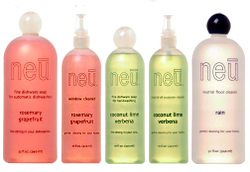
Eco-Household Cleaning Products
CAPSULE REPORT: Why scrub the sink or clean your counters with harsh-smelling bleach- or ammonia-based products, when you can do as good a cleaning job while you enjoy the scent of a French herb garden or a pink grapefruit? We’ve been cleaning with three “designer” brands, Caldrea, Method and Mrs. Meyer’s Clean Day, and and they actually make cleaning fun while doing as good a job as the “tough stuff.” We’re hooked! We only live once, so we’re giving up jumbo-sized value-priced cleaners from warehouse clubs. We’re now full-fledged, food-fragranced, boutique-brand cleaning commandos!
Even if nothing makes you happier than a fresh-scrubbed kitchen or bath, those noxious scents from commercial cleansers don’t make getting to the end goal a joyous journey. A pleasing fragrance makes the task more enjoyable to scrub-lovers as well as to those who hate to as much as wipe down a counter. Harsh chemical odors aside, pleasant scents create an “experience” and express individuality as much as one’s personal fragrances.
That honor belongs to a handful of boutique companies that are green, but first and foremost fashionable. So we sprayed and wiped and scrubbed and laundered our way through many bottles’ worth, and vote for:
- NEU Homecare
- Caldrea
- Method
- Mrs. Meyer’s
Whichever cleaning choice you make, you'll be be cleaning much more happily. Put on some calming music, and cleaning with these gentle, fragrant products can almost seem like a spa activity. Purchased online at NeuCleaners.com
Thanks for the link - www.thenibble.com
Ethanol slipping from greased hands, as oil price drop
Ethanol still has the backing of politicians, but the industry faces dropping oil prices and rising corn prices, both barometers of revenue for makers of the biofuel. Pacific Ethanol's CEO acknowledged overexcitement about the fuel and says the industry is facing "a bit of overcorrection," as Wall Street tries to determine how to value the ethanol... Forbes
Reviving old Canadian emissions laws won't clean the air,

David Suzuki Foundation says - The David Suzuki Foundation, a 16-year-old environmental group, says that the law is an "elaborate framework for procrastination" and the emissions targets are in the revised law are set so far into the future that they guarantee rising pollution levels in Canada.
"Instead of acting to cut pollution, the government is offering hollow rhetoric as a smokescreen for ignoring existing laws that could make a real difference if they were enforced," David Suzuki Foundation policy analyst Dale Marshall said after an initial review of the law. The Foundation's biggest problem with the law is that the "only definite element is more consultation, potentially delaying real action for years." Let's hope it doesn't take another 25. [Source: www.autobloggreen.com]
Did anyone from NY read this??? Pittsburgh cleaner diesel....

New Ultra Low Sulfur Diesel (ULSD) fuel, which is now widely available in America, may costs more to produce and purchase, but school districts near Pittsburgh are willing to spend money to get the benefits of the cleaner fuel. In this story from the Pittsburgh Tribune-Review, for example, the number for the North Allegheny School District and others are explained.
The district uses about 200,000 gallons of diesel a year, so the extra 20 cents it costs to buy each gallon of ULSD adds up to $40,000 of new costs. By buying diesel in bulk with other school districts in the Allegheny Intermediate Unit, the cost goes down, but obviously it's still higher than messy old diesel. Adding expensive filters or diesel catalytic converters (at about $150 per bus) also cleans the air the children breathe. The Penn Hills School District says it spent more than $12,000 for converters for the district's 83 buses. They're doing it for the children. [Source: Pittsburgh Tribune-Review VIA-www.autobloggreen.com]
The district uses about 200,000 gallons of diesel a year, so the extra 20 cents it costs to buy each gallon of ULSD adds up to $40,000 of new costs. By buying diesel in bulk with other school districts in the Allegheny Intermediate Unit, the cost goes down, but obviously it's still higher than messy old diesel. Adding expensive filters or diesel catalytic converters (at about $150 per bus) also cleans the air the children breathe. The Penn Hills School District says it spent more than $12,000 for converters for the district's 83 buses. They're doing it for the children. [Source: Pittsburgh Tribune-Review VIA-www.autobloggreen.com]
Subscribe to:
Posts (Atom)