Oct 5, 2017

Free webcast Walking-Working Surfaces questions @jjkeller has answers


Thursday, October 5th   1 PM Central Time
(2 ET, 12 MT, 11PT) – Register Now!

Last November, OSHA finalized the walking-working surfaces rule that revised Subpart D in its entirety. Since that time, many employers have struggled to understand the depth and breadth of the changes, as well as the impact on their workplace. 

During this webcast, we will answer the most frequently asked questions by hundreds of general industry employers about the new requirements to help ensure compliance and prevent slips, trips, and fall in your workplace.

We'll also take your questions during our Q&A portion of the event!

 Register Now
 
Featured Speakers:
  Jennifer StroscheinJennifer Stroschein
  Editor
  
Workplace Safety
  
J. J. Keller & Associates

 
 MIchelle GraveenMichelle Graveen
 Editor
 Workplace Safety
 J. J. Keller & Associates 


NIOSH Cancer, Reproductive, Cardiovascular and Other Chronic Disease Prevention Program, Program Performance One Pager (PPOP)

NIOSH: The Cancer, Reproductive, Cardio-vascular and Other Chronic Disease Prevention Program provides lead-ership in preventing work-related diseases related to many types of cancer, reproductive health, and cardiovascular diseases, as well as occupational neurologic and renal disease. This snapshot shows recent accomplishments and upcoming work.

What are our priorities?

The National Institute for Occupational Safety and Health (NIOSH) Cancer, Reproductive, Cardiovascular and O

​​
ther Chronic Disease Prevention (CRC) Program works with partners in industry, labor, trade associations, professional organizations, and academia. The program focuses on:

  • Preventing and reducing incidence of occupational cancer
  • Preventing and reducing incidence of adverse reproductive outcomes related to work
  • Preventing and reducing incidence of occupational cardiovascular disease (CVD)

NIOSH Recognizes National Nanotechnology Day

NIOSH: On October 9, the U.S. nanotechnology community will come together to celebrate the second National Nanotechnology Day. Nanotechnology is the manipulation of matter on a near-atomic scale with the goal of developing new and improved advancements in medicine, consumer products, energy, materials, manufacturing, and other fields. The annual event is an opportunity to inform the public about nanotechnology, share scientific accomplishments that benefit industry and society, and promote its future possibilities and benefits.

As with any new technology, it is important to identify and mitigate potential hazards or risks. NIOSH is the leading federal agency conducting research and providing guidance on the occupational safety and health implications and applications of nanotechnology. NIOSH is committed to disseminating knowledge on the responsible advancement of this technology and has developed focused practices for small businesses, medical surveillance of nanotechnology workers, and effective engineering controls. NIOSH has also produced risk assessments including recommended occupational exposure limits for ultrafine titanium dioxide and carbon nanotubes. More information is available on NIOSH  website.

In recognition of National Nanotechnology Day, NIOSH is bringing together Wikipedians and scientists to lead an effort to update Wikipedia articles on health and safety information pertaining to nanomaterials. Wikipedia editors from the Midwest will join NIOSH scientists in Cincinnati to learn the latest advances in nanotechnology health and safety and communicate that information as content on Wikipedia. This effort will provide the National Nanotechnology Coordination Office with additional resources to share with the U.S. National Nanotechnology Initiative.

Updated Website for Hazardous Drug Exposures in Healthcare

Update your bookmarks! NIOSH recently updated the Hazardous Drugs and Antineoplastic Agents webpages to enhance user navigation experience. All information related to our hazardous drugs listing, including antineoplastic agents, can now be found at one location. Stay tuned to this website for future updates to the NIOSH Antineoplastic and Other Hazardous Drugs List.

Find Publicly Available Data You Can Easily Analyze! Use the NIOSH Data Visualization Tool to Examine OSH Issues

NIOSH recently added new data sets to its Worker Health Charts (WHC) tool. Built for researchers, educators, health professionals, and policy makers, WHC can be used to visualize occupational data for research and public health purposes. WHC produces different chart types depending on the query options you select. Email any questions or comments to WHC.niosh@cdc.gov.

NIOSH - New Respiratory Protection Program Training Available

NIOSH and the American Association of Occupational Health Nurses (AAOHN) recently released a new Respiratory Protection Program Training. The program includes a respiratory protection course and accompanying resources for occupational health professionals who want to learn more about OSHA's Respiratory Protection Standard and the role of the respiratory protection program administrator. You do NOT need to be an AAOHN member to participate in this free training or access the training resources.

October is National Protect Your Hearing Month

Occupational hearing loss can happen as a result of workers' exposure to loud noise. Noise levels over 85 decibels can be hazardous to hearing. If you have to raise your voice to speak to someone an arm's length away, the noise levels may be loud enough to damage your hearing. This October, remind your colleagues that noise-induced hearing loss is 100 percent preventable. To learn more, visit NIOSH's website for noise and hearing loss prevention and read our feature article on hearing protection.

Tox-App: An App to Search for Potential Environmental Health Hazards in your Community

Use Tox-App, a free mobile app for iOS users from the National Library of Medicine, to search for industrial facilities that reported releasing certain chemicals into the environment (based on data from the US EPA TRI program). Tox-App includes a subset of about 100 TRI chemicals for the most current TRI year. You can download Tox-App from the Apple App Store: https://itunes.apple.com/us/app/tox-app/id1227471020?mt=8

Tox-App is based on the National Library of Medicine online tool TOXMAP and provides some of the basic TOXMAP functions, including:

- Search for reporting facilities by name or state
- Browse for facilities by chemical, state, or county
- View locations of reporting facilities on an interactive map

Learn more about Tox-App here:

Oct 4, 2017

OSHA’s Mobile-Friendly Publication on Training Requirements is Easy to Use on the Job

Our comprehensive guide to Training Requirements in OSHA Standards is a valuable reference to help employers, safety and health professionals, and training directors comply with the law and keep workers safe. However, at more than 250 pages, the printed version can be cumbersome to carry on some jobsites. That's why the guide available in digital (MOBI and EPUB) formats; it can be read on a smartphone or tablet and easily searched for the standards that apply to specific industries or activities. Visit OSHA's website to download a copy.

New Fact Sheets Available on Protecting Workers in Laboratories and Shipyards

Two new OSHA fact sheets provide information on assessing and preventing hazards in specific worksites.

  • Preventing and Managing Laboratory Worker Exposure to Zika Virus provides guidance on protecting workers in biomedical laboratories from infection by the virus. It includes information on performing risk assessments and standard biosafety practices for laboratory work involving pathogens.
  • Evaluating Shipyard Competent Person Programs is aimed at protecting shipyard workers from exposure to dangerous atmospheres, particularly in or around confined and/or enclosed spaces aboard vessels. The fact sheet offers guidance on determining the necessary qualifications of experts who must be employed to determine whether a confined space is safe for workers and prescribe protective measures.

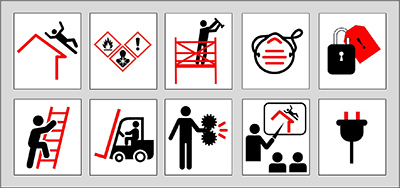
Top Stories OSHA to delay enforcement of crystalline silica standard in the construction industry OSHA Memorandum Outlines 30-Day Enforcement Plan for Silica Construction Standard Enforcement of OSHA’s respirable crystalline silica standard for construction went into effect on Sept. 23. The agency announced in a September 20 memorandum a 30-day enforcement phase-in to help employers comply with the new standard. Citations may be considered for employers not making any efforts to comply. For more information on silica hazards and OSHA’s standard, visit the Silica Final Rule webpage. Top 10 OSHA Violations Announced at National Safety Congress Top from left: Fall Protection, Hazard Communication, Scaffolding, Respiratory Protection, Lockout/Tagout Bottom from left: Ladders, Powered Industria Top from left: Fall Protection, Hazard Communication, Scaffolding, Respiratory Protection, Lockout/Tagout Bottom from left: Ladders, Powered Industrial Trucks, Machine Guarding, Fall Protection

OSHA has awarded $10.5 million in one-year grants to 80 organizations through the Susan Harwood Training Grant Program. The program funds grants to nonprofit organizations, including community and faith-based groups, employer associations, unions, joint labor-management associations, and colleges and universities. See the list of Fiscal Year 2017 Susan Harwood Training Grant recipients for details on the education and training offered by each awardee.

Top 10 OSHA Violations Announced at National Safety Congress


Top from left: Fall Protection, Hazard Communication, Scaffolding, Respiratory Protection, Lockout/Tagout Bottom from left: Ladders, Powered Industria
Top from left: Fall Protection, Hazard Communication, Scaffolding, Respiratory Protection, Lockout/Tagout
Bottom from left: Ladders, Powered Industrial Trucks, Machine Guarding, Fall Protection – Training Requirements, Electrical – Wiring Methods

On Sept. 26, at the National Safety Council's annual Congress & Expo, OSHA Deputy Director of Enforcement Programs Patrick Kapust announced the preliminary list of 10 standards most frequently cited by the agency's inspectors during Fiscal Year 2017. Fall protection was the most-cited standard for the seventh year in a row, followed by Hazard Communication, and Scaffolding. The only new addition to last year's list was Fall Protection – Training Requirements, which came in at ninth place. OSHA publicizes the Top 10 list to increase awareness of these standards so employers can take steps to find and fix the hazards to prevent injury or illness.

Oct 3, 2017

Micro Hydro as Farmland Protection against Wild Animals

Simple and easy-to-install micro hydro generators are being introduced on a broad scale in Yamaguchi Prefecture, Japan on July 26, 2017. One newly installed generator recently began operating in an irrigation canal in the Shiota district of Hikari City, located in the southeast area of the prefecture.

The installation was done by Hikari City Chikurin-kai, a group engaged in conservation of nearby "satoyama," rural areas comprising flat farmland set against forested hills. The group purchased and installed a simplified-type micro hydro generator made by local manufacturer Taiko Kikai Industries. The total installation cost of 300,000 yen (about US$2,700) was subsidized by the Seven-Eleven Foundation.

The generator generates 4.8 watts of electricity from a head of 0.8 meters and flow of four liters per second. The electricity is supplied to some 3,000 meters of electric fencing and to LED lighting used as street lamps. These systems are for protecting local produce from wild animals such as boars.

It was the eighth small-scale hydro generator introduced in Yamaguchi. Other communities are using the electricity procured from micro hydro generators set in irrigation canals to protect farmland from boars and monkeys and to illuminate school routes. They offer good examples of the utility of small-scale hydropower as an independent power source, one that can bring electricity to areas beyond the reach of conventional sources.

Source: Smart Japan (in Japanese)

Oct 2, 2017

Better Plants Program Partners Save $4.2 Billion in Energy Costs

DOE- Department of Energy (DOE) announced that partners in its Better Buildings, Better Plants Program have saved about $4.2 billion in cumulative energy costs across nearly 3,000 facilities that represent about 12 percent of the U.S. manufacturing energy footprint. In addition, DOE is recognizing the achievements of nine partners who have met their energy or water savings goals this year and welcoming 12 new partners who have joined the program.  

Today, close to 200 Better Plants partners are reducing energy costs to strengthen their productivity, create jobs, and increase their resiliency. As part of the broader Better Buildings Initiative, Better Plants partners voluntarily set a long-term goal, typically to reduce energy intensity by 25 percent over a 10-year period across all their U.S. operations. DOE supports these efforts with technical expertise and national recognition

Read the full report to learn more about this year's successes and how the Better Plants program plans to boost competitiveness through improvements in energy efficiency.

Through the Better Buildings Initiative, the Energy Department is partnering with public and private sector organizations to make commercial, public, industrial, and residential buildings more energy efficient over the next decade while creating thousands of jobs. These partners have contributed to over 1,000 solutions on the Better Buildings Solution Center. 

​​

Energy Department Launches Up to $15 Million to Tackle Solar Desalination

DOE - The U.S. Department of Energy today announced new funding to develop revolutionary solar desalination technologies that will help create freshwater from otherwise unusable waters. Desalination treats seawater, brackish water, and contaminated water for use in municipal and industrial water supplies, or to reclaim contaminated water. The Solar Energy Technologies Office expects to make $15 million available for 7 to 10 projects that explore early-stage technologies with the prospect of significantly reducing the cost of desalination through solar thermal energy.

"By integrating solar technology with desalination, we can dramatically lower the cost of creating clean water," said Charlie Gay, Solar Energy Technologies Office director. "Solar desalination can not only be used in creating freshwater from saltwater, but also to clean wastewater from industrial processes."

Electricity costs account for up to half of the operating expenses for desalination operations and require plants to be grid-connected. Solar power, either in the form of electricity or thermal power, has the potential to dramatically reduce the cost of desalination, while enabling smaller, more portable systems.

Selected projects will help improve established solar desalination technologies and create low-cost designs for solar thermal collection and storage. Successful sub-components will be tested in an integrated system and will demonstrate a credible pathway to commercial development. The projects will be awarded as cooperative agreements, and will require between 20 to 50% cost share, which ensures that federal research dollars are responsibly spent. This represents a total public-private funding of nearly $20 million.

Each project will also need to demonstrate significant improvements over best-in-class, near-commercial systems, produce repeatable results, and include clear, market-driven objectives. For example, projects that seek to address challenges facing municipal markets that utilize seawater for desalination will need to demonstrate success in creating low-cost freshwater at high volumes. Water that is produced at oil and gas well sites, by contrast, will have a particularly high salt content that is generated away from electric grid infrastructure. This makes reverse osmosis desalination technologies unpractical, but presents a significant market opportunity for solar thermal desalination.

Learn more about the department's solar energy research and concentrating solar power research. 

Earth's sixth mass extinction event under way, scientists warn:

Perhaps of interest, although depressing is this article in the Guardian:
https://www.theguardian.com/environment/2017/jul/10/earths-sixth-mass-extinction-event-already-underway-scientists-warn

The scientists found that a third of the thousands of species losing populations are not currently considered endangered and that up to 50% of all individual animals have been lost in recent decades. Detailed data is available for land mammals, and almost half of these have lost 80% of their range in the last century. The scientists found billions of populations of mammals, birds, reptiles and amphibians have been lost all over the planet, leading them to say a sixth mass extinction has already progressed further than was thought.

Billions of animals have been lost as their habitats have become smaller with each passing year.

The scientists conclude: "The resulting biological annihilation obviously will have serious ecological, economic and social consequences. Humanity will eventually pay a very high price for the decimation of the only assemblage of life that we know of in the universe."

They say, while action to halt the decline remains possible, the prospects do not look good: "All signs point to ever more powerful assaults on biodiversity in the next two decades, painting a dismal picture of the future of life, including human life."

Wildlife is dying out due to habitat destruction, overhunting, toxic pollution, invasion by alien species and climate change. But the ultimate cause of all of these factors is "human overpopulation and continued population growth, and overconsumption, especially by the rich", say the scientists, who include Prof Paul Ehrlich, at Stanford University in the US, whose 1968 book The Population Bomb is a seminal, if controversial, work.

"The serious warning in our paper needs to be heeded because civilisation depends utterly on the plants, animals, and microorganisms of Earth that supply it with essential ecosystem services ranging from crop pollination and protection to supplying food from the sea and maintaining a livable climate," Ehrlich told the Guardian. Other ecosystem services include clean air and water.

"The time to act is very short," he said. "It will, sadly, take a long time to humanely begin the population shrinkage required if civilisation is to long survive, but much could be done on the consumption front and with 'band aids' – wildlife reserves, diversity protection laws – in the meantime." Ceballos said an international institution was needed to fund global wildlife conservation.

The research analysed data on 27,500 species of land vertebrates from the IUCN and found the ranges of a third have shrunk in recent decades. Many of these are common species and Ceballos gave an example from close to home: "We used to have swallows nesting every year in my home near Mexico city – but for the last 10 years there are none."

The researchers also point to the "emblematic" case of the lion: "The lion was historically distributed over most of Africa, southern Europe, and the Middle East, all the way to northwestern India. [Now] the vast majority of lion populations are gone."

Read on at: https://www.theguardian.com/environment/2017/jul/10/earths-sixth-mass-extinction-event-already-underway-scientists-warn

​​Influenza Vaccination Coverage Among Health Care Personnel — United States, 2016–17 Influenza Season

Update: Below is the CDC summary of "​​Influenza Vaccination Coverage Among Health Care Personnel" but I would like to report that the current methods of ​​Influenza Vaccine have lead to the effectiveness of the influenza vaccine against any influenza illness of 48%. Among children 2 to 17 years of age, the inactivated influenza vaccine was 60% effective (see https://www.ncbi.nlm.nih.gov/pubmed/28792867)


CDC - Weekly The Advisory Committee on Immunization Practices recommends annual influenza vaccination for all health care personnel (HCP) to reduce influenza-related morbidity and mortality in health care settings. For the 2015–16 influenza season, the estimated overall influenza vaccination coverage among health care personnel was 79.0%.

....Overall, vaccination coverage in 2016–17 was highest among physicians (95.8%), nurse practitioners and physician assistants (92.0%), nurses (92.6%), and pharmacists (93.7%), and lowest among other clinical HCP (80.0%), assistants and aides (69.1%), and nonclinical HCP (73.7%) (Table 1). However, in hospital settings, vaccination coverage was approximately 90% or higher in all occupational groups, including assistants and aides and nonclinical personnel.

Discussion: The overall influenza vaccination coverage estimate among HCP was 78.6% in the 2016–17 season, an increase of 15 percentage points since the 2010–11 season, but similar to the 2013–14 through 2015–16 seasons (5). As in previous seasons, the highest coverage was among HCP whose workplace had vaccination requirements. In the absence of requirements, HCP with vaccination available at their workplace had higher coverage than those without on-site vaccination. HCP working in hospital settings consistently reported higher vaccination coverage than did those working in other settings and were the most likely to report workplace vaccination requirements and on-site vaccination. Even in occupational groups with lower overall coverage (i.e., assistants, aides, and nonclinical personnel), hospital personnel reported vaccination coverage ≥90%. In the 2016–17 season, 93.7% of HCP working in hospital settings reported either having a vaccination requirement or having on-site vaccination for at least 1 day. Most vaccinated HCP reported being vaccinated at their place of work, underscoring the importance of workplace vaccination availability.


Read full at:

Sources and resources:
Carla L. Black, PhD1; Xin Yue; MPS, MS1; Sarah W. Ball, ScD2; Rebecca Fink, MPH2; Marie A. de Perio, MD3; A. Scott Laney, PhD4; Walter W. Williams, MD1; Megan C. Lindley, MPH1; Samuel B. Graitcer, MD1; Peng-Jun Lu, MD, PhD1; Rebecca Devlin, MA2; Stacie M. Greby, DVM1


Health and Safety Report - Tool Ergonomics, ​Dust Exposure, WHMIS Update and Workplace Mental Health workshop

Getting a Grip on Hand Tool Ergonomics

Using hand tools to install a ceiling fan, fix a car, or repair plumbing are just a few situations where you can find yourself working with tools held above your head, in tight spaces, and in awkward body positions for extended periods. By properly selecting and using hand tools, you can prevent serious injuries, musculoskeletal disorders and unnecessary suffering, as well as lost workdays.

For many workers, using hammers, wrenches, pliers, screwdrivers, and other hand tools is part of their day-to-day work. Non-powered and powered hand tools, such as drills, are widely used in a variety of industries as well as at home.

Along with common injuries such as cuts and bruises, the frequent and extended use of hand tools can cause soreness, aches, pains, and fatigue, which, when ignored, can lead to chronic musculoskeletal disorders. Musculoskeletal disorders are injuries or disorders that affect the musculoskeletal system, including muscles, tendons and nerves. Common examples of musculoskeletal disorders are tendonitis, tenosynovitis, bursitis, tennis elbow (epicondylitis), and carpal tunnel syndrome.

You can help reduce these types of injuries and work-related musculoskeletal disorders by choosing the right tool for the job and using it correctly.  Using a well-designed tool that fits your hand without causing awkward postures or harmful contact pressures, will help decrease the physical demand required to complete the task. If you use a tool that doesn't fit your hand or use it in a way in which it was not intended, you risk developing an injury.

SIGNS OF INJURY

Problems that result from prolonged usage of the wrong tool or the right tool used improperly can appear as symptoms such as tingling, swelling of joints, decreased ability to move, continual muscle fatigue, sore muscles, numbness, change in skin colour of your hands or fingertips, and pain from movement, pressure, or exposure to cold or vibration.

These symptoms may not appear immediately - they can develop over weeks, months, or years. By then, the damage may be serious, so it's important to take preventative action.

HAZARDS

Static load, awkward working positions and postures, and tissue compression are all factors that can cause discomfort, fatigue and, eventually, musculoskeletal disorders.

Static load

Static load or effort occurs when you keep your muscles tense, motionless, elevated or extended for a period of time. Bending and twisting the neck or the whole torso can also increase static load considerably. When you add the exertion of force required by hand tools the static load can increase even further.

Static effort increases the pressure on muscles, tissues, tendons and ligaments. It reduces blood flow which can cause muscles to tire at a much quicker rate than they would when performing work involving movement. Statically loaded muscles are much more vulnerable to fatigue and subsequent injury than muscles which are performing dynamic work. Furthermore, muscles which are tired by static work take more than 10 times longer to recover from fatigue.

Awkward working positions and body postures

Hand tools can be useful when working in tight spaces and when access is difficult.  However, working in a tight space often means working in an awkward position. When the hand holds and uses a tool in an awkward position, it has less strength. When your arm is uncomfortable, the rest of your body is likely to be so as well, because it is natural to compensate for discomfort by trying to realign the body by bending the back, rounding the shoulders, tilting the neck, and so on. Awkward positions of the upper body increase the effort needed to complete the task. The resulting fatigue, discomfort, and pain add to the risk for developing injury.

Tissue compression

Using a hand tool requires a firm grip. However, if you are gripping too hard the resulting compression of soft tissue in the palm and fingers may obstruct blood circulation, resulting in numbness and tingling.

TOOL SELECTION

Selecting ergonomically designed tools and using them properly can help avoid pain and injury. This is particularly important when the job requires movements that are repetitive and forceful.

Some basic tips when using hand tools:

  • Select the right tool for the job. Substitutes increase the chance of having an accident.
  • Consider power tools for repetitive tasks, if appropriate.
  • Use tools designed to allow the wrist to stay straight. Avoid using hand tools with your wrist bent.
  • Use good quality tools.
  • Pull on a wrench or pliers. Never push unless you hold the tool with your palm open.

The best tool is one that:

  • Fits the job you are doing
  • Fits the work space available
  • Reduces the force you need to apply
  • Fits your hand
  • Can be used in a comfortable work position

Taking care and precautions up front can help to prevent a lot of pain and serious injury. 


RESOURCES


Wood
​​
Dust Exposure: Keep it Down!

Wood dust is more than just a nose irritant floating in the air of a workshop or lingering on the floor waiting to be cleaned up. Breathing in these tiny dust particles can be harmful and, over time, make you sick.

Working with wood, such as sawing, routing, and sanding, can create wood dust. When the dust becomes airborne, you are at risk of exposure and inhaling it into your lungs. This can happen when removing sawdust from furniture, during maintenance activities, or when cleaning equipment (for example, emptying the bag from a dust system or vacuum). Fine dust produced from processes such as shaping, routing and sanding are associated with higher exposure levels. Hardwoods (such as maple and oak) generally produce more dust than softwoods (for example, cedar and pine) when used in similar conditions. Dry wood tends to produce more dust than fresher woods.

Health effects

Exposure to wood dust has been associated with health issues due to the natural chemicals or substances in the wood such as bacteria, moulds, and fungi. Wood dust is also associated with toxic effects, irritation of the eyes, nose and throat, dermatitis, and decreased lung capacity and allergic reactions. Wood dust exposure can cause asthma, hypersensitivity pneumonitis, chronic bronchitis, and cancers in the nose and throat areas.   Understanding the potential health risks of breathing in wood dust can be an important step in addressing this workplace hazard and protecting workers from harm.

Workers at risk

Some occupations are at an increased risk for exposure to wood dust including logging, sawmill work, furniture and cabinet making, carpentry, cleaning or maintenance where wood dust is present, construction and shipbuilding.

Safety tips for working around wood dust

  • Educate and train employees about the hazards of wood dust exposure, safe work procedures, how to identify when a ventilation system is working appropriately, and the importance of control measures.
  • Read, understand, and follow health and safety information on the safety data sheet (where available and applicable).
  • Know the wood you are working with and all hazards associated with that wood.
  • Use wood with no, or fewer known, health effects where possible.
  • Reduce the amount of dust generated by reducing the need to cut or shape the wood.
  • Use an appropriately designed industrial ventilation system, including local ventilation exhaust and using high-efficiency particulate (HEPA) filters. The design of the ventilation system will depend on the equipment being used (sanders, shapers, routers, saws, etc.).
  • Use on-tool dust extraction systems.
  • Keep tools and blades sharp. Dull blades may release more dust into the air.
  • Be aware that you can be highly exposed to dust when cleaning (for example, emptying dust bags) or maintaining equipment.
  • Practice good housekeeping, and keep surfaces and floors clear.
  • Use wet clean-up methods such as wiping surfaces with a wet rag or mop or use a vacuum with a HEPA filter to avoid re-introducing the dust into the air.
  • Avoid using compressed air to blow dust off of furniture, equipment or clothing.
  • Bag and seal dust waste to prevent dust from re-entering the air.
  • To prevent a combustible dust explosion, don't allow wood dust to accumulate, including on ledges, ceiling beams, light fixtures, and hidden areas.
  • Wear respiratory protection when appropriate.
  • Use protective clothing and gloves to reduce skin exposure.
  • Wash or shower to remove dust from skin. Wash hands and face when finished a task, and before eating, drinking or smoking. Clean clothes by washing or using a vacuum when washing facilities are not available.


Additional Resources:

​​
New OHS Legislation App for Saskatchewan

For thousands of homebuilding, commercial and industrial construction companies and workers in Saskatchewan, accessing provincial health and safety regulations and employment legislation just got easier. A new app from the Saskatchewan Construction Safety Association (SCSA), Guide to OHS Legislation, is intended to help Saskatchewan employers and employees understand and comply with the legislative obligations within their workplaces. Each of the guide's 20 topics includes a summary and related resources such as hazard alerts and safety talks.

 "The OHS Regulations and Saskatchewan Employment Act are more than 500 pages in length. While workers, supervisors, and other managers are required to adhere to the Regulations and Act, it is often impractical for people to carry such a massive document in their back pocket" says Collin Pullar, president of the SCSA. "We felt that there was a need for a quick reference tool that focussed on some of the most common issues in construction safety with direct reference to the Regulations and Act. From the onset, we determined that the tool had to contain brief, plain language summaries and links to additional resources and training that employers and workers could benefit from. It had to be accessible anywhere and to anyone."

The Saskatchewan Construction Safety Association collaborated with the Canadian Centre for Occupational Health and Safety (CCOHS) to develop the mobile app as well as a web-based version.

You can download the app from either the Apple App Store or Google Play. To check out the web-based version visit: http://ohsguide.scsaonline.ca.


​Podcasts: WHMIS 2015 Update: Tips to Transition

This month's featured podcast is an interview with CCOHS' Jennifer Dipper, who shares WHMIS 2015 transition tips and information.

Feature Podcast: WHMIS 2015 Update: Tips to Transition

In this episode, Jennifer Dipper, Supervisor of General Health and Safety Services at the CCOHS shares WHMIS 2015 transition tips and key information workplaces need to know about meeting the new deadlines.

The podcast runs 7:24 minutes. Listen to the podcast now.

Encore Podcast: Ergonomic Risk Factors of Office Work

While office work may seem harmless, prolonged sitting, typing on a keyboard and using a mouse for hours at a time every day can set the stage for musculoskeletal injuries. In this podcast, CCOHS explains the three ergonomic risk factors of office work.

The podcast runs 4:36 minutes. Listen to the podcast now.


CCOHS produces free monthly podcasts on a wide variety of topics designed to keep you current with information, tips, and insights into the health, safety, and well-being of working Canadians. You can download the audio segment to your computer or MP3 player and listen to it at your own convenience... or on the go!

See the complete list of podcast topics. Better yet, subscribe to the series on iTunes and don't miss a single episode​


​ Saint John Workshop Offers Practical Approach to Address Workplace Mental Health

Mental health is a key component of a healthy workplace. And as part of healthy workplace, employers are required to protect their employees and address all workplace hazards, including psychosocial hazards. Many organizations, including the federal government, are committed to implementing the National Standard of Canada for Psychological Health and Safety in the Workplace as part of their health and safety programs.  To help organizations advance from awareness to action, CCOHS is conducting a practical one-day workshop, "Creating Your Healthy Workplace".

This workshop will equip leaders and champions of mental health with the framework, tools and resources they need to develop and implement a comprehensive healthy workplace program that addresses mental health.

Promoting a workplace culture that balances work, life, safety, health and wellness brings many rewards, including a more enjoyable and productive work environment, and happier, healthier employees who feel encouraged, supported and rewarded for their efforts.

Workshop details

October 3, 2017 from 8:30 am to 4 pm
Delta Hotels by Marriott, 39 King Street, Saint John, New Brunswick

$425 per person; materials, refreshments and lunch included

Register online. Space is limited.​

Does coffee get a Prop 65 warning? What is acrylamide? Is it true that coffee and cocoa contain this toxin?

ConsumerLab: Acrylamide is a neurotoxin and probable carcinogen (cancer causing agent) formed when certain starchy foods, such as wheat and potatoes, are cooked at high temperatures (>248 degrees Fahrenheit). It can also be produced when coffee and cocoa beans are roasted. Although no level of exposure is absolutely safe, amounts of acrylamide consumed by most adults is believed to represent a very low level of risk. Nevertheless, there are steps you can take to reduce your exposure. 

How much is safe? 
Exposure to even extremely small amounts of acrylamide may very slightly increase cancer risk, which has led the State of California to require a cancer warning on foods providing more than 0.2 mcg of acrylamide per daily serving (below which there is no significant risk of cancer), although up to 140 mcg is permitted before a warning regarding reproductive toxicity is required. The U.S. EPA also uses this higher 140 mcg amount (based on 2 mcg of acrylamide per kilogram of body weight) as its chronic reference dose for risk to the nervous system. 

How much is in what we eat? 
An adult weighing 150 lb consumes about 35 mcg of acrylamide per day (0.5 mcg/kg of bodyweight) (Mucci, J Agric Food Chem 2008). This is way below the 140 mcg limit of the EPA, although way above California's very stringent limit of 0.2 mcg, noted above. 

In the U.S., fried potato products (i.e., French fries, potato chips, roasted potatoes) account for the greatest source of acrylamide in the diet, accounting for up to 38% of average exposure for adults, followed by crackers, cookies and cakes (17%), bread (14%), snacks such as roasted nuts, and popcorn (14%), cereal products (9%), and lastly, coffee (8%) (Friedman, J Agric Food Chem 2008). 

Coffee 
Green coffee beans contain asparagine (it is the second-highest concentration amino acid in coffee beans) as well as sucrose (sugar). When roasted, significant amounts of acrylamide can be produced; however, brewed coffee (most of which is water) contains only about 2 mcg per 8-ounce cup of coffee. 

Cocoa 
As with coffee beans, cocoa beans are typically roasted during processing, resulting in the production of acrylamide. FDA tests of various cocoa powders and dark chocolate baking bars in 2002 showed amounts of acrylamide ranging from 0.29 mcg to 4.5 mcg per serving (see the Acrylamide table in the Dark Chocolates and Cocoas Review); however, there was no detectable acrylamide found in a popular milk chocolate bar. 

What can I do to reduce my acrylamide intake? 
Potatoes 
Limit your intake of roasted, baked and fried potatoes, chips, etc. Store raw potatoes in a cool dry place, such as a pantry or cupboard — not in the refrigerator, as the cold temperature increases the amount of sugars in potatoes, increasing acrylamide generation during high-heat cooking. Fry at the lowest possible temperature for the shortest possible amount of time (aim for a golden yellow color rather than golden brown) (Prop 65 Acrylamide Fact Sheet 2017). Soaking sliced potatoes in water for 15 to 30 minutes (or for 5 minutes in warm, slightly salted water) before frying or roasting may also reduce acrylamide formation (Pedreschi, J Sci Food Agric 2014). 

Coffee 
Several factors can modestly reduce the amount of acrylamide in your coffee when prepared at home (Soares, Coffee in Health and Disease Prevention 2015):

  • Choose coffee made from Arabica beans, which contain lower amounts of asparagine than Robusta beans. However, be aware that this won't guarantee lower acrylamide, since amounts are also affected by roasting time, temperature, etc.


  • Store coffee before using for longer periods of time. Acrylamide levels in commercial ground coffee and beans decrease over time when stored in their original container. Reductions of 40—60% have been reported in coffees stored at room temperature over a period of 6—12 months.


  • Plunger pot and filtered, drip brew coffee preparation typically results in less acrylamide than coffee prepared by decoction (such as Turkish coffee) and pressure preparation (French press, expresso).

Cocoa 
Milk chocolate and alkalized cocoa products may contain less acrylamide than non-alkalized dark chocolate, but will also contain lower amounts of healthy flavanols. 

The bottom line: 
Acrylamide is a neurotoxin and probable carcinogen formed when cooking certain foods at high temperatures. Fried and roasted potato products are the greatest source of dietary acrylamide exposure in the U.S. Brewed coffee and cocoa also contain small amounts of acrylamide. It is possible to reduce exposure to acrylamide by avoiding certain foods and modifying the way you prepare potatoes and coffee, as discussed above. 
 

October is National Cybersecurity Awareness Month

October is National Cybersecurity Awareness Month (NCSAM). NSCAM is a collaborative effort between DHS and its public and private partners-including the National Cyber Security Alliance (NCSA)-to raise awareness about the vital role cybersecurity plays in the lives of U.S. citizens. US-CERT will be participating in NCSAM through weekly posts in the Current Activity section of the US-CERT website. Over the course of the month, these will touch on

  • basic online safety,
  • cybersecurity at work,
  • protecting personal information,
  • careers in cybersecurity, and
  • cybersecurity and critical infrastructure.

Users and administrators are encouraged to review the Stay Safe Online NCSAM page and the Stay Safe Online NCSAM Events page for additional information and details on NCSA event

Sep 27, 2017

California Governor Expected to Sign Chemical Disclosure Bill

(PAINT.ORG) California Gov. Jerry Brown (D) is expected to sign a chemical disclosure bill, the Cleaning Product Right to Know Act of 2017 (S.B. 258). If enacted, the measure that was passed by the California Senate and Assembly earlier this month, would require companies to identify on labels and online information the chemical ingredients found in cleaning products; that is, household and institutional products, and automotive care products, but not industrial products or cosmetics.

Brown has until Oct. 15 to sign or veto the bill.

If signed into law, manufacturers would have until Jan. 1, 2020, to post ingredients and other product information on their websites. New labels listing intentionally added chemicals would be required a year later.

The bill, which passed in the Senate on a final 28-12 vote Sept. 13, and in the Assembly the day before, provides for the protection of proprietary information — a key point that was negotiated by industry groups.

No federal regulations require the disclosure of most ingredients in cleaning products. New York, which has a cleaning products ingredient disclosure law on the books, is finalizing guidance for industry.

The measure would require ingredients identified as causing cancer or other health and environmental harm by California, the U.S. Environmental Protection Agency, European Union, or other regulatory bodies, to be identified on labels and online.

ACA had been engaged and monitoring the bill and its former iteration that died in the last legislative session — AB 708 (Jones-Sawyer) Ingredient Disclosure on Consumer Products, which was initially going to require ingredient disclosure for a) Air care products, b) Automotive products, c) General cleaning products, and d) Polish or floor maintenance cleaners. ACA and its California Paint Council worked to ensure that paints were specifically excluded from the definition of automotive products.

Sep 25, 2017

Sea salt around the world is contaminated by plastic, @JessicaGlenza

​TheGuardian via @JessicaGlenza
....Sea salt around the world has been contaminated by plastic pollution, adding to experts' fears that microplastics are becoming ubiquitous in the environment and finding their way into the food chain via the salt in our diets.

Following this week's revelations in the Guardian about levels of plastic contamination in tap water, new studies have shown that tiny particles have been found in sea salt in the UK, France and Spain, as well as China and now the US.

Researchers believe the majority of the contamination comes from microfibres and single-use plastics such as water bottles, items that comprise the majority of plastic waste. Up to 12.7m tonnes of plastic enters the world's oceans every year, equivalent to dumping one garbage truck of plastic per minute into the world's oceans, according to the United Nations.

"Not only are plastics pervasive in our society in terms of daily use, but they are pervasive in the environment," said Sherri Mason, a professor at the State University of New York at Fredonia, who led the latest research into plastic contamination in salt. Plastics are "ubiquitous, in the air, water, the seafood we eat, the beer we drink, the salt we use – plastics are just everywhere".

Mason collaborated with researchers at the University of Minnesota to examine microplastics in salt, beer and drinking water. Her research looked at 12 different kinds of salt (including 10 sea salts) bought from US grocery stores around the world. The Guardian received an exclusive look at the forthcoming study.

​​Mason found Americans could be ingesting upwards of 660 particles of plastic each year, if they follow health officials' advice to eat 2.3 grammes of salt per day. However, most Americans could be ingesting far more, as health officials believe 90% of Americans eat too much salt.

The health impact of ingesting plastic is not known. Scientists have struggled to research the impact of plastic on the human body, because they cannot find a control group of humans who have not been exposed.

"Everybody is being exposed to some degree at any given time, from gestation through death," researchers from Johns Hopkins Bloomberg School of Public Health and Arizona State University wrote in 2013. "Detectable levels of [the plastic] bisphenol A have been found in the urine of 95% of the adult population of the United States."

"There is no clear effect on human health because there are no studies on that subject," said Juan Conesa, a professor who conducted research on sea salt at the University of Alicante in Spain. "But the increase of plastics in general in the environment will also [increase exposure]," Conesa said.

​Read on: 

​TheGuardian via @JessicaGlenza​

​

Sep 22, 2017

New Video on Protecting Oil & Gas Workers

CDPH: A new video is now available to reduce oil and gas worker injuries and fatalities from exposure to toxic gases during tank gauging. The video is a collaboration of the Occupational Health Branch (OHB) and the National Institute for Occupational Safety and Health (NIOSH). You can watch a short preview, or the full-length video.

There are thousands of workers employed in oil and gas extraction in California – a workforce that is critical to the energy infrastructure of the nation. Workers at oil tank sites can be exposed to hydrocarbon gases and vapors, oxygen-deficient atmospheres, fires, and explosions when they open tank hatches to manually gauge (measure) fluid levels or collect fluid samples. These preventable exposures can have immediate health effects, including loss of consciousness and death.

OHB's Fatality Assessment Control and Evaluation (FACE) Program has additional videos to educate workers and employers on how to prevent on-the-job injuries and fatalities. Videos and supporting materials can be found on the FACE Digital Stories Page.

Help resources for fentanyl exposure to emergency responders


The following is a link to a NIOSH webpage on fentanyl exposure to emergency responders, which includes recommendations based on best available evidence, https://www.cdc.gov/niosh/topics/fentanyl/risk.html
 
This is a link to a related NIOSH science blog, 
 
This is a link to guidance developed by the Interagency Board for Equipment Standardization and Interoperability, https://www.interagencyboard.org/sites/default/files/publications/IAB%20First%20Responder%20PPE%20and%20Decontamination%20Recommendations%20for%20Fentanyl.pdf. 

Sep 21, 2017

Kids Say the Darnest Things Hilarious Dangerous Goods Version!

Labelmaster kicked off the recent 2017 Dangerous Goods Symposium with a video that had nearly 300 DG professionals roaring in laughter.


Kids Say the DG'est Things introduces kids to the challenges dangerous goods and hazmat professionals face every day, and their candid responses are adorable, hilarious and – ultimately – a touching tribute to the importance of the DG professional.

We hope you enjoy this video and feel free to publish it on your website, newsletter or blog!